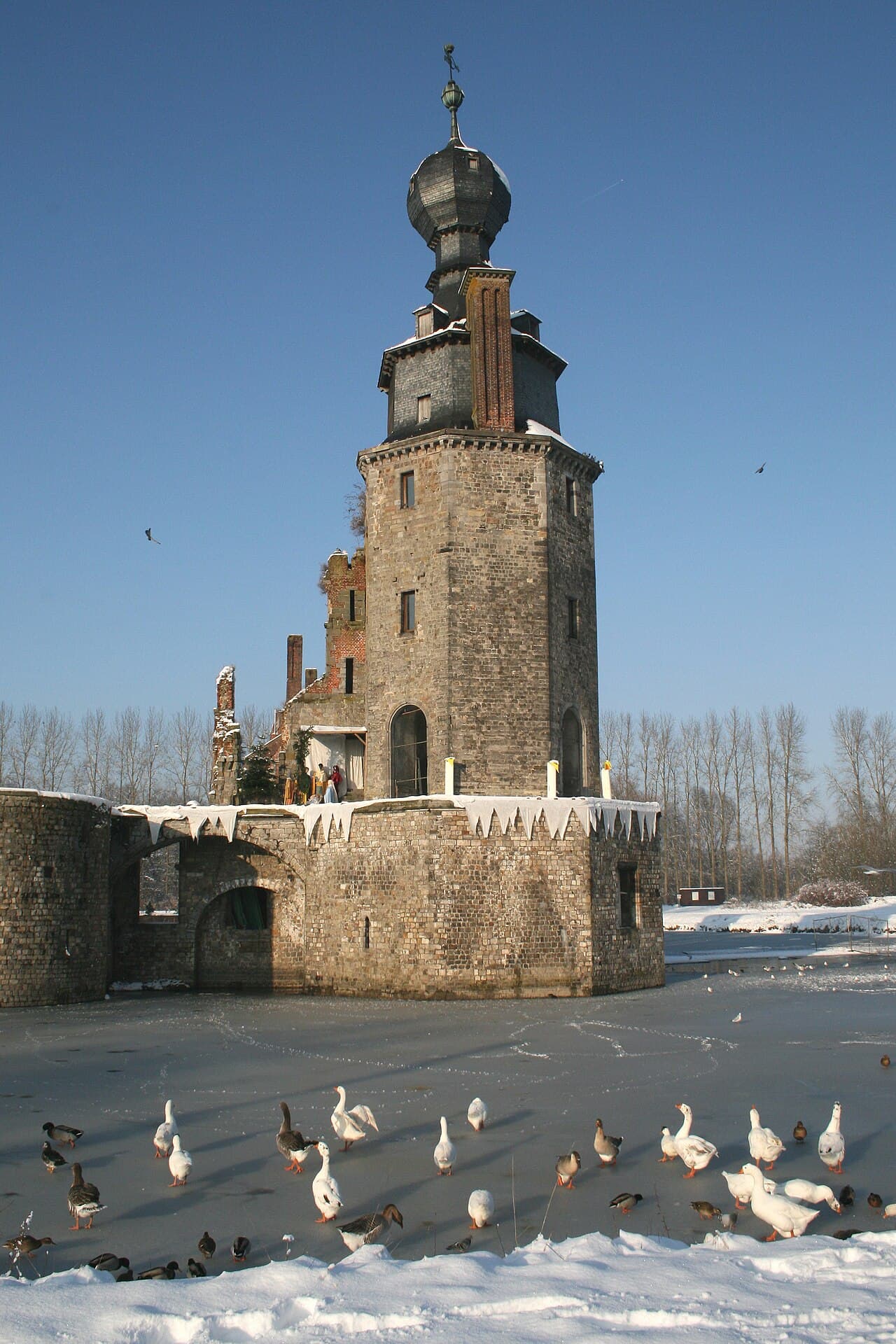
Havré Castle
Havré Castle, locally known as Château d'Havré, is a remarkable Renaissance water castle located in the village of Havré, within the town of Mons in the province of Hainaut, Wallonia, Belgium. This historic castle stands as a testament to centuries of European history, reflecting the architectural evolution and turbulent past of the region.
The origins of Havré Castle trace back to the 12th century, with the first fortification established as an advanced defense post for the strategic town of Mons along the Haine river. Initially, the site was controlled by the counts of Flanders and Hainaut from the 11th century, before passing into the hands of the Enghien family through marriage in 1255, when Ida of Mons married Engelbert d'Enghien. The Enghien family is credited with shaping the castle's present rectangular ground plan, a layout that would influence later architectural developments.
Medieval history and strategic significance
Throughout the medieval period, Havré Castle served as a key military and administrative stronghold. In 1365, it suffered near destruction during a Flemish army occupation, indicative of the frequent conflicts in the region. The castle changed hands multiple times, eventually coming under the ownership of Christophe d'Harcourt in 1423 and subsequently passing through the families Dunan, Longeville, and Croy by inheritance and marriage.
Sieges and conflicts in the 16th century
The 16th century was particularly tumultuous for Havré Castle. In 1518, it was acquired by Philippe II de Croÿ, a prominent commander under Emperor Charles V and governor of the County of Hainaut. Philippe's tenure marked a period of political significance, with the castle becoming a center of regional power. Philippe married Anna of Lorraine, daughter of Duke Anton II of Lorraine, further cementing the castle's noble connections.
During the religious and political upheavals of the late 16th century, the castle endured a siege in March 1578 by forces loyal to Don Juan de Austria and the Duke of Anjou. Despite the siege, the castle's defenses held, and it was surrendered without major damage. However, the following year, in 1579, a devastating fire severely damaged the castle, leaving only the walls intact. This event marked a significant turning point in the castle's history.
Renaissance reconstruction and cultural prominence
The castle's rebirth came at the hands of Charles-Alexandre de Croy in 1600, who rebuilt Havré Castle into a lavish Renaissance residence. Charles-Alexandre was a distinguished nobleman: a Knight of the Order of the Golden Fleece, Chamberlain of Archduke Albert VII of Austria, and a Prince of the Holy Roman Empire. Under his patronage, the castle transformed into one of Belgium's most magnificent pleasure residences.
Architectural features and artistic patronage
The restoration incorporated elegant Renaissance architectural elements, blending defensive features with refined residential comforts. The castle's rectangular layout was enhanced with ornate facades, grand halls, and richly decorated chambers suitable for entertaining high-profile guests. Notably, the castle hosted renowned figures such as the painter Peter Paul Rubens, Marie de Medicis (queen consort of France), the Infanta Isabella Clara Eugenia of Spain, Mary of Hungary (Governess of the Netherlands), the Duke of Marlborough, and the Prince of Savoy.
Decline and restoration efforts
Following the French invasion in 1792, Havré Castle was sold as national property. Although reacquired by the Croy family in 1807, the castle gradually fell into disuse and neglect. By the early 20th century, the castle was largely abandoned and had deteriorated into ruins due to vandalism and the ravages of time.
In recent decades, dedicated restoration efforts have revived Havré Castle, preserving its architectural heritage and stabilizing its structure. While restorations continue, the castle is occasionally open to the public during special events, allowing visitors to appreciate its historical significance and scenic setting.
Current status and cultural importance
Today, Havré Castle stands as a well-preserved Renaissance water castle that embodies the rich history of the Hainaut region. Its combination of medieval foundations and Renaissance grandeur offers a unique glimpse into the evolution of European castle architecture. The castle's waterside location, defensive walls, and elegant design contribute to its status as a cherished cultural landmark in Belgium.
Frequently asked questions (FAQ)
- What is the historical significance of Havré Castle?
- Havré Castle is a notable example of medieval architecture in Belgium, dating back to the 12th century. It played a crucial role in the regional power dynamics during the feudal era and has been a witness to various historical events throughout its existence.
- When was Havré Castle built?
- Havré Castle was originally constructed in the 12th century, with significant renovations occurring in the following centuries. The castle's architecture reflects the evolving styles and needs of its time, making it a fascinating site for history enthusiasts.
- What are the opening hours for Havré Castle?
- Havré Castle is open to visitors from Tuesday to Sunday, from 10 AM to 5 PM. It is advisable to check the official website for any seasonal changes or special events that may affect these hours.
- Can I take guided tours of Havré Castle?
- Yes, guided tours are available for visitors who wish to learn more about the history and architecture of Havré Castle. These tours typically run on weekends and must be booked in advance to ensure availability.
- Is it possible to access Havré Castle with a wheelchair?
- Havré Castle has made efforts to improve accessibility for all visitors, including those with mobility challenges. However, due to the historical nature of the site, some areas may still present difficulties, so it's recommended to check in advance regarding specific accessibility options.
- What is the best time to visit Havré Castle?
- The best time to visit Havré Castle is during the spring and early autumn when the weather is mild and pleasant. These seasons also offer fewer crowds, allowing for a more enjoyable exploration of the castle and its grounds.
- Are there any nearby attractions to visit after Havré Castle?
- Yes, there are several interesting attractions near Havré Castle, including the historic city of Mons and the famous Belfry of Mons. Other nearby sites include beautiful parks and museums that showcase the rich culture and history of the region.
- How much do tickets cost to enter Havré Castle?
- Ticket prices for Havré Castle are generally affordable, with discounts available for students and seniors. Children under a certain age often enter for free, making it an excellent destination for families.
Photo gallery

Information
Address
Rue du Château, Havré, Mons, Belgium
Loading map...
Visitor reviews
No reviews yet. Been here? Write the first review and help other travelers!
Write the first reviewVisited this castle? Share your experience
Your review helps other travelers and adds first-hand knowledge to our encyclopedia.


