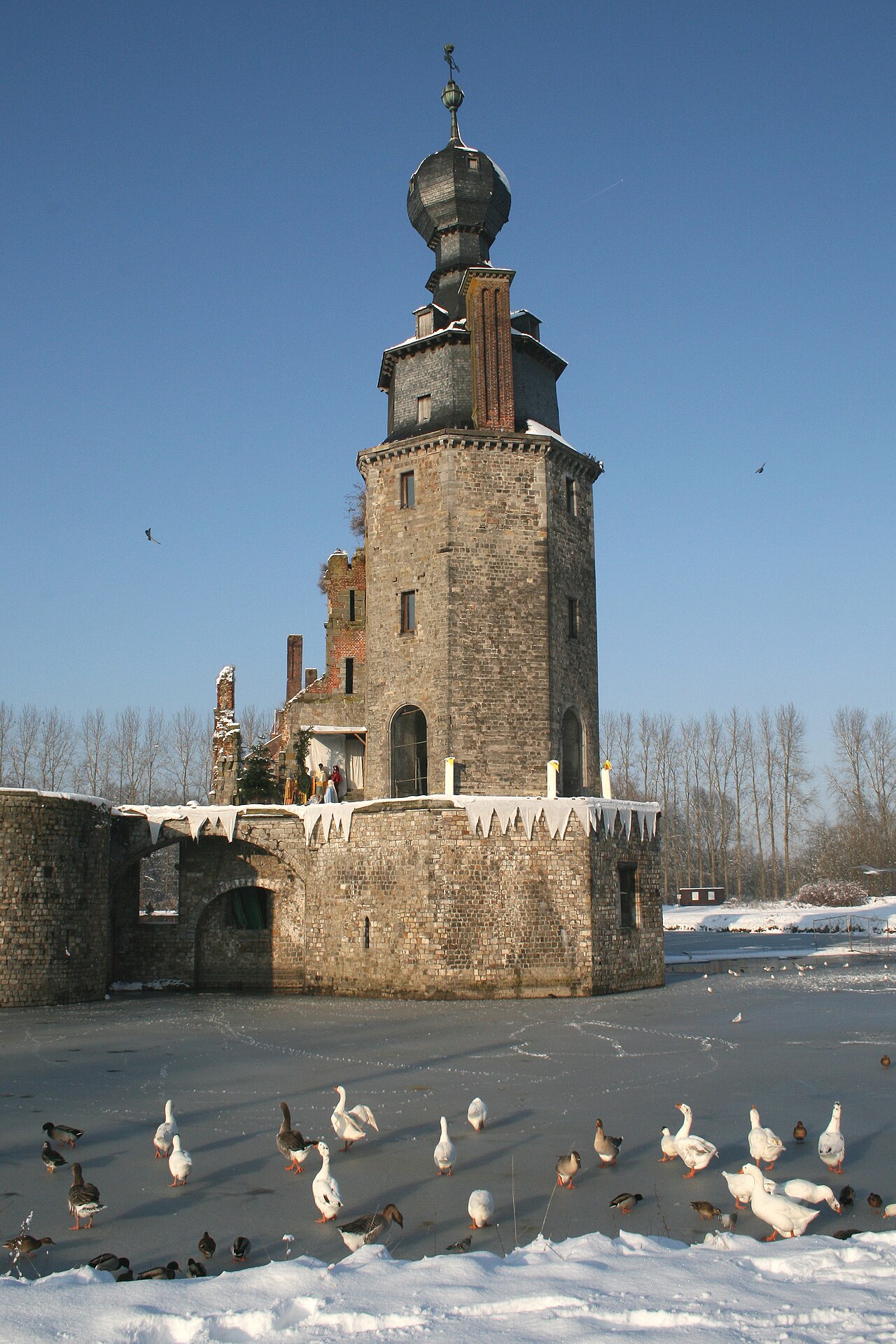
Le Rœulx Castle
Le Rœulx Castle, also known as the Château des Princes de Croÿ, is a historic noble residence located in Le Rœulx, Belgium. It serves as the family seat of the Comtes de Croÿ-Rœulx and represents an architectural palimpsest with origins dating back to the 11th century. Originally a fortified medieval structure, the castle has undergone significant transformations that reflect the changing tastes and defensive needs of its owners over the centuries.
Medieval origins and early transformations
The earliest incarnation of Le Rœulx Castle was a fortress built in the early medieval period, designed primarily for defense. By the 16th century, under the direction of Adrien de Croÿ, the castle was redeveloped to serve more as a noble residence than a military stronghold. Unfortunately, much of the castle was destroyed mid-century, likely due to the conflicts and upheavals common in the region during that time.
Visual records from the beginning of the 17th century depict a house consisting of a main residential section flanked by two towers. This configuration was markedly different from the present-day structure, indicating a period of transition from fortified castle to stately home.
18th-century reconstruction and architectural style
The current form of Le Rœulx Castle is the product of extensive conversion works carried out in the second half of the 18th century. These renovations introduced a style evocative of French classicism, blending local and Germanic architectural influences. The castle's exterior combines brick and stone, materials typical of the region, with a horizontal emphasis characteristic of Germanic design.
The castle’s layout is a distinctive U-shaped plan, comprising a central main wing and two side wings that enclose a spacious courtyard. An unusual feature of the building is the convex structures placed at the junctions between the wings and the façade, adding a dynamic quality to the castle’s silhouette.
The central section of the façade is symmetrically composed, featuring a balcony and a dome that crowns the entrance. This area houses a vestibule that retains traces of the earlier building phases, linking the castle’s past and present.
Interior highlights and decorative arts
Inside, the castle boasts a majestic main staircase that is richly decorated and serves as a focal point of the interior design. The stairwell is illuminated by a skylight, enhancing the elaborate Rocaille style décor, which is characterized by ornate and asymmetrical motifs typical of the late Baroque period.
The main drawing room is a particularly exquisite example of 18th-century decorative arts, featuring intricate woodwork, elegant plasterwork, and period furnishings that reflect the refined tastes of the aristocracy during this era.
Historical significance and cultural heritage
Le Rœulx Castle stands as a significant monument in the history of Belgian aristocracy and architecture. Its evolution from a medieval fortress to an 18th-century noble residence illustrates broader trends in European castle development, where military functions gave way to representations of status and comfort.
The castle remains under the ownership of the Croÿ family, maintaining its role as a private residence while also preserving the heritage and legacy of one of Belgium’s notable noble houses.
Architectural features and landscape setting
The castle’s setting in the town of Le Rœulx situates it within the province of Hainaut, a region known for its historic estates and castles. The surrounding grounds, though less documented, likely include formal gardens and parkland typical of 18th-century aristocratic residences, complementing the architectural elegance of the château itself.
Architecturally, the combination of brick and stone construction not only reflects local building traditions but also contributes to the castle’s distinctive appearance, merging robustness with refined aesthetic details.
Visiting and preservation status
While Le Rœulx Castle remains a private family residence, it is recognized for its architectural and historical value. Preservation efforts have maintained the castle’s structural integrity and decorative interiors, allowing it to stand as a well-preserved example of post-Renaissance French classicism in Belgium.
The castle’s condition is classified as well preserved, with many original features and decorative elements intact, providing valuable insight into the lifestyle and artistic preferences of the European nobility during the 18th century.
Information
Loading map...
Visitor reviews
No reviews yet. Been here? Write the first review and help other travelers!
Write the first reviewVisited this castle? Share your experience
Your review helps other travelers and adds first-hand knowledge to our encyclopedia.