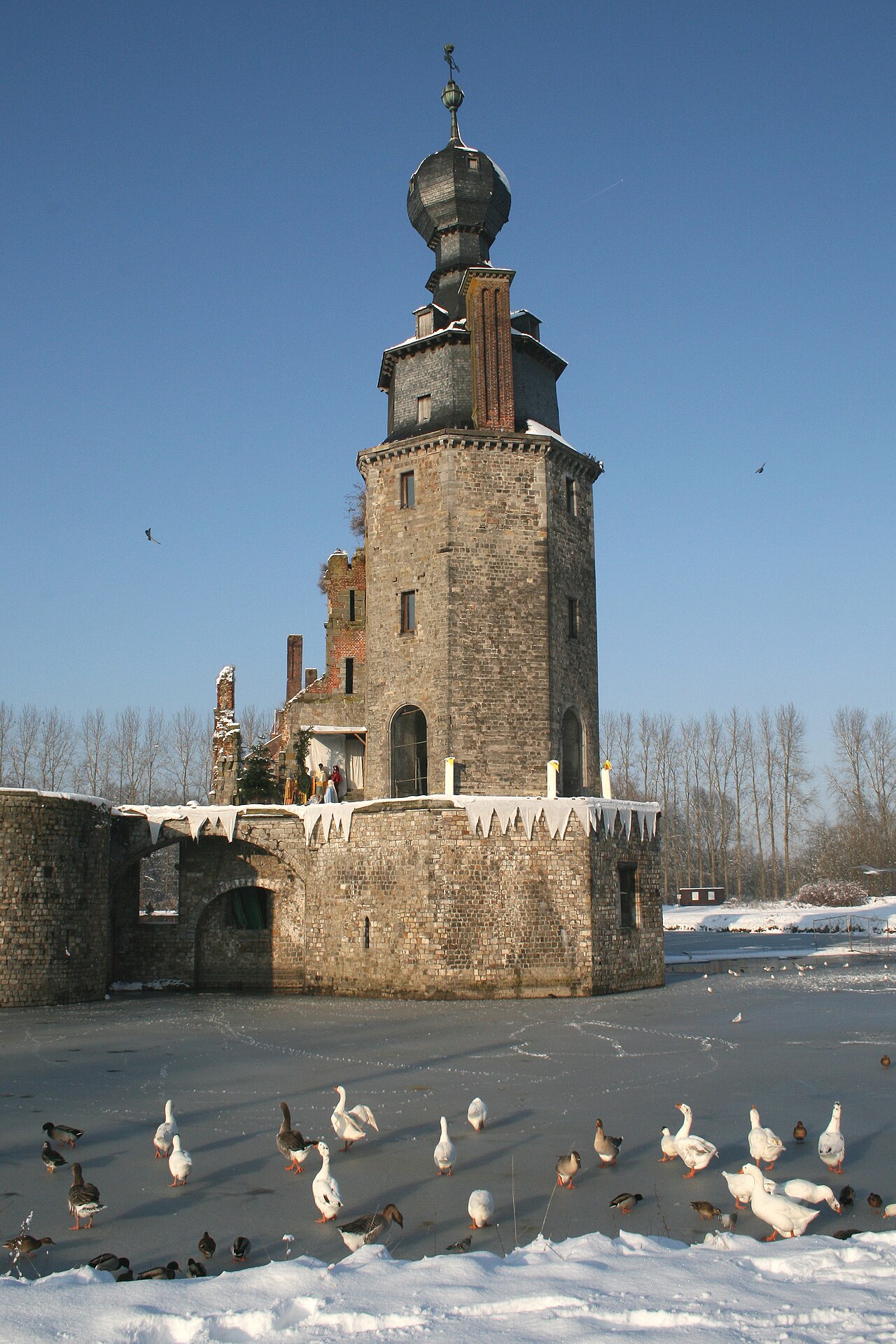
Binche Castle
Binche Castle, also known as the Palais de Marie de Hongrie or Palace of Mary of Hungary, is a significant historical site located in the southern corner of the walled old town of Binche, within the province of Hainaut in the Wallonia region of Belgium. This castle's history spans several centuries, reflecting the changing political and architectural landscapes of the region.
Early origins and medieval foundations
The original castle at Binche was constructed in the 12th century under the orders of Baldwin IV, Count of Hainaut. This early fortress was typical of high medieval defensive structures, likely featuring robust stone walls and fortifications designed to protect the strategic location within the town. During the 15th century, the castle was known as Château de la Salles. In 1461, it underwent restoration commissioned by Philip the Good, Duke of Burgundy, reflecting the castle's importance within the Burgundian territories. The castle was further extended around 1500 by Margaret of York, widow of Charles the Bold, Duke of Burgundy, who had received Binche as part of her dowry.
Renaissance transformation under mary of hungary
In 1528, Mary of Hungary became the Governess of the Netherlands and frequently resided at Binche, which became one of her favored residences. In recognition of her role and devotion, Charles V, Holy Roman Emperor, granted her lifetime usufruct of the imperial estate at Binche. Mary decided to demolish the existing medieval castle to make way for a new Renaissance-style palace. The construction was entrusted in 1545 to the architect Jacques Du Broeucq, a notable figure in Renaissance architecture in the region.
The palace was an ambitious project showcasing the Renaissance ideals of symmetry, proportion, and classical elements, marking a significant architectural shift from the medieval fortress. However, the palace's fortunes were tied to the turbulent political conflicts of the era. Mary sided with her brother, Charles V, against Henri II of France. In 1552, she ordered the destruction of Henri II's favored property, Folembray Castle. In retaliation, Henri II commanded the burning of the Binche palace in 1554, devastating much of the structure.
Decline, partial restoration, and ruin
Despite the destruction, parts of the palace survived. Restoration efforts began but were halted in 1556 when Mary left the Netherlands permanently to reside in Spain. The palace remained largely unoccupied until 1600, when Albert VII, Archduke of Austria, and his wife took residence in one of the surviving wings. They undertook maintenance work but eventually moved to their newly built castle in Mariemont.
Throughout the 17th century, the castle fell into disrepair and gradually became ruins. By 1704, the remaining structures were in a state of collapse and were demolished to clear the site. The castle's physical presence was further diminished, leaving only traces of its former grandeur.
Modern rediscovery and preservation
In the 19th century, the site of Binche Castle was transformed into a public park, integrating the historical ruins into a recreational space for the community. During the 20th century, extensive archaeological excavations uncovered significant portions of the castle's foundations and remnants, providing valuable insights into its architectural evolution and historical context.
Today, the ruins of Binche Castle remain visible within the park, though they are not accessible for close visitation. Visitors can view the ruins easily from the park grounds during daytime hours. The site offers a tangible connection to the region's medieval and Renaissance past, with the ruins serving as a reminder of the castle's historical and cultural significance.
Architectural highlights and historical significance
The castle's transformation from a high medieval fortress to a Renaissance palace reflects broader European trends in castle architecture and aristocratic residence design. The involvement of prominent figures such as Mary of Hungary, Charles V, and Philip the Good underscores the castle's political importance. Architect Jacques Du Broeucq brought Renaissance architectural principles to the project, making Binche a notable example of early Renaissance influence in the Low Countries.
The palace's destruction during the conflicts with France highlights the turbulent nature of 16th-century European politics, where castles and palaces often became targets in military reprisals. The subsequent decline and partial restoration efforts illustrate the challenges of maintaining such estates amid shifting political and economic circumstances.
Location and accessibility
Binche Castle is situated on Rue des Promenades in Binche, Belgium. The castle ruins are integrated into a public park accessible during daytime, providing visitors with an opportunity to explore the historical site in a scenic setting. While the ruins themselves are not open for close exploration, the park setting allows for an appreciation of the castle's historical footprint within the town.
Cultural heritage and tourism
The castle and its ruins form an important part of Binche's cultural heritage, attracting visitors interested in medieval and Renaissance history. The site complements the town's other attractions, including its famous carnival, contributing to the region's tourism appeal. Preservation efforts and archaeological work continue to enhance understanding of the castle's past and its role in the history of the Low Countries.
Frequently asked questions (FAQ)
- What is the historical significance of Binche Castle?
- Binche Castle played a crucial role in the political and architectural history of the Hainaut region, serving as a medieval fortress and later a Renaissance palace under Mary of Hungary.
- Can I visit the ruins of Binche Castle?
- Yes, the ruins are located within a public park on Rue des Promenades and can be viewed during daytime hours, although close access to the ruins is restricted.
- When was Binche Castle originally built?
- The original castle was constructed in the 12th century under Baldwin IV, Count of Hainaut.
- Who was responsible for the Renaissance transformation of the castle?
- Mary of Hungary commissioned the Renaissance-style palace, with architect Jacques Du Broeucq overseeing its construction beginning in 1545.
- Why was the palace at Binche destroyed?
- The palace was burned down in 1554 by order of Henri II of France in retaliation for Mary of Hungary's military actions against French properties.
Information
Opening hours
Daytime
Ticket prices
Free
Current owner
Municipality
Address
Rue des Promenades, Belgium
Loading map...
Visitor reviews
No reviews yet. Been here? Write the first review and help other travelers!
Write the first reviewVisited this castle? Share your experience
Your review helps other travelers and adds first-hand knowledge to our encyclopedia.