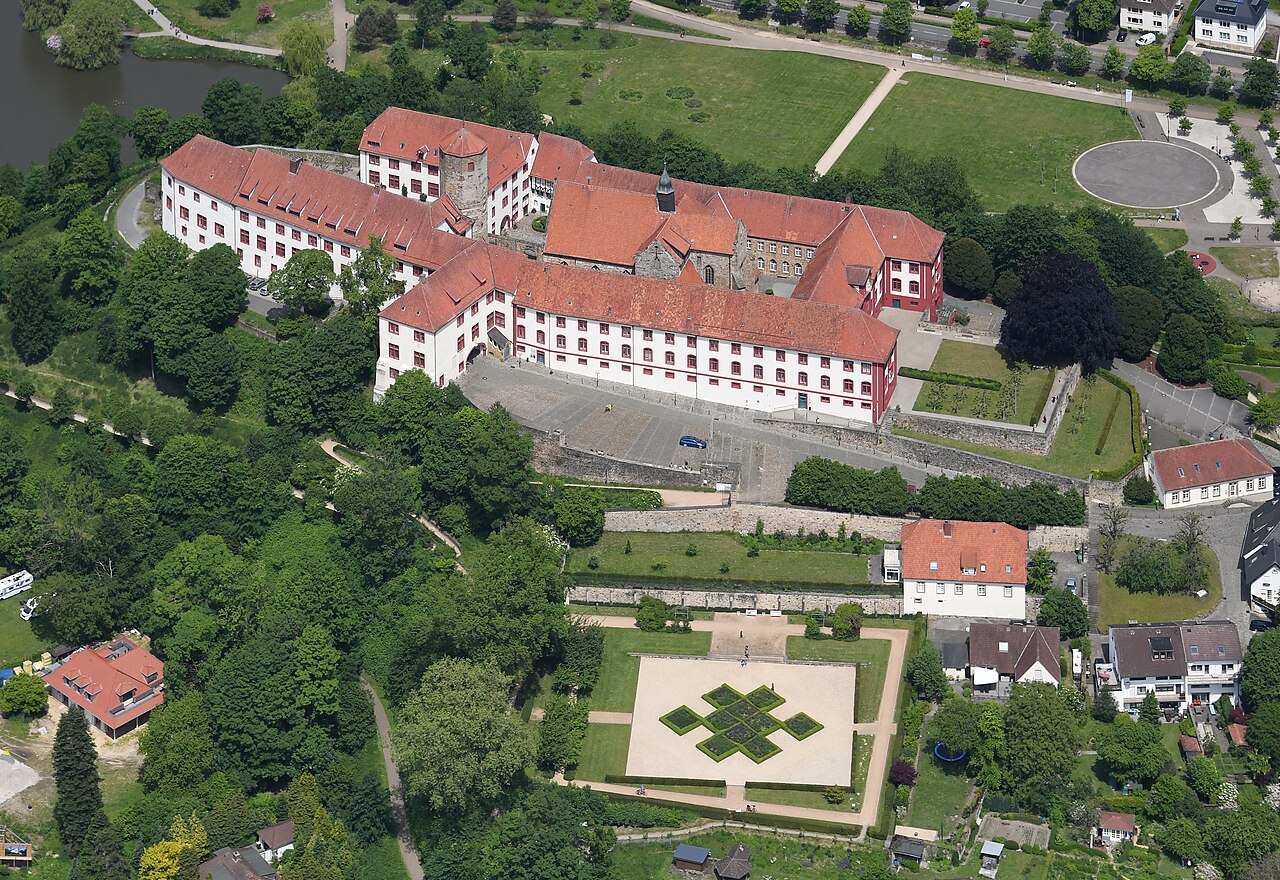
Haus Marck Castle, located at the foot of Tecklenburg, one of the most picturesque half-timbered towns in the Münsterland region of Germany, is a notable example of a moated castle that has evolved architecturally over several centuries. The castle is situated in a tranquil valley meadow, surrounded by its original moat, which adds to its charm and defensive heritage. It is considered a hidden gem for visitors exploring the Tecklenburg area, offering a glimpse into the region's late-medieval and early modern history.
Historical origins and early construction
The property was first acquired by the Knights of Horne in 1368, who established a castle on the site. This initial structure laid the foundation for what would become Haus Marck. By 1490, a new castle was constructed, marking the beginning of the castle's late-medieval phase. This period was characterized by fortified manor houses that combined residential comfort with defensive features, typical of the era's architectural needs in the region.
Architectural evolution through the Renaissance and Baroque periods
Renaissance reconstruction in 1562
In 1562, Haus Marck underwent a significant transformation reflecting the Renaissance style, which introduced more ornamental and classical elements to the castle's design. This phase likely included the addition of decorative stonework, larger windows, and more refined internal layouts, aligning with Renaissance aesthetics that emphasized symmetry and proportion.
Baroque redesign in 1754
A major event in the castle's history was the collapse of the former complex, which led to a comprehensive rebuilding in 1754. The castle was redesigned as a four-winged, single-storey complex in the Baroque style, a style known for its grandeur, elaborate ornamentation, and emphasis on dramatic forms. This reconstruction gave Haus Marck its present-day appearance, with the wings arranged around a central courtyard, enhancing both its aesthetic appeal and functional layout.
Ownership and preservation
Since 1803, the estate has been under the ownership of the von Diepenbroick-Grüter family. The family has played a crucial role in preserving both the castle and its surrounding natural environment, maintaining the estate's historical integrity and ensuring its survival into the modern era. Their stewardship has helped retain the castle's status as a cultural and architectural landmark in the Münsterland region.
Architectural features and surroundings
Haus Marck is characterized by its harmonious integration into the landscape, with its moat serving both defensive and aesthetic functions. The castle's half-timbered town setting of Tecklenburg adds to its historical ambiance. The four-winged layout creates a sheltered courtyard, which would have been used for various domestic and administrative purposes. The single-storey design is somewhat unusual for castles of its period, suggesting a focus on residential comfort and manor house functionality rather than military defense alone.
Moat and defensive elements
The moat surrounding Haus Marck is a defining feature, typical of many late-medieval moated castles in Germany. It provided protection against attackers and also contributed to the estate's picturesque quality. While the castle's defensive role diminished over time, the moat remains a significant historical and architectural element.
Interior and estate grounds
While detailed descriptions of the interior are limited, the castle's evolution through Renaissance and Baroque styles suggests richly decorated interiors with period-appropriate furnishings and architectural details. The surrounding estate includes natural landscapes that have been preserved alongside the castle, offering visitors a sense of the historical setting and the estate's scale.
Visiting Haus Marck Castle
Haus Marck is less known than some larger German castles, making it an attractive destination for visitors seeking a quieter, more intimate historical experience. Its location near Tecklenburg allows for exploration of the town's renowned half-timbered architecture and the broader Münsterland region. The castle's setting in a valley meadow with a moat provides scenic views and photographic opportunities.
Although primarily a private estate, the castle and its grounds may be accessible during special events or by arrangement, offering a chance to appreciate its architectural and historical significance firsthand.
Frequently asked questions (FAQ)
- What is the historical significance of Haus Marck Castle?
- Haus Marck Castle, located in Tecklenburg, Germany, dates back to the 13th century and has played a vital role in regional history. It served as a noble residence and a strategic point during various conflicts in the Middle Ages. Today, it stands as a testament to the architectural and cultural heritage of the area.
- When was Haus Marck Castle built?
- Haus Marck Castle was constructed in the early 13th century, with its origins linked to the local nobility. Over the centuries, it has undergone several renovations and restorations, preserving its historical architecture while adapting to modern needs.
- Can I visit Haus Marck Castle?
- Yes, Haus Marck Castle is open to visitors, allowing you to explore its rich history and stunning architecture. Guided tours are available, providing insight into the castle's past and its significance in the region.
- What are the opening hours for Haus Marck Castle?
- Haus Marck Castle is typically open to the public from 10 AM to 5 PM, but it is advisable to check the official website for any seasonal changes or special events. Visiting during these hours ensures that you can fully enjoy the castle and its surroundings.
- Is it possible to access Haus Marck Castle with mobility challenges?
- While Haus Marck Castle aims to be accessible to all visitors, some areas may have limited access due to the castle's historical architecture. It is recommended to contact the castle administration in advance to inquire about specific accessibility options and accommodations.
- What is the best time to visit Haus Marck Castle?
- The best time to visit Haus Marck Castle is during the spring and early autumn months when the weather is pleasant, and the surrounding gardens are in full bloom. Additionally, visiting during weekdays may help you avoid larger crowds and enhance your experience.
- Are there any nearby attractions to explore while visiting Haus Marck Castle?
- Yes, the area surrounding Haus Marck Castle offers several attractions, including the charming town of Tecklenburg, known for its historic buildings and scenic views. You can also explore nearby nature trails and parks that highlight the beautiful landscape of the region.
- What are the ticket prices for visiting Haus Marck Castle?
- Ticket prices for Haus Marck Castle are generally affordable, with discounts available for students, seniors, and families. For the most accurate and up-to-date pricing information, it is recommended to check the castle's official website before your visit.
Loading map...
Visitor reviews
No reviews yet. Been here? Write the first review and help other travelers!
Write the first reviewVisited this castle? Share your experience
Your review helps other travelers and adds first-hand knowledge to our encyclopedia.