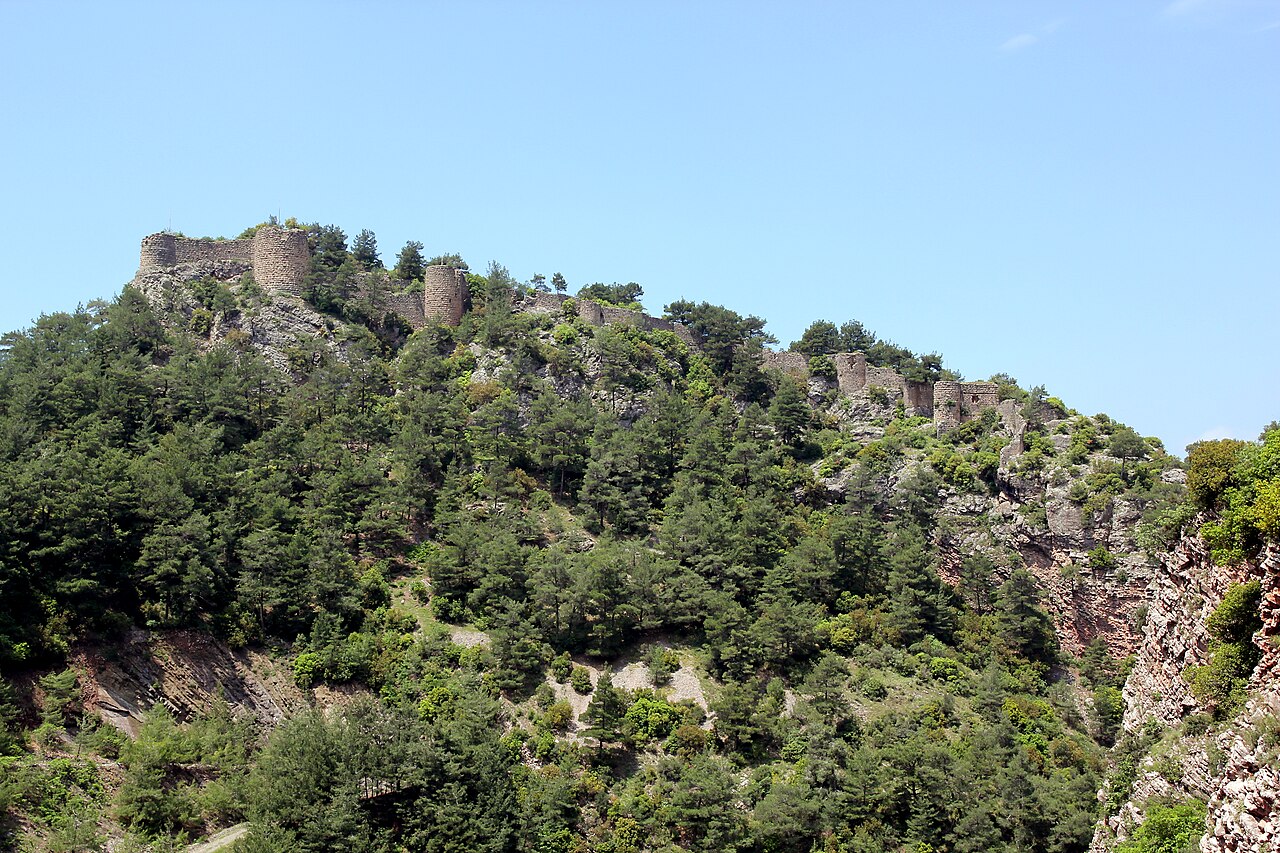
Haruniye Castle
Haruniye Castle, also known locally as Harun Resit Kalesi or Haruniye Kalesi, is a historic fortress situated in the hills above the village of Düziçi in the Osmaniye province of southern Turkey. This hill castle occupies a strategic position overlooking the route that historically connected the city of Kahramanmaraş to the fertile Cilician plain, an important corridor for trade and military movements in the region.
Historical origins and early significance
The origins of Haruniye Castle trace back to approximately 785 AD, when it was constructed under the orders of Harun al-Rashid, the renowned Abbasid Caliph. The castle was built to secure this vital road and to serve as a defensive stronghold amid the ongoing conflicts between the Abbasid Caliphate and the Byzantine Empire. Although the castle does not directly guard the Amanus Pass, it maintains intervisibility with Çardak Castle, another important fortress in the area, allowing for coordinated defense and communication.
Byzantine capture and reconstruction
During the Byzantine military campaigns against the Arabs in Syria, Emperor Nikephoros II Phokas captured the castle and its adjoining walled town in 959 AD. At that time, the fortress sheltered approximately 1,500 Muslim residents. The Byzantine forces likely caused significant damage to the castle during the siege. In response, Sayf ad-Dawlah, the governor of Aleppo, financed the reconstruction of Haruniye Castle and the surrounding town in 967 AD, restoring its defensive capabilities and infrastructure.
Armenian period and Teutonic Knights
By the late 12th century, Haruniye Castle had come under the control of the Armenian Kingdom of Cilicia. Records indicate that by 1198, the castle was held by an Armenian baron named Levon, who played a role in the coronation of King Leo I of Armenia. Following Levon, the lordship passed to Godfrey, continuing Armenian governance of the fortress.
On 22 January 1236, King Hethum I of the Armenian Kingdom granted the village and castle of Haruniye to the Teutonic Knights as a reward for their military support to the Armenian state. This transfer highlights the castle's ongoing strategic and political importance in the region during the medieval period.
Mamluk control and later history
By the end of the 13th century, the castle fell into the hands of the Mamluks, who were expanding their influence throughout the Levant. In the mid-14th century, Haruniye served as the administrative headquarters for eastern Cilicia under Egyptian Mamluk rule, underscoring its continued relevance as a regional center of power.
Architectural features and condition
Haruniye Castle is classified as a hill castle, built with defensive walls adapted to the rugged terrain of the area. Though much of the original structure remains in ruins, key elements such as the curtain walls, battlements, and remnants of towers are still visible. The castle's position on elevated ground provided natural defenses, complemented by man-made fortifications designed to control the surrounding landscape.
Currently, the castle is in a ruined state but remains accessible to visitors. Recent restoration efforts have been controversial; some repairs and new constructions intended for tourism have altered the site's historic character. Despite this, Haruniye Castle offers valuable insights into the military architecture and regional history of medieval Cilicia.
Visiting Haruniye Castle today
Visitors to Haruniye Castle can explore the ruins freely, gaining a sense of the castle's strategic importance and architectural layout. The site provides panoramic views of the surrounding hills and plains, reflecting its original purpose as a lookout and defensive position. While the ongoing restoration work may affect the aesthetic experience, the castle remains a significant cultural and historical landmark in Osmaniye province.
Frequently asked questions (FAQ)
- How do I get to Haruniye Castle near Düziçi?
- Haruniye Castle is located in the hills above Düziçi village in Osmaniye province, Turkey. Visitors typically reach the site by car or local transport from Osmaniye city, followed by a short hike to the castle ruins.
- What is the historical significance of Haruniye Castle?
- Haruniye Castle was built in 785 AD by Abbasid Caliph Harun al-Rashid and later controlled by Byzantines, Armenians, and Mamluks. It played a key role in securing strategic routes in Cilicia.
- Can I explore the castle ruins freely?
- Yes, Haruniye Castle is freely accessible to visitors. However, some restoration works are ongoing, so visitors should exercise caution while exploring the site.
- When was Haruniye Castle built?
- The castle was originally constructed around 785 AD, with significant rebuilding in the 13th century during the Armenian period.
- Is Haruniye Castle suitable for families and casual tourists?
- The castle ruins involve uneven terrain and some climbing, so it is best suited for visitors who are comfortable with moderate hiking. Families with young children should take care.
Information
Loading map...
Visitor reviews
No reviews yet. Been here? Write the first review and help other travelers!
Write the first reviewVisited this castle? Share your experience
Your review helps other travelers and adds first-hand knowledge to our encyclopedia.