Harput Castle
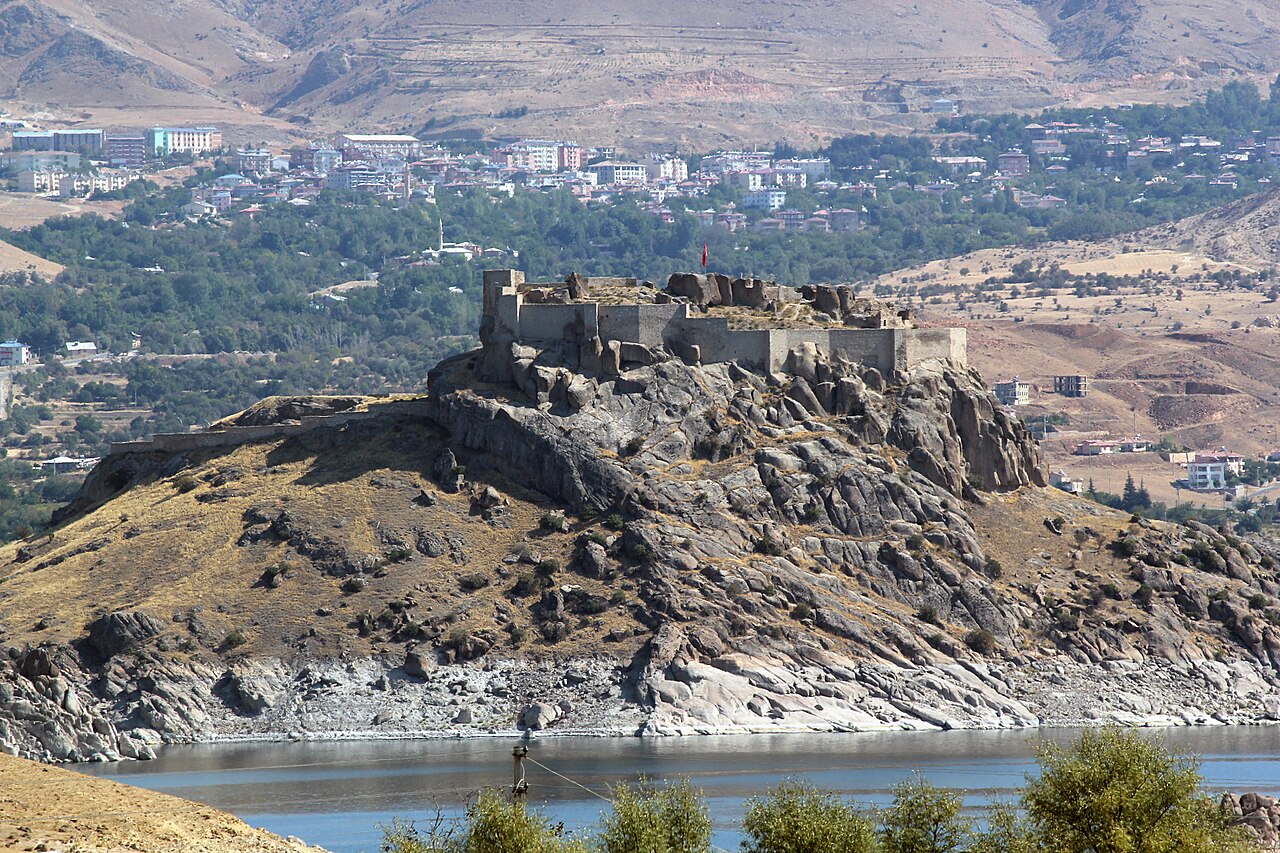
Harput Castle stands as a monumental testament to the rich and complex history of eastern Anatolia. Located in the historic neighborhood of Harput within the municipality of Elazığ, Turkey, this hill castle occupies a commanding position atop steep rocky cliffs overlooking the fertile Elazığ Plain. Its strategic location has made it a coveted military and administrative center for over two millennia.
The origins of Harput Castle trace back to the Urartian Kingdom in the 8th century BC, making it one of the oldest fortified sites in the region. Constructed on a rectangular plan, the fortress was initially designed to exploit the natural rocky terrain for defense, with sheer cliffs providing formidable protection on multiple sides. This early phase established the foundation for a complex layered history of architectural adaptation and cultural influence.
Throughout its long history, Harput Castle has witnessed a succession of powerful empires and dynasties. After the Urartians, the castle came under Persian control in the 6th century BC, followed by periods of rule by the Armenians, Romans, Sassanids, Byzantines, and Abbasids. Each of these cultures left their mark on the fortress, contributing to its evolving fortifications and internal structures.
Medieval transitions and dynastic control
From the late 11th century onward, Harput Castle became a focal point of regional power struggles. It was governed initially by the Çubukoğulları dynasty from 1085, then passed to the Artukoğulları in 1112, and later to the Seljuks in 1234. During the Artuqid period, the castle served as an important administrative center under leaders such as Belek Ghazi. The Seljuk period saw further architectural enhancements, including reinforced walls and towers to adapt to evolving military technologies.
The 14th century was marked by frequent shifts in control between the Dulkadiroğulları and Akkoyunlu dynasties, reflecting the turbulent political landscape of Anatolia. In 1465, the fortress was captured by the Akkoyunlu ruler Hasan Bahadır Han. This period also witnessed the integration of new defensive features and residential quarters within the castle precincts.
In the early 16th century, the castle briefly fell to Shah Ismail in 1507 during his campaigns, before being incorporated into the Ottoman Empire by Yavuz Sultan Selim in 1515. Under Ottoman rule, Harput Castle continued to function as a regional administrative and military hub, with modifications reflecting Ottoman architectural and strategic preferences.
Architectural features and layout
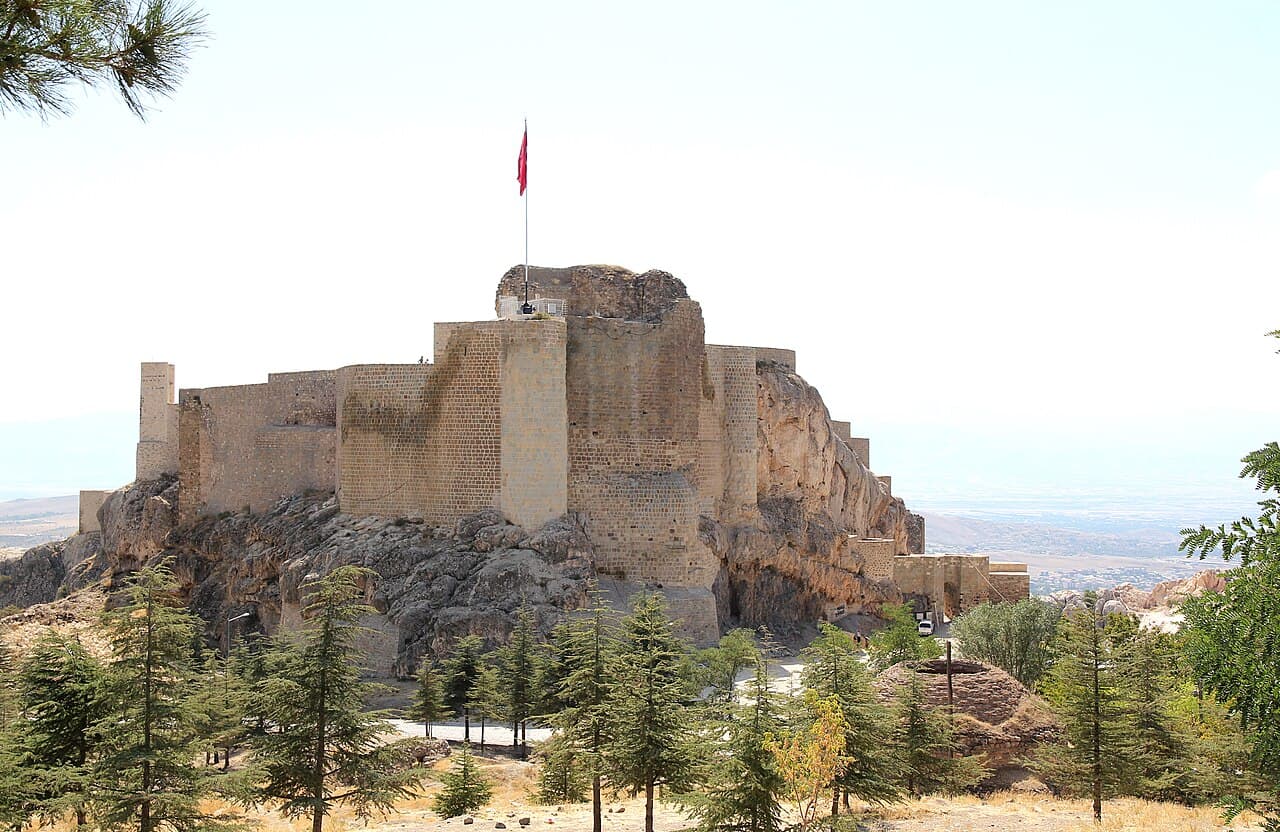
The castle complex is divided into two main sections: the inner fortress (citadel) and the outer defensive walls. The original rectangular layout is still discernible, with the main entrance located on the eastern side facing the town of Harput. The castle’s position atop sheer rock faces provided a natural defense mechanism that was enhanced by man-made fortifications.
The inner castle retains several restored towers and gates, some of which underwent significant conservation work completed in 2005. The outer walls, once forming a continuous defensive ring, have mostly been dismantled over time, with only a solitary tower near the entrance surviving as a vestige of the original fortifications.
Within the castle walls, archaeological excavations have revealed a complex network of functional spaces, including dungeons, living quarters, and areas believed to have been used for medical treatment or healing practices. The northwest section of the inner fortress houses the remains of an Artukid palace, underscoring the castle’s role as a seat of regional government during the medieval period.
Religious architecture within the fortress
A notable feature of Harput Castle is the presence of a 4th-century church dedicated to the Virgin Mary located on the eastern side of the castle. One of the church’s walls is uniquely built directly onto the castle’s rocky foundation, illustrating a seamless integration of religious and military architecture. This church, along with numerous inscriptions found behind the walls, provides valuable insights into the diverse cultural and religious influences that have shaped the site over centuries.
Cultural significance and local traditions
Harput Castle is also known locally as the "Milk Castle" (Süt Kalesi), a name derived from a traditional story that during its original construction, due to water shortages, milk was mixed into the mortar instead of water. This legend has become an integral part of the fortress’s identity and reflects the ingenuity and resilience of its builders.
Until about sixty to seventy years ago, a sizeable neighborhood existed within the castle walls, indicating the fortress’s role as a living urban center well into the modern era. Although these residential buildings have since disappeared, archaeological excavations have documented their presence and layout, revealing a vibrant community life that coexisted with the castle’s military functions.
Archaeological excavations and restoration efforts
Modern archaeological interest in Harput Castle began in the early 21st century. Excavations and restoration projects started in 2005 under the direction of Prof. Dr. Veli Sevin. These efforts uncovered an Ottoman-era neighborhood within the castle precincts dating from the mid-17th century to the early 20th century, shedding light on the castle’s continuous occupation and adaptation through different historical periods.
A second phase of archaeological work commenced in 2014, led by Prof. Dr. İsmail Aytaç, continuing to reveal the layered history of the site. These excavations have contributed significantly to understanding the castle’s architectural evolution, its role in regional politics, and its cultural heritage.
Conservation and visitor experience
Conservation efforts have focused on stabilizing the remaining structures, restoring key towers and gates, and making the site accessible to visitors. Harput Castle today offers a unique glimpse into the military architecture and urban life of a fortress that has endured through numerous civilizations and historical epochs.
Visitors can explore the citadel’s towers, walk along the remnants of the defensive walls, and visit the ancient church, all while enjoying panoramic views of the surrounding landscape. The castle’s rich history and impressive architecture make it a significant cultural landmark in eastern Turkey.
Frequently asked questions (FAQ)
- How do I get to Harput Castle?
- Harput Castle is located in the historic Harput district of Elazığ, Turkey. It is accessible by local transport or taxi from the city center, with roads leading up to the hilltop fortress.
- What is the best time to visit Harput Castle?
- The best time to visit Harput Castle is during spring and autumn when the weather is mild and the surrounding landscape is especially scenic, providing excellent views from the fortress.
- Can I explore the inner fortress and towers?
- Yes, visitors can explore the inner fortress, including several restored towers and gates. Some areas may have restricted access for safety reasons, but the main parts of the citadel are open to the public.
- What historical periods are represented at Harput Castle?
- Harput Castle features architectural and archaeological remains from the Urartian, Persian, Armenian, Roman, Sassanid, Byzantine, Artuqid, Akkoyunlu, and Ottoman periods, reflecting its long and diverse history.
- Is there an entrance fee to visit the castle?
- Currently, there is no official entrance fee to visit Harput Castle, but visitors should check locally for any updates or guided tour options.
Photo gallery

Information
Website
Visit websiteSources & official resources
Verify the information above using these authoritative references.
Loading map...
Visitor reviews
No reviews yet. Been here? Write the first review and help other travelers!
Write the first reviewVisited this castle? Share your experience
Your review helps other travelers and adds first-hand knowledge to our encyclopedia.