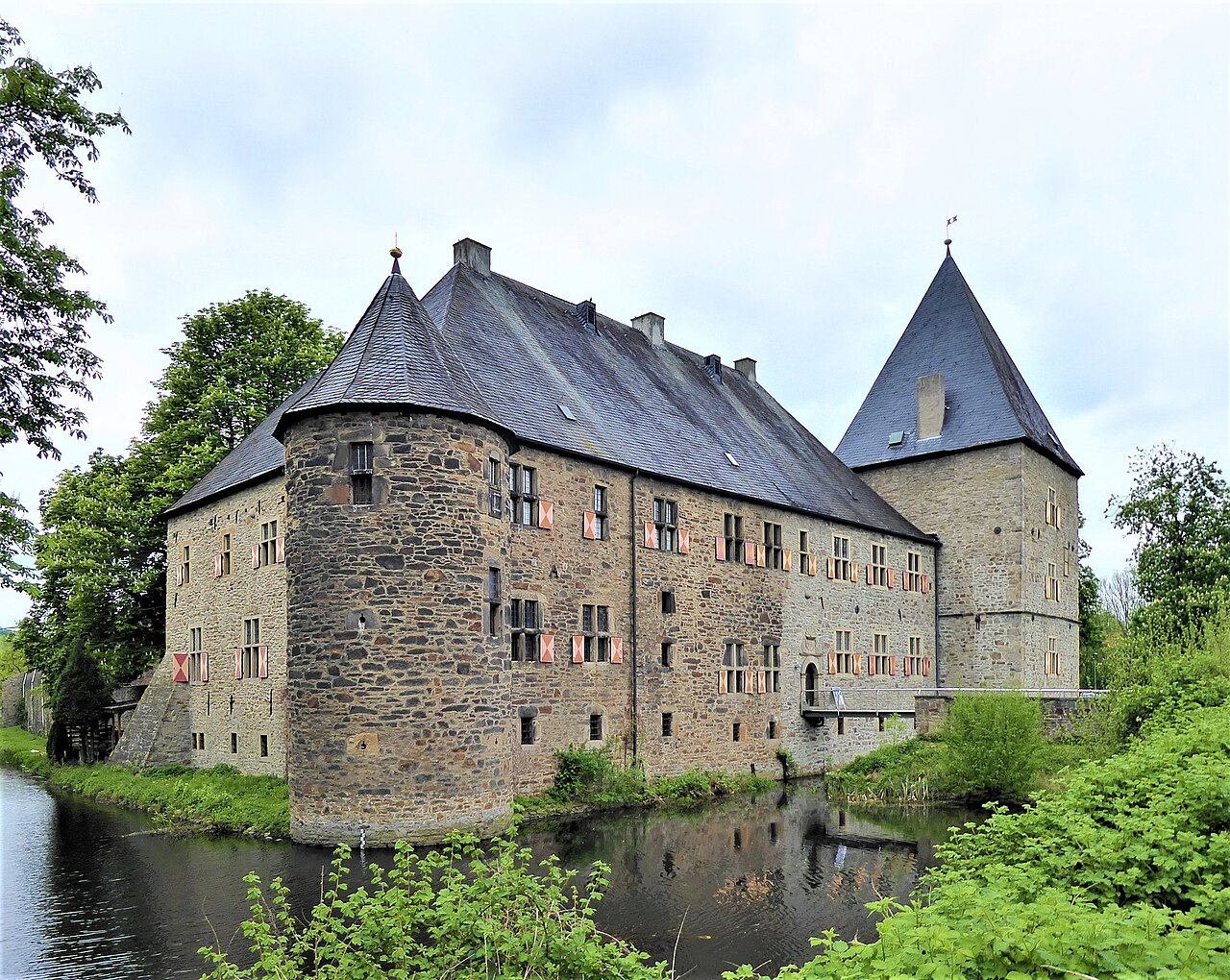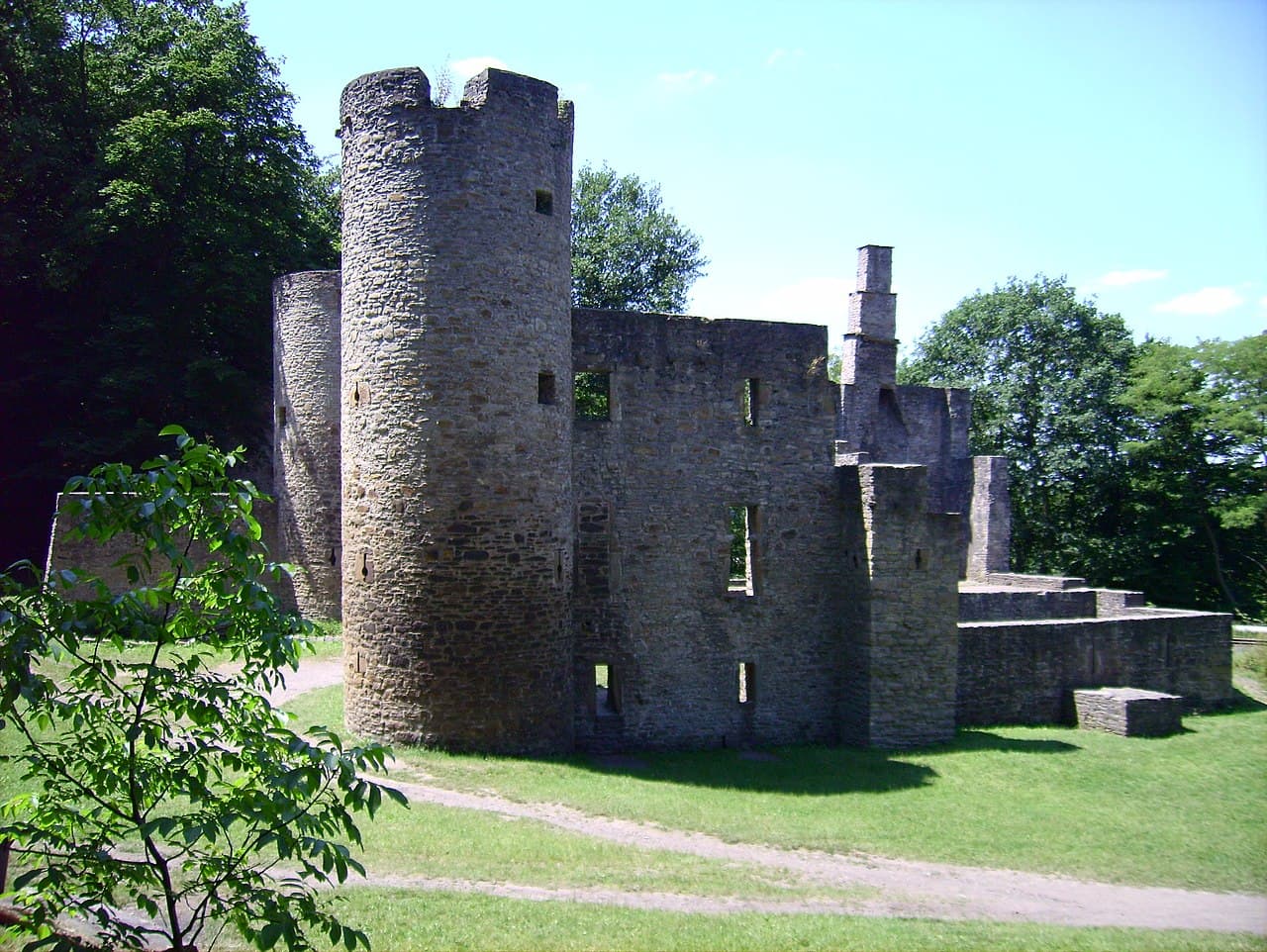
Hardenstein Castle
Hardenstein Castle stands as a remarkable example of a medieval fortified noble residence, nestled near the Ruhr River in the municipality of Witten, Germany. Its ruins, surrounded by a nature reserve and steeped in local legend, reflect a rich history intertwined with regional mining activity and noble family heritage. The castle's strategic location on the southern bank of the Ruhr and its architectural evolution provide insight into the social and economic dynamics of the late medieval period in this part of Germany.
Historical background and noble lineage
The origins of Hardenstein Castle trace back to the mid-14th century, with construction believed to have occurred between 1345 and 1354. Initially built as a water castle, it was surrounded by a moat fed by the Ruhr River, a common defensive feature for noble residences of the time. The castle was acquired in 1354 by Heinrich II von Hardenberg, who established his family's lordship here, with subsequent generations adopting the name von Hardenstein.
Throughout its history, the castle was more a fortified residence than a military fortress, reflecting the architectural and social customs of medieval German nobility. The Hardenstein family faced significant challenges, including financial difficulties that culminated in the defeat of Heinrich IV von Hardenstein in a 1378 conflict with the city of Dortmund. This episode ended tragically with his capture and execution by Cologne forces, highlighting the turbulent political landscape of the region.
Following the extinction of the Hardenberg line with Heinrich V, the estate passed through marriage in 1439 to Robert Stael von Holstein. This transfer marked a new chapter in the castle's history, accompanied by architectural enhancements to its defenses.
Architectural evolution and fortifications
Between 1430 and 1440, significant modifications were made to Hardenstein Castle, particularly on its southern side. Two towers were constructed flanking the walls, accompanied by the addition of a shield wall that strengthened the castle's defensive capabilities. These reinforcements indicate ongoing regional tensions and the need to protect the noble residence from potential threats.
The castle's design as a Festes Haus, or fortified house, was typical of the period, combining residential comfort with modest fortifications. Its moat, fed by the Ruhr River, was integral to its defense until the 19th century when the construction of the Ruhrtalbahn railway altered the landscape and severed the castle from the riverbank.
Today, the remains of these fortifications are visible, though fragmentary, and have undergone restoration efforts to stabilize the structure. The southern towers and shield wall remain key features, offering valuable insight into the castle's defensive architecture during the late medieval period.
Mining heritage and local folklore
Hardenstein Castle is closely linked to the region's mining history, situated near the Muttental mining trail, an area known for its coal deposits. This connection is reflected in local legends, most notably the tale of King Goldemar, a dwarf or kobold said to have dwelled at the castle. According to tradition, Goldemar lived with Neveling von Hardenberg and brought good fortune to the inhabitants for three years. However, when a curious man attempted to reveal Goldemar's presence by scattering ashes to find his footprints, the dwarf retaliated violently, leading to his departure and a curse of misfortune on the castle.
This folklore enriches the cultural heritage of Hardenstein Castle, linking its physical ruins to the intangible legacy of myth and legend that permeates the region.
Decline, preservation, and modern significance
By the 18th century, the depletion of local coal resources and changing economic conditions led to the castle's abandonment. Over time, the structure fell into ruin, affected by natural weathering and periods of insufficient conservation. A notable event occurred on March 16, 2010, when part of an intermediate wall collapsed, prompting restoration work completed by 2012 to secure the ruins.
Since the late 20th century, efforts by the cities of Herbede and Witten have focused on protecting and preserving the site. Archaeological excavations have uncovered artifacts now housed in a local school museum, facilitating research and public education about the castle's history. The castle ruins are illuminated at night and have been equipped with video surveillance since 2017, making Hardenstein the first castle ruin in North Rhine-Westphalia to be monitored electronically, a significant step in heritage preservation.
The site remains accessible to visitors, with the nearby Hardenstein ferry operating since 2006 as the only ferry service on the Ruhr River. This modern connection underscores the castle's enduring relationship with the river and its role in regional transport and tourism.
Architectural remains and landscape context
The surviving ruins of Hardenstein Castle offer a glimpse into its original structure and setting. The castle's position on a hill overlooking the Ruhr River provided natural defensive advantages, complemented by the moat and water defenses. The southern fortifications, including the two towers and shield wall, are the most prominent features visible today.
The surrounding Hardenstein nature reserve enhances the site's historical ambiance, preserving the castle's environment and linking it to the broader cultural landscape of the Ruhr region. The proximity to the Muttental mining trail further situates the castle within the context of the area's industrial heritage.
Visitors to the site can explore the ruins, appreciate the medieval architecture, and engage with the rich history and legends that make Hardenstein Castle a unique cultural landmark in Germany.
Frequently asked questions (FAQ)
- How do I visit Hardenstein Castle and what are the opening hours?
- Hardenstein Castle ruins are accessible to the public year-round as an open-air site within the Hardenstein nature reserve. There are no formal opening hours or entrance fees, but visitors should check local tourism websites for any temporary restrictions or guided tour availability.
- What is the historical significance of Hardenstein Castle?
- Hardenstein Castle is significant as a late medieval fortified noble residence linked to the Hardenberg family and regional mining history. Its architectural evolution and local legends like King Goldemar enrich its cultural heritage.
- Can I explore the castle ruins and nearby mining trail?
- Yes, visitors can explore the castle ruins and the adjacent Muttental mining trail, which highlights the area's coal mining heritage. The trail and ruins together offer a comprehensive historical and cultural experience.
- Is Hardenstein Castle accessible for people with limited mobility?
- Due to its ruinous state and natural terrain, Hardenstein Castle may present challenges for visitors with limited mobility. Paths can be uneven and steep, so appropriate footwear and caution are advised.
- Are there guided tours or educational programs available at Hardenstein Castle?
- While there are no permanent guided tours at the castle, local heritage groups and museums occasionally organize educational programs and special events. Visitors should check with the municipality of Witten or local tourist offices for current offerings.

Information
Sources & official resources
Verify the information above using these authoritative references.
Loading map...
Visitor reviews
No reviews yet. Been here? Write the first review and help other travelers!
Write the first reviewVisited this castle? Share your experience
Your review helps other travelers and adds first-hand knowledge to our encyclopedia.