Hardelot Castle
Hardelot Castle, known locally as Château d'Hardelot, stands near the village of Condette in the Pas-de-Calais department of northern France. This historic site is a remarkable example of a high medieval fortress that evolved through centuries into a neo-Tudor manor, reflecting the complex history of the region and the intertwined relations between France and England.
Origins and medieval construction
The original castle at Hardelot was constructed in the 12th century by the Counts of Boulogne. The earliest surviving elements, notably the curtain walls, date from this period, establishing the castle's initial defensive purpose. In 1222, Philip I, Count of Boulogne—son of Philip II of France—commissioned a significant rebuilding of the castle. This reconstruction followed a design similar to that of Boulogne-sur-Mer Castle, featuring a roughly circular plan with projecting circular towers but notably lacking a central keep or donjon. This architectural choice emphasized a strong curtain wall defense system supplemented by towers, a style typical of the high medieval period in northern France.
Military history and strategic significance
Throughout the medieval and early modern periods, Hardelot Castle was a contested stronghold. It changed hands multiple times during conflicts involving the French, English, and Burgundians. Its location near the English Channel made it strategically valuable during the Hundred Years' War and other regional disputes. However, by the 17th century, the castle's military importance waned. Cardinal Richelieu, aiming to reduce the power of feudal lords and prevent fortified sites from becoming centers of rebellion, ordered the dismantling of Hardelot Castle. Following this, the castle was repurposed as a farm, signaling the end of its role as a fortress.
Challenges of nature and ownership changes
The village of Condette and the castle grounds faced natural threats, particularly from the advancing dunes and the encroaching sea. In the late 18th and early 19th centuries, efforts were made to stabilize the land by planting trees to halt sand movement. The castle itself was sold as national property during the French Revolution in 1791 to the Lord of Châteaubourg, and later changed hands again in 1820. Despite these challenges, the castle remained a prominent landmark in the area.
19th-century revival and neo-Tudor transformation
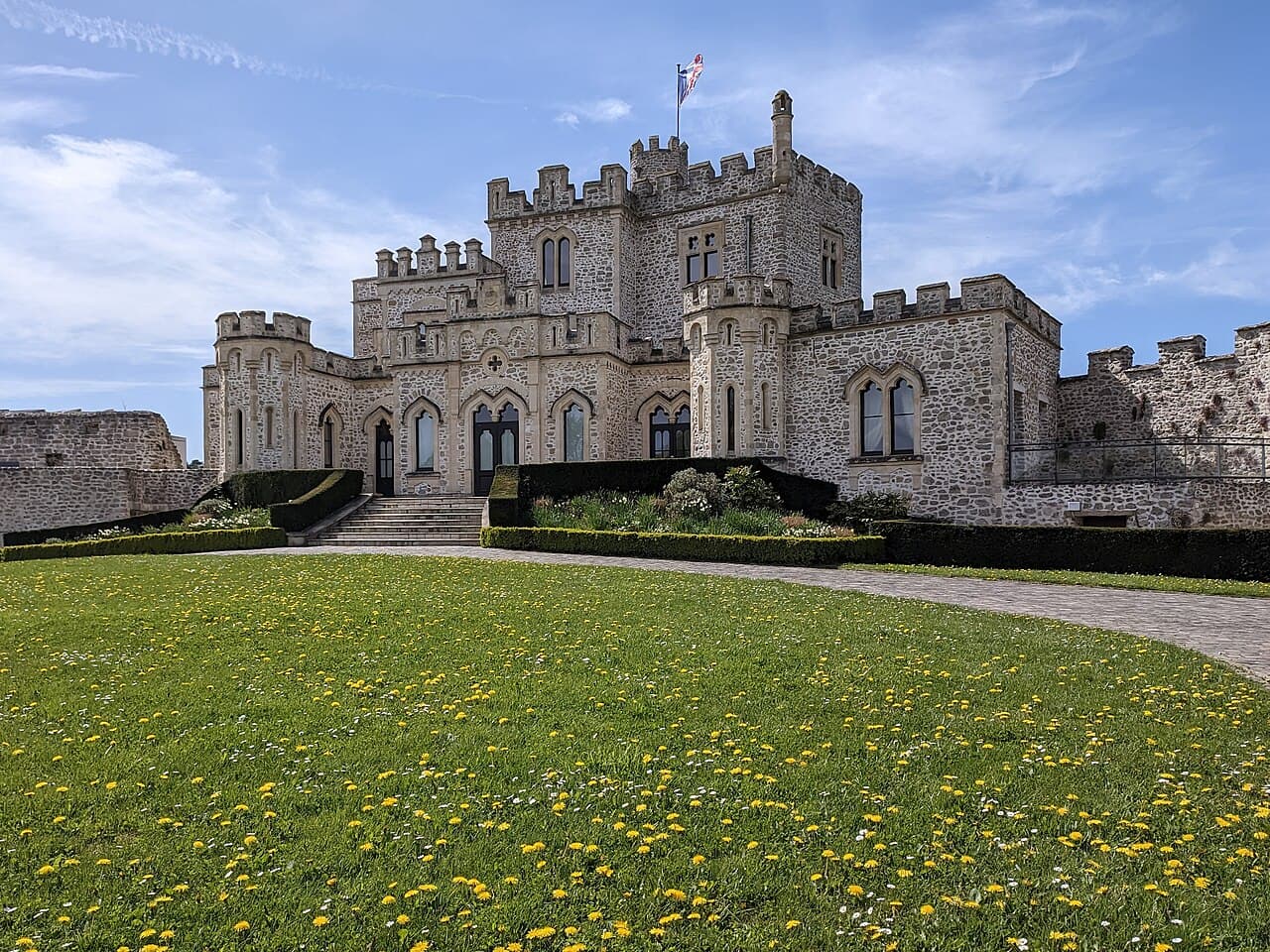
In 1848, the castle was purchased by the Englishman Sir John Hare, who undertook a significant transformation of one of the best-preserved medieval towers into a neo-Tudor mansion. This remodeling introduced Tudor architectural elements such as decorative chimneys, mullioned windows, and half-timbered facades, blending the medieval structure with Victorian-era romanticism. The castle became a social hub, hosting large receptions and notable guests including the famous writer Charles Dickens, a personal friend of Hare. This period marked a cultural renaissance for Hardelot, linking English heritage with French history.
20th-century developments and cultural role
In 1897, the castle was acquired by another Englishman, John Whitley, who envisioned developing the surrounding area into a sports and leisure destination. The castle later served religious functions; in 1934, it was sold to the local priest, Father Bouley, and housed nuns for a time. Since 1987, Hardelot Castle has been owned by the village of Condette. Between 2007 and 2009, the castle underwent extensive renovations to preserve its structure and adapt it for public use, although some critics note that the restoration's neat appearance somewhat diminishes the visible traces of its layered history.
Architectural features and current use
The castle's architecture is a fascinating blend of high medieval defensive structures and 19th-century neo-Tudor residential design. The circular curtain walls and towers reflect its original military purpose, while the Tudor-style mansion elements showcase Victorian romanticism. The castle grounds are located adjacent to the regional nature reserve of the Condette marsh, near the forest and dunes of Ecault, adding natural beauty to the historic site.
Today, Hardelot Castle serves as a cultural center, housing the Cultural Center of the Entente Cordiale, managed by the Department of Pas-de-Calais. The fully furnished rooms illustrate the complex and tumultuous relations between France and Great Britain, offering visitors an immersive historical experience. Additionally, a small museum dedicated to the pioneering aviator Louis Blériot is located within the main building, accessible for a modest fee.
Visiting and accessibility
The castle grounds are freely accessible during opening hours, inviting visitors to explore the historic architecture and surrounding natural landscape. The museum and cultural exhibitions provide educational opportunities about local history, Franco-British relations, and aviation heritage. Hardelot Castle remains a significant cultural landmark, combining centuries of history with ongoing community engagement.
Frequently asked questions (FAQ)
- How do I get to Hardelot Castle?
- Hardelot Castle is located at 1 Rue de la Source, France. You can reach it by car or public transport, with nearby train stations providing convenient access. Parking is available on-site for visitors.
- What is the historical significance of Hardelot Castle?
- Hardelot Castle, built in the 19th century, is a remarkable example of neo-Gothic architecture and reflects the romantic ideals of its time. It has served various purposes throughout its history, including as a holiday home for the wealthy and a military hospital during World War I. Today, it stands as a testament to France's rich cultural heritage.
- When was Hardelot Castle built?
- Construction of Hardelot Castle began in 1870 and was completed in 1895. The castle was commissioned by the Englishman Sir John W. H. Smith and designed by the architect Eugène Viollet-le-Duc. Its unique architecture captures the essence of the era.
- Can I visit Hardelot Castle year-round?
- Yes, Hardelot Castle is open to visitors throughout the year, although opening hours may vary by season. It is advisable to check the official website for the latest information on visiting hours and any special events. Guided tours are available to enhance your experience.
- Why is Hardelot Castle a popular tourist attraction?
- Hardelot Castle is popular for its stunning architecture, beautiful gardens, and rich history. Visitors appreciate the picturesque setting and the opportunity to explore its unique features, including the impressive towers and interior rooms. It also hosts various cultural events and exhibitions, making it a vibrant destination.
- Is it possible to access Hardelot Castle for individuals with disabilities?
- Yes, Hardelot Castle is committed to accessibility for all visitors. The grounds are wheelchair accessible, and efforts have been made to accommodate individuals with mobility challenges. For specific accessibility inquiries, it's best to contact the castle administration directly.
- What are the ticket prices for visiting Hardelot Castle?
- Ticket prices for Hardelot Castle vary depending on age and group size, with discounts available for students and seniors. Typically, entry fees are modest, ensuring that the castle remains accessible to a wide audience. Check the official website for the most current pricing and any special offers.
- What are the best times to visit Hardelot Castle?
- The best times to visit Hardelot Castle are during the spring and early autumn months when the weather is pleasant, and the gardens are in full bloom. These seasons often feature fewer crowds, allowing for a more enjoyable experience. Additionally, consider visiting on weekdays for a quieter atmosphere.
- Are there any nearby attractions to visit after Hardelot Castle?
- Yes, there are several attractions near Hardelot Castle, including the scenic beaches of Hardelot-Plage and the charming town of Neufchâtel-Hardelot. Visitors can also explore local markets and enjoy outdoor activities in the surrounding area. The castle's location makes it a great starting point for discovering the region.
Photo gallery

Loading map...
Visitor reviews
No reviews yet. Been here? Write the first review and help other travelers!
Write the first reviewVisited this castle? Share your experience
Your review helps other travelers and adds first-hand knowledge to our encyclopedia.