Fort Ambleteuse
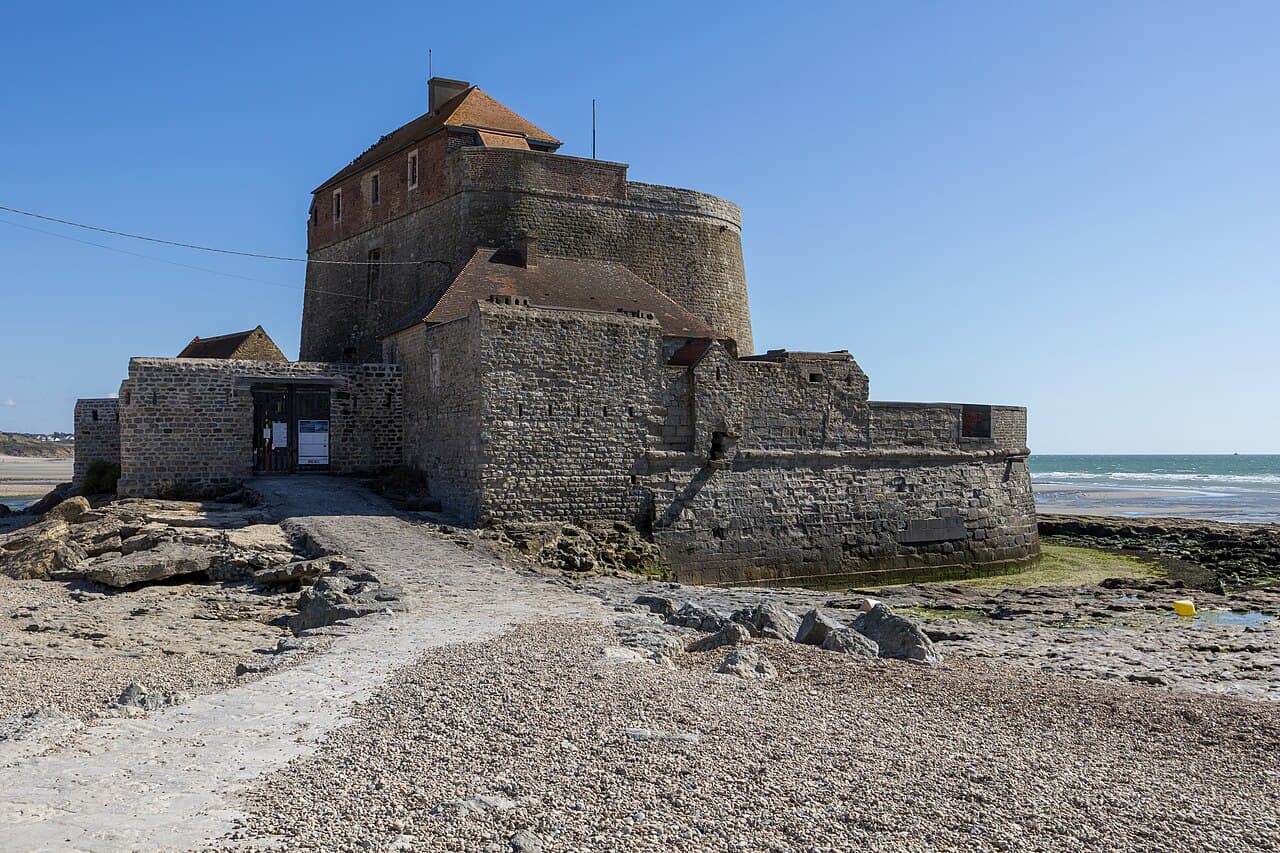
Fort Ambleteuse, also known locally as Fort d'Ambleteuse or Fort Vauban, is a historically significant coastal fortress situated in the town of Ambleteuse in the Pas de Calais department of northern France. Perched on a rocky outcrop along the beach north of the mouth of the river Slack, this fortification was constructed between 1682 and 1690 during the Renaissance period under the reign of Louis XIV. It is widely attributed to the renowned military engineer Sébastien Le Prestre de Vauban, whose expertise in fortification design shaped much of France's coastal defenses in the late 17th century.
Historical context and strategic importance
The fort was originally built to protect a newly established naval port behind it, also commissioned by Louis XIV in 1680. This port was intended to strengthen France's maritime capabilities on the English Channel. However, the port's strategic promise was short-lived; it was quickly abandoned due to rapid silting and challenging currents that made navigation and harbor access difficult. Consequently, Fort Ambleteuse lost its primary military purpose soon after its completion and fell into disuse for a time.
Restoration and military use during the Napoleonic era
The fort regained military significance in the late 18th and early 19th centuries. In 1798, during the period when Napoleon Bonaparte was contemplating an invasion of England, the estuary of the Slack River was fortified anew, and the port was rebuilt to support this strategic initiative. As part of these efforts, Fort Ambleteuse was restored and rearmed in 1803. The fort then served as a command post for French forces, notably housing General Claude-Juste-Alexandre Legrand while he led the 3rd Infantry Division stationed in nearby Saint-Omer until March 1805.
Later military roles and world war ii impact
During the mid-19th century, specifically in 1854, Fort Ambleteuse was used as a military camp by the army of Napoleon III, reflecting its continued strategic value in French military planning. In the 20th century, the fort again saw military use during World War II when it was occupied by German forces. The occupiers installed artillery batteries and constructed concrete pillboxes to strengthen coastal defenses against Allied invasion. However, the fort suffered damage in 1945 when two sea mines exploded against its seaward wall, causing significant structural harm.
Architectural features and design
Fort Ambleteuse exemplifies Vauban's fortification principles, characterized by its compact and robust design adapted to the coastal environment. The fort's position on a rocky promontory provided natural defensive advantages, augmented by thick stone walls designed to withstand artillery bombardment. The structure includes bastions and ramparts typical of 17th-century military architecture, allowing defenders to cover all approaches with overlapping fields of fire. The layout also facilitated the mounting of heavy coastal artillery to control access to the estuary and protect the naval port behind it.
Post-war restoration and current status
Following World War II, Fort Ambleteuse was abandoned and fell into a state of neglect. In recent decades, a dedicated association of volunteers has undertaken gradual restoration efforts to preserve the fort's historical fabric and architectural integrity. Today, the fort is well-preserved and functions as a cultural heritage site. It houses a small museum that offers visitors insights into its military history, architectural significance, and the broader historical context of coastal defense in France.
Visitor information and cultural significance
Visitors to Fort Ambleteuse can explore the fort's battlements, chambers, and museum exhibits that detail its construction, use, and restoration. The fort's scenic location on the coast of the Strait of Dover affords beautiful views and a tangible connection to France's maritime past. It stands as a testament to the ingenuity of Vauban and the evolving military strategies from the Renaissance through the Napoleonic era and into modern times.
Frequently asked questions
- How do I visit Fort Ambleteuse? The fort is open to the public with a small entrance fee. Visitors can explore the museum and the fort's historic structures during designated opening hours.
- What is the historical significance of Fort Ambleteuse? It served as a coastal defense fortification designed by Vauban to protect a naval port and later played roles in Napoleonic and World War II military operations.
- When was Fort Ambleteuse built? Construction took place between 1682 and 1690 during the reign of Louis XIV.
- Can I see original Vauban architectural features? Yes, many of Vauban's design elements, including bastions and ramparts, remain visible and have been preserved through restoration.
- Is the fort accessible for visitors with mobility issues? Due to its historic nature and coastal location, some areas may have limited accessibility. It is advisable to check in advance for specific accommodations.
- What are the best times to visit Fort Ambleteuse? Spring through early autumn offers pleasant weather and full access to the museum and outdoor areas.
- Are there other attractions near Fort Ambleteuse? The town of Ambleteuse and the surrounding Pas de Calais region offer additional historical sites, beaches, and cultural experiences.
Frequently asked questions (FAQ)
- How do I get to Fort Ambleteuse?
- Fort Ambleteuse is easily accessible by car and public transportation. If you're traveling by train, the nearest station is in Boulogne-sur-Mer, from where you can take a bus or taxi to the fort. There is also parking available nearby for those driving.
- What is the historical significance of Fort Ambleteuse?
- Fort Ambleteuse was built in the 17th century under the orders of King Louis XIV to protect the French coast from invasions. Its strategic location made it crucial during various conflicts, including the Napoleonic Wars. Today, it stands as a testament to France's military architecture and history.
- When was Fort Ambleteuse constructed?
- Construction of Fort Ambleteuse began in 1680 and was completed in 1690. The fort was designed by the architect Vauban, known for his military fortifications across France. Its design reflects the military engineering of the time, which aimed to enhance coastal defense.
- Can I visit Fort Ambleteuse year-round?
- Yes, Fort Ambleteuse is open to visitors throughout the year, though hours may vary by season. It’s advisable to check the official website for specific opening times and any seasonal events. This allows you to plan your visit accordingly.
- Why is Fort Ambleteuse considered an architectural marvel?
- Fort Ambleteuse showcases the iconic bastion style of military architecture designed by Vauban, featuring thick walls and strategic vantage points. The fort's design not only served a military purpose but also blends harmoniously with the surrounding landscape. Its construction techniques and layout are studied by architects and historians alike.
- Is it possible to take guided tours of Fort Ambleteuse?
- Yes, guided tours of Fort Ambleteuse are available, providing visitors with in-depth knowledge of its history and architecture. These tours often include access to areas not open to the general public. It's recommended to book in advance, especially during peak tourist seasons.
- What are the ticket prices for visiting Fort Ambleteuse?
- Ticket prices for Fort Ambleteuse are generally affordable, with discounts available for students and seniors. Children under a certain age may enter for free. Check the official website for the most current pricing and any special offers.
- What is the best time to visit Fort Ambleteuse?
- The best time to visit Fort Ambleteuse is during the spring and early autumn when the weather is mild and ideal for exploring. Summer months may attract larger crowds, while winter can be chilly. Planning your visit during shoulder seasons can enhance your experience.
- Are there any nearby attractions to Fort Ambleteuse?
- Yes, nearby attractions include the picturesque village of Ambleteuse and the scenic beaches along the Côte d'Opale. You can also explore nearby historical sites like the Nausicaá Aquarium and the town of Boulogne-sur-Mer. These sites offer additional cultural and recreational activities for visitors.
Photo gallery

Information
Address
Boulevard de la Liberté, Ambleteuse, France
Loading map...
Visitor reviews
No reviews yet. Been here? Write the first review and help other travelers!
Write the first reviewVisited this castle? Share your experience
Your review helps other travelers and adds first-hand knowledge to our encyclopedia.