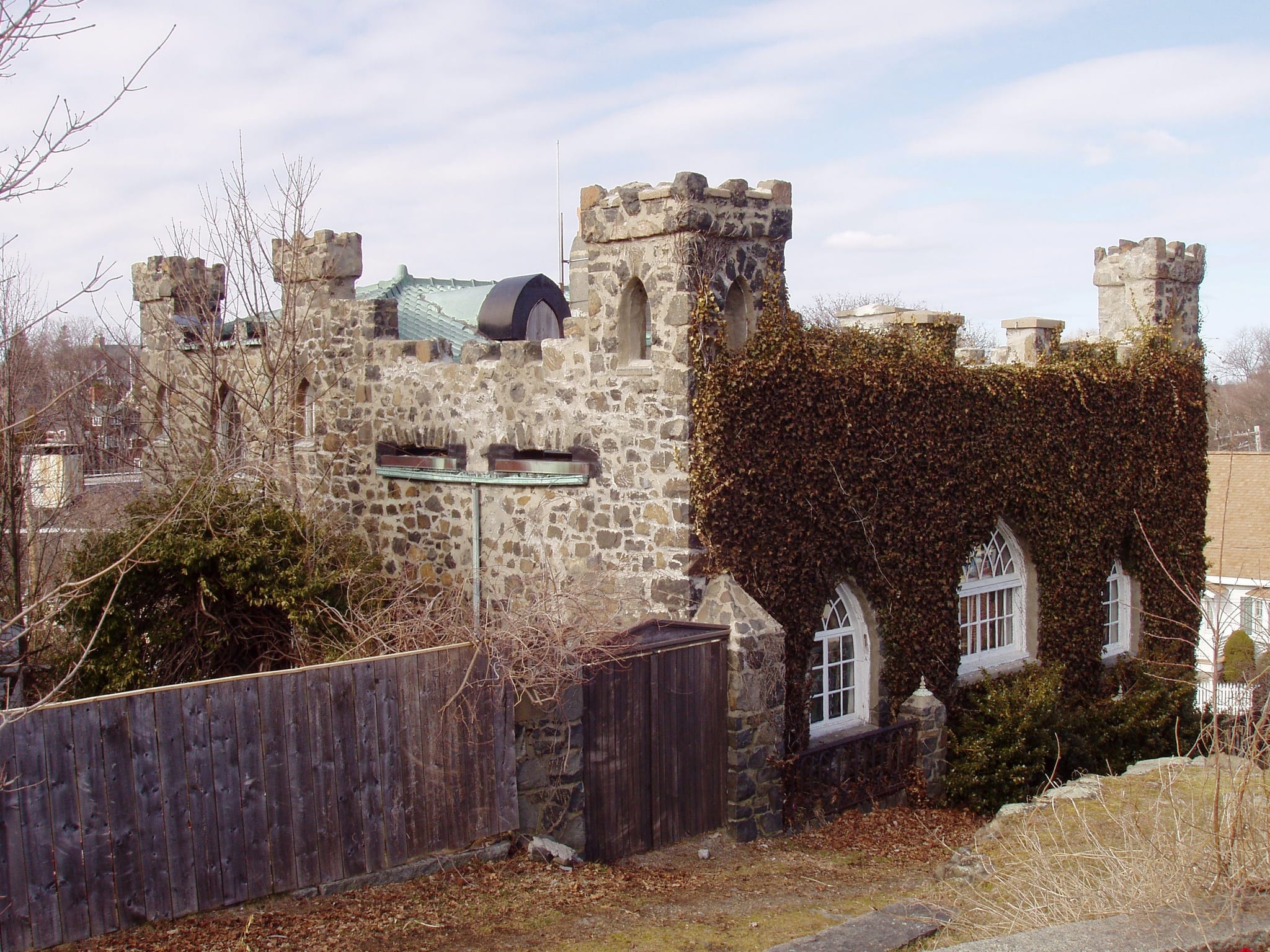
Hammond Castle Museum

Hammond castle museum in gloucester, massachusetts
Post-Renaissance (17th–18th c.)
Well Preserved

Hammond Castle Museum stands as a remarkable example of 20th-century architecture inspired by medieval European castles. Located in Gloucester, Massachusetts, this unique structure was built between 1926 and 1929 by the renowned inventor John Hays Hammond, Jr. Designed to resemble a medieval fortress, the castle was originally constructed to house Hammond's extensive collection of artifacts spanning from ancient Rome through the Renaissance.

The castle's design reflects a deliberate embrace of medieval architectural elements, including stone walls, towers, battlements, and arched doorways. Despite its historic appearance, Hammond Castle is a product of the post-medieval period, embodying the romantic neo-gothic style that was popular in early 20th-century revival architecture. The castle's location on the Atlantic shoreline provides stunning views that complement its historic ambiance.

Architectural features and design

The castle's architecture is characterized by its stone masonry construction, which gives it the appearance of an authentic medieval fortress. The building includes several towers and turrets, which contribute to its fortress-like silhouette. The interior is equally impressive, featuring medieval-style halls and chambers designed to showcase Hammond's collection.

Among the notable architectural features are the arched windows and doorways, heavy wooden doors, and intricate ironwork that adorns various parts of the castle. The castle grounds include beautifully maintained gardens and pathways that allow visitors to enjoy the scenic surroundings.

Historical context and significance

John Hays Hammond, Jr., an inventor and engineer, created Hammond Castle not only as a residence but also as a museum to preserve and display his vast collection of historical artifacts. The castle serves as a testament to Hammond's fascination with history and technology, blending his interests into a single architectural masterpiece.

The castle's construction during the late 1920s places it in the context of the American fascination with medieval revival architecture, which sought to evoke the grandeur and mystery of the Middle Ages. Unlike authentic medieval castles built for defense, Hammond Castle was intended as a private home and museum, emphasizing aesthetic and cultural values over military function.

Museum and visitor experience

Today, Hammond Castle Museum operates as a public museum offering a variety of tours and educational programs. Visitors can explore numerous rooms filled with artifacts from ancient Rome to the Renaissance, gaining insight into historical periods through the lens of Hammond's collection.

The castle also hosts special events and is available as a venue for weddings and other gatherings, accommodating up to 120 guests outdoors and 95 indoors. Its picturesque setting on the coast and unique architectural style make it a popular destination for both tourists and locals.

Educational programs cater to school groups and tour organizations, providing tailored experiences that highlight the castle's historical and architectural significance. The museum's commitment to preservation ensures that Hammond Castle remains a vibrant cultural landmark.

Location and accessibility

Hammond Castle Museum is situated at 80 Hesperus Avenue, Gloucester, Massachusetts, offering easy access to visitors traveling within the region. The castle's proximity to the Atlantic Ocean enhances its appeal, combining natural beauty with historical intrigue.

Visitors can enjoy scenic views of the Atlantic shoreline from various points within the castle grounds, making it an ideal spot for photography and leisurely exploration.

Frequently asked questions (FAQ)

What is the historical significance of Hammond Castle Museum?
Hammond Castle Museum was built by inventor John Hays Hammond, Jr. between 1926 and 1929 to house his collection of artifacts from ancient Rome through the Renaissance. It reflects the American fascination with medieval revival architecture and serves as both a residence and museum.
Can I visit Hammond Castle Museum year-round?
Hammond Castle Museum is typically open to visitors throughout the year, offering tours and educational programs. It is advisable to check the museum's official website for current opening hours and any seasonal variations.
Is Hammond Castle Museum suitable for weddings and events?
Yes, Hammond Castle Museum offers its grounds and indoor spaces for weddings and events. It can accommodate up to 120 guests outdoors and 95 guests indoors, making it a popular venue for special occasions.
What kind of artifacts are displayed at Hammond Castle Museum?
The museum showcases a wide range of artifacts collected by John Hays Hammond, Jr., including items from ancient Rome, the Middle Ages, and the Renaissance, reflecting a broad historical spectrum.
How do I get to Hammond Castle Museum?
Hammond Castle Museum is located at 80 Hesperus Avenue in Gloucester, Massachusetts. It is accessible by car and public transportation, with parking available nearby. Visitors can enjoy scenic views of the Atlantic Ocean from the castle grounds.

Information

Palace Castle

Current owner

Private owner

Address

80 Hesperus Avenue, Gloucester, MA 01930, United States

Loading map...

Visitor reviews

No reviews yet. Been here? Write the first review and help other travelers!

Write the first review

Visited this castle? Share your experience

Your review helps other travelers and adds first-hand knowledge to our encyclopedia.

Write a review

(5/5)

0/2000 characters

Your review will be visible after admin approval

Nearby castles

0.2 km

Hammond Castle Museum

Gloucester, United States Minor Outlying Islands

Hammond Castle Museum, located in Gloucester, Massachusetts, is a unique historic site that blends the worlds of innovation and medieval European architecture. The castle was the home and laboratory of John Hays Hammond Jr., a prolific inventor and pioneer in the field of remote control technology. Inspired by his mentor, Thomas Edison, Hammond Jr. amassed an impressive portfolio of patents, second only to Edison himself, and contributed significantly to early radio control systems, earning him the nickname "the father of remote control." Built between 1926 and 1929, Hammond Castle is a striking example of romantic neo-Gothic architecture in the United States. Unlike traditional medieval castles, Hammond Castle was designed as a personal residence and laboratory, incorporating authentic architectural elements salvaged from European castles and cathedrals. The castle's construction reflects Hammond's deep passion for European history and his desire to immerse himself in the ambiance of the medieval period. Architectural design and features The castle's design is characterized by its stone walls, turrets, arched windows, and a dramatic courtyard that evokes the spirit of a medieval fortress. Hammond incorporated numerous historic artifacts into the structure, including stained glass windows, carved woodwork, and ironwork, giving the castle an authentic and eclectic feel. The castle also features a great hall with a massive fireplace, a library filled with rare books, and a laboratory where Hammond conducted his experiments and developed his inventions. The great hall and living quarters The great hall serves as the centerpiece of the castle, with its soaring ceilings and intricate stonework. It was designed not only as a gathering space but also as a showcase for Hammond's extensive collection of medieval and Renaissance artifacts. The living quarters blend comfort with historic charm, featuring antique furnishings and period details that reflect Hammond's appreciation for European culture. The laboratory and technological innovations Hammond's laboratory was equipped with state-of-the-art technology for its time, allowing him to experiment with radio waves and remote control devices. This space highlights Hammond's dual identity as both a man of science and a lover of history, merging cutting-edge innovation with a medieval aesthetic. Historical context and significance John Hays Hammond Jr.'s life and work exemplify the spirit of early 20th-century American innovation. His relationship with Thomas Edison profoundly influenced his career, and his contributions to radio control technology paved the way for many modern applications, including unmanned vehicles and remote-operated devices. Hammond Castle stands as a testament to his legacy, preserving both his inventive genius and his passion for history. The castle also reflects the broader cultural trends of the 1920s and 1930s, when wealthy Americans often built grand homes inspired by European castles and manor houses. Hammond's approach was unique in its authentic incorporation of historic materials and its dual function as a home and scientific laboratory. Visiting hammond castle museum today Today, Hammond Castle Museum is open to the public, offering visitors a chance to explore its well-preserved romantic neo-Gothic architecture and learn about the fascinating life of John Hays Hammond Jr. The museum hosts guided tours that highlight the castle's architectural features, Hammond's inventions, and the eclectic collection of artifacts displayed throughout the property. The castle's location overlooking the Atlantic Ocean provides a picturesque setting, enhancing the visitor experience. Educational programs and special events further enrich the museum's offerings, making it a popular destination for history enthusiasts, architecture lovers, and those interested in the history of technology. Visitor information Hours: Typically open daily from 10:00 AM to 4:00 PM, with seasonal variations. Admission: Tickets are generally priced around $15 for adults, with discounts for children and seniors. Accessibility: The castle offers accommodations for visitors with mobility challenges, though some areas may have limited access due to the historic nature of the building. Nearby attractions: Gloucester's historic harbor, maritime museums, and coastal parks provide additional points of interest. Legacy and cultural impact Hammond Castle Museum not only preserves the memory of an important American inventor but also serves as a cultural bridge connecting technological progress with historical appreciation. Its unique combination of scientific innovation and medieval-inspired architecture makes it a singular landmark in the United States. The castle continues to inspire visitors with its story of creativity, curiosity, and the enduring allure of history brought to life through architecture. It stands as a monument to John Hays Hammond Jr.'s vision of blending the past and future in a single, captivating space.

Post-Renaissance (17th–18th c.)
Details
15.6 km
Herreshoff Castle — United States of America castle

Herreshoff Castle

Marblehead, United States of America

Herreshoff Castle, located in Marblehead, Massachusetts, is a distinctive example of early 20th-century castle-inspired architecture in the United States. Built as a private residence, this stone structure emulates the appearance of a small medieval fortress, showcasing the architectural fascination with Gothic revival and romantic castle motifs popular during that period. Architectural features and design The castle is constructed primarily of stone, lending it a robust and enduring presence reminiscent of authentic medieval European castles. Its most striking features include crenellations that run along the roofline and the tops of the four corner towers, which reinforce the fortress-like aesthetic. These towers provide vertical emphasis and contribute to the castle's silhouette, evoking the defensive structures typical of medieval keeps. The windows are styled in the Gothic architectural tradition, characterized by pointed arches which enhance the castle's historic ambiance. Complementing these are the Gothic-style wooden front doors, accessed by an external stone staircase that adds to the dramatic approach and medieval feel of the entrance. Historical context and usage Constructed in the early 1900s, Herreshoff Castle reflects the romantic revivalist trends of the era, when wealthy individuals in America sought to evoke the grandeur and mystique of European castles. While it has remained primarily a private residence, the castle has occasionally been operated as a bed and breakfast, allowing visitors to experience its unique atmosphere. Despite its castle-like appearance, Herreshoff Castle was never built for defensive purposes. Instead, it serves as an architectural statement and a residence, blending historic styles with early 20th-century building techniques. Location and accessibility Situated at 2 Crocker Park Lane, Marblehead, MA 01945, the castle is part of a residential neighborhood in this coastal New England town. Marblehead is known for its rich maritime history and scenic views, adding to the charm and appeal of the castle's setting. Herreshoff Castle remains a private property, and visitors are respectfully reminded to honor the privacy of its owners. Public access is generally not permitted, except during occasional special events or when the property operates as a bed and breakfast. Herreshoff Castle in the context of American castle architecture The castle is a notable example of the early 20th-century American trend of constructing castle-like homes that incorporate Gothic revival and romantic medieval elements. This movement was part of a broader fascination with European history and architecture, often expressed in private estates designed to evoke nobility and grandeur. Herreshoff Castle's combination of stone masonry, crenellated battlements, and Gothic windows places it within this eclectic architectural tradition, demonstrating how historical styles were adapted for modern residential use. Preservation and current status Today, Herreshoff Castle is well preserved and maintained as a private residence. Its distinctive architectural features remain intact, offering a glimpse into the romantic architectural ideals of the early 20th century. While not open to the public, the castle continues to be a landmark within Marblehead, admired for its unique design and historical significance.

Post-Renaissance (17th–18th c.)
Details
15.9 km

Carcassonne Castle

Marblehead, United States of America

Carcassonne Castle is a distinctive stone mansion located on the scenic Marblehead Neck in Massachusetts. Constructed in the 1930s, this waterfront residence draws inspiration from the grand French chateaux, showcasing a unique blend of architectural elegance and coastal charm. Although not a medieval fortress, its design evokes the romanticism and grandeur typically associated with historic castles, making it a notable example of early 20th-century revivalist architecture. Architectural style and features The castle's design is heavily influenced by chateau-esque architecture, characterized by its use of stone masonry that lends the structure a sense of permanence and solidity. The residence features steeply pitched roofs, ornate chimneys, and detailed stonework that mimic the stylistic elements of French chateaux. Large windows and terraces offer expansive views of the surrounding waterfront, integrating the natural beauty of Marblehead Neck with the castle's stately presence. Exterior details The exterior is marked by finely crafted stone walls with varied textures and colors, giving the mansion a rich, layered appearance. The use of turrets and battlement-like parapets adds to the castle-like silhouette, while the arched doorways and window surrounds reflect the influence of Gothic revival elements. The roofline is punctuated by decorative finials and steep gables, enhancing the vertical emphasis typical of the style. Interior elements Inside, the mansion features expansive great halls and fireplaces crafted from local stone, creating warm and inviting spaces. Wood paneling, intricate moldings, and leaded glass windows complement the exterior's historicist style, blending comfort with grandeur. The layout includes formal dining rooms, libraries, and private chambers designed for both entertaining and private retreat. Historical context and construction Built during the interwar period, Carcassonne Castle reflects the era's fascination with European architectural forms and the desire among affluent Americans to emulate the grandeur of Old World estates. The 1930s saw a resurgence in revivalist styles, and this mansion embodies that trend through its careful craftsmanship and stylistic choices. While it does not serve a defensive purpose, its castle-like appearance was intended to convey prestige and timeless elegance. Architectural influences The design draws heavily on the French Renaissance chateaux of the Loire Valley, incorporating elements such as steep roofs, decorative stonework, and symmetrical facades. This choice reflects a broader American architectural trend of the early 20th century, where wealthy patrons commissioned homes inspired by European aristocratic residences. Construction techniques The mansion was constructed using traditional masonry methods, with an emphasis on durability and aesthetic detail. Local stone was carefully selected to harmonize with the coastal environment, and skilled artisans were employed to execute the intricate stone carvings and finishes. The building process emphasized quality over speed, resulting in a residence that has remained well-preserved over nearly a century. Location and surroundings Situated on Ocean Avenue, the castle enjoys a prime waterfront location on Marblehead Neck, a narrow peninsula known for its natural beauty and historic homes. The setting provides stunning views of the Atlantic Ocean and nearby harbors, enhancing the residence's allure. The surrounding area is characterized by rocky shores, maritime vegetation, and a tranquil atmosphere, making Carcassonne Castle a serene private retreat. Marblehead Neck environment Marblehead Neck is renowned for its rugged coastline and maritime heritage, with a landscape shaped by glacial activity and oceanic influences. The castle's placement takes advantage of this dramatic setting, with terraces and windows oriented to maximize views and natural light. The area's historic homes and natural reserves contribute to a sense of exclusivity and preservation. Current status and privacy Carcassonne Castle remains a private residence, and as such, it is not open to the public. The owners maintain the property with respect to its architectural heritage and natural setting. Visitors are encouraged to appreciate the castle's exterior from a distance and to respect the privacy of its inhabitants. Cultural significance and legacy While Carcassonne Castle does not have the medieval history of its European namesake, it stands as a notable example of castle-inspired architecture in America. Its presence on Marblehead Neck contributes to the area's architectural diversity and offers insight into the lifestyle and aesthetic preferences of early 20th-century American elites. The mansion continues to be admired for its craftsmanship, design, and harmonious integration with the coastal landscape. Influence on local architecture The castle's distinctive style has influenced other waterfront homes in the region, encouraging the use of historicist architectural elements in modern residential design. It serves as a landmark within Marblehead Neck, symbolizing the area's connection to both maritime tradition and architectural heritage.

Post-Renaissance (17th–18th c.)
Details