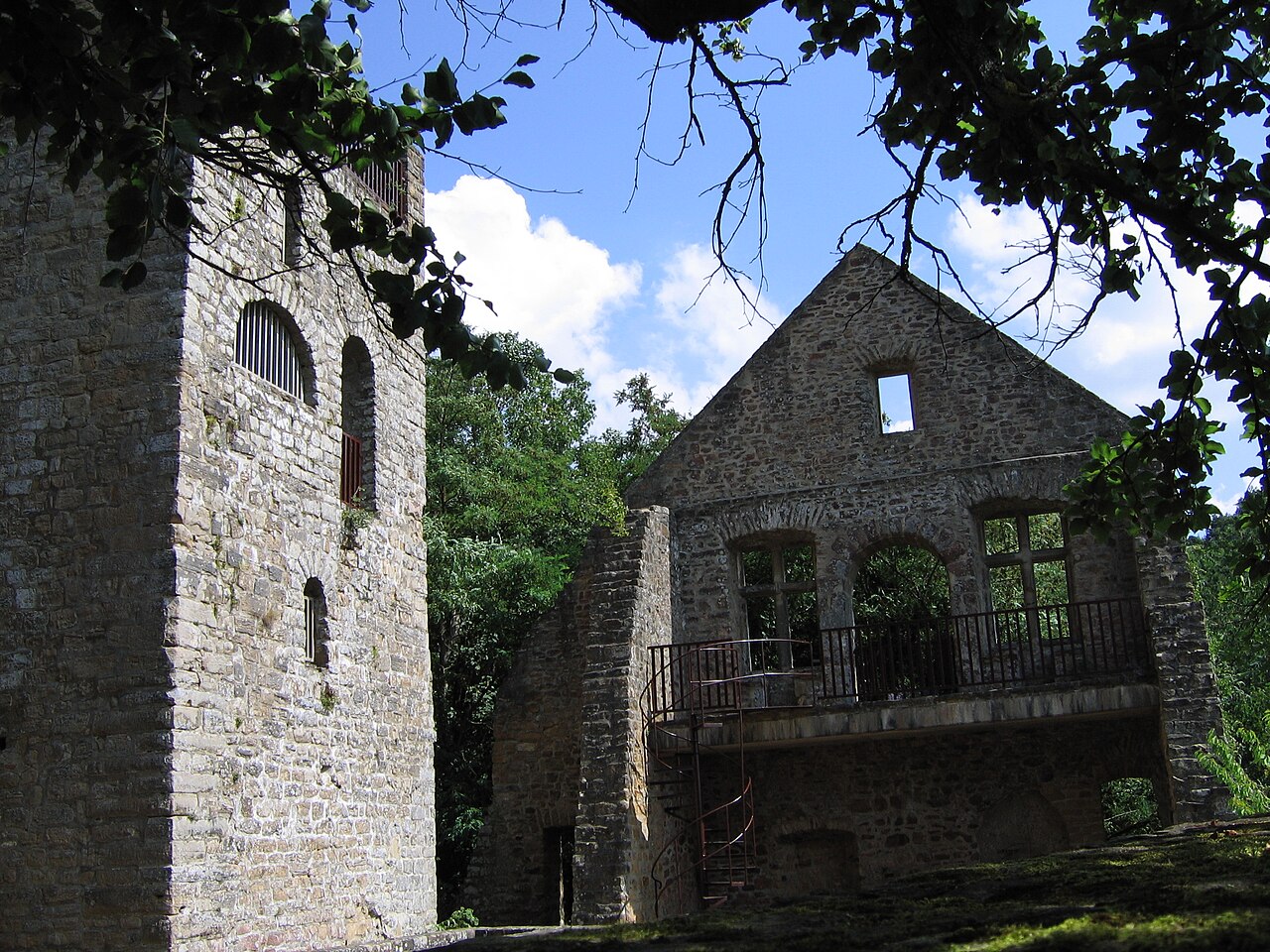
Bettingen Castle
Bettingen Castle, known locally as Burg Bettingen, is a high medieval hill castle situated on a prominent hill in the village of Bettingen, west of Bitburg in the Rhineland-Palatinate region of Germany. This strategic location provided natural defense advantages and oversight of the surrounding landscape, typical of castles built during the 13th century.
The origins and construction of Bettingen Castle
The castle was likely constructed by the noble family of Bettingen, who had close ties to the Lords of Falkenstein. This connection influenced both the castle's design and its role within the feudal network of the region. Bettingen Castle was designed as a fortified residence and defensive stronghold, featuring a ring wall that enclosed the core structures and was punctuated by four round corner towers. These towers enhanced the castle's defensive capabilities by providing overlapping fields of fire along the curtain walls.
The architectural style reflects typical high medieval military construction, emphasizing robust stone masonry and functional design over ornamentation. The castle's layout served both military and residential purposes, with a courtyard likely surrounded by living quarters, storage buildings, and possibly a chapel.
Bettingen Castle's role in local history and ownership changes
Bettingen Castle was not only a military installation but also the nucleus around which the village of Bettingen developed. The settlement grew as the castle provided protection and economic opportunities for inhabitants. Over time, the castle passed through different noble hands, most notably transferring through marriage to the Counts of Manderscheid-Blankenheim, a prominent noble family in the region. This transition reflects the common medieval practice of consolidating power and lands through dynastic alliances.
Destruction and decline in the late 18th century
In 1794, during the upheavals of the French Revolutionary Wars, Bettingen Castle was deliberately demolished by French forces. This act was part of a broader strategy to neutralize feudal strongholds that could be used against the revolutionary armies. Following its destruction, the castle fell into ruin and was gradually dismantled by local villagers who quarried its stones for building materials, a fate common to many castles rendered obsolete by changing military technology and political circumstances.
Current state and archaeological significance
Today, only two ruined sections of Bettingen Castle remain visible. The original castle site has been partially overbuilt with residential houses, limiting the extent of visible ruins. Despite this, the surviving fragments provide valuable insight into 13th-century castle construction and the feudal history of the Rhineland-Palatinate region. The remains include portions of the ring wall and at least one of the original round towers, which continue to attract interest from historians and castle enthusiasts.
Architectural features and defensive elements
The castle's four round corner towers were a significant defensive innovation during the high medieval period, allowing defenders to cover adjacent walls and reduce blind spots. The ring wall encircled the castle's inner courtyard, creating a secure perimeter. While detailed plans of Bettingen Castle are scarce, these features align with contemporary castle designs aimed at resisting siege warfare, including protection against battering rams and archery attacks.
The castle's influence on the village of Bettingen
The castle's presence was integral to the development of the village that shares its name. As a center of local power, it attracted craftsmen, farmers, and traders who settled nearby for protection and economic opportunity. This pattern of settlement is typical of medieval castles, which often served as focal points for emerging communities.
Preservation and public access
Given the castle's ruined condition and partial overbuilding, Bettingen Castle is not a major tourist attraction. However, the site remains accessible for visitors interested in medieval history and architecture. The ruins offer a tangible connection to the region's feudal past and the architectural practices of the high medieval period.
Frequently asked questions (FAQ)
- How do I get to Bettingen Castle?
- Bettingen Castle is located on Burgstrasse in Germany, easily accessible by car and public transportation. If you're driving, there are parking facilities nearby. For public transport, check local bus and train schedules for routes that service the area.
- What is the historical significance of Bettingen Castle?
- Bettingen Castle dates back to the medieval period and has played an important role in regional history. It was originally built as a defensive structure and has witnessed various historical events over the centuries. Today, it stands as a testament to the architectural styles and historical narratives of its time.
- When was Bettingen Castle built?
- Bettingen Castle was constructed in the early 14th century, showcasing the architectural styles prevalent during that era. Its enduring structure reflects the craftsmanship of the period and has been preserved to highlight its historical importance. Visitors can learn more about its construction and history during their visit.
- Can I take guided tours of Bettingen Castle?
- Yes, guided tours are available for visitors who wish to explore Bettingen Castle more thoroughly. These tours often provide in-depth information about the castle's history, architecture, and significance. Be sure to check the castle's official website for tour schedules and availability.
- Why is Bettingen Castle a popular tourist attraction?
- Bettingen Castle attracts visitors for its stunning architecture, rich history, and picturesque surroundings. The castle offers unique insights into medieval life and architecture, making it a fascinating destination for history enthusiasts. Additionally, its scenic location enhances the experience for visitors looking to enjoy nature and photography.
- Is it possible to host events at Bettingen Castle?
- Yes, Bettingen Castle offers facilities for hosting various events, including weddings and corporate gatherings. The enchanting backdrop of the castle adds a unique charm to any event. Interested parties should contact the castle management for more information on available spaces and booking procedures.
- What are the opening hours for Bettingen Castle?
- Bettingen Castle is typically open to visitors from 10 AM to 5 PM, but hours may vary seasonally. It's advisable to check the official website for the most up-to-date information on opening hours before planning your visit. This ensures you make the most of your time at the castle.
- What are the ticket prices for visiting Bettingen Castle?
- Ticket prices for Bettingen Castle are generally affordable, with discounts available for students and seniors. Children under a certain age may enter for free or at a reduced rate. Always check the castle's official website for the latest pricing information and any special offers that may be available.
- What is the best time to visit Bettingen Castle?
- The best time to visit Bettingen Castle is during the spring and early autumn when the weather is mild and pleasant. These seasons also offer beautiful scenery, making your visit even more enjoyable. Additionally, visiting during weekdays can help you avoid larger crowds and enhance your experience.
- Is Bettingen Castle accessible for visitors with disabilities?
- Yes, Bettingen Castle strives to be accessible to all visitors, including those with disabilities. There are adapted facilities and paths to ensure everyone can enjoy the castle and its grounds. It is recommended to contact the castle in advance to inquire about specific accessibility options and accommodations.
Loading map...
Visitor reviews
No reviews yet. Been here? Write the first review and help other travelers!
Write the first reviewVisited this castle? Share your experience
Your review helps other travelers and adds first-hand knowledge to our encyclopedia.