Halych Castle
Halych Castle is a prominent hill castle located in the town of Halych, Ukraine, overlooking the right bank of the Dniester River. Its origins trace back to the early 12th century, with the first recorded mention in 1119 describing a wooden fortress established by the East Slavic rulers of Galicia. This initial stronghold occupied a strategic high ground, which was essential for controlling the surrounding region and river routes.
Over the centuries, the castle evolved from its wooden beginnings into a formidable stone fortress. During the 12th to 14th centuries, it served as the principal seat of power for the princes of Halych, playing a crucial role in the political and military landscape of medieval Galicia. The castle's location on a hill provided natural defensive advantages, which were enhanced by successive architectural developments.
Medieval origins and early development
The earliest phase of Halych Castle was characterized by wooden fortifications typical of early medieval Slavic defensive structures. By the mid-14th century, following the incorporation of Galicia and Western Volhynia into the Kingdom of Poland, the fortress underwent significant reconstruction in stone. This phase of rebuilding is believed to have been initiated either under King Casimir III the Great or Prince Lubart of Volhynia, marking a transition to more durable and imposing fortifications.
This stone reconstruction expanded the castle's footprint and fortifications, transforming it into one of the largest strongholds in the region by the late 14th and early 15th centuries. The castle was garrisoned by over a thousand soldiers and equipped with early firearms, including cannons, reflecting advancements in military technology and the castle's strategic importance.
Political shifts and military engagements
In 1436, ownership of Halych Castle shifted to the Moldavian ruler Iliaș I after he pledged loyalty to the Polish crown. The castle's strategic position made it a focal point in regional conflicts, including a notable siege in 1509 by Moldavian forces under Bogdan III the One-Eyed, which the fortress successfully withstood.
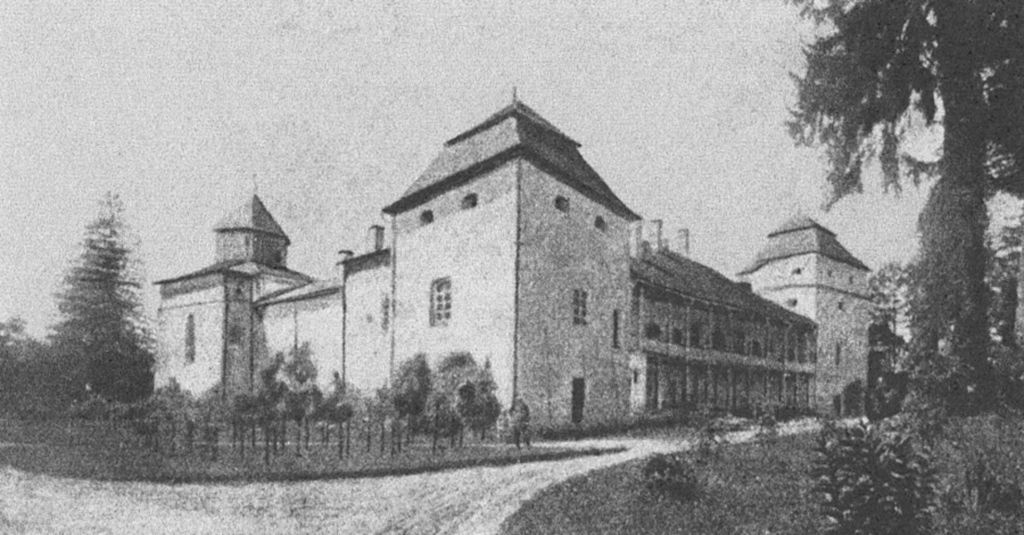
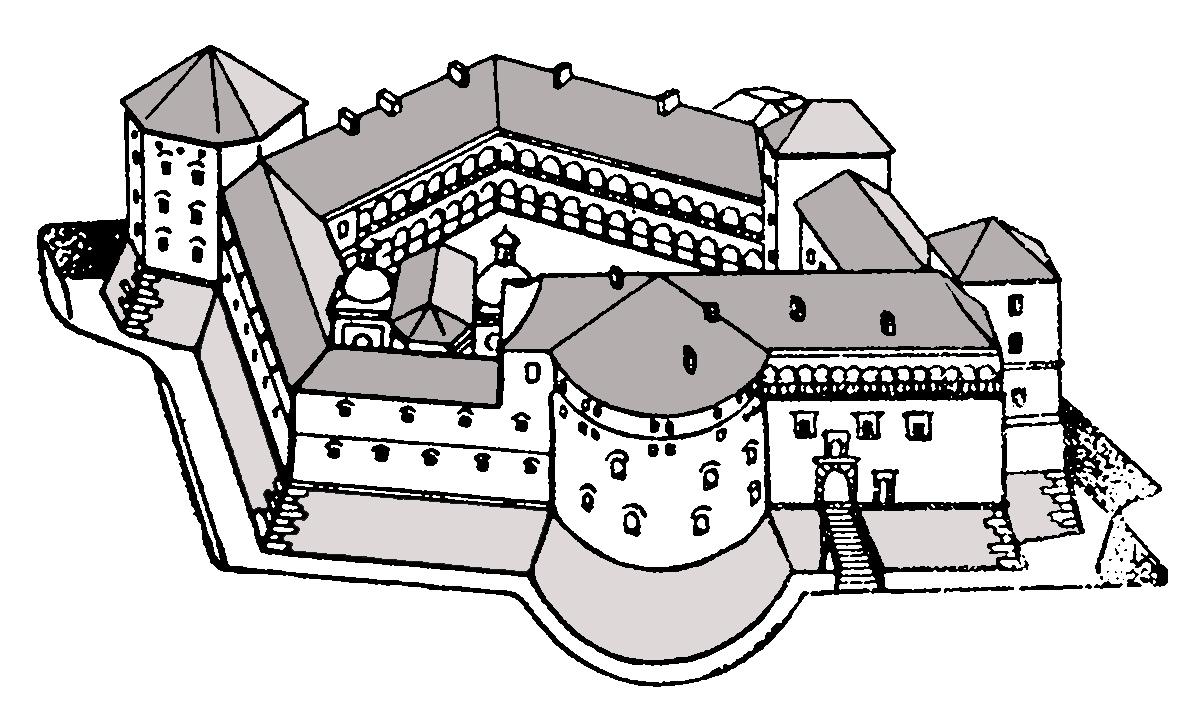
Renovations around 1520 by the Ruthenian voivode Otto Chodecki underscored the castle's ongoing military significance. The late 16th century saw the fortress severely damaged by fire but subsequently rebuilt using sandstone and brick. The redesign introduced a complex layout featuring two terraces and a roughly triangular shape fortified by multiple towers, gates, earthen embankments, and a deep moat.
Fortifications and architectural features
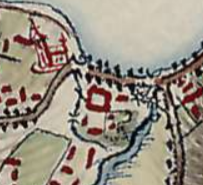
The late 16th-century reconstruction reflected contemporary military architectural trends, emphasizing layered defense systems. The castle's irregular triangular plan spanned approximately 1.7 hectares, with an upper terrace housing the main castle structures and a lower terrace enclosing a courtyard.
Defensive features included five towers, primarily constructed of sandstone and brick, with at least three masonry corner towers providing strong points of defense. The fortress had three controlled gates and was surrounded by earthen embankments and a deep moat, enhancing its resistance to siege warfare.
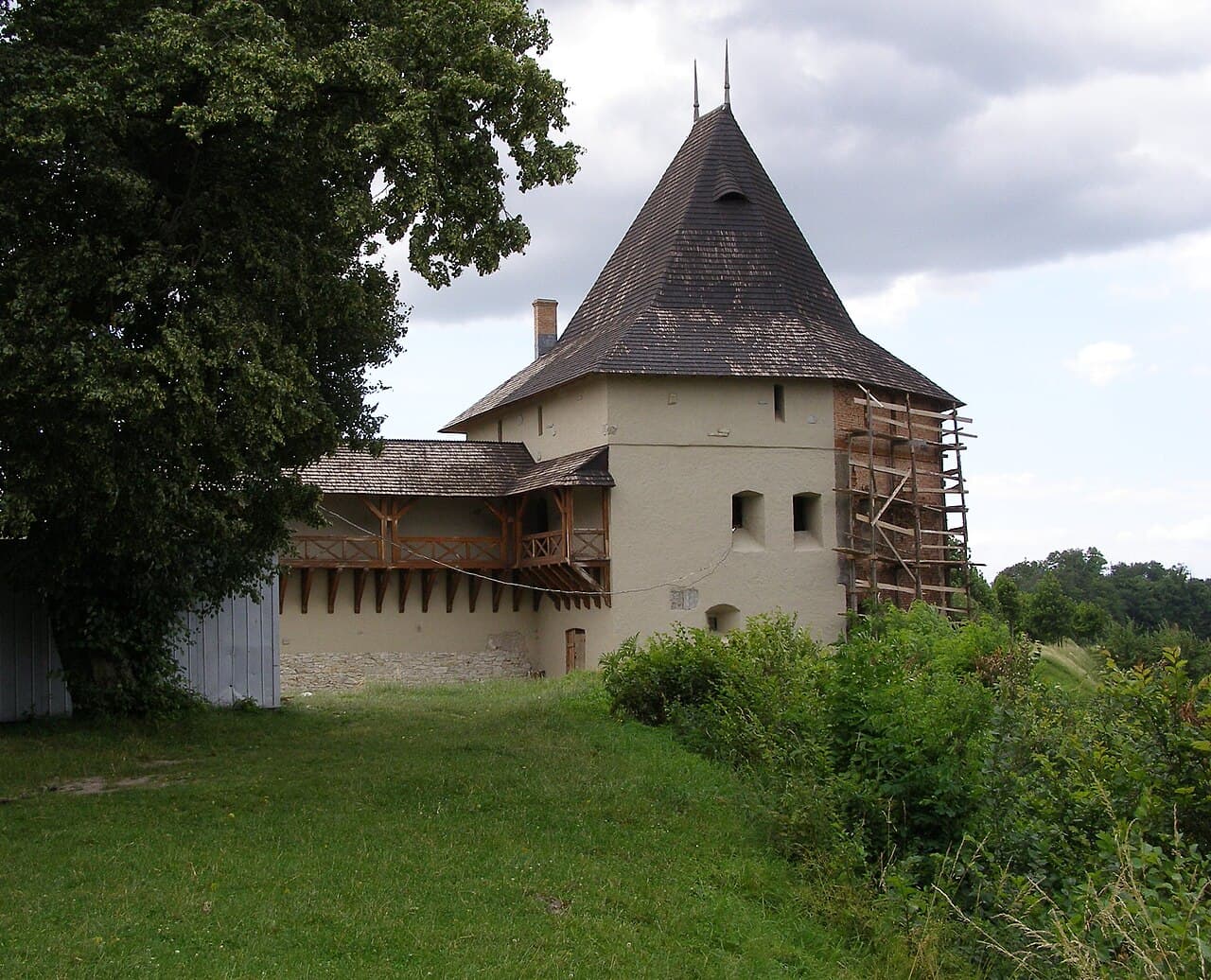
One of the most significant surviving structures is the gate tower, excavated in 2022. Measuring about 22 by 16 meters with walls up to 3.5 meters thick, it contained multiple firing openings and several rooms arranged over multiple levels. The tower also featured underground passageways that allowed secret exits beyond the castle's defenses.
Within the castle, vaulted basement chambers served various functions such as storage and shelter. A small turret connected to a masonry tower led directly to a castle church, which housed a sculpted altar made from white alabaster, indicating the presence of religious practices within the fortress.
Sieges, ownership changes, and decline
Throughout the late 16th and early 17th centuries, Halych Castle faced multiple attacks from Ottoman and Tatar forces, notably in 1594, 1612, and 1624. Despite these assaults, the fortress remained resilient, serving as a key defensive bastion in the volatile borderlands.
During the Khmelnytsky Uprising in 1649, the castle was captured by Cossack forces under Bohdan Khmelnytsky, highlighting the turbulent political environment of the region. Repairs funded by the Polish starosta Andrzej Potocki and overseen by Italian engineer Franciszek Corazzini transformed the castle into a triangular fortress with living quarters, administrative offices, courtrooms, and a chapel dedicated to St. Catherine.
In 1676, during the Polish-Turkish War, the fortress was surrendered without resistance to a Turkish army led by Ibrahim Pasha of Damascus. This event led to the execution of the fortress commander Łachowski by King John III Sobieski for his failure. The subsequent Ottoman occupation caused further damage, accelerating the castle's decline.
The construction of a new fortress in Stanisławów diminished Halych Castle's strategic importance. By 1767, parts of the castle walls were dismantled by order of the local governor, with stones repurposed for town construction projects. The ruins remained visible but gradually fell into neglect.
Archaeological discoveries and preservation efforts
Modern archaeological excavations began in 2022, focusing on the gate tower and other key defensive structures. These investigations uncovered structural remains and numerous artifacts, including bronze rings, coins, glass shards, decorated stove tiles, and ancient graffiti dating back to the 12th and 13th centuries. These findings provide valuable insight into the castle's long history and the daily lives of its inhabitants.
Restoration efforts currently aim to preserve the chapel of St. Catherine, reconstruct parts of the southwestern tower, and rebuild connecting walls to restore the castle's historic silhouette. Halych Castle is recognized as a national cultural heritage site in Ukraine, reflecting its significant historical and architectural value.
Today, visitors to Halych Castle can explore the remains of its defensive walls, towers, and gatehouse, gaining a tangible connection to the medieval past of Galicia and the complex history of this borderland fortress.
Frequently asked questions (FAQ)
- How do I get to Halych Castle?
- Halych Castle is located in the town of Halych in Ivano-Frankivsk Oblast, Ukraine. Visitors can reach it by car or local transport from nearby cities such as Ivano-Frankivsk.
- What is the historical significance of Halych Castle?
- Halych Castle was a major seat of power for the princes of Galicia and played a key role in regional defense from the 12th to 17th centuries. It witnessed numerous sieges and ownership changes reflecting the turbulent history of the borderlands.
- Can I visit the gate tower excavations?
- The gate tower excavations are part of ongoing archaeological work. Access may be limited, but some areas might be open to visitors during special tours or events organized by the local heritage authorities.
- When was the castle built?
- The original wooden fortress at Halych Castle dates back to the early 12th century, with significant stone reconstructions occurring in the 14th century and later.
- Is the castle accessible for visitors with mobility issues?
- Due to the castle's hilltop location and ruined condition, accessibility may be limited for visitors with mobility challenges. It is advisable to check with local tourist information for the latest accessibility options.
Photo gallery

Photo by Roman Zacharij•Public domain
Information
Sources & official resources
Verify the information above using these authoritative references.
Loading map...
Visitor reviews
No reviews yet. Been here? Write the first review and help other travelers!
Write the first reviewVisited this castle? Share your experience
Your review helps other travelers and adds first-hand knowledge to our encyclopedia.