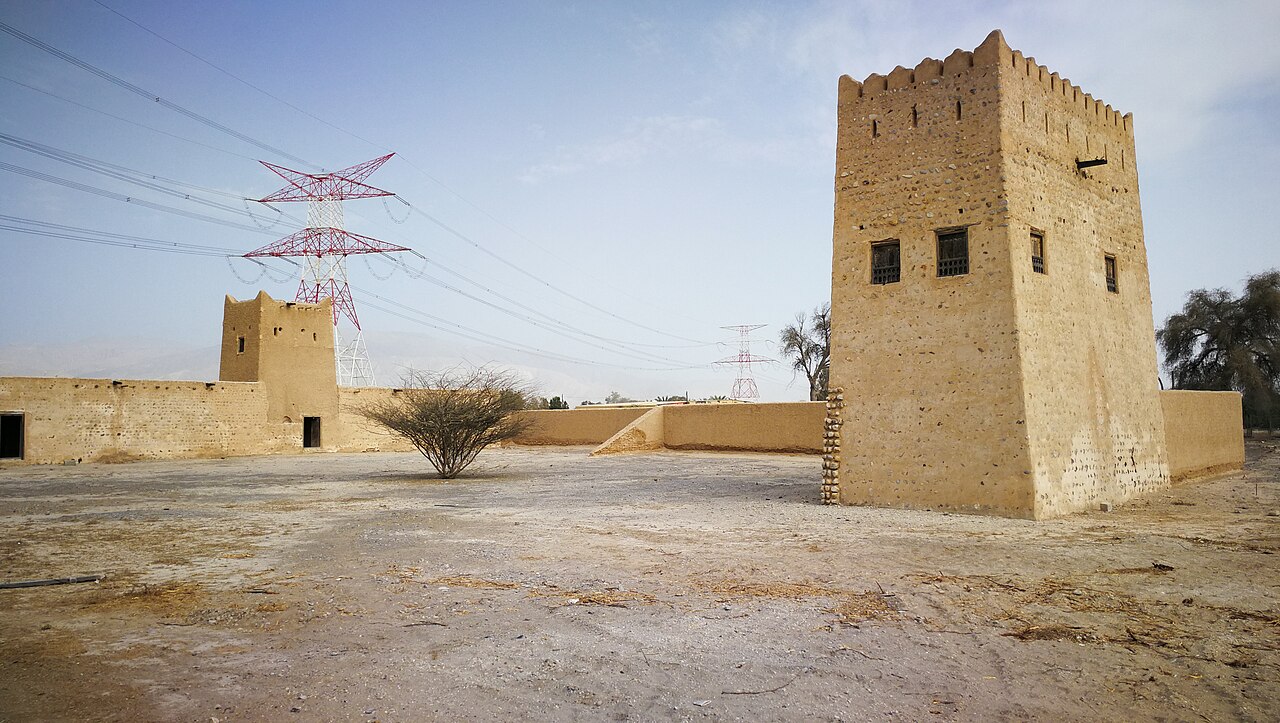
Habhab Towers
The Habhab Towers are a pair of historic defensive structures located near the village of Habhab, sometimes spelled Habsab, in the emirate of Fujairah within the United Arab Emirates. These towers stand prominently on the hills just south of the town of Khatt, which lies in the neighboring emirate of Ras Al Khaimah. The towers, together with the nearby Habhab Fort, formed a small defensive network designed to protect the local village oasis and its inhabitants.
Historical context and purpose
While detailed historical records about the Habhab Towers are scarce, architectural and regional evidence suggests that they were constructed in the late 19th or early 20th century. This period was marked by tribal conflicts and the need to safeguard vital resources such as water and agricultural lands in the harsh desert environment. The towers likely served as watchpoints and defensive posts to monitor approaching threats and provide refuge during attacks.
The towers' proximity to the Habhab Fort, situated at the foot of the hills, indicates a coordinated defense strategy. The fort itself functioned as a stronghold for local leaders and a center for controlling the surrounding territory. Together, these structures helped secure the oasis village, which was an essential stopover and settlement in the region.
Architectural features and construction
The Habhab Towers are notable for their simple yet functional design typical of defensive architecture in this part of the Arabian Peninsula. Built primarily from local stone and mudbrick materials, the towers rise several stories high, providing wide vantage points over the surrounding landscape. Their thick walls would have offered protection against small arms fire and projectiles.
Each tower features narrow slit windows or embrasures, designed for surveillance and the use of firearms or arrows while minimizing exposure to attackers. The towers' locations on elevated terrain further enhanced their defensive capabilities by allowing early detection of any approaching forces.
The Habhab Fort complements the towers with its larger footprint and more complex layout, including defensive walls, internal chambers, and possibly storage areas for provisions and weapons. Although currently undergoing restoration, the fort retains much of its original form, illustrating traditional fortification methods used in the region during the transitional period between tribal fortresses and modern military architecture.
Current condition and visitor experience
Today, the Habhab Towers stand in an unrestored condition, which some visitors find appealing as it conveys a sense of authenticity and historical atmosphere. The towers are accessible to the public, allowing visitors to explore their rugged interiors and appreciate the strategic vantage points they offer over the surrounding hills and oasis.
The nearby Habhab Fort is currently undergoing restoration efforts. While the fort is accessible, the ongoing work may limit some areas. The restoration aims to preserve the fort's structural integrity and potentially enhance its role as a cultural heritage site.
Both the towers and the fort provide insight into the defensive architecture of the region during a period of significant social and political change in the Arabian Peninsula. They offer a tangible connection to the traditional ways communities protected vital resources and maintained control over their territories.
Geographical and cultural significance
Located near the border between the emirates of Fujairah and Ras Al Khaimah, the Habhab Towers and fort occupy a strategic position overlooking the fertile oasis of the village of Habhab. This location was crucial for controlling trade routes and agricultural resources in the region.
The structures reflect the historical tribal dynamics and the need for fortified settlements in an area characterized by rugged terrain and limited water sources. They are part of the broader cultural heritage of the UAE, representing the architectural responses to environmental and social challenges faced by communities before the country's modernization.
Access and visiting information
The Habhab Towers and Habhab Fort are open to visitors without an entrance fee. Their remote location means visitors should plan transportation accordingly, often requiring a vehicle capable of navigating rural roads. The towers' unrestored state allows for an authentic exploration, though visitors should exercise caution due to uneven surfaces and structural fragility.
Visiting these sites offers a unique opportunity to experience early 20th-century defensive architecture in the UAE, contrasting with the modern urban developments found elsewhere in the country. They are a valuable destination for those interested in history, architecture, and the cultural landscape of the Arabian Peninsula.
Frequently asked questions (FAQ)
- How do I get to Habhab Towers and Fort?
- Habhab Towers and Fort are located near the village of Habhab in Fujairah, UAE. Visitors typically reach the site by car, as public transportation options are limited. It is advisable to use a vehicle suitable for rural and hilly terrain.
- What is the historical significance of Habhab Towers?
- Habhab Towers were built in the late 19th or early 20th century as defensive structures to protect the village oasis. They provide insight into traditional fortification methods used in the region before modern developments.
- Can I visit the Habhab Fort during restoration?
- Yes, Habhab Fort is currently undergoing restoration, but visitors can still access parts of the fort. However, some areas may be restricted for safety and preservation reasons.
- Are the Habhab Towers and Fort free to visit?
- Yes, both Habhab Towers and Habhab Fort can be visited free of charge. There are no entrance fees, making them accessible to all visitors interested in history and architecture.
- What architectural features characterize Habhab Towers?
- The towers feature thick stone and mudbrick walls, narrow slit windows for defense, and elevated positions on hills for surveillance. These elements reflect practical defensive architecture of the late 19th and early 20th centuries in the Arabian Peninsula.
Information
Loading map...
Visitor reviews
No reviews yet. Been here? Write the first review and help other travelers!
Write the first reviewVisited this castle? Share your experience
Your review helps other travelers and adds first-hand knowledge to our encyclopedia.