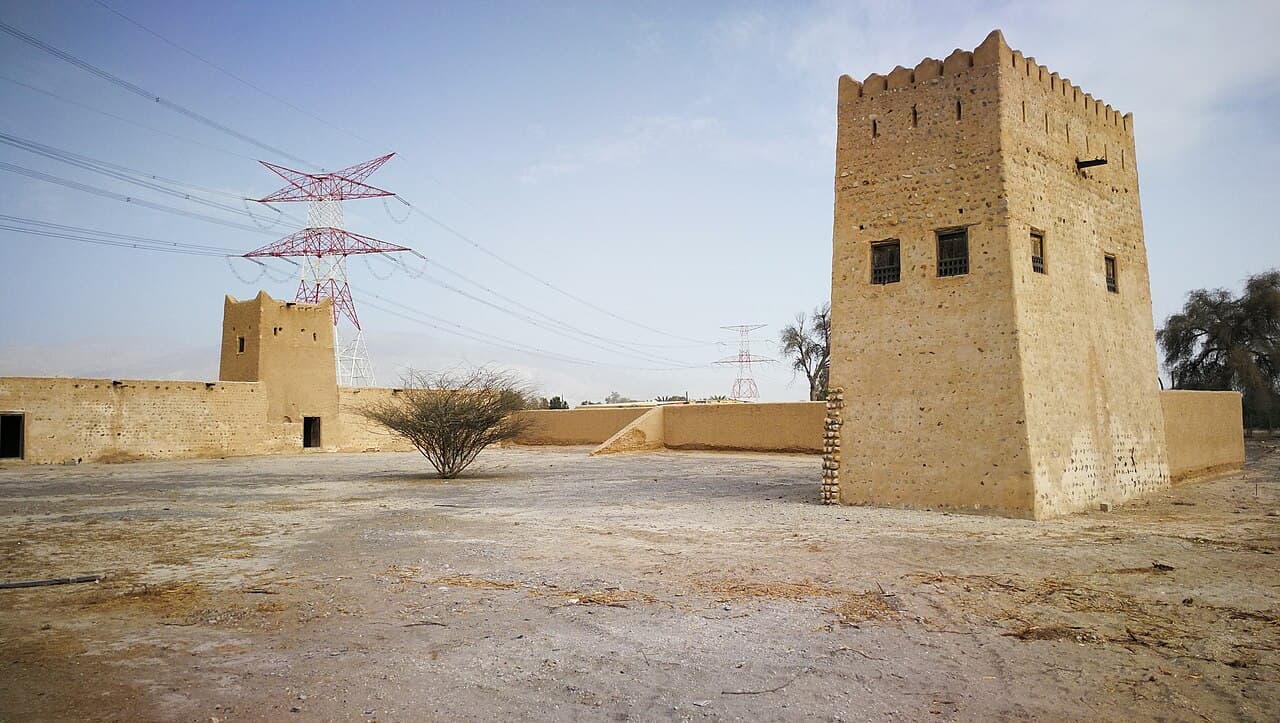
Al Fulayyah — United Arab Emirates castle

Al Fulayyah

Al Falayah fort in Ras Al Khaimah, United Arab Emirates
Post-Renaissance (17th–18th c.)
Partially Preserved

Al Falayah fort is a notable 18th-century bastioned fortress located in Ras Al Khaimah, one of the emirates of the United Arab Emirates. This fort served an important role historically as the summer residence and rest house of the ruling Al Qasimi family, a powerful dynasty that governed the area during the post-Renaissance period. Its strategic position and architectural features reflect the military and residential needs of the time.

Historical context and significance

The Al Qasimi family were influential rulers in the region, known for their naval power and control over parts of the Arabian Gulf. Al Falayah fort was constructed during the 18th century when the Al Qasimi sought to establish fortified residences that could serve both defensive and domestic purposes. The fort's use as a summer retreat highlights its role beyond mere military defense, providing a place of respite from the harsh climatic conditions of the region.

Architectural features of Al Falayah fort

The fort is classified as a bastioned fortress, a style characterized by angular bastions projecting from the main walls, designed to provide overlapping fields of fire and improved defense against attackers. The bastions at Al Falayah would have enabled defenders to cover the approaches to the fort effectively, reflecting military architectural trends of the post-Renaissance period adapted to local needs.

The structure is built primarily from local materials, including stone and coral, bonded with traditional mortar. The walls are thick and robust, designed to withstand both artillery and the harsh desert environment. The fort includes typical features such as high defensive walls, watchtowers, and a which would have served as a communal space and possibly for military drills or gatherings.

Layout and internal structures

Inside, the fort contains several chambers used for residential and administrative purposes. These rooms would have accommodated the ruling family and their retinue during their stays. The design balances defensive strength with livability, incorporating ventilation and shaded areas to cope with the hot climate.

The role of Al Falayah fort in regional history

Al Falayah fort played a role in the defense network of the Al Qasimi territories, helping to secure Ras Al Khaimah against rival tribes and colonial powers. Its position allowed control over nearby routes and access points, contributing to the stability and governance of the emirate.

Though not as large or famous as some other forts in the UAE, Al Falayah remains an important cultural and historical landmark. It provides insight into the architectural adaptations and political landscape of the Arabian Peninsula during the 18th century.

Preservation and current status

Today, Al Falayah fort is partially preserved and recognized for its heritage value. Efforts have been made to maintain its structure and promote awareness of its historical significance. Visitors to Ras Al Khaimah can view the fort as part of the region's rich tapestry of forts and castles that illustrate the emirate's past.

While access may be limited compared to more prominent tourist sites, Al Falayah fort remains a point of interest for those studying the military architecture and ruling dynasties of the UAE.

Frequently asked questions (FAQ)

What is the historical significance of Al Falayah fort?
Al Falayah fort served as the summer residence and rest house of the ruling Al Qasimi family in the 18th century, reflecting their power and regional influence in Ras Al Khaimah.
Can visitors access Al Falayah fort?
The fort is partially preserved and can be viewed by visitors, though access may be limited compared to more prominent tourist sites in Ras Al Khaimah.
What architectural style characterizes Al Falayah fort?
Al Falayah fort is a bastioned fortress typical of the post-Renaissance period, featuring angular bastions designed for improved defense and overlapping fields of fire.
When was Al Falayah fort built?
Al Falayah fort was constructed in the 18th century during the post-Renaissance period, serving both defensive and residential purposes.
Where is Al Falayah fort located?
The fort is located in Ras Al Khaimah, one of the emirates in the United Arab Emirates, historically controlled by the Al Qasimi family.

Photo gallery

Al Fulayyah
Click to view

Photo by Ganeshvel2•CC BY-SA 4.0

1 photo • Click any image to view in full screen

Information

Bastioned Fortress

Loading map...

Visitor reviews

No reviews yet. Been here? Write the first review and help other travelers!

Write the first review

Visited this castle? Share your experience

Your review helps other travelers and adds first-hand knowledge to our encyclopedia.

Write a review

(5/5)

0/2000 characters

Your review will be visible after admin approval

Nearby castles

6.7 km

Dahan Tower

Dahan, United Arab Emirates

Dahan Tower is a historic coastal watchtower located in the Dahan suburb of the city of Ras Al Khaimah, within the emirate of the same name in the United Arab Emirates. This square-shaped tower stands approximately 50 meters from the shoreline, highlighting its strategic position along the coast. Historical context and purpose Constructed in the 20th century, Dahan Tower was likely built as a defensive structure to protect the local settlement of Dahan from maritime threats, particularly pirate attacks that were common in the region during that era. Its location near the coast also allowed it to serve as a lookout point to monitor the activities of pearl divers, who were an important part of the local economy before the discovery of oil. Architectural features The tower is characterized by its simple square plan and robust construction, typical of many coastal watchtowers designed for surveillance and defense. Its walls are built to withstand harsh seaside weather and potential attacks. Unlike larger fortifications, Dahan Tower is relatively modest in scale, reflecting its specific function as a lookout rather than a full fortress. Location and surroundings Situated just a few meters from the sea, the tower's proximity to the water was essential for its role in maritime observation. However, the immediate area around the tower is currently enclosed and reportedly used as a refuse site, which limits public access and detracts from the tower's historical significance. Current condition and accessibility Today, Dahan Tower is not open to visitors due to its location within a walled-off area. The lack of preservation efforts and the surrounding environment have left the tower in a neglected state, which is unfortunate given its cultural and historical value. There is limited documented information about the tower's detailed history or any restoration initiatives. Significance in regional heritage Despite its modest size and current condition, Dahan Tower represents an important aspect of the coastal defense system historically used in the Ras Al Khaimah emirate. It provides insight into the defensive strategies employed to protect settlements and economic activities such as pearling along the Arabian Gulf coast during the early 20th century. Preservation challenges The tower's current state reflects broader challenges faced by many small historic structures in rapidly developing regions. Urban expansion and lack of dedicated conservation efforts contribute to the risk of losing such cultural landmarks. Increased awareness and potential restoration could help preserve Dahan Tower as a valuable piece of the UAE's maritime heritage.

Contemporary (20th–21st c.)
Details
7 km

Ras Al Khaimah Fort

Ras Al Khaimah, United Arab Emirates

Ras Al Khaimah Fort is a prominent historical fortress located in the heart of the city of Ras Al Khaimah, within the emirate of the same name in the United Arab Emirates. This fort stands as a significant cultural landmark, reflecting the region's turbulent history and strategic importance along the Arabian Gulf coast. The site of Ras Al Khaimah has hosted fortifications for centuries, with an earlier fort recorded approximately 700 meters north of the current structure. Historical records indicate that this original fort endured multiple attacks, notably its destruction by the Portuguese in 1621 and again by the British in 1820. These events underscore the area's contested position amid colonial and regional power struggles during the early modern period. Construction and architectural features The present Ras Al Khaimah Fort was constructed between the two major British military campaigns of 1809 and 1819, marking a strategic effort to strengthen local defenses outside the old town. The fort's design is characterized by a square ground plan with two square towers positioned on opposite corners. Early British maps depict it as a square fortification reinforced with three round towers and a larger main tower, indicative of its defensive role against seaborne and land-based threats. Over time, the fort underwent expansions and modifications to enhance its fortifications. Its robust walls and towers were designed to provide vantage points for surveillance and defense, utilizing traditional Arabian Gulf military architecture adapted to withstand artillery and small arms fire prevalent in the 19th century. Historical significance and usage Ras Al Khaimah Fort served as the residence of the ruling Al Qasimi family until 1964, highlighting its role not only as a military stronghold but also as a center of political power within the emirate. The Al Qasimi dynasty was influential in the region, often involved in maritime trade and conflicts that shaped the history of the Arabian Peninsula. Following its period as a royal residence, the fort was repurposed as a police headquarters and prison, reflecting changing administrative needs in the mid-20th century. This adaptive reuse preserved the structure's relevance within the evolving urban fabric of Ras Al Khaimah city. Conversion into a museum and cultural preservation In 1987, Ras Al Khaimah Fort was transformed into the National Museum of Ras Al Khaimah, marking a shift towards cultural preservation and public education. The museum showcases artifacts and exhibits related to the emirate's history, archaeology, and traditional life, providing visitors with insights into the region's heritage. The museum's location within the fort allows visitors to experience the architectural features firsthand, including the fortified walls, towers, and internal courtyards. This setting enhances the interpretive value of the exhibits by situating them within a genuine historical context. Visiting ras al khaimah fort today Today, Ras Al Khaimah Fort is accessible to the public for a fee, inviting tourists and locals alike to explore its well-preserved defensive structures and museum collections. The fort's central location next to Al Hisn Road makes it a convenient destination for those interested in the history and architecture of the Arabian Gulf region. Visitors can observe the fort's square towers, battlements, and strategic positioning, which collectively illustrate the military architecture of the early 19th century in this part of the world. The fort remains a significant symbol of Ras Al Khaimah's historical resilience and cultural identity.

Post-Renaissance (17th–18th c.)
Details
13.9 km

Khatt Towers

Khatt, United Arab Emirates

The Khatt towers are a group of three circular defense towers located in the small town of Khatt, situated within the emirate of Ras Al Khaimah in the United Arab Emirates. These towers date back to the 19th century and likely formed part of a defensive system to protect the local oasis and therapeutic hot springs, which have been valued in the region for their reputed healing properties. Each tower is built on a circular ground plan, a common design for watchtowers and small fortifications in the Arabian Peninsula during this period. The towers served as lookout points and defensive positions to guard against raids and to secure the valuable water resources and settlements in this arid environment. Architectural features and layout The three towers are positioned around the oasis area, with the east tower located on the grounds of a castle-like hotel, which limits public access. The north tower is accessible to visitors, although it is in a state of ruin. The west tower is also in ruins and is noted for its interesting remains; however, it is situated on the grounds of a boys' school and is not open for visitation. Despite their modest size and relatively simple construction, the towers are significant as examples of the region's traditional defensive architecture. Their cylindrical shape was practical for defense, offering wide fields of view and making them difficult targets for attackers. Historical context and significance The 19th century was a period of tribal conflicts and coastal raids in the Arabian Peninsula, and small fortifications like the Khatt towers played a crucial role in local defense strategies. The towers worked in conjunction with the nearby Khatt Fort, creating a network of surveillance and protection for the oasis community. The oasis itself has long been an important settlement site due to its water resources and the presence of natural hot springs, which attracted inhabitants and travelers alike. Protecting these resources was vital for the survival and prosperity of the local population. Current condition and accessibility Today, the Khatt towers are partially preserved, with two of them in a state of ruin. The north tower, while accessible, shows signs of deterioration but remains a point of interest for visitors exploring the historical landscape of Ras Al Khaimah. The east tower's location within a hotel complex restricts access, and the west tower's placement on school grounds limits public visitation. Despite these challenges, the towers contribute to the cultural heritage of the area and offer insight into the defensive measures employed in the region during the 19th century. Preservation and cultural heritage Efforts to preserve such structures are important to maintain the historical fabric of Ras Al Khaimah and to promote understanding of the emirate's past. The towers, though simple, represent the traditional architectural responses to local needs and environmental conditions. Visitors to the area are encouraged to explore the accessible north tower and learn about the role these towers played in protecting the oasis and its valuable resources. The Khatt towers stand as modest but meaningful reminders of the region's history and its architectural heritage.

Post-Renaissance (17th–18th c.)
Details
