Gyürky-Solymossy Castle & Park, Kisterenye — Hungary castle

Gyürky-Solymossy Castle & Park, Kisterenye

Gyürky-Solymossy Castle and park, Kisterenye
Kisterenye, Hungary
Post-Renaissance (17th–18th c.)
Well Preserved

Gyürky-Solymossy Castle is a historic hill castle located near the town of Kisterenye in Hungary. Although not as widely known internationally as some of Hungary's grander fortresses, this castle holds significant local historical and architectural value. The castle is set amidst a picturesque park that enhances its appeal as a cultural and natural landmark.

Historical background and significance

The origins of Gyürky-Solymossy Castle trace back to the 19th century, when it was constructed as a noble residence rather than a military fortress. The castle was associated with the Gyürky and Solymossy families, who were notable Hungarian aristocrats. Their influence in the region contributed to the castle's development and the establishment of the surrounding parkland.

Unlike medieval castles built primarily for defense, this castle reflects the architectural and social trends of its period, emphasizing comfort and status. It served as a country estate and a symbol of the families' prestige.

Architectural features and style

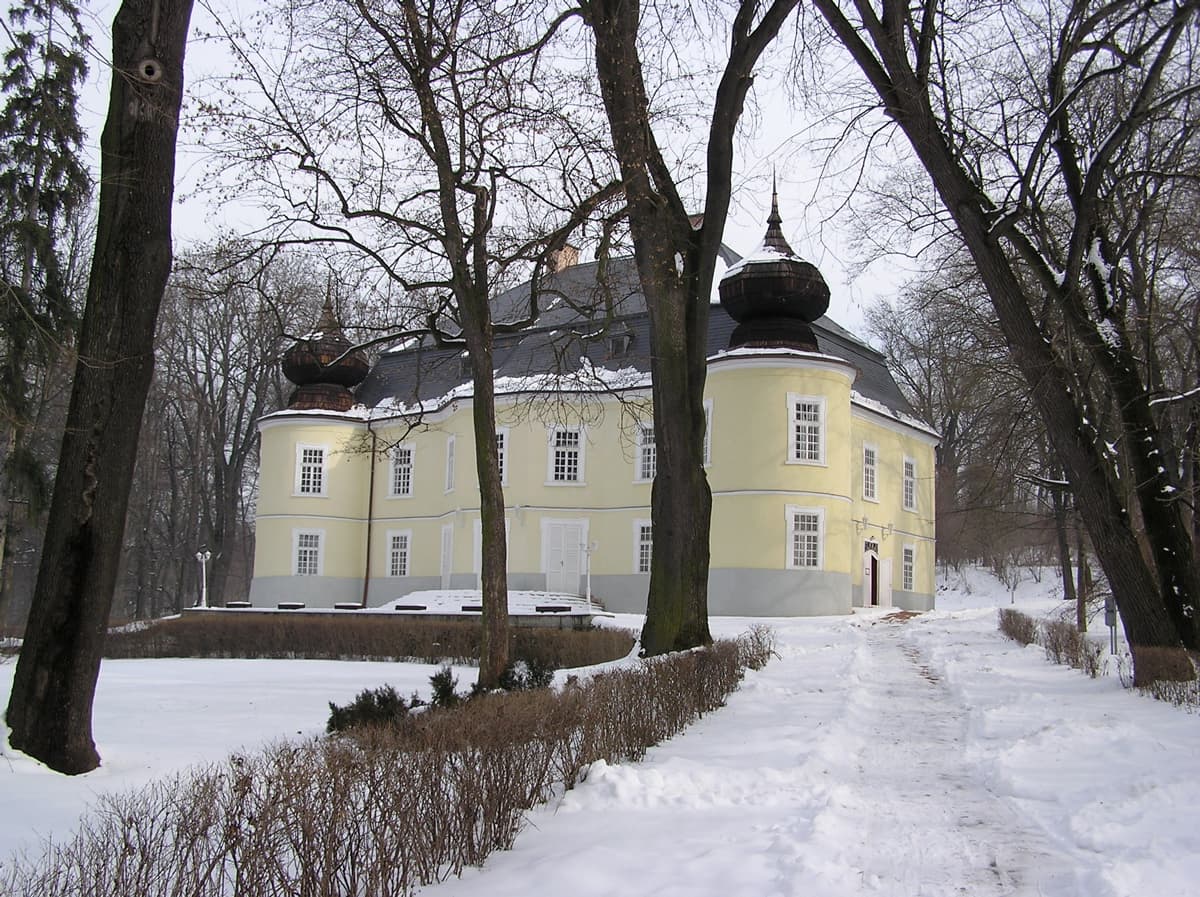
The castle exhibits characteristics typical of 19th-century Hungarian manor houses, blending elements of historicism with romantic influences. Its design includes a multi-storey main building with decorative façades, large windows, and an elegant roofline. The structure is complemented by ancillary buildings and landscaped gardens that form the park.

The park surrounding the castle is notable for its mature trees and carefully planned pathways, which create a tranquil environment. This setting reflects the 19th-century trend of integrating architecture with nature to create harmonious estates.

The castle park and landscape

The castle park is an essential part of the estate's identity. It features a variety of native and exotic tree species, flower beds, and open lawns. The park was designed to provide a scenic backdrop for the castle and to serve as a recreational space for its inhabitants.

Walking paths and seating areas allow visitors to enjoy the natural beauty and historical ambiance. The park also plays a role in preserving local biodiversity and offers opportunities for cultural events and community gatherings.

Current condition and use

Today, Gyürky-Solymossy Castle stands as a well-preserved example of 19th-century Hungarian aristocratic architecture. The estate is managed to maintain both the castle and its park, ensuring their accessibility to the public and preservation for future generations.

The castle and park are used for various cultural activities, including exhibitions, concerts, and educational programs that highlight the region's heritage. Visitors can explore the grounds and appreciate the architectural details and natural surroundings.

Visiting information

The castle is open to visitors during specific hours, often coordinated with local tourism schedules. It provides a quiet retreat for those interested in history, architecture, and nature. Visitors are encouraged to check local sources for up-to-date information on opening times and any special events.

Architectural and cultural importance

The Gyürky-Solymossy Castle and park represent an important cultural asset for the Northern Hungary region. The estate offers insights into the lifestyle of Hungarian nobility in the 19th century and showcases the integration of architectural design with landscape gardening traditions.

Its preservation contributes to understanding Hungary's social history and architectural evolution during the post-medieval period. The castle's setting on a hill enhances its visual prominence and historical significance within the local landscape.

Frequently asked questions (FAQ)

How do I get to Gyürky-Solymossy Castle?
Gyürky-Solymossy Castle is located in Kisterenye, Hungary, and can be reached by car or public transport. The nearest major city is Eger, from where you can take a local bus or drive for about 30 minutes to reach the castle.
What is the historical significance of Gyürky-Solymossy Castle?
Gyürky-Solymossy Castle dates back to the 18th century and is an important example of Hungarian baroque architecture. The castle has served various purposes throughout its history, including as a noble residence and a cultural venue, reflecting the region's rich history.
When was Gyürky-Solymossy Castle built?
The construction of Gyürky-Solymossy Castle began in the early 1700s and was completed in the following decades. The castle showcases the architectural styles popular during that time, making it a valuable piece of Hungary's cultural heritage.
Can I visit Gyürky-Solymossy Castle?
Yes, Gyürky-Solymossy Castle is open to visitors, allowing guests to explore its beautiful architecture and scenic park. Guided tours are available, providing insights into the castle's history and significance.
Why is the park surrounding Gyürky-Solymossy Castle important?
The park surrounding Gyürky-Solymossy Castle is an integral part of the estate, featuring lush greenery and walking paths. It serves as a recreational area for visitors and enhances the castle's picturesque setting, making it an ideal spot for relaxation and outdoor activities.
Is it possible to host events at Gyürky-Solymossy Castle?
Yes, Gyürky-Solymossy Castle is available for various events, including weddings and cultural gatherings. The unique historical ambiance and beautiful surroundings make it a popular choice for special occasions.
What are the opening hours for Gyürky-Solymossy Castle?
The castle is typically open to visitors from Tuesday to Sunday, with specific hours that may vary by season. It is advisable to check the official website or contact the castle directly for the most accurate and up-to-date information.
What are the ticket prices for visiting Gyürky-Solymossy Castle?
Ticket prices for Gyürky-Solymossy Castle vary based on age and group size, with discounts often available for students and seniors. It is recommended to check the official site for current pricing and any special offers before your visit.
When is the best time to visit Gyürky-Solymossy Castle?
The best time to visit Gyürky-Solymossy Castle is during the spring and early autumn when the weather is mild and the surrounding park is in full bloom. Visiting during these seasons allows for a more enjoyable exploration of both the castle and its gardens.
Are there any nearby attractions to Gyürky-Solymossy Castle?
Yes, there are several nearby attractions, including historical towns and natural parks, which can be explored in conjunction with a visit to Gyürky-Solymossy Castle. The region is rich in culture and offers a variety of sightseeing opportunities for visitors.

Photo gallery

Gyürky-Solymossy Castle & Park, Kisterenye
Click to view

Photo by hu:User:IJoe = Birincsik József•CC BY-SA 3.0

1 photo • Click any image to view in full screen

Information

Hill Castle

Loading map...

Visitor reviews

No reviews yet. Been here? Write the first review and help other travelers!

Write the first review

Visited this castle? Share your experience

Your review helps other travelers and adds first-hand knowledge to our encyclopedia.

Write a review

(5/5)

0/2000 characters

Your review will be visible after admin approval

Nearby castles

10.9 km

Castle of Hasznos

Pásztó, Hungary

The Castle of Hasznos stands as a significant medieval fortress located in the municipality of Pásztó within present-day Hungary. Constructed in the early 14th century, this hill castle was strategically positioned to protect the vital Kövecses-patak valley, a key passage through the Mátra Mountains. Its origins trace back to between 1300 and 1320, when it was built under the auspices of Domokos of the Rátót family, a powerful noble lineage whose members held important offices such as the palatine (nádor), one of the highest-ranking officials in the Kingdom of Hungary. The castle first appears in historical records in 1304, with a notable mention in 1329 referring to the "Castellanus de Hasnos," indicating the fortress's role as a military stronghold governed by a castellan. Alongside the nearby castles of Ágasvár and Óvár, Hasznos formed part of a defensive network securing the Mátra Mountains and controlling access through the valley. This network was crucial for regional defense during a period marked by feudal conflicts and external threats. Historical significance and ownership Originally, the fortress was under the control of the Hasznosi family, who derived their name from the site itself. They also held dominion over the adjacent settlements of Tarnak and Pásztó. The Hasznosi lineage became extinct by the time of the Battle of Mohács in 1526, a pivotal event that led to the fragmentation of many noble estates. Subsequently, the castle's ownership passed through female descendants and partly reverted to the royal treasury, reflecting the complex inheritance practices of medieval Hungary. Throughout its history, the castle attracted visits from prominent figures such as Vencel and King Charles Robert, who sought alliances with the Rátót family, underscoring the fortress's political and military importance in the early 14th century. By the mid-15th century, the Pásztói family had taken possession of the castle and maintained its defensive and administrative functions alongside the local village. The castle during the ottoman era The mid-16th century brought significant upheaval as the Ottoman Empire expanded into Hungarian territories. In 1552, during the Ottoman campaign targeting the nearby Eger Castle, the village of Hasznos paid tribute to Eger, signaling its submission to Ottoman influence. That same year, Ottoman forces led by Ali Pasha occupied the fortress without resistance, suggesting either a strategic withdrawal by defenders or insufficient military readiness. During the subsequent Ottoman occupation, the castle's fortifications were deliberately dismantled to reduce its military threat. Despite this, the fortress remained structurally intact enough to be reinforced again after Christian forces recaptured the area. Unlike many other castles in the region that fell into ruin earlier, Hasznos retained its defensive structures well into the 15th century and beyond. Architectural features and layout The Castle of Hasznos was modest in scale, occupying approximately three hectares atop a rocky hill rising 383 meters above the nearby Hasznosi reservoir. The fortress was divided into two main sections: a lower castle and an upper castle, separated by a dry moat, a defensive trench designed to impede attackers without the use of water. This feature enhanced the castle's defensive capabilities by creating an additional barrier within the complex. Architectural remains include portions of the former palace building and the foundational elements of a square tower, which served as a lookout and stronghold within the castle. The construction predominantly utilized local stone, meticulously shaped and assembled to form robust defensive walls and internal structures. The rocky terrain provided a natural foundation, contributing to the fortress's durability over centuries. Today, the ruins are partially concealed by dense vegetation that thrives on the warm, sheltered slopes of the hill. Only two taller fragments of the original walls rise clearly above the tree line, marking the fortress's location. The eastern side of the hill features a distinctive layer of diatomaceous earth, a sediment rich in fossilized remains of microscopic algae, which has preserved a variety of paleontological specimens. Paleontological significance The diatomaceous earth deposits near the castle have yielded fossils of turtles, deer, and several small mammals such as shrews and dormice. Notably, a new prehistoric hamster species was identified here, named Democricetodon hasznosensis in honor of the site. This discovery highlights the area's importance not only for medieval history but also for paleontology and natural history. Later history and preservation Following the Ottoman period, the castle changed hands multiple times. After 1720, the lands were owned by prominent families such as the Koháry, Fáy, and Szalay. Post-1848, ownership passed to the Almássy, Platthy, Zay, Orczy, and Gosztonyi families. Despite these changes, the fortress gradually fell into ruin during the 18th century, accelerated by local inhabitants repurposing its stones for construction. Today, the Castle of Hasznos ruins offer valuable insights into medieval Hungarian defensive architecture and regional history. The site’s rocky hilltop location and partial preservation provide a tangible connection to the past, even as natural overgrowth conceals much of the original structure. The remaining walls and foundations allow visitors and scholars to appreciate the castle's historical role and architectural characteristics. Visiting the castle ruins The ruins are accessible to visitors interested in medieval history, architecture, and natural heritage. The site’s setting within the Mátra Mountains offers scenic views and a glimpse into Hungary’s feudal past. While the fortress is not fully restored, the visible remains and surrounding landscape create an evocative atmosphere for exploration and study.

High Medieval (11th–13th c.)
Details
15.1 km

Salgo

Salgo, Hungary

Salgo Castle stands as a remarkable example of a medieval bastioned fortress perched atop a basalt hill in the Zala region of Hungary. Its origins trace back to the 13th century, a period marked by significant military and political upheaval following the devastating Mongol invasions of 1241-42. In response to these incursions, King Béla IV of Hungary initiated a widespread castle-building program to fortify the kingdom's defenses. Salgo Castle was among the fortifications erected during this era, strategically positioned to oversee and protect the surrounding landscape. The earliest construction on the site was a stone tower built from local basalt, measuring approximately 7.5 by 9.5 meters. This tower, located at the eastern end of the hilltop, likely served dual purposes as both a defensive stronghold and a residential space. Due to later destruction, the exact number of floors it originally had remains uncertain. By the late 13th century, the castle was associated with the noble Kacsics family, with the first documented mention of the castle dating to 1331. Historical records attribute the castle's construction at the end of the 13th century to a figure named Miklós. Architectural layout and defensive features From the corners of the original tower, defensive walls extended westward, enclosing a narrow, elongated courtyard. The northern section of these walls contained the main entrance, accessed by wooden stairs leading to a portal. Within the courtyard, a cistern was constructed to collect and store water, a vital feature for withstanding sieges. During the 15th and early 16th centuries, the castle underwent significant expansions and fortifications. In 1460, the castle was seized by Hussite forces under the command of Jan Jiskra, but was soon recaptured by King Matthias Corvinus and granted to the influential Zápolya family. By 1470, ownership had passed to notable palatines including László Cseha Lévai, Mihály Országha Gúthi, and later János Szapolyai. 15th-century expansions The castle's entrance was fortified with a small, walled courtyard approximately 10 by 6 meters, featuring rounded corners. A new water reservoir was added within this space. The upper courtyard was roofed over to create a residential building, enhancing the castle's habitability and defensive capabilities. 16th-century fortifications and lower castle Around 1530, a robust defensive wall about 1 meter thick was built on the northern and western slopes of the castle hill, supported by buttresses. This construction created a new courtyard known as the lower castle, which served primarily economic and logistical functions. The main gate was located on the southwest side, reinforced by a quadrangular gatehouse connected to a watchtower built on a nearby rock formation. The northern wall featured a distinctive horseshoe-shaped tower projecting outward and open on the courtyard side, providing enhanced defensive coverage. Turkish occupation and bastion construction In 1542, the castle came under the ownership of Ferenc Bebek through inheritance, who subsequently sold it in 1548 to Farkas Derencsényi with royal consent. Facing the growing threat of the Ottoman Turks, Derencsényi commissioned the construction of a five-sided bastion on the eastern side of the castle hill, measuring approximately 14 by 15 meters. This bastion was strategically designed to control the approach road to the castle, enhancing its defensive posture. Despite these improvements, the castle fell to the Turks in 1554, who occupied it for four decades. The Ottoman garrison eventually withdrew in December 1593 after sustained artillery bombardment destroyed the main tower. The defenders initially resisted but abandoned the fortress without further combat. Decline and present condition Following the Turkish withdrawal, Salgo Castle lost its military significance and was gradually abandoned. The lack of maintenance led to its deterioration, and today it remains as ruins with well-preserved wall layouts reaching several meters in height in places. Visitors can explore the lower castle ruins, including the base of the defensive walls supported by buttresses, remnants of the gatehouse, and tower foundations. On the eastern slope, the remains of the 16th-century bastion are still visible. The upper castle area reveals traces of the water cistern and the division of rooms within the residential building. The highest eastern part of the hill features the remains of the main tower, which has been covered with a roof and now serves as a scenic viewpoint. The vantage point offers stunning views over the Cserhát Mountains and the surrounding landscape, including the nearby Somoskő Castle located just across the border in Slovakia. Salgo Castle's ruins thus not only embody centuries of Hungarian medieval military architecture but also provide a captivating historical and cultural experience for visitors. Historical significance and cultural heritage Salgo Castle represents a significant chapter in Hungary's high medieval fortification history, reflecting the evolution of defensive architecture from a simple stone tower to a complex bastioned fortress. Its strategic location and robust design illustrate the kingdom's efforts to withstand invasions and internal conflicts during turbulent centuries. The castle's association with prominent Hungarian noble families and its role during the Ottoman wars further underscore its importance. Today, the castle ruins are a protected cultural monument, attracting historians, architects, and tourists interested in medieval fortifications and Hungarian history. The site offers valuable insights into construction techniques, defensive strategies, and the lifestyle of the nobility during the 13th to 16th centuries.

High Medieval (11th–13th c.)
Details
18.1 km
Somoskő — Slovakia castle

Somoskő

Somoskő, Slovakia

Somoskő Castle stands as a remarkable example of late medieval hill castles in Central Europe, uniquely constructed using the region's distinctive hexagonal basalt columns. Situated on a basalt hill near the village of Somoskő in present-day Slovakia, this fortress offers a vivid glimpse into medieval military architecture adapted to challenging volcanic terrain. Its strategic location on the border between Slovakia and Hungary underscores its historical importance as a defensive stronghold through centuries of regional conflict. Early origins and medieval construction The castle's origins trace back to the late 13th and early 14th centuries when the noble Kachy family established the initial fortification. Originally, the castle consisted primarily of a triangular curtain wall enclosing the summit of the basalt hill. This simple enclosure was designed to take advantage of the natural defensive qualities of the volcanic rock formation. Around 1323, ownership passed to Tamás Szécsényi, a prominent Hungarian noble, marking the beginning of significant expansions. The Szécsényi family held the castle until the mid-15th century, after which it transferred to the Losonczy family in 1461. Under the Losonczy, the fortress underwent substantial fortification enhancements to meet evolving military needs. Architectural evolution and defensive upgrades During the 15th century, the castle's defenses were considerably strengthened. The original triangular walls were reinforced with two oval towers positioned at two corners, enhancing the castle's ability to repel attackers. The third corner was fortified with a barbican, a fortified outwork protecting the main gate and controlling access to the interior. Along the perimeter walls, various residential and utility buildings were constructed, including a principal representative palace attached to the eastern curtain wall. The castle's courtyard featured two water cisterns carved directly into the basalt rock, ensuring a reliable water supply during sieges. In the 16th century, as artillery warfare became more prevalent, further modifications were made. A bastion was added on the northeast side, projecting outward to provide enhanced fields of fire. The oval towers were interconnected by a vaulted corridor containing artillery casemates, allowing defenders to operate cannons under cover. Historical significance and military engagements Somoskő Castle played a vital role in the turbulent military history of the region. Despite its relatively small size, it successfully resisted two Ottoman Turkish sieges during the mid-16th century, capitulating only in 1575. The castle was subsequently reclaimed by the Losonczy family in 1593 after the withdrawal of Ottoman forces. The early 17th century saw the fortress embroiled in the anti-Habsburg uprisings. It was occupied by forces loyal to István Bocskai in 1605 and later by Gabriel Bethlen between 1619 and 1626. These events highlight the castle's strategic importance as a military asset during periods of political upheaval. Following the participation of Simon Forgách in the anti-Habsburg rebellion of Francis II Rákóczi, the castle was confiscated by imperial authorities in 1709. Subsequently abandoned, it fell into disrepair and suffered further damage when lightning struck, causing a devastating fire in 1826. Geological uniqueness and construction materials One of Somoskő's most distinctive features is its construction from local basalt stone, quarried from the nearby natural basalt formation known as the "stone waterfall." These columnar basalt pillars are pentagonal and hexagonal in shape, formed by volcanic activity millions of years ago. The medieval builders skillfully incorporated these natural columns into the castle's walls and defensive structures, lending the fortress a unique aesthetic and structural strength uncommon among Slovak castles. Modern restoration and visitor experience Today, Somoskő Castle exists as a partially restored ruin, with significant sections of its walls, the barbican, and one of its towers preserved or reconstructed. The second tower has been rebuilt and serves as a prominent symbol of the castle. Visitors can explore the ruins and appreciate the castle’s integration with the volcanic landscape. The castle's location straddles the Slovak-Hungarian border, with the site officially within Slovak territory. However, access is often easier from the Hungarian side, making it a popular destination for tourists interested in medieval history and geology. The proximity of Salgó Castle on an adjacent volcanic hill further enriches the historical landscape of this border region. Architectural layout and defensive features Somoskő Castle's layout is characterized by its compact triangular courtyard, optimized for the limited space atop the basalt hill. The curtain walls, constructed from basalt blocks, form a robust perimeter enclosing the inner buildings. The oval towers at two corners provided vantage points for surveillance and defense, while the barbican guarded the main entrance with layered fortifications. The vaulted corridor connecting the towers, equipped with artillery casemates, exemplifies the adaptation of the castle to gunpowder weaponry. The bastion projecting to the northeast further enhanced the castle's artillery capabilities, reflecting the evolving nature of warfare in the 16th and 17th centuries. Cultural and historical legacy Somoskő Castle embodies the complex history of Central Europe, reflecting the shifting political powers and military conflicts from the medieval period through the early modern era. Its survival through Ottoman sieges, anti-Habsburg uprisings, and eventual decline illustrates the resilience and strategic significance of hilltop fortresses in this region. The castle's unique basalt construction connects it intimately to the natural landscape, symbolizing the interplay between geology and human fortification. As a partially restored monument, it serves as an educational site and cultural landmark, attracting historians, architects, and tourists alike.

Late Medieval (14th–15th c.)
Details