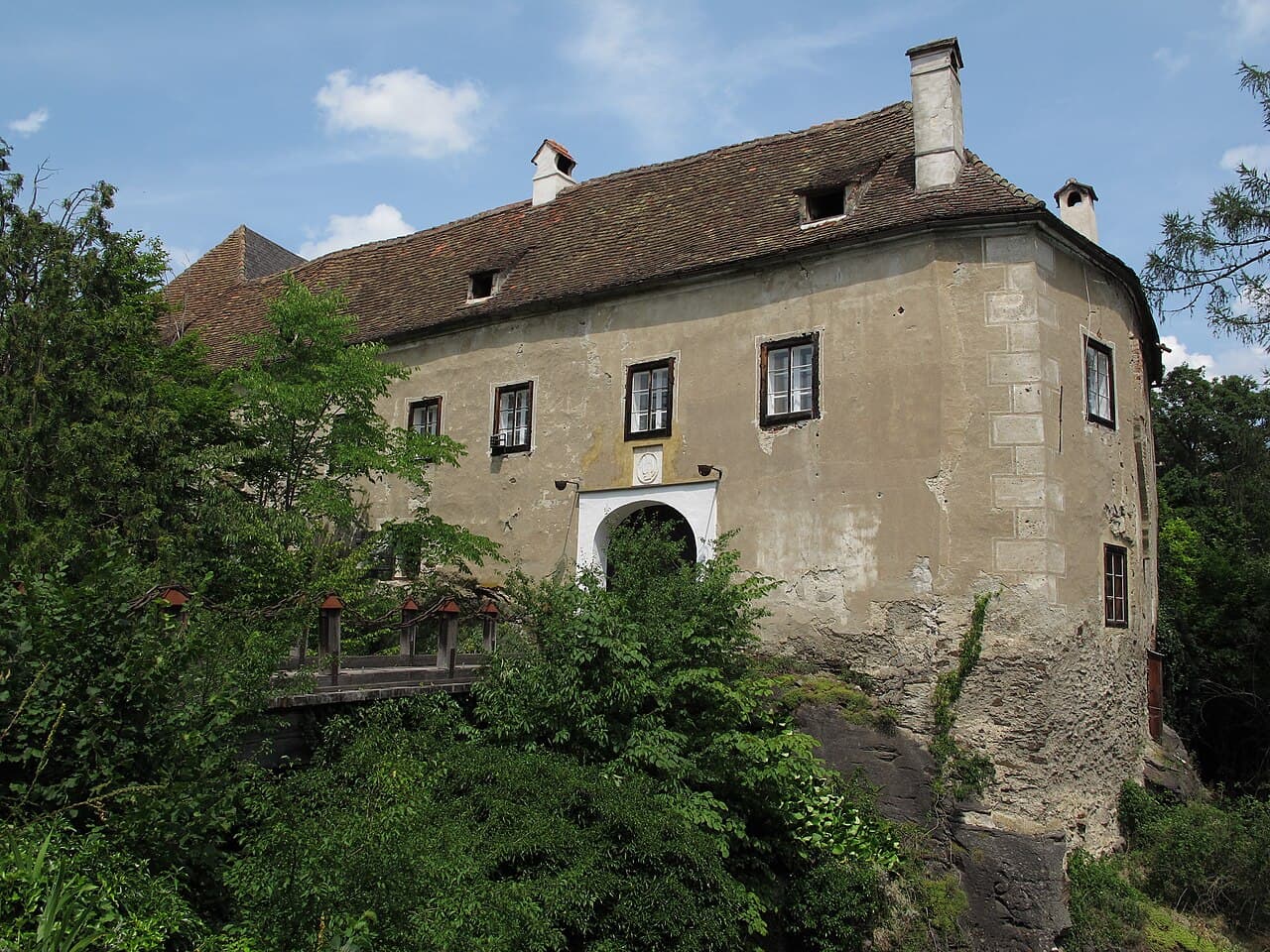
Gutenberg Castle
Gutenberg Castle, located in the scenic region of Styria, Austria, is a remarkable example of a high medieval hill castle that has evolved architecturally over centuries. Founded by Luitold III of Waldstein in 1185, the castle stands prominently on a rocky outcrop at an elevation of 567 meters, overlooking the Raabklamm gorge. Since 1288, it has been under the ownership of the Stubenberg family, one of the notable noble families of the region, who have maintained and expanded the castle through the ages.
Historical foundation and early architecture
The original construction of Gutenberg Castle dates back to the 12th century, with the oldest surviving parts reflecting the robust defensive needs of the era. The castle was initially designed as a fortified residence on a strategic hilltop, typical of high medieval hill castles. Its location on a prominent rock provided natural defenses, complemented by man-made fortifications.
The castle's earliest section includes a south-facing rustic gate and a chapel dedicated to Saint Pancras situated at the southwest corner, which is the oldest part of the complex. This chapel, originally constructed as a three-story tower-like structure, features galleries on the upper two stories. It was consecrated in 1365 and contains valuable frescoes from the second half of the 14th century depicting religious figures such as St. Alfa, St. James the Elder, the Martyrs of Ten Thousand, St. George, and the Caravan of the Three Kings. These frescoes are located on the first gallery, which was later enclosed by a dome, and the chapel's Romanesque window behind the altar now contains modern glass.
Expansion and Renaissance influences
Over time, the castle was expanded and remodeled, incorporating Renaissance architectural elements alongside its medieval foundations. A significant addition was the construction of a two-story bailey, which was protected by two moats. While the outer moat remains bridged today, the inner moat has been filled in, reflecting changes in defensive strategies and the castle's transition from purely military use to a noble residence.
The castle complex is characterized by an irregular four-story building arranged in an almost pentagonal footprint, enclosing a pentagonal courtyard. This layout is somewhat unusual and highlights the adaptive architectural evolution to suit both defensive and residential purposes.
Chapels and religious art
In addition to the medieval chapel of Saint Pancras, the castle grounds include two other chapels dating from the 18th century. One chapel, built around 1721, is located on the access road leading to the castle, while the second was constructed in the third quarter of the 18th century. Along this access road stand two notable stone statues of St. Anna and St. John Nepomuk, originally from Schloss Wieden at Kapfenberg. These statues were created by the renowned sculptor Veit Königer circa 1770, adding Baroque artistic elements to the castle's religious heritage.
Architectural features and defensive elements
The castle's defensive features include its hilltop position, thick stone walls, and the two moats that once surrounded the bailey. The pentagonal shape of the main building and courtyard is distinctive, providing multiple angles for defense and surveillance. The rustic gate facing south serves as the main entrance, historically fortified to control access.
Inside, the castle's multi-story design includes residential quarters, defensive towers, and the chapel, all arranged to maximize both comfort and security. The mixture of medieval and Renaissance styles is evident in the stonework, window designs, and internal layout, reflecting the castle's continuous adaptation over several centuries.
Current status and cultural significance
Today, Gutenberg Castle is recognized as a well-preserved example of medieval and Renaissance castle architecture in Austria. Its continuous ownership by the Stubenberg family contributes to its historical authenticity. The castle's location near the Raabklamm gorge adds to its scenic and strategic importance.
The castle is accessible to visitors interested in medieval architecture, fresco art, and Austrian noble history. Its chapels, frescoes, and statuary offer insight into the religious and cultural life of the region from the Middle Ages through the Baroque period.
Frequently asked questions (FAQ)
- How do I get to Gutenberg Castle?
- Gutenberg Castle is located in Gutenberg-Stenzengreith, Austria, and can be accessed by car or public transport. The nearest major city is Graz, from which you can take a train or bus to reach the castle. Make sure to check local transport schedules for the most convenient routes.
- What is the historical significance of Gutenberg Castle?
- Gutenberg Castle dates back to the 12th century and has played a crucial role in the region's defense and governance. It served as a residence for various noble families and has witnessed significant historical events throughout the centuries. Today, it stands as a testament to medieval architecture and history.
- When was Gutenberg Castle built?
- Gutenberg Castle was constructed in the 12th century, with its first documented mention occurring in 1150. Over the years, it has undergone various renovations and restorations, reflecting different architectural styles. This long history adds to its charm and significance as a heritage site.
- Can I visit Gutenberg Castle year-round?
- Yes, Gutenberg Castle is open for visitors year-round, although specific opening hours may vary by season. It's advisable to check the official website or contact the castle management for the latest information before planning your visit. Certain areas may be closed during winter months for maintenance.
- Why is Gutenberg Castle considered an architectural gem?
- Gutenberg Castle showcases a blend of Romanesque and Gothic architectural styles, making it a fascinating study for architecture enthusiasts. Its well-preserved structures, towers, and surrounding landscapes contribute to its charm. The castle's intricate details and historical features offer a glimpse into medieval life.
- Is it possible to take guided tours of Gutenberg Castle?
- Yes, guided tours of Gutenberg Castle are available and highly recommended for a deeper understanding of its history and architecture. Knowledgeable guides provide insights into the castle's past and its role in the region. Tours are typically offered in multiple languages to accommodate visitors.
- What are the ticket prices for visiting Gutenberg Castle?
- Ticket prices for Gutenberg Castle are generally affordable, with discounts available for students and seniors. Children under a certain age may enter for free, making it a great family-friendly destination. Be sure to check the official site for the latest pricing information and any special offers.
- What is the best time to visit Gutenberg Castle?
- The best time to visit Gutenberg Castle is during the spring and fall when the weather is mild and the surrounding scenery is particularly beautiful. Summer can be quite busy with tourists, while winter offers a unique, quiet atmosphere. Each season brings its own charm, so choose based on your preferences.
- Are there any nearby attractions to see after visiting Gutenberg Castle?
- Yes, there are several nearby attractions to explore after your visit to Gutenberg Castle. The picturesque village of Stenzengreith offers lovely walking trails and local eateries. Additionally, the region is rich in natural beauty, with opportunities for hiking and enjoying the Austrian countryside.
Photo gallery

Information
Current owner
Stubenberg family
Loading map...
Visitor reviews
No reviews yet. Been here? Write the first review and help other travelers!
Write the first reviewVisited this castle? Share your experience
Your review helps other travelers and adds first-hand knowledge to our encyclopedia.


