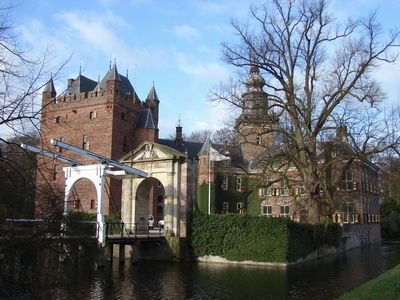
Aastein Castle

Aastein Castle near Nieuwer ter Aa, Netherlands
Near Ter Aaseweg 6, Netherlands
Late Medieval (14th–15th c.)

Aastein Castle was a notable late-medieval castle located east of the village of Nieuwer ter Aa in the province of Utrecht, Netherlands. Its history traces back to the 15th century, when it was constructed as a replacement for the older Ter Aa Castle, situated approximately 700 meters to the northwest along the river Aa. The Van der Aa family, a prominent noble lineage in the region, originally owned both castles along with Clarenborg Castle.

Origins and historical background

The first known mention of Aastein Castle dates to 1394, but it was likely built earlier in the same century. The decision to replace Ter Aa Castle with Aastein was driven by the changing needs and tastes of the Van der Aa family. Ter Aa Castle was an older circular plan fortress dating back to at least before 1156. Its medieval design and location near a bend in the river Aa were eventually deemed less suitable for the family's status and defensive requirements.

The Van der Aa family held significant influence in the area, owning multiple estates and castles, including Aastein, Ter Aa, and Clarenborg. Their holdings reflected their social standing and control over the surrounding lands.

Architectural features and layout

Historical depictions and descriptions indicate that Aastein Castle was constructed as a square tower house accompanied by a rectangular bailey. The entire complex was surrounded by a moat, a common defensive feature in medieval Dutch castles. This layout suggests a focus on both residential comfort and defense, typical of late-medieval noble residences in the region.

The square tower house would have served as the main living quarters and stronghold, while the bailey provided space for ancillary buildings, stables, and possibly gardens or courtyards. The moat added an extra layer of protection against potential attackers.

Ownership transitions and decline

In the late 15th century, ownership of Aastein Castle passed to Gerrit van Renesse through his marriage to Agniese van der Aa, linking two influential noble families. This union consolidated estates and reinforced the social standing of the Renesse family in the region.

By 1666, the three family castles—Aastein, Ter Aa, and Clarenborg—were sold together by Lady Anna van Renesse van der Aa. A year later, the properties were acquired by Frederik van Renesse van Moermont, Lord of Zuileveld, indicating continued noble ownership but also possibly reflecting changing economic or political circumstances.

Destruction and disappearance

Aastein Castle met its demise in 1673, when it was destroyed by French troops during the Franco-Dutch War. By that time, the castle had lost much of its military importance. Its location next to a silted-up river further diminished its strategic value, making reconstruction unattractive or impractical.

Following its destruction, the castle ruins were left to decay. Over the course of the 18th century, all visible traces of the castle disappeared. Today, no above-ground remains of Aastein Castle exist, and the site is occupied by a farm and surrounding grassland.

Legacy and archaeological significance

While Aastein Castle no longer stands, its history offers insight into the evolution of noble residences in the Utrecht region during the late-medieval period. The transition from the older circular Ter Aa Castle to the square tower house design of Aastein reflects broader architectural and social shifts of the time.

Archaeological interest in the site is limited due to the lack of visible remains, but historical records and depictions provide valuable information about the castle's structure and role. The castle's story is intertwined with the fortunes of the Van der Aa and Renesse families, important players in local history.

Frequently asked questions (FAQ)

How do I get to Aastein Castle?
Aastein Castle is conveniently located near Ter Aaseweg 6 in the Netherlands. Visitors can reach the castle by car, with ample parking available on-site. Public transport options are also accessible, with nearby bus stops connecting to major train stations.
What is the historical significance of Aastein Castle?
Aastein Castle dates back to the 14th century and has played a crucial role in the region's history. It served as a stronghold during various conflicts and has been a witness to significant events that shaped the local culture. The castle is a symbol of heritage and attracts history enthusiasts from around the world.
When was Aastein Castle built?
Aastein Castle was constructed in the late 1300s, showcasing the architectural styles of the medieval period. Over the centuries, it has undergone several renovations, preserving its historical elements while adapting to modern needs. Visitors can appreciate its age through the original features and structures still in place.
Can I take guided tours of Aastein Castle?
Yes, guided tours of Aastein Castle are available and provide a deeper insight into its history and architecture. Tours are led by knowledgeable guides who share fascinating stories and facts about the castle. It is recommended to book in advance, especially during peak tourist seasons.
Why is Aastein Castle a popular tourist destination?
Aastein Castle attracts visitors due to its stunning architecture, rich history, and picturesque surroundings. The castle's well-preserved structure and beautiful gardens provide a perfect backdrop for photography and exploration. Additionally, its proximity to other attractions makes it an ideal stop for a day trip.
Is it possible to host events at Aastein Castle?
Yes, Aastein Castle offers facilities for hosting various events, including weddings, corporate meetings, and private gatherings. The enchanting setting and historical ambiance make it a memorable venue. Interested parties should contact the castle's event management team for availability and booking details.
What are the opening hours for Aastein Castle?
Aastein Castle is open to visitors from 10 AM to 5 PM, Tuesday through Sunday. On Mondays, the castle remains closed for maintenance and preservation efforts. It's advisable to check the official website for any seasonal changes in hours or special event schedules.
What are the ticket prices for visiting Aastein Castle?
Ticket prices for Aastein Castle are reasonably set, with discounts available for children, students, and seniors. General admission is typically around €10, while children under 12 may enter for free with an adult. Special family packages and group rates can also be arranged for larger parties.
When is the best time to visit Aastein Castle?
The best time to visit Aastein Castle is during the spring and early autumn months when the weather is mild and the gardens are in full bloom. These seasons offer a pleasant experience for outdoor exploration and photography. Additionally, visiting during weekdays can help avoid large crowds.
Are there any nearby attractions to Aastein Castle?
Yes, there are several attractions near Aastein Castle, including beautiful nature reserves, charming villages, and other historical sites. The surrounding area offers hiking trails and scenic spots for picnics, making it a great destination for a day out. Be sure to explore the local cafes and shops that reflect the region's culture.

Loading map...

Visitor reviews

No reviews yet. Been here? Write the first review and help other travelers!

Write the first review

Visited this castle? Share your experience

Your review helps other travelers and adds first-hand knowledge to our encyclopedia.

Write a review

(5/5)

0/2000 characters

Your review will be visible after admin approval

Nearby castles

1.4 km

Fort Nieuwersluis

Nieuwersluis, Netherlands

Fort Nieuwersluis is a significant example of 19th-century military architecture in the Netherlands. Constructed between 1849 and 1851, this modern fortress was designed as part of the New Dutch Waterline (Nieuwe Hollandse Waterlinie), an extensive defensive system that utilized controlled flooding to protect the western provinces of the country from potential invasion. Historical context and strategic importance The New Dutch Waterline was developed in response to evolving military technologies and geopolitical threats in the mid-19th century. Fort Nieuwersluis was strategically positioned near the village of Nieuwersluis to guard the sluices and waterways critical to the controlled inundation system. The fort's location allowed it to control access to the water defenses and protect the surrounding areas from enemy forces. The fort was enlarged in 1880 to enhance its defensive capabilities, reflecting changes in artillery and military tactics. This expansion was part of a broader modernization effort within the New Dutch Waterline to maintain its effectiveness against increasingly powerful weaponry. Architectural features and design Fort Nieuwersluis exhibits characteristics typical of mid-19th century fortress design, combining traditional masonry with innovations suited to the era's military requirements. The fort was constructed primarily from brick and stone, materials chosen for their durability and resistance to artillery fire. The layout includes defensive walls with bastions and casemates designed to house artillery pieces and troops. The fort's design allowed for overlapping fields of fire, maximizing its defensive reach. The moat surrounding the fort was integrated into the waterline's inundation system, enhancing its defensive potential by creating a water barrier against attackers. Additional structures within the fort include barracks for soldiers, storage rooms for ammunition, and command posts. The fort's design reflects a balance between defensive strength and the logistical needs of a garrisoned military installation. Role in Dutch defense and later history Throughout its active military use, Fort Nieuwersluis played a critical role in the defense strategy of the Netherlands. Although the fort never saw direct combat, it served as a deterrent and a control point within the New Dutch Waterline. With changes in warfare and the advent of new military technologies in the 20th century, the fort's strategic importance declined. It was eventually decommissioned as a military installation but remains an important cultural and historical monument. Preservation and current status Today, Fort Nieuwersluis is well preserved and accessible to the public. It stands as a testament to the engineering and military planning of the 19th century. The fort is maintained as part of the Dutch heritage and waterline defense system, which is recognized for its historical and cultural significance. Visitors can explore the fort's defensive structures, learn about the New Dutch Waterline, and appreciate the integration of military architecture with the unique Dutch landscape of waterways and polders. Architectural significance within the New Dutch Waterline Fort Nieuwersluis is one of several forts built along the New Dutch Waterline, a unique defensive concept that relied on flooding low-lying lands to create an impassable barrier. This system combined natural geography with engineered fortifications, showcasing Dutch ingenuity in military defense. The fort's design reflects the transition from medieval fortress concepts to modern military engineering, incorporating bastioned walls and artillery platforms adapted to the era's technological advancements. Its preservation allows for study and appreciation of this important phase in fortress architecture.

Modern (19th–20th c.)
Details
2.1 km
Nijenrode Castle — Netherlands castle

Nijenrode Castle

Breukelen, Netherlands

Nijenrode Castle stands as a remarkable testament to medieval and Renaissance architecture in the heart of the Netherlands. Located in Breukelen, Utrecht, this historic fortress was originally constructed around 1260 by Knight Gerard Splinter van Ruwiel. Its strategic position on the narrowest bank of the river Vecht was no accident; the river was a vital trade route linking the market town of Utrecht to the Dutch South Sea, making the castle an important defensive and economic stronghold. Medieval origins and strategic significance The castle's initial purpose was primarily military and administrative. As a high medieval hill castle, it was designed to control river traffic and protect the surrounding lands. The choice of location on the Vecht river allowed its occupants to monitor and regulate commerce, collect tolls, and defend against potential invaders. The castle's early fortifications likely included a stone keep, curtain walls, and a moat fed by the river, typical of 13th-century defensive architecture in the region. Destruction and rebuilding phases Nijenrode Castle experienced significant destruction twice in its history, first in 1481 and again in 1511. These events reflect the turbulent political and military conflicts in the Low Countries during the late Middle Ages, including regional feuds and the struggles for power among local nobility. Each destruction necessitated rebuilding efforts which altered the castle's structure and function over time. Transformation into a Renaissance manor In the 17th century, the castle underwent a profound transformation under the ownership of Bernard van den Bongard III. He converted the medieval fortress into a splendid manor house, embracing the Dutch Renaissance style that was fashionable among the nobility of the period. This renovation included adding a drawbridge and modernizing the castle's exterior to reflect the aesthetic ideals of a knightly mansion rather than a purely military fortress. The architectural modifications included ornamental gables, decorative brickwork, and large mullioned windows, which softened the castle's defensive appearance and enhanced its residential comfort. The castle's layout was adapted to accommodate more luxurious living spaces, reflecting the shift from feudal stronghold to noble residence. Architectural features and style Nijenrode Castle exemplifies the transition from medieval fortification to Renaissance manor, combining elements of both eras. The castle's core retains aspects of its high medieval origins, such as robust stone walls and remnants of its defensive moat, while the later additions showcase the Dutch Renaissance style characterized by symmetry, classical motifs, and refined brickwork. The castle's distinctive drawbridge remains a focal point, symbolizing its historic defensive role even as the structure evolved into a stately home. The blend of architectural styles makes Nijenrode a valuable example of how Dutch castles adapted to changing political and social circumstances over centuries. Historical importance and legacy Throughout its history, Nijenrode Castle has played a significant role in the regional history of Utrecht and the Netherlands. Its position on the Vecht river connected it to important trade networks, and its owners were influential figures in local governance and society. The castle's survival through periods of conflict and change illustrates the resilience and adaptability of such estates in Dutch history. Today, Nijenrode Castle is not only a cultural monument but also a symbol of the rich historical tapestry of the region. Its preservation allows visitors to appreciate the architectural evolution from a medieval fortress to a Renaissance manor, reflecting broader European trends in castle construction and noble residence design. Visiting Nijenrode Castle While the castle is privately owned and not regularly open to the public, its exterior and surrounding grounds can be admired from nearby public areas. The picturesque location along the Vecht river offers scenic views and opportunities for photography. Visitors interested in Dutch history and castle architecture will find Nijenrode Castle a fascinating subject for study and exploration. Nearby attractions include the historic town of Breukelen and the Vecht river's scenic cycling and walking routes, which provide additional context for understanding the castle's strategic importance and natural beauty.

High Medieval (11th–13th c.)
Details
2.1 km

Gunterstein Castle

Breukelen, Netherlands

Gunterstein Castle stands on the banks of the river Vecht in Breukelen, Netherlands, embodying a significant chapter in Dutch Renaissance architecture and history. The castle visible today was constructed in 1681 by the renowned architect Adriaan Dortsman, who is also noted for designing Amsterdam's Lutheran church. This elegant estate was commissioned by the wealthy widow Magdalena Poulle (1626–1699), who acquired the property and its noble title following the destruction of the previous castle during the rampjaar (disaster year) of 1672, when French forces burned down many estates including the former Gunterstein and nearby Castle Nijenrode.The site of Gunterstein has a layered history dating back to the 14th century. The original castle was named after Gysbrecht Gunter and was destroyed in 1511. It was rebuilt by his descendants but eventually changed ownership multiple times. Notably, it was once owned by Johan van Oldenbarnevelt, a key Dutch statesman who was executed in 1619. The castle that stood before the current one was lost to fire during the French invasion in 1672.Architectural design and featuresThe current Renaissance-style castle reflects the architectural trends of the late 17th century, with symmetrical facades, classical proportions, and detailed stonework characteristic of the period. Adriaan Dortsman designed the castle on the foundations of the medieval predecessor, blending historical continuity with modern elegance. The building features a prominent central block with balanced wings, large sash windows, and decorative elements including the Poulle family coat of arms prominently displayed above the windows.Interior and artistic heritageInside, the castle retains a number of original features and artworks. A notable piece is the portrait of Magdalena Poulle alongside her nephew Pieter, painted by David van der Plas, who was both a prominent Amsterdam portrait artist and Dortsman’s son-in-law. This portrait, dating from 1683, hangs above the main mantelpiece, symbolizing the family legacy and the castle's rebirth under Magdalena’s stewardship.Magdalena Poulle and the gardens of GuntersteinMagdalena Poulle was not only a patron of architecture but also an enthusiastic gardener. She commissioned a notable collection of etchings titled Veues de Gunterstein, dedicated to her and the estate at Thienhoven. This book includes one of the earliest known depictions of a Dutch orangerie complete with hothouses, reflecting the 17th-century fascination with exotic plants and botanical experimentation. Her work influenced other prominent figures such as Agnes Block and George Clifford III, who also cultivated rare plants and documented them in albums.The gardens surrounding Gunterstein castle were designed with both aesthetic beauty and horticultural innovation in mind. The estate’s park remains open to the public today and is protected as a rijksmonument, along with the castle and its ancillary structures, preserving the cultural heritage of the site.Historical significance and legacyGunterstein Castle exemplifies the resilience and transformation of Dutch noble estates through turbulent times. From medieval stronghold to Renaissance mansion, it reflects changes in ownership, architectural style, and social function. Its association with figures like Johan van Oldenbarnevelt and Magdalena Poulle links it closely to Dutch political and cultural history of the 16th and 17th centuries.Today, Gunterstein remains a private residence of Poulle’s descendants, maintaining a living connection to its past. The preservation of the castle and its grounds, including the historically significant gardens, offers insight into Dutch aristocratic life and the evolution of estate design during the Renaissance period.Visiting Gunterstein and its surroundingsThe castle grounds are accessible to the public, allowing visitors to explore the historic park and appreciate the legacy of Dutch Renaissance landscaping. While the castle itself is a private home and not generally open for tours, the surrounding area offers scenic views along the Vecht river and nearby historic sites such as Castle Nijenrode.Visitors interested in Dutch history, Renaissance architecture, and garden design will find Gunterstein a noteworthy destination for understanding the interplay of art, nature, and nobility in the Netherlands.

Renaissance (15th–17th c.)
Details