Gümligen Castle — Switzerland castle

Gümligen Castle

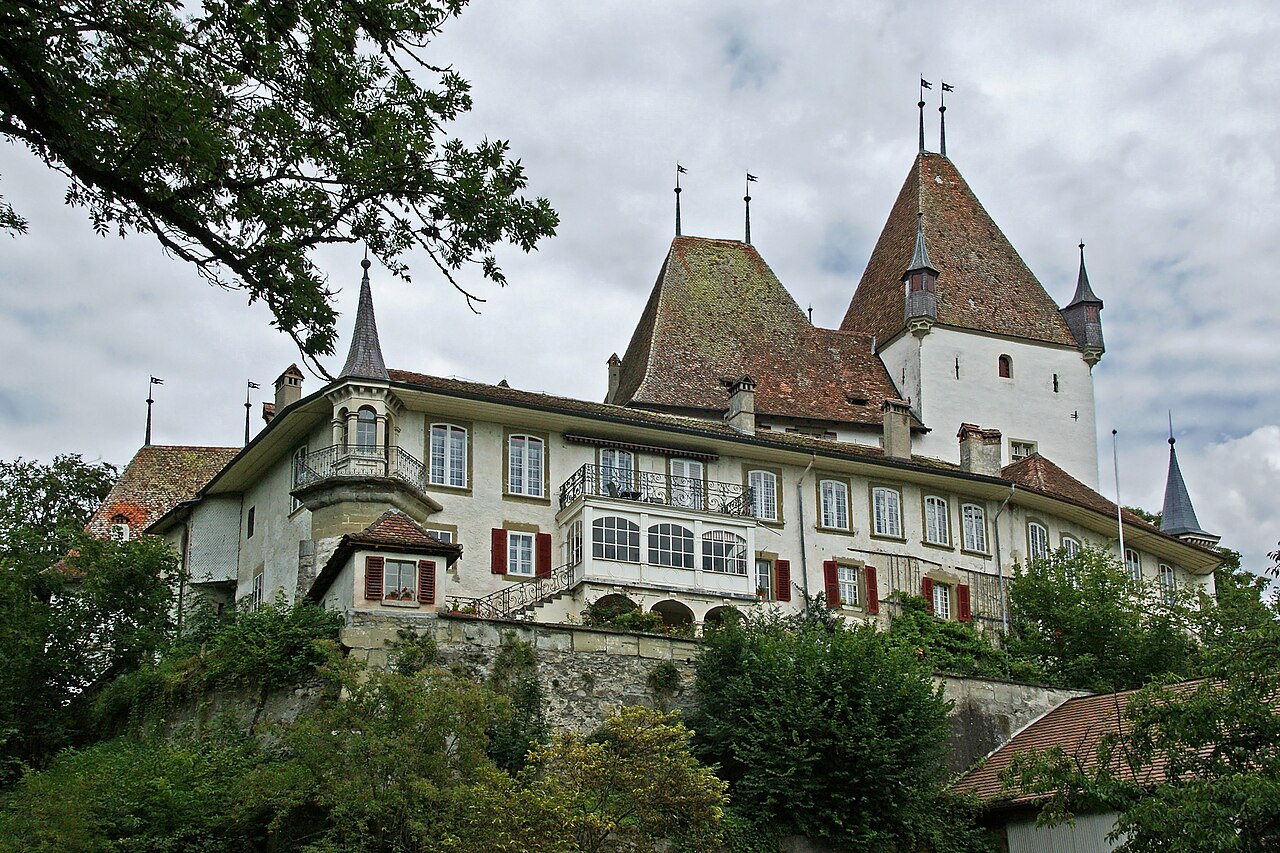
Gümligen Castle in Muri bei Bern, Switzerland
Post-Renaissance (17th–18th c.)

Gümligen Castle is an 18th-century hill castle located in the municipality of Muri bei Bern in the Canton of Bern, Switzerland. Recognized as a Swiss heritage site of national significance, it represents an important example of post-medieval castle architecture in the region.

Historical context and construction

The castle was constructed in the 18th century, during the post-Renaissance period, a time when many traditional fortifications transitioned into more residential and representative estates. Unlike medieval castles built primarily for defense, Gümligen Castle exemplifies the architectural shift towards stately homes that combined elegance with practicality.

The site was chosen for its elevated position, typical of a hill castle, providing a commanding view over the surrounding landscape. This strategic placement was less about military defense by the 18th century and more about demonstrating status and control over the local territory.

Architectural features and style

Gümligen Castle exhibits characteristics typical of the post-Renaissance architectural style prevalent in Switzerland during the 18th century. The castle's design emphasizes symmetry, proportion, and classical elements rather than the fortified walls and battlements of earlier periods.

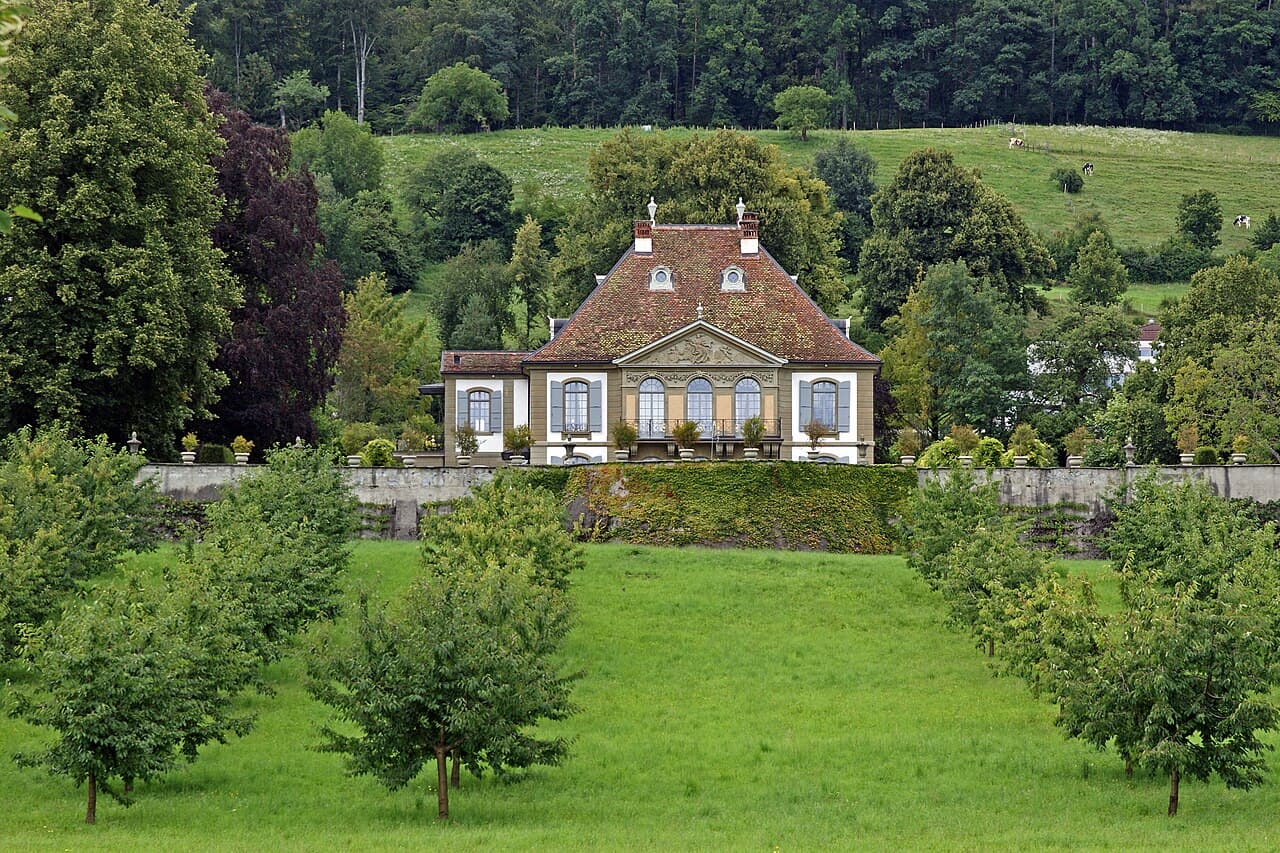
The main building is complemented by ancillary structures and landscaped grounds, reflecting the era's aesthetic preferences for harmonious integration of architecture and nature. While it lacks the imposing defensive features of medieval castles, it includes elements such as a formal courtyard and possibly decorative gatehouses that enhance its grandeur.

Significance and preservation

As a Swiss heritage site of national significance, Gümligen Castle is protected for its cultural, historical, and architectural value. The castle offers insights into the evolution of castle construction from purely defensive strongholds to elegant residences.

Its preservation allows visitors and scholars to appreciate the 18th-century Swiss aristocratic lifestyle and the architectural trends of the post-Renaissance period. The castle's setting in the Canton of Bern situates it within a region rich in history and cultural heritage.

Visiting Gümligen Castle

While specific visitor information such as opening hours and ticket prices may vary, Gümligen Castle is generally accessible to the public, either through guided tours or special events. Its location near Bern makes it a feasible destination for those interested in Swiss history and architecture.

Visitors can explore the castle's exterior and grounds, enjoying the scenic views afforded by its hilltop position. The castle's architecture and historical context provide a meaningful experience for enthusiasts of post-medieval European estates.

Frequently asked questions (FAQ)

How do I get to Gümligen Castle?
Gümligen Castle is easily accessible by public transport from Bern. You can take a tram or bus to the nearby station and then enjoy a short walk to the castle grounds.
What is the historical significance of Gümligen Castle?
Gümligen Castle dates back to the 13th century and has played a vital role in the region's history. It served as a noble residence and has witnessed various historical events throughout the centuries.
When was Gümligen Castle built?
Gümligen Castle was constructed in the early 13th century, with its foundations laid around 1220. Over the years, it has undergone several renovations, preserving its historical architecture.
Can I take guided tours of Gümligen Castle?
Yes, guided tours of Gümligen Castle are available for visitors to explore its rich history and architectural beauty. It is recommended to check the schedule and book in advance to ensure availability.
Why is Gümligen Castle a popular visiting spot?
Gümligen Castle attracts visitors for its picturesque setting and well-preserved medieval architecture. The serene surroundings and historical significance make it a perfect spot for history enthusiasts and photographers alike.
Is it possible to host events at Gümligen Castle?
Yes, Gümligen Castle offers facilities for hosting events such as weddings and corporate gatherings. It provides a unique and enchanting atmosphere for special occasions.
What are the opening hours for Gümligen Castle?
Gümligen Castle is typically open to visitors from May to October, with specific hours varying by month. It is advisable to check the official website for the most current opening times before planning your visit.
What are the ticket prices for visiting Gümligen Castle?
Ticket prices for Gümligen Castle are usually modest, with reduced rates available for students and seniors. Group discounts may also apply, so it's best to check the official website for the latest pricing information.
When is the best time to visit Gümligen Castle?
The best time to visit Gümligen Castle is during the late spring and early autumn months when the weather is pleasant, and the gardens are in full bloom. This period also sees fewer tourists, allowing for a more relaxed experience.
Are there any nearby attractions to Gümligen Castle?
Yes, there are several nearby attractions including beautiful parks and walking trails around the castle. Visitors can also explore the city of Bern, which is just a short distance away and offers a wealth of cultural and historical sites.

Photo gallery

Gümligen Castle
Click to view

Photo by WillYs Fotowerkstatt•CC BY 3.0

1 photo • Click any image to view in full screen

Information

Hill Castle

Loading map...

Visitor reviews

No reviews yet. Been here? Write the first review and help other travelers!

Write the first review

Visited this castle? Share your experience

Your review helps other travelers and adds first-hand knowledge to our encyclopedia.

Write a review

(5/5)

0/2000 characters

Your review will be visible after admin approval

Nearby castles

2.1 km

Allmendingen Castle

Allmendingen, Switzerland

Allmendingen Castle in Switzerland stands as a notable example of Renaissance architecture with roots tracing back to the High Middle Ages. Originally constructed for the Lords of Allmendingen or Alwandingen, the medieval castle was first mentioned in records between 1239 and 1256, specifically referencing Rudolf von Alwandingen. This original stronghold was a modest square fortress with walls approximately 2.1 meters thick and 9 meters in length, with the south and west sides notably lacking windows, reflecting its defensive purpose. The medieval origins and decline of old Allmendingen Castle The first castle's strategic significance waned after the Lords of Allmendingen sold the estate to Interlaken Abbey in 1256. Over the centuries, the fortress fell into disrepair, and by the 16th century, it was described as an arx disruta, or broken castle, by the cartographer Thomas Schöpf. Subsequent mentions by Albrecht Kauws in 1676 and records up to 1729 confirm the ruins remained visible for some time, marking the site as a relic of medieval fortification. The castle's original layout and construction details, such as the thick walls and windowless defensive sides, emphasize its role as a fortified residence rather than a lavish palace. The transition after the Protestant Reformation and new construction The Protestant Reformation in 1528 led to the secularization of Interlaken Abbey and the transfer of its lands, including Allmendingen, to the control of Bern. This political and religious shift paved the way for the construction of a new castle near the old ruins during the late 16th or early 17th century. Evidence for this timing includes a door in the castle's tower dated 1607. The new structure was commissioned by the Graffenried family, reflecting the Renaissance architectural style that was prevalent in Switzerland during this period. Architectural features of the Renaissance Allmendingen Castle The Renaissance style of the new Allmendingen Castle is characterized by its elegant proportions and decorative elements that contrast with the austere medieval ruins nearby. The castle features a prominent tower that originally had a high pointed roof, later replaced with a lower one, demonstrating evolving architectural tastes and practical adaptations over time. In the 18th century, the castle underwent significant renovations under the guidance of Schultheiss Isaak Steiger and his son Franz Ludwig Steiger. They expanded the castle's footprint by adding a garden courtyard and a connecting arbor, enhancing its residential comfort and aesthetic appeal. Structural layout and defensive elements The castle's design includes fortified walls typical of Renaissance noble residences, balancing defense with comfort. The tower remains a focal point, serving both as a lookout and a symbol of status. The garden courtyard introduced in the 18th century reflects the period's emphasis on landscaped spaces as extensions of the living area, blending nature with architecture. Historical significance and notable events Allmendingen Castle is not only architecturally significant but also historically notable. On 17 September 1946, the castle hosted a visit from Winston Churchill, underscoring its continued relevance and prestige well into the 20th century. This event highlights the castle's role beyond a noble residence, serving as a site of cultural and political importance. Preservation and current status Today, the Renaissance Allmendingen Castle stands well preserved, representing a tangible link between medieval fortifications and Renaissance residential architecture in Switzerland. The original medieval castle remains as ruins nearby, providing a layered historical context that enriches the visitor experience. The castle's preservation allows for ongoing study and appreciation of Swiss architectural evolution from the Middle Ages through the Renaissance and into the modern era. Visiting Allmendingen Castle Visitors to Allmendingen Castle can explore the Renaissance structure and view the remains of the medieval fortress, gaining insight into the region's feudal past and architectural heritage. The castle's gardens and courtyard offer a peaceful setting, while the tower provides a vantage point over the surrounding landscape. The site is a valuable destination for those interested in Swiss history, architecture, and the legacy of noble families like the Graffenrieds and Steigers.

Renaissance (15th–17th c.)
Details
2.7 km

Wittigkofen Castle

Bern, Switzerland

Wittigkofen Castle is a historic high medieval castle located in the Bern region of Switzerland. Originally constructed in the 13th century, the castle began as a residence associated with a farm and was granted to followers of the influential Zähringian dynasty. This connection places Wittigkofen within the broader context of medieval feudal structures in the Swiss plateau, where the Zähringians played a key role in regional governance and land distribution. Historical origins and early ownership The earliest known manager of the estate was Heinricus Wittenchoven, a notable figure who served on the local council and is documented as the first feudal superior of the property during the mid-13th century. His stewardship reflects the castle's function as both a residential and administrative center in the feudal hierarchy of the time. Throughout its history, Wittigkofen Castle changed hands among various noble families, illustrating the shifting political and social alliances typical of medieval Switzerland. A significant chapter in its ownership began in 1570 when Beat Ludwig von Mülinen (1521-1597) acquired the castle. Von Mülinen’s tenure marked a period of consolidation and partial transfer of ownership; six years after his purchase, he granted half of the property to Hans Rudolf Steiger (1549-1577), another prominent figure of the era. Architectural features and style While specific architectural details of Wittigkofen Castle are less documented, its classification as a high medieval hill castle suggests typical features such as fortified stone walls, a central keep or residential tower, and defensive elements adapted to the terrain. Castles from this period often included courtyards, battlements, and gatehouses designed to provide security and control over the surrounding lands. The castle’s origins as a farm residence imply that it may have combined both residential and agricultural functions, with outbuildings and storage facilities integrated into the castle complex. The castle’s location in Bern, a region known for its strategic importance during the medieval period, would have influenced its design to balance comfort with defense. Connection to the monastery of Interlaken Wittigkofen Castle also had historical ties to the monastery of Interlaken, indicating a role in ecclesiastical landholding and possibly serving as a local administrative center for monastic estates. This relationship highlights the interconnectedness of religious and secular powers in medieval Switzerland, where monasteries often held significant territorial influence. The Von Wurstemberger collection and modern history In more recent history, Wittigkofen Castle housed a significant collection of historical and military artifacts belonging to the Von Wurstemberger family. This collection included an extensive library, maps, portraits, and drawings that documented the family's impact on the military history of the Swiss Confederation. In June 2011, the decision was made by Jürg Stüssi-Lauterburg, director of the Library am Guisanplatz (BiG)—a federal military library in Bern—to acquire this collection. The Von Wurstemberger library was located in the castle’s French room and contained many rare and valuable books. Prior to transfer, each book was carefully cleaned to prevent insect infestation, demonstrating the care taken in preserving these historical materials. In September 2011, with assistance from active military personnel, approximately 50 boxes of books and artifacts were moved to the Library am Guisanplatz, ensuring their preservation and accessibility for future research into Swiss military heritage. Preservation and current status Wittigkofen Castle remains a well-preserved example of a high medieval hill castle in the Bern region. Though not as extensively documented architecturally as some other Swiss castles, its historical significance is maintained through its connections to notable families and its role in preserving military history collections. The castle’s condition reflects ongoing efforts to maintain its structure and heritage, contributing to the cultural landscape of Bern and offering insights into medieval feudal life and Swiss history.

High Medieval (11th–13th c.)
Details
4 km
Worb Castle — Switzerland castle

Worb Castle

Worb, Switzerland

Worb Castle is a historic hill castle located in the municipality of Worb in the Canton of Bern, Switzerland. Dating back to the 12th century, it stands as a significant example of medieval Swiss castle architecture and has undergone several important renovations and expansions over the centuries. The castle is recognized as a Swiss heritage site of national significance, reflecting its cultural and historical importance. The origins and early history of Worb Castle The earliest known mention of the castle's ruling family, the Freiherr de Worvo, dates to 1127, slightly preceding the first recorded mention of the village of Worb itself. The castle's core structures, including the keep, great hall, and knight's house, were constructed before 1130, marking Worb Castle as a notable example of early medieval fortification in the region. This initial design reflected the typical hill castle layout, strategically placed for defense and control over the surrounding lands. By the latter half of the 13th century, ownership passed to the Freiherr von Kien family, who inherited the village, surrounding lands, and the castle itself. The von Kien family maintained control of the Worb Herrschaft until 1336, when they became citizens of Bern, resulting in the territory coming under the authority of the expanding Bernese state. Architectural developments and renovations Throughout the medieval period, Worb Castle saw several renovations and expansions reflecting changing architectural styles and residential needs. Notably, in 1469 and again in 1594, the castle underwent significant repairs and updates. These works likely included reinforcement of defensive structures and modernization of living quarters, adapting the fortress to evolving military and domestic requirements. In 1643, a new residential wing was added, marking a shift towards more comfortable and stately living spaces within the castle complex. This addition reflects the transition of many medieval castles from purely military fortresses to noble residences. The construction of Neuworb (New Castle) and later ownership changes In 1734, a new manor house, often referred to as Neuworb or the Neuschloss (New Castle), was constructed near the original castle. This estate was commissioned by Franz Ludwig von Graffenried, son of Christoph von Graffenried, a prominent Bernese noble family. The new manor reflected the architectural tastes of the 18th century, emphasizing elegance and comfort over military defense. Over the following centuries, ownership of both the old and new estates changed hands multiple times. In 1846, the Goumoëns-Sinner family acquired both properties. Later, the old castle was purchased by the Seelhofer family in 1964, while the New Castle returned to the von Graffenried family in 1985. Architectural features and significance Worb Castle exemplifies the evolution of Swiss castle architecture from the High Medieval period through the early modern era. The original keep and great hall demonstrate typical defensive and residential features of 12th-century hill castles, including thick stone walls and limited access points designed for protection. The later additions, such as the residential wing and the Neuworb manor house, illustrate the changing function of castles from military strongholds to noble estates focused on comfort and status. The Neuworb manor, built in the 18th century, likely incorporates elements of baroque or classical architecture, common among Swiss noble residences of that period. The castle's location on a hill provided strategic advantages for surveillance and defense, controlling the surrounding lands and trade routes. Its continuous occupation and adaptation over nearly a millennium reflect the shifting political and social landscape of the Bern region. Worb Castle today and cultural importance Today, Worb Castle remains a well-preserved example of Swiss medieval architecture with significant later modifications. It is recognized as a heritage site of national significance, highlighting its importance in Swiss history and culture. Although privately owned, the castle contributes to the historical identity of the municipality of Worb and serves as a tangible link to the region's feudal past. The castle's preservation allows for study and appreciation of medieval construction techniques, noble residence development, and the historical narrative of Bernese nobility. Its dual estates, the original castle and the Neuworb manor, provide insight into architectural and social transitions from the Middle Ages through the early modern period. Visiting and accessibility While Worb Castle is privately owned and not generally open to the public, its exterior and surrounding landscape can be appreciated by visitors to the region. The castle's prominent hilltop position makes it a notable landmark visible from various points in the municipality. Legacy of the von Graffenried family The von Graffenried family played a significant role in the castle's history, commissioning the construction of the New Castle in the 18th century and maintaining ties to the estate into the late 20th century. Their influence reflects the intertwined nature of Bernese nobility and regional governance during this period.

High Medieval (11th–13th c.)
Details