Allmendingen Castle
Allmendingen Castle in Switzerland stands as a notable example of Renaissance architecture with roots tracing back to the High Middle Ages. Originally constructed for the Lords of Allmendingen or Alwandingen, the medieval castle was first mentioned in records between 1239 and 1256, specifically referencing Rudolf von Alwandingen. This original stronghold was a modest square fortress with walls approximately 2.1 meters thick and 9 meters in length, with the south and west sides notably lacking windows, reflecting its defensive purpose.
The medieval origins and decline of old Allmendingen Castle
The first castle's strategic significance waned after the Lords of Allmendingen sold the estate to Interlaken Abbey in 1256. Over the centuries, the fortress fell into disrepair, and by the 16th century, it was described as an arx disruta, or broken castle, by the cartographer Thomas Schöpf. Subsequent mentions by Albrecht Kauws in 1676 and records up to 1729 confirm the ruins remained visible for some time, marking the site as a relic of medieval fortification. The castle's original layout and construction details, such as the thick walls and windowless defensive sides, emphasize its role as a fortified residence rather than a lavish palace.
The transition after the Protestant Reformation and new construction
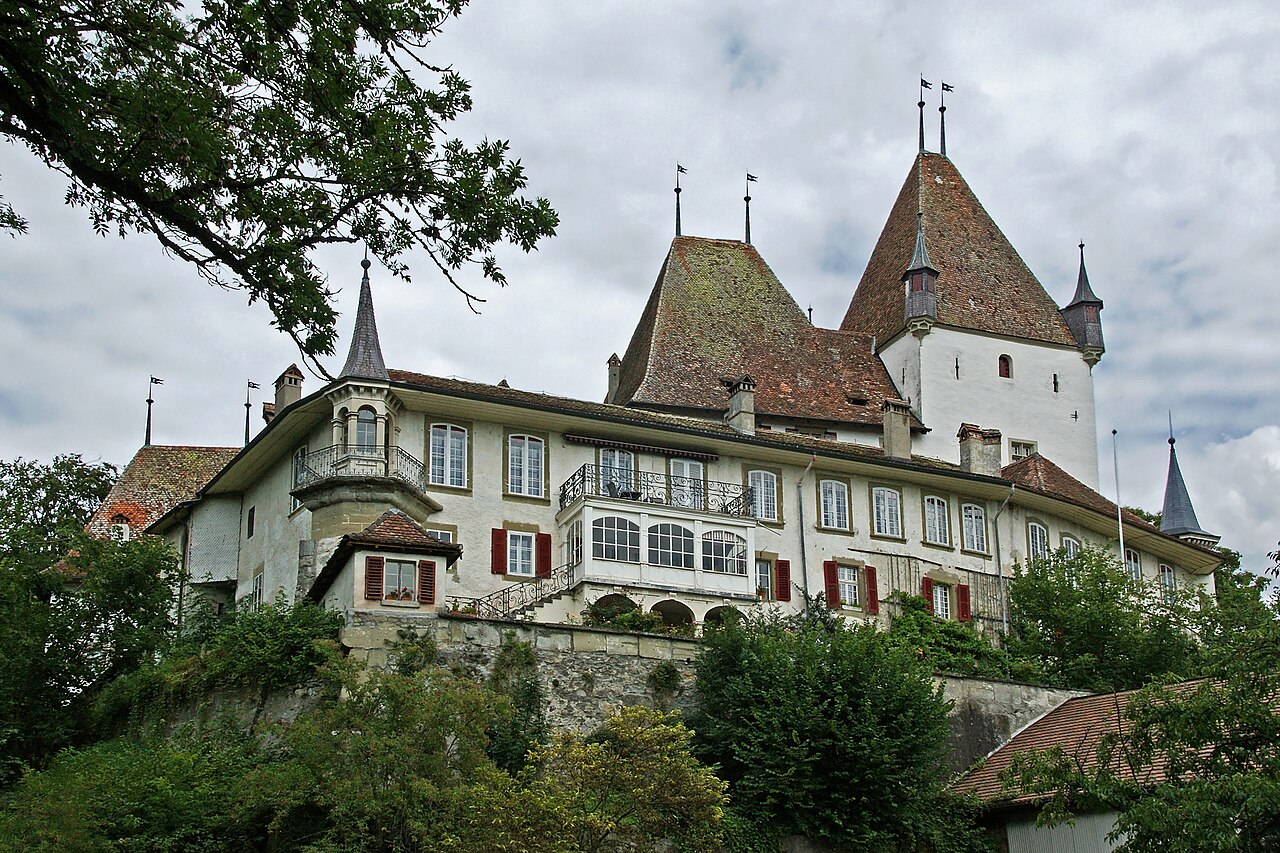
The Protestant Reformation in 1528 led to the secularization of Interlaken Abbey and the transfer of its lands, including Allmendingen, to the control of Bern. This political and religious shift paved the way for the construction of a new castle near the old ruins during the late 16th or early 17th century. Evidence for this timing includes a door in the castle's tower dated 1607. The new structure was commissioned by the Graffenried family, reflecting the Renaissance architectural style that was prevalent in Switzerland during this period.
Architectural features of the Renaissance Allmendingen Castle
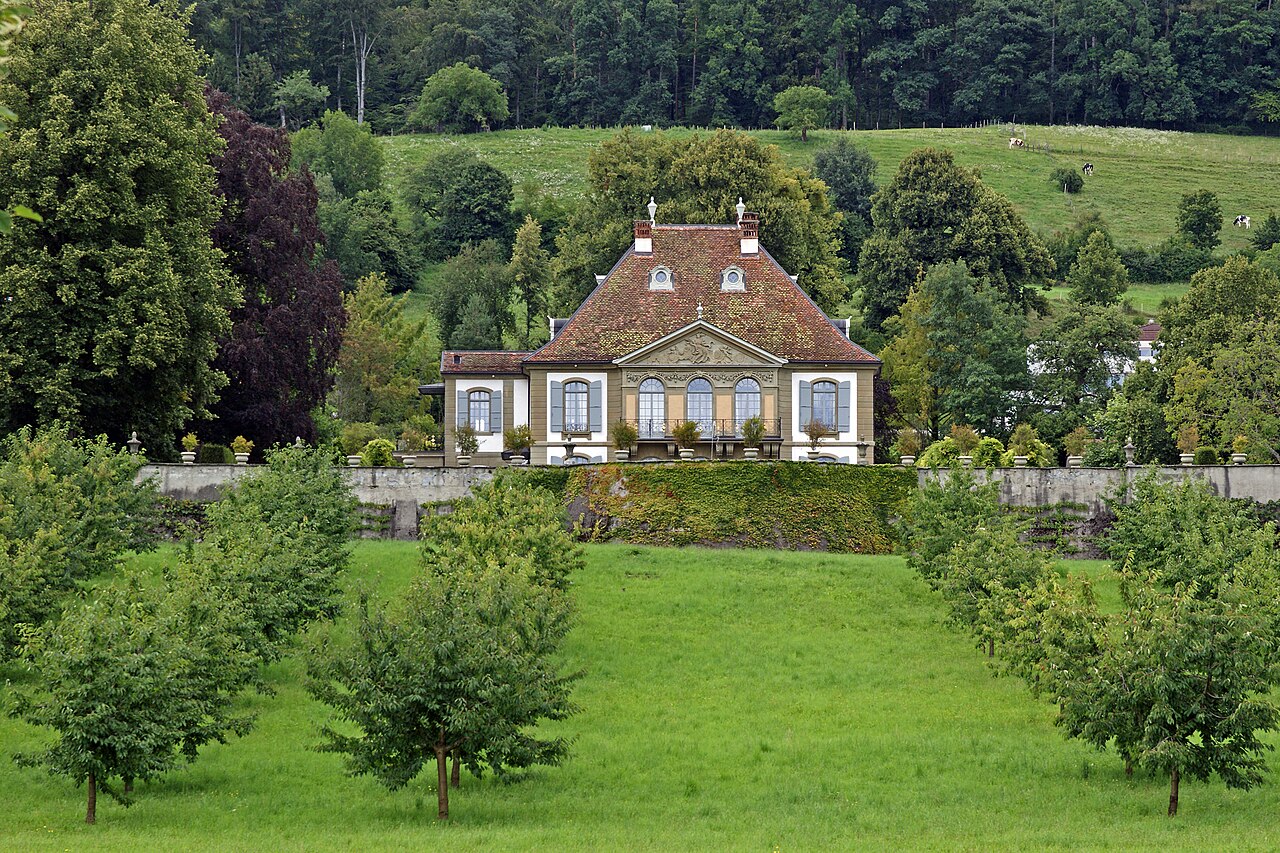
The Renaissance style of the new Allmendingen Castle is characterized by its elegant proportions and decorative elements that contrast with the austere medieval ruins nearby. The castle features a prominent tower that originally had a high pointed roof, later replaced with a lower one, demonstrating evolving architectural tastes and practical adaptations over time. In the 18th century, the castle underwent significant renovations under the guidance of Schultheiss Isaak Steiger and his son Franz Ludwig Steiger. They expanded the castle's footprint by adding a garden courtyard and a connecting arbor, enhancing its residential comfort and aesthetic appeal.
Structural layout and defensive elements
The castle's design includes fortified walls typical of Renaissance noble residences, balancing defense with comfort. The tower remains a focal point, serving both as a lookout and a symbol of status. The garden courtyard introduced in the 18th century reflects the period's emphasis on landscaped spaces as extensions of the living area, blending nature with architecture.
Historical significance and notable events
Allmendingen Castle is not only architecturally significant but also historically notable. On 17 September 1946, the castle hosted a visit from Winston Churchill, underscoring its continued relevance and prestige well into the 20th century. This event highlights the castle's role beyond a noble residence, serving as a site of cultural and political importance.
Preservation and current status
Today, the Renaissance Allmendingen Castle stands well preserved, representing a tangible link between medieval fortifications and Renaissance residential architecture in Switzerland. The original medieval castle remains as ruins nearby, providing a layered historical context that enriches the visitor experience. The castle's preservation allows for ongoing study and appreciation of Swiss architectural evolution from the Middle Ages through the Renaissance and into the modern era.
Visiting Allmendingen Castle
Visitors to Allmendingen Castle can explore the Renaissance structure and view the remains of the medieval fortress, gaining insight into the region's feudal past and architectural heritage. The castle's gardens and courtyard offer a peaceful setting, while the tower provides a vantage point over the surrounding landscape. The site is a valuable destination for those interested in Swiss history, architecture, and the legacy of noble families like the Graffenrieds and Steigers.
Frequently asked questions (FAQ)
- When was Allmendingen Castle originally built?
- The original Allmendingen Castle was constructed during the High Middle Ages, with records mentioning the Lords of Allmendingen between 1239 and 1256.
- What architectural style characterizes the current Allmendingen Castle?
- The present Allmendingen Castle was built in the Renaissance style in the 17th century, featuring a tower and garden courtyard added in the 18th century.
- Can visitors see the ruins of the original medieval castle?
- Yes, the ruins of the original Allmendingen Castle remain visible near the Renaissance castle, offering a glimpse into its medieval past.
- Who owned Allmendingen Castle after the Protestant Reformation?
- After the Protestant Reformation in 1528, the lands including Allmendingen Castle were secularized and taken over by Bern.
- What notable historical figure visited Allmendingen Castle in the 20th century?
- Winston Churchill visited Allmendingen Castle on 17 September 1946, marking a significant event in its modern history.
Information
Loading map...
Visitor reviews
No reviews yet. Been here? Write the first review and help other travelers!
Write the first reviewVisited this castle? Share your experience
Your review helps other travelers and adds first-hand knowledge to our encyclopedia.