Guadalerzas Castle

Guadalerzas Castle in Toledo, Spain
Urda, Spain
High Medieval (11th–13th c.)
Partially Preserved

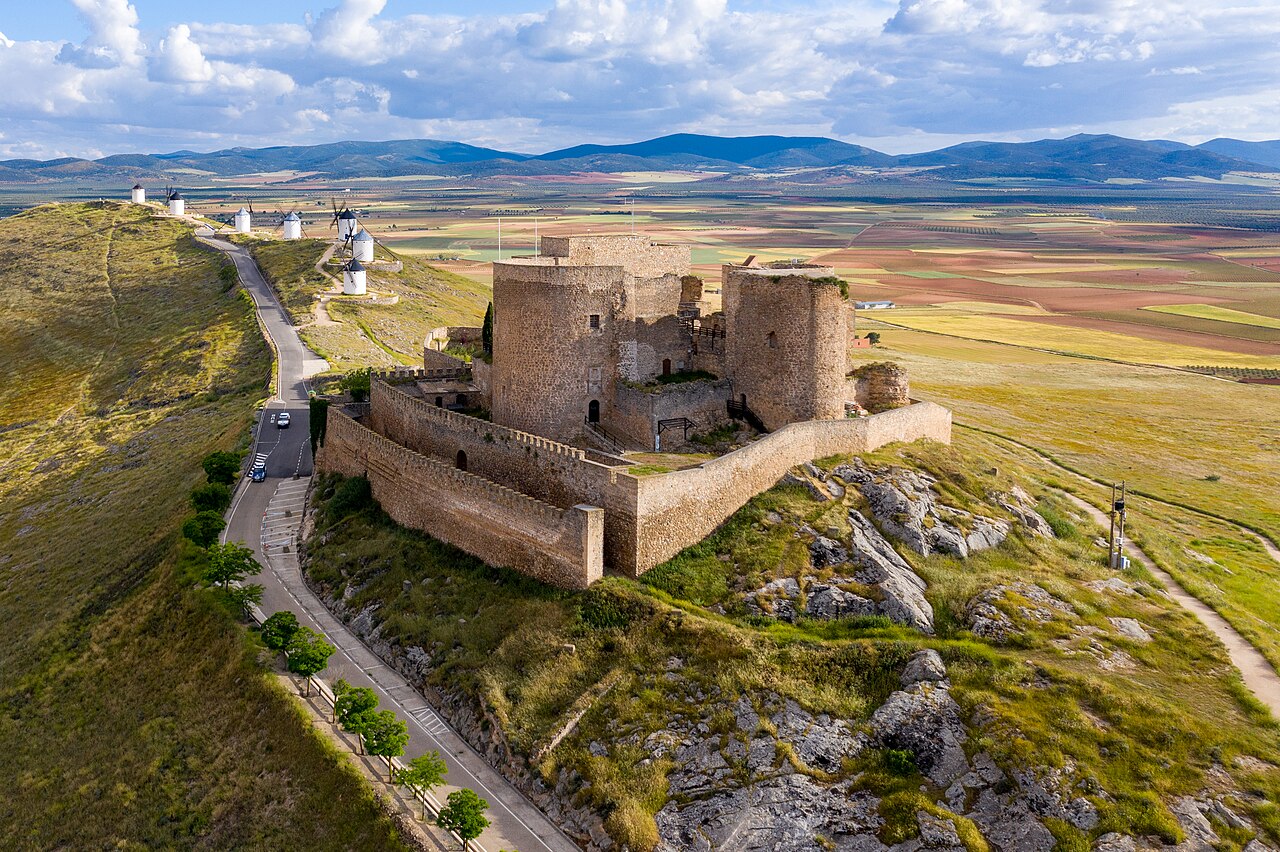
Guadalerzas Castle, also known locally as Castillo de (Las) Guadalerzas, is a prominent high medieval fortress situated on a strategic hill in a rural valley northwest of Urda, within the province of Toledo, Spain. Its location east of the N-401 road places it in a historically significant zone that controlled key mountain passes leading south towards Córdoba.

The origins and early history

The first fortification in this valley was constructed during the period of Arab rule in the Iberian Peninsula. This early Muslim castle served as a defensive stronghold overseeing a critical passage through the mountains, vital for controlling movement between the central plateau and the southern territories. The castle's initial purpose was primarily military, securing the frontier of Al-Andalus.

Following the Christian reconquest efforts, the area came under the control of Alfonso VI of León and Castile in the late 11th and early 12th centuries. The Muslim castle was captured and subsequently came under Christian rule. The governance of this frontier region was entrusted to the Order of Calatrava, a military-religious order instrumental in the Reconquista.

Construction of Guadalerzas Castle

Recognizing the inadequacy of the old Muslim fortification for the new military challenges, the Order of Calatrava commissioned the construction of a new fortress on a hill located further east. This new castle, Guadalerzas Castle, was completed in 1178. Its elevated position provided enhanced defensive capabilities and better control over the surrounding territory.

Upon completion, the old Arab castle was abandoned as the new fortress assumed its strategic functions. Guadalerzas Castle was designed with typical high medieval military architecture features, including robust curtain walls, defensive towers, and a commanding vantage point over the valley.

Military and religious significance

Due to its proximity to the volatile frontier between Christian and Muslim territories, Guadalerzas Castle played a vital role beyond mere defense. It served as a hospital facility managed by three prominent military orders: the Order of Calatrava, the Knights Templar, and the Knights Hospitaller. This dual military and medical function was crucial during the frequent conflicts of the period.

In 1195, following the Battle of Alarcos, the Moors temporarily regained control of the castle and the surrounding region. However, after the decisive Battle of Las Navas de Tolosa in 1212, Christian forces permanently reclaimed the fortress. Although the frontier moved further south, Guadalerzas Castle continued to serve as a hospital and administrative center for the military orders.

Later history and transformation

As the military frontier stabilized and the Reconquista advanced, the castle gradually lost its strategic military importance. In 1572, the castle was sold by Philip II of Spain to Cardinal Juan Martínez Silíceo. The Cardinal repurposed the fortress into a college for girls of noble descent, marking a significant shift from its martial origins to an educational institution.

During the 19th century, specifically after the ecclesiastical confiscations of Mendizábal in the 1830s, the castle was sold to a private individual. It was converted into a residence and a labor house but eventually fell into disuse and was abandoned later that century.

Architectural features and current condition

The castle retains much of its high medieval architectural character, with well-preserved defensive walls and towers that reflect its original military function. Its location on a hill provides commanding views of the surrounding countryside, which remains largely rural and picturesque.

Currently, Guadalerzas Castle is private property and is not open to the public. Access requires a 20-minute walk over private land from the nearest road. Despite its restricted access, the castle remains a remarkable example of medieval fortification in the Toledo region and a witness to the complex history of Christian-Muslim relations during the Reconquista.

Surrounding landscape and accessibility

The castle's setting in an idyllic rural valley adds to its historical ambiance. The surrounding landscape features rolling hills and agricultural land, typical of the Toledo province. Visitors should note that due to private ownership, there is no public access to the interior, and the castle can only be viewed from a distance.

Legacy and cultural significance

Guadalerzas Castle is a significant cultural landmark that illustrates the transition from Muslim to Christian control in central Spain. Its association with three major military orders highlights its importance in medieval military and religious history. The castle's later adaptation into a noble girls' college reflects broader social changes in post-medieval Spain.

Frequently asked questions (FAQ)

What is the historical significance of Guadalerzas Castle?
Guadalerzas Castle, located in Urda, Spain, dates back to the 12th century and played a crucial role during the Reconquista. It served as a strategic military stronghold, showcasing the architectural and defensive techniques of its time.
When was Guadalerzas Castle built?
Construction of Guadalerzas Castle began in the late 12th century, with significant modifications made in subsequent centuries. The castle reflects a blend of Moorish and medieval architectural styles, indicative of its historical context.
Is it possible to visit Guadalerzas Castle?
Yes, Guadalerzas Castle is open to visitors. Access may be subject to certain regulations, so it's advisable to check in advance for any visitor restrictions or guided tour options.
What are the opening hours for Guadalerzas Castle?
Guadalerzas Castle typically opens from 10 AM to 6 PM, but hours may vary seasonally or for special events. It is recommended to verify the current hours before planning your visit.
Can I take photographs at Guadalerzas Castle?
Yes, visitors are encouraged to take photographs while exploring Guadalerzas Castle. However, be respectful of any areas that may have restrictions on photography, especially during guided tours.
What is the best time to visit Guadalerzas Castle?
The best time to visit Guadalerzas Castle is during the spring and fall when the weather is mild. This allows for a more comfortable experience while exploring the castle and its surrounding landscape.
Are there nearby attractions to visit when I go to Guadalerzas Castle?
Yes, nearby attractions include the charming town of Urda and other historical sites in the region. Exploring the local area can enhance your visit and offer additional cultural experiences.
What are the ticket prices for Guadalerzas Castle?
Ticket prices for Guadalerzas Castle are generally affordable, with discounts available for children and seniors. Check the official website or local tourist information for the most current pricing and any available promotions.
How do I get to Guadalerzas Castle?
Guadalerzas Castle is accessible by car and is located near major roads leading to Urda. Public transportation options may be limited, so driving or arranging local transport is the most convenient way to reach the site.

Information

Hill Castle

Loading map...

Visitor reviews

No reviews yet. Been here? Write the first review and help other travelers!

Write the first review

Visited this castle? Share your experience

Your review helps other travelers and adds first-hand knowledge to our encyclopedia.
Write a review

(5/5)

0/2000 characters

Your review will be visible after admin approval

Nearby castles

17.2 km
Consuegra Castle — Spain castle

Consuegra Castle

Consuegra, Spain

Consuegra Castle, also known as Castillo de Consuegra, is a prominent hill castle located on Cerro el Calderico in the province of Toledo, Spain. This fortress dominates the surrounding landscape, offering spectacular views of the countryside and serving as an iconic backdrop to the famous white windmills of Consuegra. Its strategic position atop a ridge has made it a significant military stronghold throughout history. Early origins and moorish period The site of Consuegra Castle has a long history of human occupation, with evidence dating back to the 5th century BCE. Originally, the area was home to the ancient Roman town of Consabura in the 2nd century BCE, which featured typical Roman infrastructure such as baths, defensive walls, an aqueduct, and a circus. The castle itself likely began as a modest fortification during the 10th century under the Caliphate of Córdoba, possibly constructed or enhanced by the military leader Almanzor. During the period of Moorish rule, the castle played a crucial role in the regional power struggles, especially in the civil wars between the caliphates of Toledo and Córdoba. The fortress was a key military asset due to its commanding position and defensive capabilities. Transition to christian control and knights hospitaller influence Between 1085 and 1090, the castle came under the control of the Christian king Alfonso VI. The exact circumstances of this transfer remain unclear, with some sources suggesting it was gained through siege, while others propose it was part of a dowry arrangement. The castle briefly returned to Moorish control before being permanently captured by Alfonso VII in 1147. In 1183, King Alfonso VIII granted the castle to the Knights Hospitaller, a military order formally known as the Order of Saint John of Jerusalem. Recognizing the fortress's strategic importance, Alfonso VIII endowed the castle with the revenue from a tax on the nearby city of Toledo for ten years to fund its maintenance and fortification. Under the Hospitallers, the castle was extensively rebuilt, transforming it from its Moorish origins into a robust medieval fortress with enhanced military and residential features. This reconstruction gave the castle a unique architectural character distinct from other fortifications in the region. Architectural features and layout The castle's design is notable for its three large, irregularly shaped enclosures, each protected by strong defensive walls and multiple (semi-)circular towers. The interior is a complex labyrinth of gates, walkways, stairs, and chambers, all engineered to complicate entry for attackers. Some towers have specific names, such as the Shield Tower and the Bell Tower, reflecting their historical roles or distinctive features. Within the castle grounds, several cisterns were constructed to collect and store water, vital for withstanding sieges. Some of these cisterns were later repurposed as prisons during the 16th and 17th centuries. The castle also included a chapel, which served as a religious center for the knights and residents. A distinctive architectural element is the albarrana tower on the southern side, a circular watchtower separated from the main walls but connected by a raised walkway called an adarve or chemin de ronde. This tower, standing four stories tall, was designed during the Arab period as a forward defense post to launch counterattacks or isolate itself if captured by enemies. Historical significance and later periods Throughout the 14th century, the castle served as the regional headquarters of the Knights Hospitaller, with notable figures such as Fernando Rodríguez de Valbuena acting as prior. The fortress was referenced in contemporary romances, emphasizing its strength and importance in medieval Spain. After the completion of the Reconquista, the castle's military importance declined, leading to periods of neglect. However, in the 17th century, it regained political prominence when Juan José de Austria, Grand Prior of the Order in Castile and prime minister under King Carlos II, used the castle as a leadership base. During the Napoleonic Wars, French forces occupied the castle from 1809 to 1813, causing severe damage during their retreat. The subsequent Mendizábal confiscations in 1836 led to the castle's abandonment and further deterioration due to neglect and fires. Restoration and current status In 1962, the municipality of Consuegra purchased the castle and initiated restoration efforts to preserve this historic monument. Today, the castle is partially restored and open to visitors for a small entrance fee. Restoration has revealed many architectural features, including the vaulted cistern from the Arab period, the barbican, battlements, chapter house, and the restored chapel, which was once the site of the knights' investiture ceremonies. The castle's unusual layout, combining a square core with large cylindrical towers at each side, and its robust defensive walls built from roughly hewn local stone using early concrete techniques, make it an exceptional example of medieval military architecture in Spain. Visitors can explore the castle's three floors, including rooms that once served as kitchens, prisons, and administrative chambers. The castle's elevated position provides panoramic views of the La Mancha plains and the iconic windmills, making it a popular destination for history enthusiasts and tourists alike. Cultural significance and tourism Consuegra Castle is not only a monument of military and architectural importance but also a cultural symbol of the region's rich history. Its image frequently appears in travel literature and promotional materials for Castilla-La Mancha, highlighting its role as a landmark of Spanish heritage. The castle's combination of Moorish origins, Christian reconquest, and the influence of the Knights Hospitaller offers visitors a comprehensive narrative of Spain's complex medieval past. The site is accessible via a dead-end road leading up the hill, ensuring a peaceful visit complemented by the spectacular natural surroundings.

Renaissance (15th–17th c.)
Details
19.9 km

Manzaneque Castle

Manzaneque, Spain

Manzaneque Castle, locally known as Castillo de Manzaneque, is a historic fortress located in the heart of the town of Manzaneque in the province of Toledo, Spain. This late medieval hill castle stands as a testament to the region's turbulent history and the architectural styles that shaped Spanish fortifications during the 15th century. Constructed primarily in the 15th century by Don Íñigo de Ávalos, the castle was originally built to serve both as a defensive stronghold and a noble residence. Its strategic location in the town center allowed it to oversee and protect the surrounding territory. Over time, the castle passed through the hands of several prominent figures, including Don Álvarez de Toledo, who was the Secretary to the Catholic Monarchs, Queen Isabella I of Castile and King Ferdinand II of Aragon. Later, it became the property of the Counts of Cedillo, who eventually abandoned it, leading to changes in its function and condition. Architectural design and features The castle is characterized by its rectangular layout, a common design choice for fortifications of its period, providing a compact and easily defensible structure. Originally, it was surrounded by a moat and an outer defensive wall equipped with corner towers. These features enhanced its defensive capabilities by creating multiple layers of protection against invaders. Unfortunately, both the moat and the outer wall with its towers have disappeared over the centuries, likely due to neglect and urban development. The main entrance is notable for its pointed arch doorway, emblematic of the Gothic architectural style prevalent in the late medieval period. Above this entrance, visitors can observe the heraldic shields of the Figueroa and Orozco noble families, carved in stone. These emblems not only serve as decorative elements but also symbolize the castle's historical connections to these influential lineages, suggesting that parts of the castle or a predecessor structure may have existed before the 15th century. At the heart of the castle stands a prominent keep, also known as the tower of homage. This was the most fortified part of the castle, serving as the last refuge during sieges and a symbol of the lord's authority. The keep's robust construction and elevated position within the castle complex highlight its importance in both defense and governance. Historical significance and ownership The castle's history reflects the broader political and social dynamics of late medieval Spain. Its initial construction by Íñigo de Ávalos coincided with a period of consolidation of Christian power after the Reconquista. The castle's transfer to Don Álvarez de Toledo, a key figure in the court of the Catholic Monarchs, underscores its strategic and political importance during the unification of Spain under Isabella and Ferdinand. In the centuries that followed, the castle's role evolved. It was repurposed as the town hall at one point, demonstrating its integration into the civic life of Manzaneque. During the Carlist Wars in the 19th century, specifically in 1833, the castle served as a refuge for local inhabitants fleeing from Carlist troops, highlighting its continued defensive value even as military technology and tactics changed. Restoration and preservation efforts By the early 20th century, the castle had fallen into a state of disrepair. Recognizing its cultural and historical value, restoration efforts were undertaken to preserve its structure and prevent further deterioration. These restorations focused on consolidating the existing walls and maintaining the castle's distinctive Gothic features, especially the entrance and the keep. Today, Manzaneque Castle is protected under Spanish heritage laws enacted in 1949, which safeguard historic castles from alterations that could compromise their integrity or lead to structural damage. Its status as a protected cultural monument ensures ongoing preservation and highlights its importance as part of Spain's architectural and historical heritage. Visiting manzaneque castle Manzaneque Castle is accessible to visitors by appointment, offering a unique opportunity to explore a well-preserved example of a late medieval hill castle in the heart of Spain. While it is not open for casual walk-in visits, arranging a guided tour allows visitors to appreciate its architectural details, historical context, and the noble heraldry that adorns its entrance. The castle's location within the urban fabric of Manzaneque provides an intimate glimpse into how medieval fortifications were integrated into town life. Visitors can observe the castle's relationship to the surrounding streets and buildings, gaining insight into the defensive strategies and residential functions of such structures. Architectural and cultural context Manzaneque Castle exemplifies the transition from purely military fortifications to residences that also conveyed social status and power. Its Gothic entrance and heraldic decorations reflect the aesthetic values of the late medieval Spanish nobility, while its defensive features speak to the ongoing need for security in a period marked by political upheaval. The castle's square plan and central keep are typical of late medieval military architecture in Castile-La Mancha, combining functionality with symbolic presence. The loss of its moat and outer walls is common among many such castles, as changing military technology and urban expansion rendered some defensive features obsolete. Overall, Manzaneque Castle remains a significant cultural landmark, embodying centuries of Spanish history and architectural evolution. Its preservation allows current and future generations to connect with the rich heritage of Toledo province and the broader narrative of medieval Spain.

Late Medieval (14th–15th c.)
Details
22 km

Orgaz Castle

Orgaz, Spain

Orgaz Castle stands in the village of Orgaz, located in the province of Toledo, Spain. This late-medieval fortress reflects the turbulent history of the region during the 14th and 15th centuries. Despite its placement on flat terrain within the village, the castle was once fortified with a moat and an outer enclosure, emphasizing its defensive role. Historical background and ownership The castle's origins as a Christian stronghold date back to the 14th and 15th centuries. It was granted by King Pedro I to Martin Fernández, marking its importance in the medieval political landscape. Later, King Carlos I bestowed the title of Count of Orgaz upon Don Álvaro Pérez de Guzmán, linking the castle to one of Spain's noble families. However, the castle suffered significant damage when royal troops set it on fire during conflicts with the Comuneros, local rebels allied with the villagers resisting the crown. By the 18th century, the castle was abandoned, reflecting the decline of such fortifications as military strongholds in the region. Architectural features and layout Structure and plan The castle has a rectangular ground plan with a notable projecting keep on its south side, rising approximately 20 meters high. This keep served as the main defensive tower and last refuge during sieges. On the east side, a distinctive semicircular apse-like tower protrudes, adding to the castle's unique silhouette. Its walls are primarily constructed of rubblework masonry, interspersed with patches of ashlar masonry, indicating repairs or reinforcements over time. The castle also features five small turrets that contribute to its defensive capabilities and aesthetic appeal. Entrance and decorative elements The entrance is situated adjacent to the keep and is marked by a Renaissance-style door that bears the coat of arms of the Guzmán family. This entrance reflects the architectural transition from medieval fortification to Renaissance influence, highlighting the castle's evolving role and status. Defensive features and village integration Despite its location on level ground and within the village, the castle was equipped with a moat and an outer enclosure, which would have provided additional layers of defense against attackers. The integration of the castle into the village layout indicates its importance as a local power center and protective structure for the inhabitants. Current condition and accessibility Thanks to various restoration efforts, Orgaz Castle remains in a good state of preservation. However, public access appears limited, as the castle was closed at the time of recent visits, and it is unclear whether it currently serves any public or private function. Its status as a well-preserved late-medieval castle makes it a notable example of regional military architecture, though it remains a modest village fortress rather than a grand palace. Significance and architectural context Orgaz Castle exemplifies the late-medieval military architecture typical of Castile-La Mancha, combining functional defensive design with elements of Renaissance style. Its 20-meter-high keep and unique semicircular tower distinguish it among other Spanish castles of the period. The castle's history, marked by royal patronage and conflict during the Comuneros uprising, reflects the broader political and social upheavals of 15th-century Spain. While smaller and less famous than many Spanish fortresses, Orgaz Castle offers valuable insight into the evolution of castle construction and the shifting roles of such structures from purely military to noble residences.

Late Medieval (14th–15th c.)
Details

