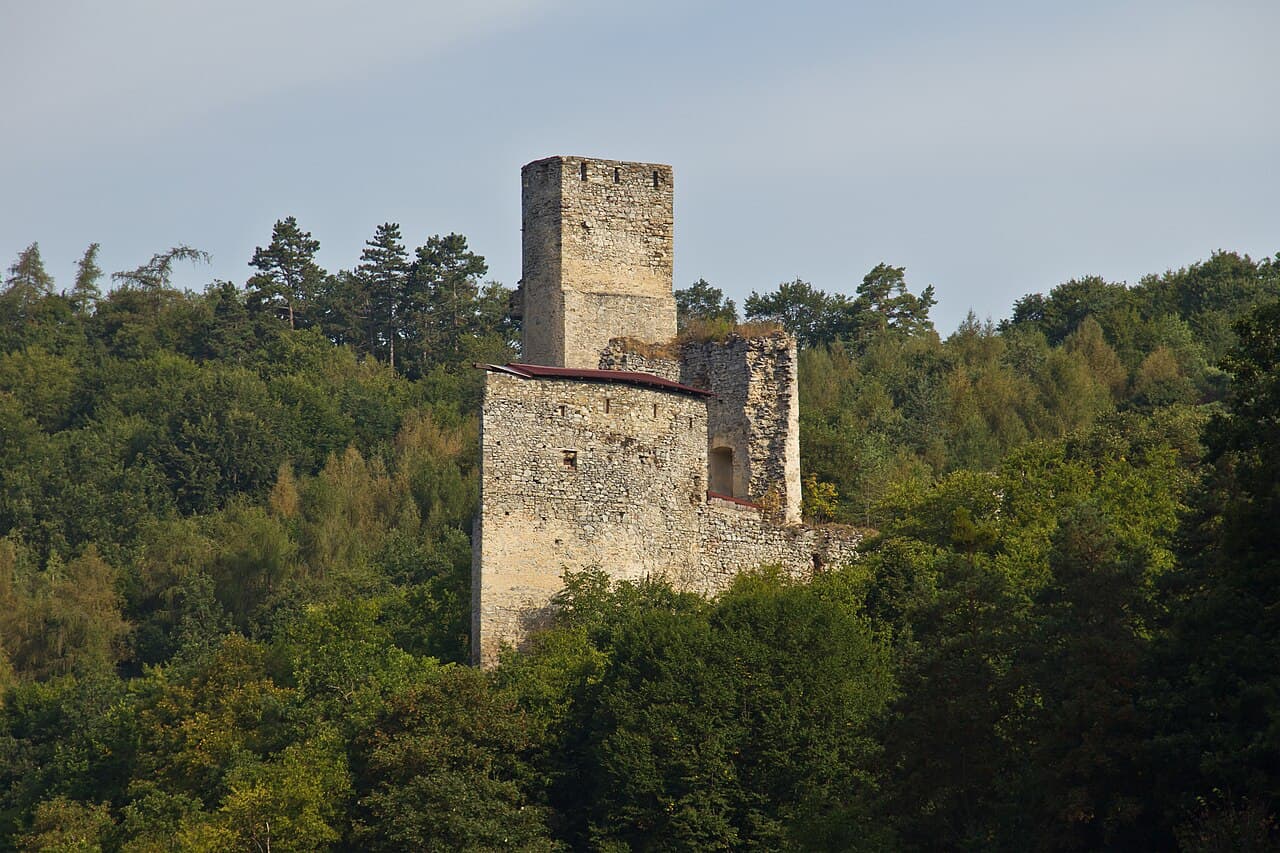
Grub Castle
Grub Castle, locally known as Burg Grub, is a significant medieval castle ruin located in the quiet hamlet of Grub, west of the city of Horn in the province of Lower Austria. This castle stands as a testament to the region's turbulent history and the shifting fortunes of noble families over several centuries. It is a remarkable example of a high medieval fortress that witnessed sieges, ownership changes, and eventual destruction before undergoing restoration efforts in the 20th century.
Early history and construction
The earliest documented mention of Grub Castle dates back to 1237, with the reference to a Pilgrimus de Grueb. This suggests that the castle was likely constructed in the late 12th or early 13th century, aligning with the high medieval period of castle building in Austria. The castle's strategic location in Lower Austria would have made it an important defensive and administrative site during this era.
Ownership and noble families
The truchsess family and the 1372 siege
In 1372, Grub Castle was under the ownership of the Truchsess family. During this time, the castle endured a significant siege lasting four weeks by Duke Albert. This event highlights the castle's military importance and its role in regional conflicts during the late medieval period.
Transition to the matschach and rauber families
By the mid-15th century, the castle had passed to the Matschach family, a knightly family from the Austrian province of Styria, following the ennoblement of the Truchsess von Grub family in 1464/65. Later, in 1525, ownership transferred to the Rauber family, who also held other notable castles such as Dobra Castle and Krumau Castle. These transitions reflect the castle's continued significance among the regional nobility.
Later ownership and decline
In 1572, the castle came into the possession of the Auerberg family through inheritance, and by 1593 it was owned by the Protestant Puchheim family. However, the castle's fortunes declined dramatically in the early 17th century.
Destruction and ruin
In 1620, Grub Castle was destroyed by the forces of Bavarian Duke Maximilian I during the conflicts of that period. The destruction was so severe that the castle never fully recovered and gradually fell into ruin. Despite this, the fiefdom changed hands several times, passing to the Traun family in 1621 and later to the Selb family in 1668. Eventually, in 1767, the Altenburg Abbey acquired the castle domain.
20th-century restoration efforts
By the mid-20th century, Grub Castle was in private hands and faced the threat of being used as a quarry. Thankfully, this was prevented, and in 1970 the castle was purchased by Franz Josef and Maria Magdalena Hampapa, a couple dedicated to restoring the historic site. They undertook extensive restoration work to preserve the castle ruins, reviving its historical presence in the region. Franz Josef Hampapa passed away in 2006, and the current ownership status is unclear.
Architectural features and current condition
Today, Grub Castle remains a partially restored medieval ruin, notable for its fortified walls and remnants of its chapel, which was first documented in 1429. The castle's layout and surviving structures offer insights into medieval defensive architecture typical of the high medieval period. Although the castle is closed to the public currently and cannot be reached by car, it remains a point of interest for visitors and historians fascinated by Austria's medieval heritage.
Visiting and accessibility
Previously, during the Hampapas' stewardship, the castle was accessible to visitors in the summer months. However, it is now closed, and access is limited due to its remote location and lack of direct road access. Visitors interested in exploring the castle ruins should plan accordingly and be prepared for a walk through the village of Grub.
Historical significance
Grub Castle stands as a symbol of the feudal history of Lower Austria, reflecting the region's medieval power struggles and noble lineage. Its survival through sieges, ownership changes, destruction, and restoration encapsulates the dynamic history of Austrian castles. The castle's story enriches the cultural tapestry of the area and offers valuable insights into the architectural and social developments of the high medieval period.
Frequently asked questions (FAQ)
- When was Grub Castle built?
- Grub Castle was likely built in the late 12th or early 13th century, with the first documented mention in 1237.
- Who owned Grub Castle during the 14th century?
- In 1372, the castle was owned by the Truchsess family and was besieged by Duke Albert for four weeks.
- What happened to Grub Castle in 1620?
- In 1620, Grub Castle was destroyed by Bavarian Duke Maximilian I and subsequently fell into ruin.
- Is Grub Castle open to visitors today?
- Currently, Grub Castle is closed to the public and cannot be reached by car, but it was accessible during summer months in the past.
- Who restored Grub Castle in the 20th century?
- Franz Josef and Maria Magdalena Hampapa purchased the castle in 1970 and carried out extensive restoration work.
Photo gallery

Information
Current owner
Private owner
Loading map...
Visitor reviews
No reviews yet. Been here? Write the first review and help other travelers!
Write the first reviewVisited this castle? Share your experience
Your review helps other travelers and adds first-hand knowledge to our encyclopedia.



