Groznaya — Russia castle

Groznaya

Groznaya castle
Modern (19th–20th c.)

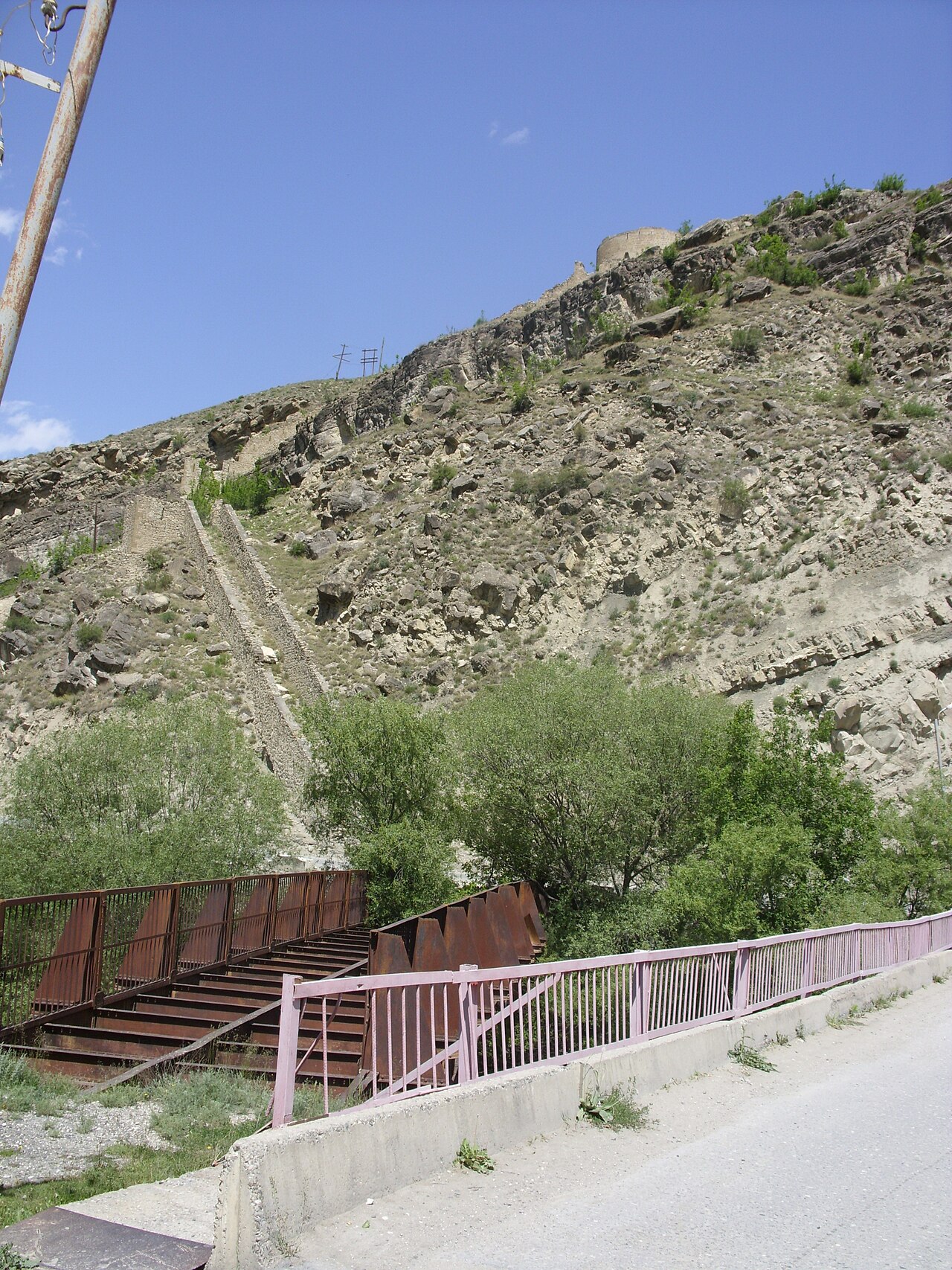
Groznaya Castle is a notable example of a 19th-century hill castle located within the Russian Federation. Although the exact city of its location remains unspecified, the castle's construction during the modern period places it within a significant era of architectural and military development in Russia.

Architectural characteristics and strategic location

As a hill castle, Groznaya was deliberately built on elevated terrain to maximize its defensive capabilities and provide commanding views over the surrounding landscape. This strategic positioning allowed for early detection of approaching enemies and enhanced its role as a military stronghold. The castle's design likely incorporates typical features of hill castles such as fortified walls, towers, and possibly battlements adapted to the terrain.

The 19th century was a period of transition in castle construction, blending traditional fortification methods with emerging modern military architecture. Groznaya Castle may have integrated stone masonry with newer defensive innovations to withstand contemporary warfare tactics.

Historical context and significance

Constructed in the 19th century, Groznaya Castle reflects Russia's efforts to reinforce its border defenses and internal security during a time of political change and modernization. While specific historical events linked to the castle are not well documented, its existence underscores the continued importance of fortified structures in Russia's military strategy during the modern era.

Current status and preservation

The current condition of Groznaya Castle is not clearly documented, but given its age and historical value, it may be in a state ranging from partially preserved to restored. Castles from this period often face challenges related to preservation due to changes in military technology and shifts in political priorities.

Cultural and architectural importance

Groznaya Castle represents a link between traditional medieval fortifications and the evolving military architecture of the 19th century in Russia. Its presence contributes to the understanding of regional defense systems and architectural adaptations to modern warfare. The castle's hilltop location and construction techniques provide valuable insights into the strategic thinking of the period.

Visitors and scholars interested in Russian military history and castle architecture may find Groznaya Castle a subject worthy of further research and exploration, particularly to uncover more detailed information about its design, use, and historical role.

Frequently asked questions (FAQ)

How do I get to Groznaya Castle?
Groznaya Castle is located in the picturesque region of the Russian Federation, and can be accessed by car or public transportation from nearby cities. It is advisable to check local transport schedules, as they may vary depending on the season.
What is the historical significance of Groznaya Castle?
Groznaya Castle dates back to the 16th century and played a crucial role in the defense of the region against invasions. Its rich history includes tales of battles and sieges, making it a significant landmark for understanding the area's past.
When was Groznaya Castle built?
Construction of Groznaya Castle began in the early 16th century, with various renovations and expansions occurring over the centuries. This long history contributes to its architectural diversity and makes it a fascinating site for visitors.
Can I take guided tours of Groznaya Castle?
Yes, guided tours of Groznaya Castle are available, providing visitors with in-depth knowledge of its history and architecture. It is recommended to book in advance, especially during peak tourist seasons.
Why is the architecture of Groznaya Castle unique?
The architecture of Groznaya Castle combines elements of traditional Russian fortifications with influences from various periods due to its long history. This blend of styles makes it a unique example of the region's architectural evolution.
Is it possible to visit Groznaya Castle year-round?
Yes, Groznaya Castle is open to visitors year-round, though certain areas may be restricted during winter months due to weather conditions. It is best to check the official website for specific opening hours and seasonal events.
What are the ticket prices for Groznaya Castle?
Ticket prices for Groznaya Castle vary depending on the type of tour and age group. Discounts may be available for students and seniors, so it's advisable to check the pricing details before your visit.
What is the best time to visit Groznaya Castle?
The best time to visit Groznaya Castle is during the spring and early autumn when the weather is mild, and the surrounding landscape is particularly beautiful. This timing also allows visitors to enjoy seasonal events and activities hosted at the castle.
Are there any nearby attractions to Groznaya Castle?
Yes, there are several attractions near Groznaya Castle, including scenic parks and historical sites that showcase the region's rich cultural heritage. Exploring these nearby locations can enhance your visit and provide a fuller understanding of the area's history.

Photo gallery

Groznaya
Click to view

Photo by А.П.Дьяконова•Public domain

1 photo • Click any image to view in full screen

Information

Hill Castle

Loading map...

Visitor reviews

No reviews yet. Been here? Write the first review and help other travelers!

Write the first review

Visited this castle? Share your experience

Your review helps other travelers and adds first-hand knowledge to our encyclopedia.
Write a review

(5/5)

0/2000 characters

Your review will be visible after admin approval

Nearby castles

71.5 km
Nazran Fortress — Russia castle

Nazran Fortress

, Russia

Nazran Fortress is a significant example of a 19th-century bastioned fortress located in the Russian Federation. Constructed during the modern period, this fortress reflects the military architectural developments of its time, designed primarily for defense and control in a region of strategic importance. Historical context and strategic importance Built in the 19th century, Nazran Fortress was part of the Russian Empire's efforts to secure its southern borders and maintain control over the volatile Caucasus region. The fortress served as a military stronghold, designed to withstand artillery attacks and provide a base for troops operating in the area. Its construction corresponds with a period of increased military activity and fortification building in the Russian Empire, reflecting advances in military engineering and the need to adapt to new warfare technologies. Architectural features and design The fortress is classified as a bastioned fortress, a style characterized by angular bastions projecting from the main walls. These bastions allowed defenders to cover adjacent walls with gunfire, eliminating blind spots and enhancing the fortress's defensive capabilities. The design incorporates thick walls and low profiles to better absorb and deflect artillery fire, a common feature in fortifications built after the advent of gunpowder artillery. Nazran Fortress likely features a surrounding moat or ditch, ramparts, and a series of gates designed to control access. The bastions are positioned to provide overlapping fields of fire, a tactical innovation that improved the fortress's resilience against siege warfare. The layout would have included barracks, armories, and storage facilities within the walls to support prolonged military occupation. Role in regional military history Throughout its operational history, Nazran Fortress played a role in various military campaigns and regional conflicts. Its presence helped to stabilize Russian control in the Caucasus, serving as a deterrent against local uprisings and external threats. The fortress's strategic location enabled rapid deployment of forces and acted as a secure logistics hub. Current condition and preservation Today, Nazran Fortress is recognized for its historical and architectural significance. While detailed information about its current condition is limited, bastioned fortresses from this era often face challenges related to preservation due to their size and the materials used in construction. Efforts to maintain or restore such structures are important for cultural heritage and provide insight into 19th-century military architecture. Visiting information and cultural significance Visitors interested in military history and fortress architecture may find Nazran Fortress a valuable site to explore. The fortress exemplifies the transition in fortification design prompted by advancements in artillery technology. It also offers a tangible connection to the historical military strategies employed by the Russian Empire in the Caucasus region.

Modern (19th–20th c.)
Details
87.1 km
Preobragenskaya Fortress — Russia castle

Preobragenskaya Fortress

, Russia

The Preobragenskaya Fortress is a significant example of a 19th-century bastioned fortress located in the Russian Federation. This fortress represents the evolution of military architecture during the modern period, characterized by the use of bastions—angular structures projecting outward from the main walls—to improve defensive capabilities against artillery attacks. Historical context and construction Constructed in the 19th century, the Preobragenskaya Fortress reflects a period in Russian history when fortifications were adapting to advances in artillery technology and changing military tactics. The fortress was likely built as part of a broader defensive strategy to protect key territories or strategic points within the Russian Empire during a time of frequent military conflicts and territorial adjustments. Architectural features and design The fortress is classified as a bastioned fortress, a style that emerged prominently in the early modern period and continued into the 19th century. This design incorporates angular bastions protruding from the main curtain walls, allowing defenders to cover adjacent walls with overlapping fields of fire, reducing blind spots and enhancing the fortress's defensive perimeter. The walls of the Preobragenskaya Fortress are robustly constructed to withstand artillery bombardment, and the bastions are arranged to maximize defensive coverage. The fortress likely includes other typical features such as moats, ravelins (triangular fortifications placed in front of the curtain walls), and casemates (vaulted chambers within the walls for artillery and troops). Military significance and role During the 19th century, bastioned fortresses like Preobragenskaya played a crucial role in regional defense, controlling important routes and serving as military strongholds. The fortress would have been garrisoned by troops trained to operate the artillery and defend the complex against sieges or attacks. Its strategic position within the Russian Federation would have contributed to local security and the projection of military power, especially in times of conflict or political unrest. Preservation and current condition The current condition of the Preobragenskaya Fortress is not widely documented, but many similar 19th-century bastioned fortresses in Russia have survived in various states ranging from well-preserved to ruins. Preservation efforts, if any, would focus on maintaining the structural integrity of the bastions and curtain walls, as well as protecting the site from environmental damage. Architectural legacy and cultural importance As a representative of modern military architecture in Russia, the Preobragenskaya Fortress offers valuable insights into the defensive strategies and architectural innovations of the 19th century. It stands as a historical monument reflecting the military engineering advancements of its time and contributes to the understanding of Russia's military history and heritage. Visiting information and accessibility Details about public access, visiting hours, and ticket prices for the Preobragenskaya Fortress are not readily available. Visitors interested in military history and fortress architecture should seek local information or contact regional heritage organizations for guidance. Frequently asked questions What is the architectural style of Preobragenskaya Fortress?The fortress is designed as a bastioned fortress, typical of modern military architecture in the 19th century, featuring angular bastions for improved defense. When was the Preobragenskaya Fortress built?It was constructed in the 19th century during the modern period of military fortification development. Can visitors tour the fortress?Public visiting information is limited; interested visitors should check with local authorities or heritage organizations for access details. What was the military purpose of the fortress?The fortress served as a defensive stronghold to protect strategic locations and control military routes within the Russian Federation. Is the fortress well preserved?The current preservation status is unclear, but many similar fortresses from the period range from well-preserved to ruins.

Modern (19th–20th c.)
Details
103.8 km

Keselo Castle Ruins

Omalo, Georgia

Keselo castle ruins stand prominently above the village of Omalo in the historic region of Tusheti, Georgia. This small medieval fortress is nestled on the northern slopes of the Greater Caucasus Mountains, a strategic location near the borders of the Republic of Chechnya and Dagestan to the north, with the Georgian historic provinces of Kakheti and Pshav-Khevsureti lying to the south and east. The fortress played a crucial role in the defense of local communities during turbulent periods in the region's history. Constructed in the 1230s during the Mongol invasions of Georgia, Keselo originally comprised 13 defensive towers. These towers were built by the indigenous Tush peoples to serve as temporary refuges during raids. The fortress's elevated position and robust stone towers provided protection not only against Mongol forces but also later against incursions from Daghestani tribal groups. The towers' design reflects the traditional defensive architecture of the region, characterized by thick stone walls and narrow windows suitable for archers. Historical context and strategic importance The 13th century was a period marked by frequent invasions and instability in the Caucasus. The Mongol invasions brought widespread destruction, and local communities sought to fortify their settlements. Keselo's construction during this period underscores the need for secure strongholds in the mountainous terrain. The fortress's location above Omalo allowed for early warning of approaching enemies and served as a last line of defense. Architectural features and construction techniques Keselo fortress was originally composed of multiple stone towers strategically placed to provide overlapping fields of defense. The towers are typical of Tush defensive architecture, built with local stone and mortar, featuring narrow embrasures for defense and thick walls to withstand sieges. The fortress's layout took advantage of the natural rocky terrain, integrating the towers into the landscape to maximize protection. The towers were connected by defensive walls, creating an enclosed compound where villagers could retreat during raids. The design reflects a hill castle typology, utilizing elevation for defense and surveillance. The fortress's construction techniques are rooted in medieval methods, emphasizing durability and functionality over ornamental design. Decline and restoration efforts By the 20th century, most of Keselo's towers had fallen into ruin due to centuries of neglect and the harsh mountain climate. The fortress had lost much of its former defensive capability and was largely a historical relic. In 2003, a significant restoration project began, funded initially by Henk and Eliane Hooft, a Dutch family residing in Georgia, and later supported by the Keselo Foundation. This project aimed to rebuild five of the original towers using traditional medieval Tush construction techniques. The restoration respected the fortress's original materials and methods, ensuring historical accuracy and cultural authenticity. Alongside the reconstruction, archaeological excavations uncovered a variety of artefacts, including ancient rock art motifs and Bronze Age axes and jewellery, indicating the site's long-standing significance well before the medieval period. These findings enrich the understanding of the region's prehistoric and historic occupation. Keselo's cultural significance today Today, Keselo castle ruins serve as a symbol of Tush resilience and cultural heritage. The fortress is a popular destination for visitors interested in medieval architecture and Caucasian history. Nearby, a monument in the village of Dartlo commemorates the region's history, and a tower in Khiso, on the road to Omalo, has also been rebuilt as part of the cultural preservation efforts. The site offers insight into the defensive strategies of mountain communities and the architectural ingenuity required to survive in a challenging environment. Keselo remains a testament to the enduring legacy of the Tush peoples and their medieval fortifications in the Caucasus.

High Medieval (11th–13th c.)
Details