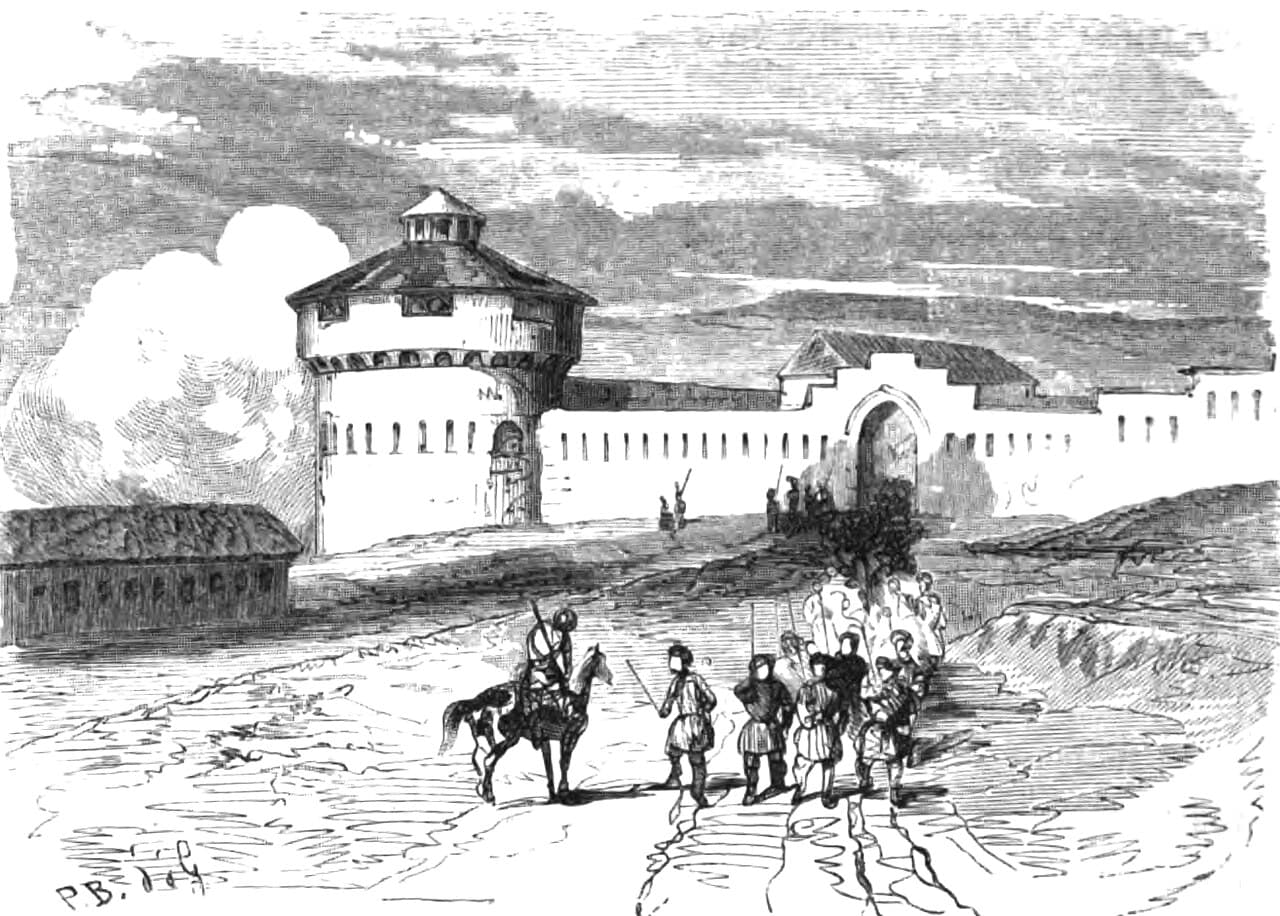
Nazran Fortress — Russia castle

Nazran Fortress

Nazran Fortress: 19th-century bastioned fortress in Russia
Modern (19th–20th c.)

Nazran Fortress is a significant example of a 19th-century bastioned fortress located in the Russian Federation. Constructed during the modern period, this fortress reflects the military architectural developments of its time, designed primarily for defense and control in a region of strategic importance.

Historical context and strategic importance

Built in the 19th century, Nazran Fortress was part of the Russian Empire's efforts to secure its southern borders and maintain control over the volatile Caucasus region. The fortress served as a military stronghold, designed to withstand artillery attacks and provide a base for troops operating in the area. Its construction corresponds with a period of increased military activity and fortification building in the Russian Empire, reflecting advances in military engineering and the need to adapt to new warfare technologies.

Architectural features and design

The fortress is classified as a bastioned fortress, a style characterized by angular bastions projecting from the main walls. These bastions allowed defenders to cover adjacent walls with gunfire, eliminating blind spots and enhancing the fortress's defensive capabilities. The design incorporates thick walls and low profiles to better absorb and deflect artillery fire, a common feature in fortifications built after the advent of gunpowder artillery.

Nazran Fortress likely features a surrounding moat or ditch, ramparts, and a series of gates designed to control access. The bastions are positioned to provide overlapping fields of fire, a tactical innovation that improved the fortress's resilience against siege warfare. The layout would have included barracks, armories, and storage facilities within the walls to support prolonged military occupation.

Role in regional military history

Throughout its operational history, Nazran Fortress played a role in various military campaigns and regional conflicts. Its presence helped to stabilize Russian control in the Caucasus, serving as a deterrent against local uprisings and external threats. The fortress's strategic location enabled rapid deployment of forces and acted as a secure logistics hub.

Current condition and preservation

Today, Nazran Fortress is recognized for its historical and architectural significance. While detailed information about its current condition is limited, bastioned fortresses from this era often face challenges related to preservation due to their size and the materials used in construction. Efforts to maintain or restore such structures are important for cultural heritage and provide insight into 19th-century military architecture.

Visiting information and cultural significance

Visitors interested in military history and fortress architecture may find Nazran Fortress a valuable site to explore. The fortress exemplifies the transition in fortification design prompted by advancements in artillery technology. It also offers a tangible connection to the historical military strategies employed by the Russian Empire in the Caucasus region.

Frequently asked questions (FAQ)

How do I get to Nazran Fortress?
Nazran Fortress is located in the Republic of Ingushetia, Russia. You can reach it by car or public transport from major cities like Nazran or Magas. There are also guided tours available that provide transportation and insights into the fortress's history.
What is the historical significance of Nazran Fortress?
Nazran Fortress, built in the 18th century, served as a strategic military outpost during the Caucasian War. It played a crucial role in the defense against various invasions and has significant cultural importance for the Ingush people. Today, it stands as a symbol of regional heritage.
When was Nazran Fortress constructed?
Nazran Fortress was constructed between 1810 and 1820 as part of Russia's efforts to secure its territories in the Caucasus region. The fortress's construction reflects the architectural styles of that period, aimed at both defense and habitation.
Can I visit Nazran Fortress year-round?
Yes, you can visit Nazran Fortress throughout the year. However, the best time to visit is during the spring and early autumn months when the weather is mild and conducive for exploration. Be sure to check local weather conditions before planning your trip.
Why is the architecture of Nazran Fortress unique?
The architecture of Nazran Fortress features a blend of traditional Caucasian design and Russian military fortification styles. Its robust stone walls and strategic layout reflect its historical function as a defensive stronghold. This unique architectural style makes it a significant site for both history enthusiasts and architecture lovers.
Is it possible to take guided tours of Nazran Fortress?
Yes, guided tours of Nazran Fortress are available and highly recommended for visitors. These tours provide valuable insights into the fortress's history, architecture, and its role in regional conflicts. You can book a tour in advance through local tourism agencies.
What are the opening hours for Nazran Fortress?
Nazran Fortress is generally open to visitors from 9 AM to 6 PM daily. However, it's advisable to check in advance for any seasonal changes or special events that might affect these hours. Always consider arriving early to fully enjoy the site.
Are there any nearby attractions to visit?
Yes, there are several nearby attractions, including the ancient tower complexes of Ingushetia and the picturesque landscapes of the Caucasus Mountains. The city of Nazran itself offers cultural experiences, such as local markets and traditional cuisine, enhancing your visit to the fortress.
What are the ticket prices for visiting Nazran Fortress?
The entrance to Nazran Fortress is typically free for visitors, though guided tours may have associated costs. It is best to check with local tourism offices for the most current pricing and any special events that might require a ticket.

Photo gallery

Nazran Fortress
Click to view

Photo by Floriant Gille•Public domain

1 photo • Click any image to view in full screen

Information

Bastioned Fortress

Loading map...

Visitor reviews

No reviews yet. Been here? Write the first review and help other travelers!

Write the first review

Visited this castle? Share your experience

Your review helps other travelers and adds first-hand knowledge to our encyclopedia.
Write a review

(5/5)

0/2000 characters

Your review will be visible after admin approval

Nearby castles

57.5 km
Dzivgis Cave Fortress — Russia castle

Dzivgis Cave Fortress

Dzivgis, Russia

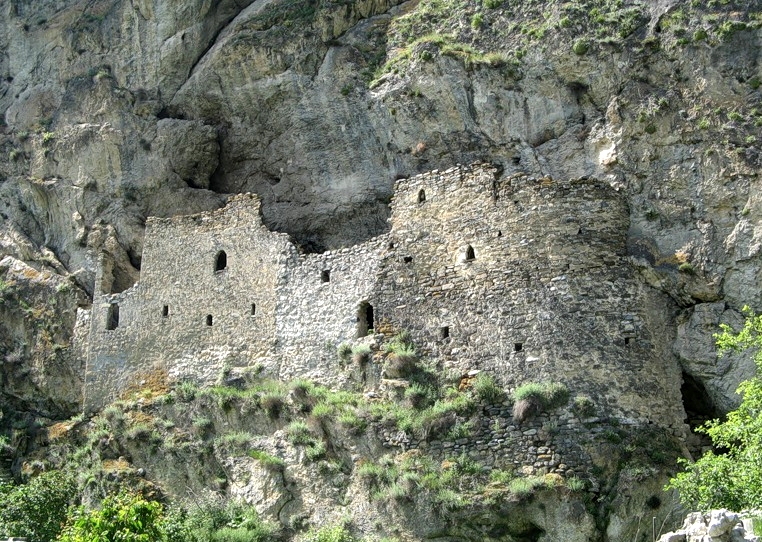
Dzivgis Cave Fortress stands as a remarkable example of ancient defensive architecture uniquely integrated into the natural landscape of North Ossetia–Alania Republic, Russia. Nestled within the Kurtatin Gorge near the village of Dzivgis, this hill castle utilizes the rugged limestone cliffs and natural caves to form a fortified complex that served both military and residential purposes. The fortress's origins trace back to a period before the 16th century, although exact construction dates remain elusive, highlighting the long-standing strategic importance of this site in the Caucasus region. Historical significance and strategic role The fortress was built by local communities inhabiting the Kurtatin Gorge, capitalizing on the natural terrain's defensive advantages. Its location on steep, rocky slopes provided a formidable barrier against invading forces. Local tradition credits Dzivgis Cave Fortress with playing a pivotal role during the early 17th century when the forces of Shah Abbas I of Persia attempted to penetrate the gorge. The defenders' successful resistance forced the Persian army to retreat, underscoring the fortress's military effectiveness. In the early 20th century, the fortress was documented by researchers including Esaul F. S. Pankratov, who contributed valuable records under the pseudonym Grebenets. These early studies preserved knowledge of Dzivgis during a time when the surrounding population was diminishing, ensuring its historical legacy endured despite the fortress's gradual abandonment. Architectural features and construction Integration with natural caves The fortress comprises six primary cave dwellings carved into natural limestone cavities formed by millennia of water and wind erosion. These dwellings, or residential towers, vary in size and could shelter up to one hundred inhabitants each. The builders skillfully enhanced the natural caves with stone walls made from local materials and durable mortar, creating fortified living spaces that blend seamlessly with the surrounding rock formations of the mountain known as Kariukhok. Defensive design and layout The fortress is arranged across different elevations but remains largely on a single plane, with movement between towers facilitated by rock-carved pathways and suspended ladders. These ladders could be retracted during attacks, isolating each tower as an independent stronghold and strengthening the overall defense. This multi-tiered fallback system allowed defenders to resist sieges effectively. The main fortification is situated at the lowest level of the complex and is accessed via a stone staircase, remnants of which survive today. This principal tower extends into a deep limestone niche approximately 65 meters above the gorge base, ending in a dead end that enhanced its defensibility by limiting access points. Current condition and preservation Today, Dzivgis Cave Fortress remains partially preserved. Several sections retain their original stonework, including walls and staircases, while other areas show signs of natural decay and overgrowth. Dense vegetation covers much of the fortress, further camouflaging its man-made structures within the natural environment. Despite its partial ruinous state, the fortress continues to offer valuable insights into the adaptive use of natural caves for fortified residential purposes in mountainous regions. Architectural and cultural importance Dzivgis Cave Fortress exemplifies a rare form of rock castle architecture, where natural geological features are transformed into defensible living quarters. This approach reflects the ingenuity of the local communities in utilizing their environment for protection and habitation. The fortress's enduring presence highlights the historical resilience of the region's inhabitants and their strategic responses to external threats over several centuries. Its unique combination of natural and man-made elements offers scholars and visitors a tangible connection to the early defensive systems of the Caucasus. The site remains a significant cultural landmark within North Ossetia, symbolizing both the historical challenges and architectural innovation of the area. Visiting Dzivgis Cave Fortress While Dzivgis Cave Fortress is not a heavily commercialized tourist destination, it attracts visitors interested in history, architecture, and nature. The fortress's remote location and rugged terrain require careful planning for access, typically involving hiking through the Kurtatin Gorge. Visitors can explore the remaining cave dwellings, pathways, and fortifications, gaining a firsthand experience of this ancient defensive complex. Preservation efforts are limited, so visitors should exercise caution when navigating the site. The fortress's integration with the natural landscape offers a striking visual experience, particularly for those fascinated by the intersection of human ingenuity and natural formations.

Late Medieval (14th–15th c.)
Details
58.5 km

Dariali Castle

Dariali, Georgia

Dariali Castle stands as a significant historical fortress located opposite the settlement of Dariali, within the Kazbegi municipality in the Mtskheta-Mtianeti region of Georgia. Positioned strategically on a rocky outcrop above the left bank of the Terek River, it commands the narrow and historically vital Darial Gorge, a natural passageway that links Georgia with Russia. This gorge has served as a crucial corridor for trade and military movements for millennia, forming part of the ancient route now known as the Georgian Military Road. The origins of Dariali Castle trace back to the 2nd century BC, making it one of the earliest fortifications in the Caucasus region. Its name is believed to derive from "Door of Alan," referencing the Alans, an ancient nomadic people considered ancestors of the modern Ossetians. The castle's primary function was to guard the Darial Gorge, often called the "Iberian Gates" or "Caucasian Gates" by ancient geographers, due to its role as a gateway between the northern and southern Caucasus. Historical significance and early control During the 1st century BC, when the Romans expanded their influence into the Caucasus, Dariali Castle was under the control of the Kingdom of Iberia, an early Georgian kingdom. The fortress was mentioned by notable ancient scholars such as Strabo and Ptolemy, highlighting its strategic importance on the trade and military route connecting the North Caucasus with the south. In the mid-3rd century AD, the castle came under the control of the Sassanian Empire, reflecting the shifting power dynamics in the region. Later, in the 5th century, the Georgian ruler Vakhtang I of Iberia undertook restoration and fortification efforts, reinforcing the castle's defenses. Medieval transitions and architectural developments The 7th century saw Dariali Castle fall under the influence of the Western Turkic Khaganate and subsequently the Rashidun Caliphate, marking the castle's role in the broader geopolitical contests of the Caucasus. By the 11th century, the castle was incorporated into the expanding Kingdom of Georgia. It is believed that significant rebuilding occurred during this period, possibly under the reigns of David IV of Georgia or Queen Tamar, two of Georgia's most celebrated monarchs. This period marked the castle's peak in terms of military and political relevance, and the fortress was sometimes referred to as "David's Castle" or "Tamar's Castle" in honor of these rulers. Decline following the Mongol invasions The 13th century Mongol invasions dramatically altered the political landscape of the Caucasus, leading to the gradual decline of Dariali Castle's strategic importance. Following these upheavals, the fortress was likely abandoned and fell into ruin, no longer serving as a major defensive stronghold. Later history and current status Despite the castle's decline, the Darial Gorge remained a critical strategic passage through subsequent centuries. In the early 19th century, the Russian Empire constructed the Dzharakhov Fort at the base of the ruined castle to secure the border region. This fort has since disappeared, but the site continues to mark the boundary between Georgia and Russia today. Currently, the ruins of Dariali Castle overlook the Georgian border checkpoint, but the site itself is inaccessible to visitors. Only fragments of the outer walls remain visible, offering limited insight into the original structure. While the castle ruins may not present extensive architectural remains, the location's historical significance and panoramic views of the Darial Gorge make it a noteworthy destination for those interested in Caucasian history and ancient fortifications. Architectural features and strategic design Dariali Castle was originally constructed as a hill castle on a rocky promontory, utilizing the natural topography to enhance its defensive capabilities. The fortress's position above the Terek River and within the narrow gorge provided a commanding vantage point over the surrounding landscape and control over the vital trade route. Although little remains today, historical records suggest the castle featured robust stone walls, defensive towers, and gates designed to repel invaders attempting to pass through the gorge. Its design reflects the military architecture of the early medieval period, with subsequent modifications likely introduced during the medieval Georgian era to strengthen its fortifications. The darial gorge as a natural defense The gorge itself served as a natural defensive barrier, funneling any invading forces into a narrow passage easily monitored and defended from the castle's elevated position. This topographical advantage made Dariali Castle a critical military asset for controlling movement between the northern and southern Caucasus regions throughout history. Cultural and historical legacy Dariali Castle holds a prominent place in Georgian and Caucasian history as a symbol of the region's complex interactions between empires, kingdoms, and nomadic peoples. Its role as a gateway between continents and cultures underscores its enduring importance over centuries. The fortress's association with notable Georgian rulers such as Vakhtang I, David IV, and Queen Tamar further cements its status as a monument of national heritage. Despite its current ruined state, Dariali Castle remains a point of interest for historians, archaeologists, and travelers exploring the Caucasus's rich past.

Early Medieval (5th–10th c.)
Details
69.9 km

Pansheti Towers

Pansheti, Georgia

The Pansheti Towers are located in the hamlet of Pansheti within the Kazbegi municipality in the Mtskheta-Mtianeti region of Georgia. These two village towers are notable examples of defensive architecture from the 17th century, serving as places of refuge for local villagers during times of conflict or danger. Architectural features and layout The Pansheti Towers stand approximately 100 meters apart on a rocky hill that overlooks the surrounding landscape. The village itself was strategically positioned on this elevated terrain, which provided natural defense advantages. The main tower is situated on a cliff at the edge of the hill, while the second tower is located on the northern slope of the same hill. Both towers share a similar architectural design: they are slender and square in plan, characteristic of many defensive towers built in the region during the Renaissance period. The towers were constructed primarily from local stone, designed to be tall and narrow to maximize defensive capabilities and visibility. The main tower originally featured a small entrance opening accessible only by climbing part of the cliff face with the aid of a fixed chain. This design was a deliberate defensive measure to restrict access and protect inhabitants. However, this method of entry is no longer possible today due to changes in the structure and safety concerns. Historical context and usage Dating from the 17th century, the Pansheti Towers reflect the turbulent history of the region, where local communities built fortified structures to defend themselves against raids and invasions. These towers functioned as refuges where villagers could retreat during times of unrest. The village surrounding the towers was eventually abandoned approximately 50 to 70 years ago, as residents relocated to the more accessible and fertile valley floor along the Terek River. The second tower is notably shorter than the main one, missing its uppermost section. Local legend attributes this incomplete state to the builder's inability to finish construction, adding a layer of folklore to the site's history. Preservation and current condition The main tower suffered partial collapse in the 1970s but was subsequently restored to preserve its structural integrity. The other tower remains partially ruined, missing its top portion, which affects its overall height and appearance. Today, the Pansheti Towers are accessible to visitors, who can explore the exterior and appreciate the towers' historical and architectural significance. The surrounding abandoned village area is home to roaming dogs, which visitors should be cautious of when exploring the site. Cultural significance and visitor experience The Pansheti Towers offer a glimpse into the defensive architecture and rural life of 17th-century Georgia. Their location on a rocky hill provides dramatic views and a tangible connection to the region's past defensive strategies. Visitors are drawn to the main tower in particular for its imposing presence and the story of its unique entrance. While the towers are not equipped with modern visitor facilities, their accessibility and historical ambiance make them a valuable cultural heritage site within the Mtskheta-Mtianeti region. The site is a point of interest for those studying Georgian medieval architecture and local history.

Renaissance (15th–17th c.)
Details

