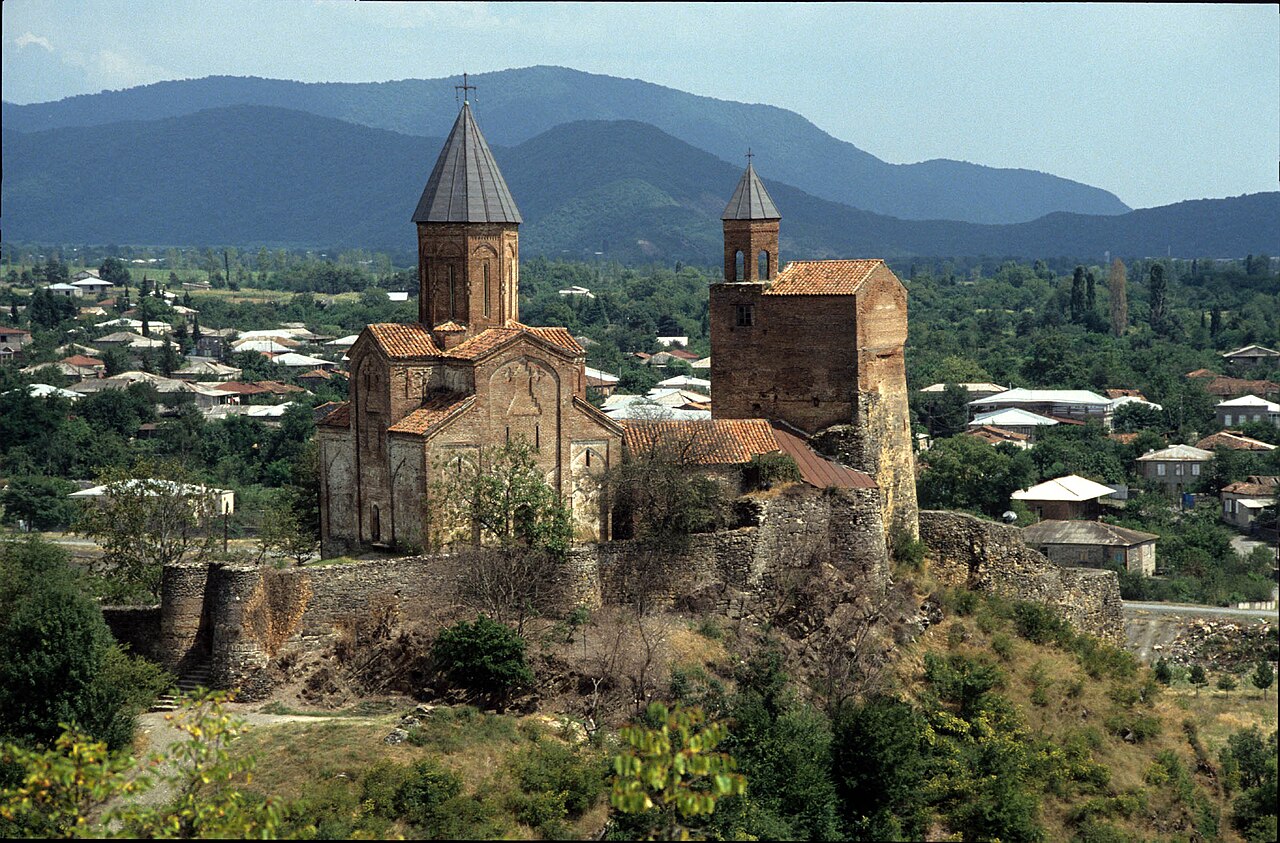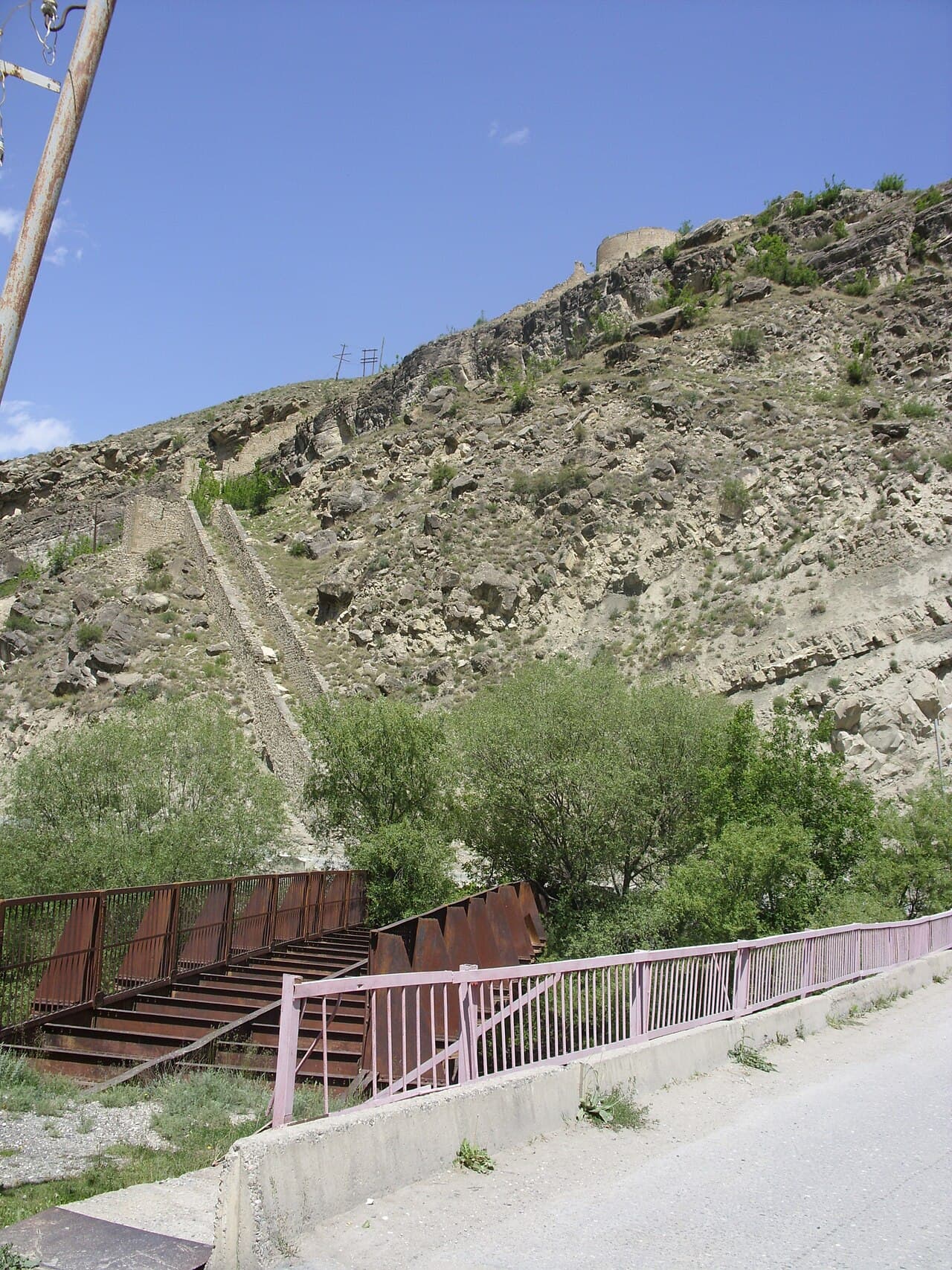
Preobragenskaya Fortress — Russia castle

Preobragenskaya Fortress

Preobragenskaya Fortress
Modern (19th–20th c.)

The Preobragenskaya Fortress is a significant example of a 19th-century bastioned fortress located in the Russian Federation. This fortress represents the evolution of military architecture during the modern period, characterized by the use of bastions—angular structures projecting outward from the main walls—to improve defensive capabilities against artillery attacks.

Historical context and construction

Constructed in the 19th century, the Preobragenskaya Fortress reflects a period in Russian history when fortifications were adapting to advances in artillery technology and changing military tactics. The fortress was likely built as part of a broader defensive strategy to protect key territories or strategic points within the Russian Empire during a time of frequent military conflicts and territorial adjustments.

Architectural features and design

The fortress is classified as a bastioned fortress, a style that emerged prominently in the early modern period and continued into the 19th century. This design incorporates angular bastions protruding from the main curtain walls, allowing defenders to cover adjacent walls with overlapping fields of fire, reducing blind spots and enhancing the fortress's defensive perimeter.

The walls of the Preobragenskaya Fortress are robustly constructed to withstand artillery bombardment, and the bastions are arranged to maximize defensive coverage. The fortress likely includes other typical features such as moats, ravelins (triangular fortifications placed in front of the curtain walls), and casemates (vaulted chambers within the walls for artillery and troops).

Military significance and role

During the 19th century, bastioned fortresses like Preobragenskaya played a crucial role in regional defense, controlling important routes and serving as military strongholds. The fortress would have been garrisoned by troops trained to operate the artillery and defend the complex against sieges or attacks.

Its strategic position within the Russian Federation would have contributed to local security and the projection of military power, especially in times of conflict or political unrest.

Preservation and current condition

The current condition of the Preobragenskaya Fortress is not widely documented, but many similar 19th-century bastioned fortresses in Russia have survived in various states ranging from well-preserved to ruins. Preservation efforts, if any, would focus on maintaining the structural integrity of the bastions and curtain walls, as well as protecting the site from environmental damage.

Architectural legacy and cultural importance

As a representative of modern military architecture in Russia, the Preobragenskaya Fortress offers valuable insights into the defensive strategies and architectural innovations of the 19th century. It stands as a historical monument reflecting the military engineering advancements of its time and contributes to the understanding of Russia's military history and heritage.

Visiting information and accessibility

Details about public access, visiting hours, and ticket prices for the Preobragenskaya Fortress are not readily available. Visitors interested in military history and fortress architecture should seek local information or contact regional heritage organizations for guidance.

Frequently asked questions

  • What is the architectural style of Preobragenskaya Fortress?
    The fortress is designed as a bastioned fortress, typical of modern military architecture in the 19th century, featuring angular bastions for improved defense.
  • When was the Preobragenskaya Fortress built?
    It was constructed in the 19th century during the modern period of military fortification development.
  • Can visitors tour the fortress?
    Public visiting information is limited; interested visitors should check with local authorities or heritage organizations for access details.
  • What was the military purpose of the fortress?
    The fortress served as a defensive stronghold to protect strategic locations and control military routes within the Russian Federation.
  • Is the fortress well preserved?
    The current preservation status is unclear, but many similar fortresses from the period range from well-preserved to ruins.

Frequently asked questions (FAQ)

What is the architectural style of Preobragenskaya Fortress?
The fortress is designed as a bastioned fortress, typical of modern military architecture in the 19th century, featuring angular bastions for improved defense.
When was the Preobragenskaya Fortress built?
It was constructed in the 19th century during the modern period of military fortification development.
Can visitors tour the fortress?
Public visiting information is limited; interested visitors should check with local authorities or heritage organizations for access details.
What was the military purpose of the fortress?
The fortress served as a defensive stronghold to protect strategic locations and control military routes within the Russian Federation.
Is the fortress well preserved?
The current preservation status is unclear, but many similar fortresses from the period range from well-preserved to ruins.

Photo gallery

Preobragenskaya Fortress
Click to view

Photo by ArgoDag•CC BY-SA 3.0

1 photo • Click any image to view in full screen

Information

Bastioned Fortress

Loading map...

Visitor reviews

No reviews yet. Been here? Write the first review and help other travelers!

Write the first review

Visited this castle? Share your experience

Your review helps other travelers and adds first-hand knowledge to our encyclopedia.
Write a review

(5/5)

0/2000 characters

Your review will be visible after admin approval

Nearby castles

40.4 km
Khunzakh Fortress — Russia castle

Khunzakh Fortress

Khunzakh, Russia

Khunzakh fortress is a significant example of a 19th-century bastioned fortress located in the Republic of Dagestan, Russian Federation. This fortress stands as a testament to the military architectural advancements of the modern period, particularly reflecting the strategic defensive needs of the Caucasus region during the 19th century. Historical context and strategic importance The fortress was constructed in the 19th century during a time of intense military and political activity in the North Caucasus. This period was marked by the Russian Empire's efforts to consolidate control over the region, which involved numerous conflicts with local mountain peoples. The Khunzakh fortress played a vital role in these campaigns, serving as a defensive stronghold and a base for military operations. Located in the mountainous terrain of Dagestan, the fortress's position was chosen for its natural defensive advantages. The site allowed control over key routes and provided a vantage point to monitor movements through the surrounding valleys and passes, which were critical for both military logistics and regional governance. Architectural features and design The fortress is classified as a bastioned fortress, a style that became prominent in Europe from the 16th century onward and was adapted in various forms into the 19th century. This design features projecting bastions at the corners of the defensive walls, allowing defenders to cover adjacent walls with overlapping fields of fire, minimizing blind spots and enhancing the fortress's defensive capabilities. Khunzakh fortress incorporates these bastions into a layout that maximizes the natural topography. The walls were constructed using local stone materials, providing robust fortifications against artillery and infantry assaults. The fortress likely included multiple layers of walls, gates, and defensive ditches or moats to further impede attackers. Within the walls, there would have been facilities to support a garrison, including barracks, armories, and storage areas. The design would have balanced defensive strength with the practical needs of housing troops and supplies for extended periods. Role in regional history Throughout the 19th century, the Khunzakh fortress was a focal point in the Russian Empire's military efforts in Dagestan. It helped secure Russian dominance over the local populations and served as a deterrent against uprisings and incursions. The fortress's presence contributed to the gradual integration of Dagestan into the imperial administrative framework. While there are limited detailed records of specific battles or sieges involving the fortress, its strategic location and robust construction suggest it was a key military asset. Its role extended beyond warfare to include administration and control of the surrounding territory. Current condition and cultural significance Today, the Khunzakh fortress remains an important cultural and historical monument in Dagestan. Its condition varies, with sections of the fortress preserved or partially restored to allow visitors to appreciate its architectural and historical significance. The fortress attracts interest from historians, architects, and tourists interested in the military history of the Caucasus and the architectural evolution of fortifications. Efforts to maintain and study the site contribute to a broader understanding of the region's complex history during the 19th century. Visiting Khunzakh fortress Visitors to the fortress can explore the remains of the bastioned walls and gain insight into the military engineering techniques of the 19th century. The site offers scenic views of the surrounding mountainous landscape, enhancing the experience of understanding the fortress's strategic placement. Access to the fortress may be subject to local conditions and regulations, and it is advisable to seek information from regional tourism authorities or guides. The fortress's remote location adds to its allure as a historical destination off the beaten path.

Modern (19th–20th c.)
Details
58 km

Keselo Castle Ruins

Omalo, Georgia

Keselo castle ruins stand prominently above the village of Omalo in the historic region of Tusheti, Georgia. This small medieval fortress is nestled on the northern slopes of the Greater Caucasus Mountains, a strategic location near the borders of the Republic of Chechnya and Dagestan to the north, with the Georgian historic provinces of Kakheti and Pshav-Khevsureti lying to the south and east. The fortress played a crucial role in the defense of local communities during turbulent periods in the region's history. Constructed in the 1230s during the Mongol invasions of Georgia, Keselo originally comprised 13 defensive towers. These towers were built by the indigenous Tush peoples to serve as temporary refuges during raids. The fortress's elevated position and robust stone towers provided protection not only against Mongol forces but also later against incursions from Daghestani tribal groups. The towers' design reflects the traditional defensive architecture of the region, characterized by thick stone walls and narrow windows suitable for archers. Historical context and strategic importance The 13th century was a period marked by frequent invasions and instability in the Caucasus. The Mongol invasions brought widespread destruction, and local communities sought to fortify their settlements. Keselo's construction during this period underscores the need for secure strongholds in the mountainous terrain. The fortress's location above Omalo allowed for early warning of approaching enemies and served as a last line of defense. Architectural features and construction techniques Keselo fortress was originally composed of multiple stone towers strategically placed to provide overlapping fields of defense. The towers are typical of Tush defensive architecture, built with local stone and mortar, featuring narrow embrasures for defense and thick walls to withstand sieges. The fortress's layout took advantage of the natural rocky terrain, integrating the towers into the landscape to maximize protection. The towers were connected by defensive walls, creating an enclosed compound where villagers could retreat during raids. The design reflects a hill castle typology, utilizing elevation for defense and surveillance. The fortress's construction techniques are rooted in medieval methods, emphasizing durability and functionality over ornamental design. Decline and restoration efforts By the 20th century, most of Keselo's towers had fallen into ruin due to centuries of neglect and the harsh mountain climate. The fortress had lost much of its former defensive capability and was largely a historical relic. In 2003, a significant restoration project began, funded initially by Henk and Eliane Hooft, a Dutch family residing in Georgia, and later supported by the Keselo Foundation. This project aimed to rebuild five of the original towers using traditional medieval Tush construction techniques. The restoration respected the fortress's original materials and methods, ensuring historical accuracy and cultural authenticity. Alongside the reconstruction, archaeological excavations uncovered a variety of artefacts, including ancient rock art motifs and Bronze Age axes and jewellery, indicating the site's long-standing significance well before the medieval period. These findings enrich the understanding of the region's prehistoric and historic occupation. Keselo's cultural significance today Today, Keselo castle ruins serve as a symbol of Tush resilience and cultural heritage. The fortress is a popular destination for visitors interested in medieval architecture and Caucasian history. Nearby, a monument in the village of Dartlo commemorates the region's history, and a tower in Khiso, on the road to Omalo, has also been rebuilt as part of the cultural preservation efforts. The site offers insight into the defensive strategies of mountain communities and the architectural ingenuity required to survive in a challenging environment. Keselo remains a testament to the enduring legacy of the Tush peoples and their medieval fortifications in the Caucasus.

High Medieval (11th–13th c.)
Details
84.1 km
Gremi — Georgia castle

Gremi

, Georgia

Gremi is a prominent 16th-century bastioned fortress and royal citadel located in the historic region of Kakheti, Georgia. This architectural complex, which includes the Church of the Archangels, stands as a significant remnant of the once thriving town of Gremi. Positioned southwest of the modern village named Gremi in the Kvareli district, it lies approximately 115 kilometers east of Tbilisi, the capital of Georgia. Historical significance and context The fortress of Gremi emerged as a crucial political and military center in eastern Georgia during the Late Medieval period. It served as the capital of the Kingdom of Kakheti from the early 16th century until the 17th century. Gremi's strategic location on trade routes linking the Caucasus to Persia and beyond contributed to its prominence in regional commerce and defense. The citadel was not only a military stronghold but also a royal residence and administrative hub, reflecting the kingdom's political power and cultural development during that era. Architectural features and layout The bastioned fortress The fortress is classified as a bastioned fortress, characterized by its defensive walls reinforced with bastions designed to withstand artillery attacks, a feature typical of fortifications constructed or renovated during the 15th and 16th centuries. The walls enclose a compact area that includes the royal palace, religious buildings, and military installations. The bastions provided overlapping fields of fire, enhancing the fortress's defensive capabilities against invaders. The church of the archangels Within the fortress complex, the Church of the Archangels stands out as a masterpiece of Georgian ecclesiastical architecture. Built in the 16th century, this church features traditional Georgian design elements such as a cross-in-square plan, stone masonry, and ornamental carvings. The church served as the royal chapel and was integral to the spiritual life of the kingdom. Its preservation offers valuable insights into the religious art and architecture of the period. Decline and preservation Despite its initial importance, Gremi suffered decline following invasions and political upheavals in the 17th century, including attacks by Persian forces. The town was eventually abandoned, and much of the original settlement outside the fortress walls has not survived. However, the fortress and the church remain relatively well preserved, providing a tangible link to Georgia's medieval past. Today, Gremi is recognized as a cultural heritage site and attracts visitors interested in Georgian history and architecture. Visiting Gremi today Visitors to Gremi can explore the fortress walls, bastions, and the Church of the Archangels, gaining an understanding of the military and religious significance of the site. The location offers scenic views of the Kakheti region's landscape, including vineyards and rolling hills that characterize this part of Georgia. The site is accessible from Tbilisi and serves as a popular destination for those interested in medieval fortifications and Georgian cultural heritage.

Late Medieval (14th–15th c.)
Details