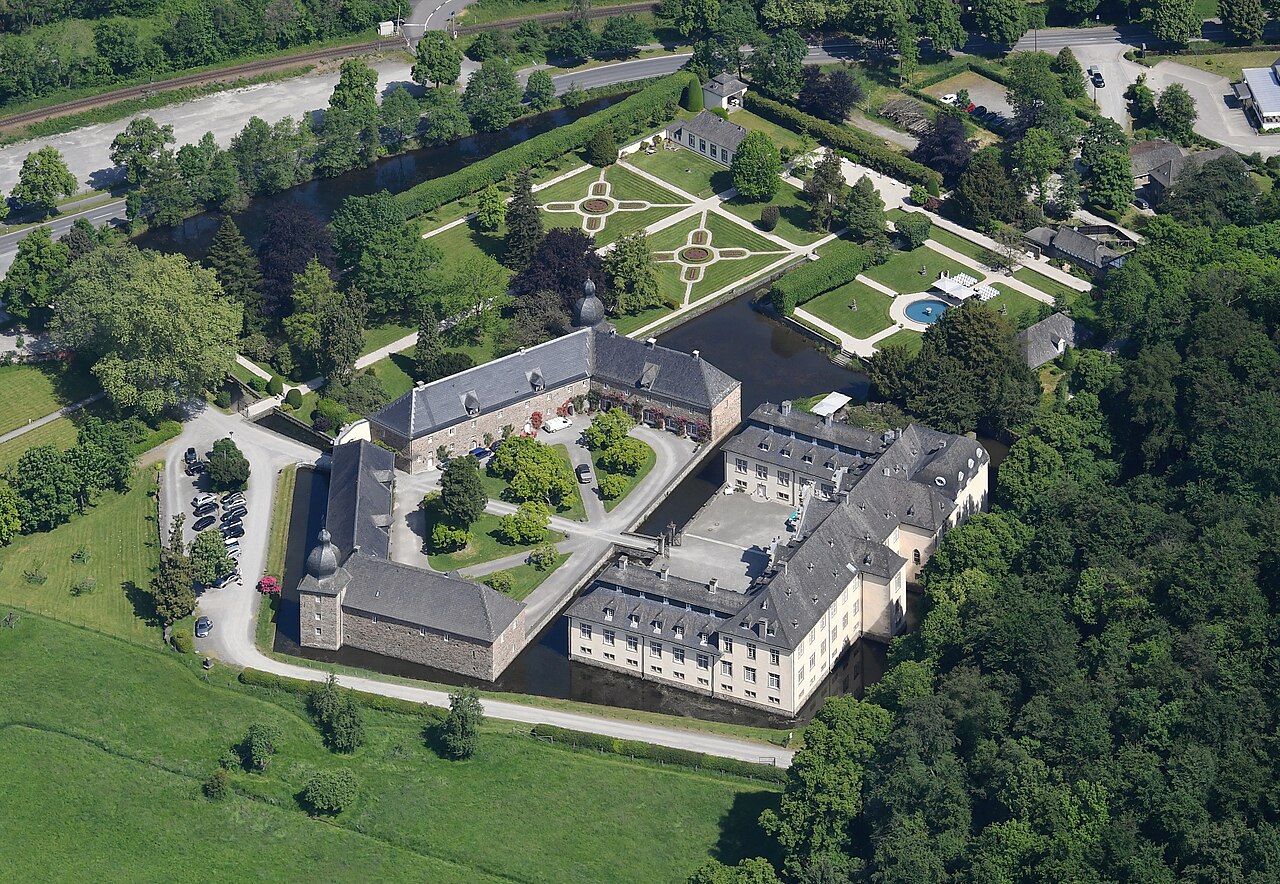
Großbernsau Castle
Großbernsau Castle is a medieval water castle located in the municipality of Overath, in the Agger lowlands of Germany. Built in the 14th century, it was part of a network of noble residences that secured control over this strategically important lowland region. The castle's design as a water castle, surrounded originally by a moat, reflects the typical defensive architecture of the period, combining natural and man-made elements to enhance protection.
Historical background and ownership lineage
Constructed by the medieval knightly class, Großbernsau Castle served as a fortified residence for local knights and their families. Its early history is closely tied to the noble Bernsau family. After the death of Wilhelm von Bernsau in 1532, ownership passed to his son-in-law, Goddert van Wylich, who held the estate until his death around 1560. Subsequently, the castle changed hands among several prominent noble families, including the von Schoeller, von Steinen, and von Schaesberg lineages. These transfers were typical of the period, often occurring through inheritance or marriage alliances, reflecting the social and political networks of the German nobility during the Late Medieval and Early Modern periods.
The castle remained inhabited until the 18th century, after which it gradually fell into disuse and decay. In 1904, Heinrich Reichsgraf von Schaesberg-Thannheim sold the property to Johann Dünn, marking the transition from noble ownership to private hands. In the 21st century, the city of Overath acquired the ruins in 2009, initiating conservation efforts in partnership with local heritage groups starting in 2016. These efforts have focused on clearing overgrowth and improving public access, supported by donations including one from a descendant of the original knightly family.
Architectural features and site layout
Großbernsau Castle was originally designed as a water castle, occupying an area approximately 30 by 30 meters. Its location in the lowlands allowed it to utilize a surrounding moat as a key defensive feature. The moat and water defenses were characteristic of many castles in the region, providing protection against siege and assault by creating a physical barrier.
The surviving remains include a single external wall standing about four meters high. This wall is constructed from typical medieval masonry materials, likely local stone, consistent with fortifications of the 14th century. The rest of the castle's structures have not survived above ground, with the site heavily overgrown, indicating the extent to which nature has reclaimed the area over centuries.
One of the castle's most notable features was its tower, which was a prominent defensive and residential element. Unfortunately, the castle tower collapsed during World War II, significantly reducing the visible ruins and contributing to the castle's current ruinous state. Despite this loss, the footprint of the castle and the remaining wall provide valuable insight into its original layout and defensive arrangements.
Defensive design elements
The moat surrounding Großbernsau Castle remains identifiable despite overgrowth, highlighting the importance of water defenses in its design. The combination of moat and elevated walls would have made direct assault difficult, especially in the context of the lowland terrain. The castle's modest size suggests it was primarily a fortified noble residence rather than a large military fortress, typical of many hill castles adapted to lowland conditions.
Cultural significance and preservation efforts
Großbernsau Castle is an important heritage site that reflects the feudal and knightly history of the Agger region. Its successive ownership by notable noble families illustrates the patterns of landholding and social alliances in medieval and early modern Germany. The castle's gradual decline and ruinous condition also tell a story of changing military technology, social structures, and economic conditions that made such fortified residences obsolete.
The acquisition of the site by the city of Overath and the partnership with local heritage groups mark a renewed interest in preserving this historic monument. The conservation work since 2016 has aimed to stabilize the ruins, clear vegetation, and make the site accessible to the public. These efforts help to maintain the castle as a cultural landmark and educational resource, connecting contemporary visitors with the region's medieval past.
Visitor experience and accessibility
While Großbernsau Castle is now a ruin with limited standing structures, visitors can explore the site to appreciate its historical footprint and setting within the Agger lowlands. The visible moat and surviving wall offer tangible links to its defensive past. Interpretive signage and local heritage initiatives enhance the understanding of the castle's role and history.
Access to the site is facilitated by pathways cleared by the heritage group, although visitors should be prepared for uneven terrain and natural overgrowth. The castle is an example of how medieval noble residences adapted to lowland environments and water defenses, providing a unique glimpse into regional castle architecture.
Frequently asked questions (FAQ)
- When was Großbernsau Castle built?
- Großbernsau Castle was constructed in the 14th century as a fortified residence for the local knightly class.
- What type of castle is Großbernsau Castle?
- Großbernsau Castle is a water castle, originally surrounded by a moat that provided defense in the lowland terrain.
- Who owned Großbernsau Castle historically?
- The castle was initially owned by the Bernsau family and later passed through noble families including the von Schoeller, von Steinen, and von Schaesberg lineages.
- What happened to the castle tower?
- The castle tower collapsed during World War II, significantly reducing the visible ruins of Großbernsau Castle.
- Is Großbernsau Castle accessible to visitors?
- The castle ruins are accessible to the public, with efforts made since 2016 to clear overgrowth and improve pathways, though visitors should expect uneven terrain.
Information
Current owner
Municipality
Loading map...
Visitor reviews
No reviews yet. Been here? Write the first review and help other travelers!
Write the first reviewVisited this castle? Share your experience
Your review helps other travelers and adds first-hand knowledge to our encyclopedia.