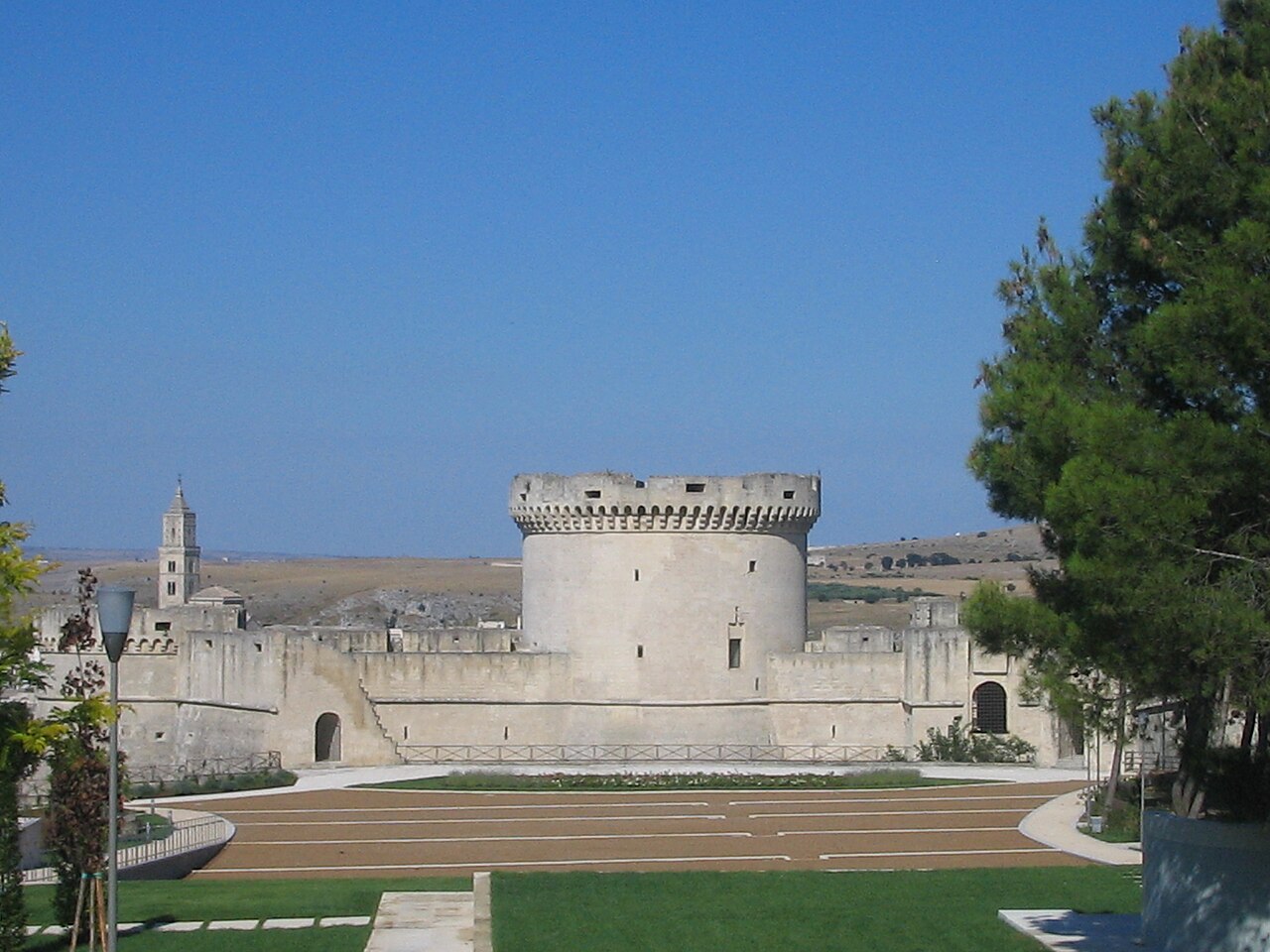
Gravina Castle
Gravina Castle, located in Gravina in Puglia, Italy, stands as a remarkable example of high medieval architecture commissioned by the Holy Roman Emperor Frederick II. Perched on a hill approximately 450 meters above sea level, about a kilometer from the town center along the road to Spinazzola, the castle commands a strategic vantage point overlooking the surrounding landscape. This fortress was originally conceived not only as a defensive structure but also as a luxurious hunting lodge complete with a birding park and an artificial lake, reflecting the multifaceted interests of Frederick II.
Historical background and construction
The castle's construction dates back to between 1224 and 1231, with the Florentine architect Fuccio credited for its design. This timeline coincides with the reign of Frederick II, who was known for his innovative architectural projects and blending of military and residential functions within his castles. Gravina Castle was part of a network of imperial residences and fortifications that included notable sites such as the domus of Foggia, the castles of Lucera, and the famous Castel del Monte. These buildings collectively showcase the emperor's vision of power, culture, and administration in southern Italy.
The castle features a rectangular plan measuring approximately 58 by 30 meters, encircled by a sturdy wall about three meters high. The structure is organized on two distinct levels: the upper floor served as the residential quarters for the emperor and his court, illuminated by large windows that allowed ample natural light, while the lower level was designated for practical uses such as stables, servants’ quarters, and storage, characterized by narrower windows for security and ventilation. Notably, one of the rooms was specifically intended to house the emperor's falcons, underscoring the castle's role as a hunting lodge.
Architectural features and materials
The castle was constructed primarily using the local mazzaro tuff, a type of volcanic stone common in the region. Stone blocks were strategically employed for foundational elements, pillars, and staircases, ensuring structural stability and durability. The main residential body of the castle extended along three sides of the rectangular courtyard, which itself was a significant open space within the fortress. This courtyard likely served as a central gathering area for the court and various activities.
Defensive and residential design
Gravina Castle was designed with both defense and comfort in mind. Its walls and towers, including four corner towers as noted by the Renaissance historian Giorgio Vasari, provided strong defensive capabilities. The large windows on the upper floor not only enhanced the living quarters but also symbolized the castle's dual role as a noble residence. The lower floor's narrower windows and robust construction reflected the need for security and functionality.
Historical significance and usage
Gravina Castle was not merely a fortress but also a center for imperial administration. Frederick II used it as one of his preferred residences, known as loca solaciorum, where he often stayed with his court. The castle hosted biannual meetings of the Curia in May and November, during which provincial officials reported on their governance and judicial matters. This administrative function highlights the castle's importance as a hub of political power in the region.
The castle was accessible and in use by 1227, as Frederick II is documented to have stayed there that year. Its role as a hunting lodge was complemented by the surrounding birding park and artificial lake, which were integral to the emperor's leisure pursuits.
Decline and restoration efforts
Despite its initial grandeur, Gravina Castle suffered a gradual decline starting from the 15th century. The earthquake of 1456 caused significant damage, after which the castle was only partially inhabited. Over the centuries, neglect and systematic removal of architectural elements led to progressive degradation. By the 17th century, the castle was largely abandoned and used as a quarry for building materials. A violent storm in 1687 likely contributed to the near destruction of the structure.
Ownership of the castle passed from the Orsini family until 1806, after which it came under the Pomarici Santomasi family, who eventually donated it to the city of Gravina. Recent archaeological excavations and restoration efforts have aimed to recover and preserve the castle's remaining features. These works have helped to restore part of its ancient splendor, and the site is now planned to be incorporated into the Gravina Archaeological Park, enhancing its cultural and historical accessibility.
Architectural legacy and cultural importance
Gravina Castle stands as a testament to the architectural innovation and imperial ambition of Frederick II. Its combination of military, residential, and recreational functions exemplifies the multifaceted nature of medieval castles under his reign. The use of local materials, thoughtful layout, and integration with the natural landscape reflect a sophisticated approach to castle design in the high medieval period.
Today, the castle's ruins offer valuable insights into medieval construction techniques and the lifestyle of one of the most influential emperors of the Holy Roman Empire. Its inclusion in heritage preservation initiatives underscores its significance as a cultural landmark in Puglia and southern Italy.
Frequently asked questions (FAQ)
- What is the historical significance of Gravina Castle?
- Gravina Castle, built in the 11th century, served as a strategic fortress during various conflicts in Southern Italy. Its architecture reflects the transition from Romanesque to Gothic styles, showcasing the historical evolution of fortifications in the region.
- When was Gravina Castle last renovated?
- The last significant renovation of Gravina Castle took place in the early 2000s, aimed at preserving its structure and enhancing visitor access. These efforts have helped maintain the castle's historical integrity while making it more accessible to tourists.
- Is it possible to visit Gravina Castle year-round?
- Yes, Gravina Castle is open to visitors throughout the year, although opening hours may vary by season. It’s advisable to check the official website for the most current visiting hours before planning your trip.
- Can I access Gravina Castle with a wheelchair?
- While efforts have been made to improve accessibility, some areas of Gravina Castle may still pose challenges for wheelchair users due to its historic architecture. It is recommended to contact the castle administration in advance to inquire about specific accessibility options.
- What are the ticket prices for visiting Gravina Castle?
- Tickets for Gravina Castle are reasonably priced, typically ranging from €5 to €10, with discounts available for students and seniors. Children under a certain age may enter for free, making it an affordable destination for families.
- When is the best time to visit Gravina Castle?
- The best time to visit Gravina Castle is during the spring and early fall when the weather is mild and pleasant. These seasons also avoid the peak tourist crowds, allowing for a more enjoyable experience while exploring the castle and its grounds.
- Are there any nearby attractions to visit while at Gravina Castle?
- Yes, nearby attractions include the historic town of Gravina in Puglia, known for its charming streets and local cuisine. Visitors can also explore the nearby aqueduct and the ancient churches that reflect the rich history of the region.
- What are the opening hours for Gravina Castle?
- Gravina Castle typically opens at 9 AM and closes around 7 PM during peak season, with shorter hours in the off-season. It is recommended to check the castle's official website for any updates on hours and potential holiday closures.
Information
Loading map...
Visitor reviews
No reviews yet. Been here? Write the first review and help other travelers!
Write the first reviewVisited this castle? Share your experience
Your review helps other travelers and adds first-hand knowledge to our encyclopedia.