Grajal de Campos Castle
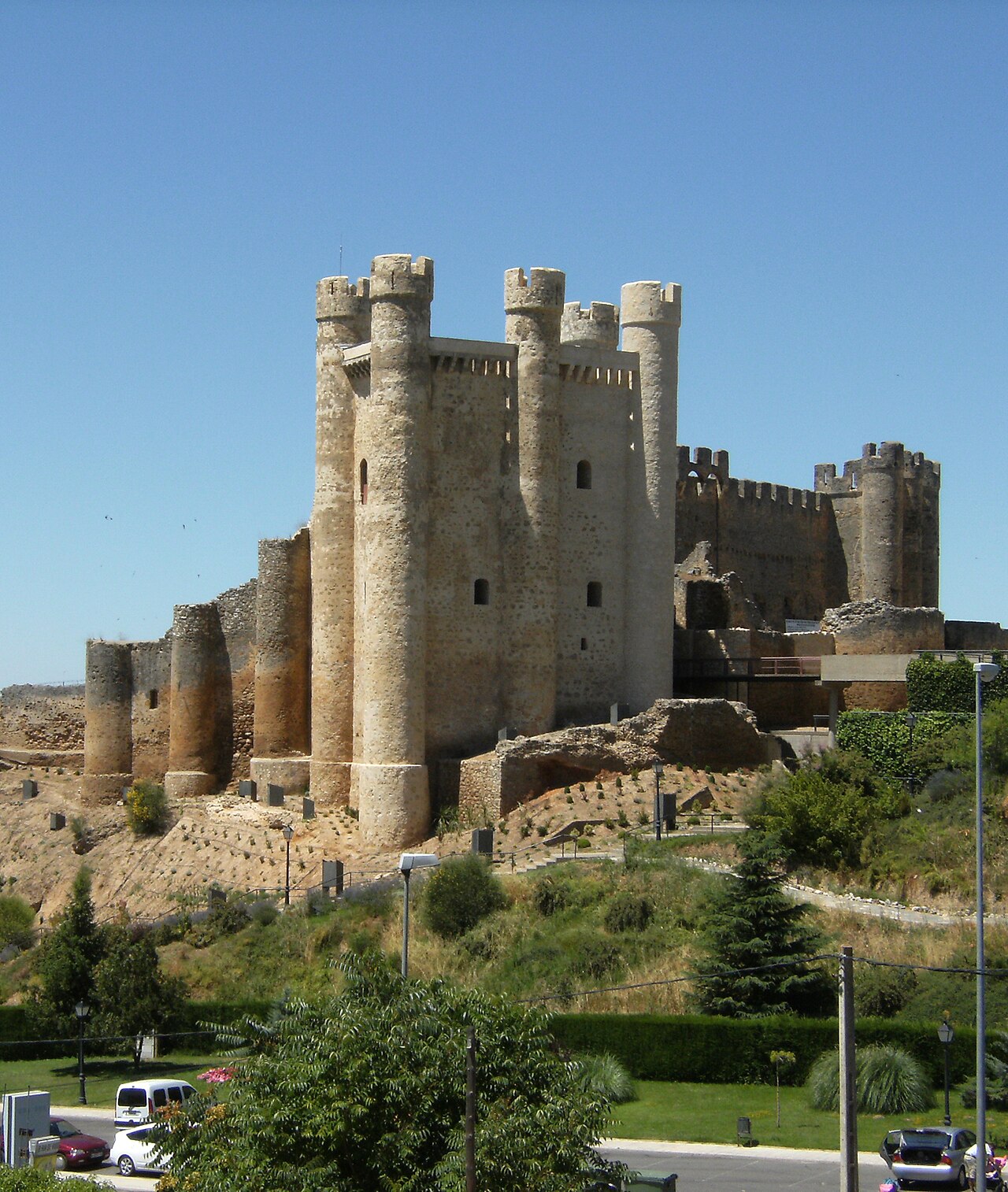
Grajal de Campos Castle stands as a remarkable example of Renaissance military architecture in the province of León, Spain. Constructed in the 16th century by Hernando de Vega atop the remains of an earlier 10th-century fortress, this castle was completed by his son, Juan de Vega y Acuña, the count of Grajal. It was specifically designed to address the challenges posed by the advent of artillery warfare, a significant evolution from medieval fortifications.
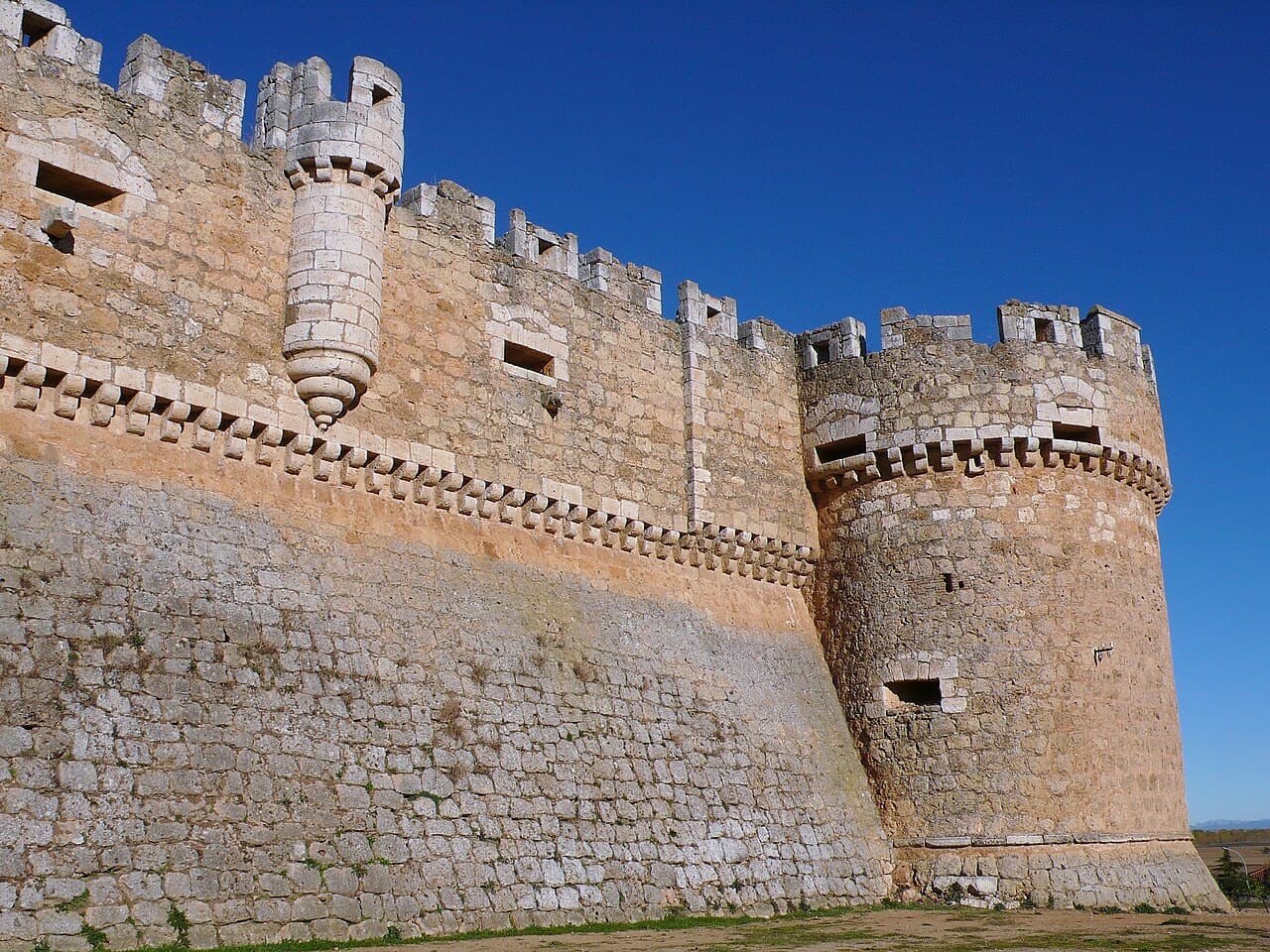
The castle's square plan is fortified by four corner towers, each strategically placed to cover all blind spots and provide overlapping fields of fire. Unlike earlier medieval castles, the walls are sloped and the overall height is deliberately kept lower to reduce vulnerability to cannon fire. This architectural adaptation exemplifies the transition from high-walled castles to more robust artillery fortresses during the Renaissance period.
Historical background and significance
The site originally hosted a 10th-century castle, likely built during the early medieval period as a defensive stronghold. The strategic location on a small hill at the western edge of the village of Grajal de Campos allowed control over the surrounding territory. The 16th-century reconstruction under Hernando de Vega transformed the site into a modern fortress capable of withstanding contemporary siege technology.
Juan de Vega y Acuña, the count of Grajal, was a prominent nobleman whose family maintained ownership of the castle and the adjacent Renaissance palace in the village. There are local traditions suggesting an underground tunnel linking the palace and the castle, indicative of the close relationship between the two estates and the need for secure passage during times of conflict.
Architectural features and defensive design
Structural layout and fortifications
The castle's square layout is typical of Renaissance military design, emphasizing geometric precision and efficient defense. The four corner towers are robust and designed to provide crossfire coverage, eliminating blind spots around the perimeter. The walls are constructed with a noticeable sloping batter, a defensive feature that helped deflect cannonballs and reduce damage from artillery bombardments.
Adaptations for artillery warfare
The lower height of the walls compared to earlier medieval castles was a deliberate design choice to minimize the target area for enemy cannons. The sloped walls further enhanced the castle's resilience, reflecting the shift in military technology during the Renaissance. This makes Grajal de Campos Castle an important example of how fortifications evolved in response to gunpowder weaponry.
Current condition and visitor information
Today, Grajal de Campos Castle remains in a state of ruins, with its interior largely dismantled. Despite this, the castle is accessible to visitors who wish to explore its historic remains and appreciate its architectural significance. It continues to be owned by the current Duke of Alburquerque, maintaining its connection to the noble lineage that has preserved it through centuries.
The castle's location on a hill provides scenic views of the village and surrounding landscape, making it an attractive destination for history enthusiasts and tourists interested in Renaissance military architecture.
Relationship with the Renaissance palace
Within the village of Grajal de Campos lies a Renaissance palace historically owned by the same counts as the castle. This palace exemplifies the residential and administrative aspects of the noble family's estate, contrasting with the military function of the castle. The reputed underground tunnel connecting the two structures suggests a sophisticated level of planning and security, allowing safe movement between the residence and the fortress during times of unrest.
Legacy and cultural importance
Grajal de Campos Castle represents a significant chapter in the architectural and military history of Spain. It illustrates the adaptation of castle design to the realities of Renaissance warfare, combining traditional medieval elements with innovative features to counter artillery threats. As a heritage site, it offers valuable insights into the evolution of fortifications and the lifestyle of Spanish nobility during the 16th century.
Its preservation, even in a ruined state, allows for continued study and appreciation of Renaissance military architecture and contributes to the cultural identity of the region.
Frequently asked questions (FAQ)
- How do I visit Grajal de Campos Castle?
- Grajal de Campos Castle is open to visitors who can explore its ruins. It is located on a small hill at the western edge of the village of Grajal de Campos, Spain. Visitors should check local tourism information for any access restrictions or guided tour availability.
- What is the historical significance of Grajal de Campos Castle?
- Grajal de Campos Castle is a prime example of Renaissance military architecture designed to withstand artillery. Built in the 16th century over a 10th-century fortress, it reflects the evolution of castle design in response to gunpowder weaponry.
- Can I see the underground tunnel between the castle and the Renaissance palace?
- The existence of an underground tunnel linking the castle and the Renaissance palace is part of local tradition. However, the tunnel is not accessible to the public and its current condition is unknown.
- Why are the walls of Grajal de Campos Castle sloped?
- The sloped walls are a defensive feature designed to deflect cannonballs and reduce damage from artillery bombardment. This architectural adaptation was common in Renaissance fortresses to improve resilience against gunpowder weapons.
- Is Grajal de Campos Castle suitable for families and children?
- While the castle is in ruins, it can be visited by families interested in history and architecture. Visitors should exercise caution due to uneven terrain and the dismantled interior. Supervision is recommended for children.
Photo gallery

Information
Current owner
Duke of Alburquerque
Loading map...
Visitor reviews
No reviews yet. Been here? Write the first review and help other travelers!
Write the first reviewVisited this castle? Share your experience
Your review helps other travelers and adds first-hand knowledge to our encyclopedia.