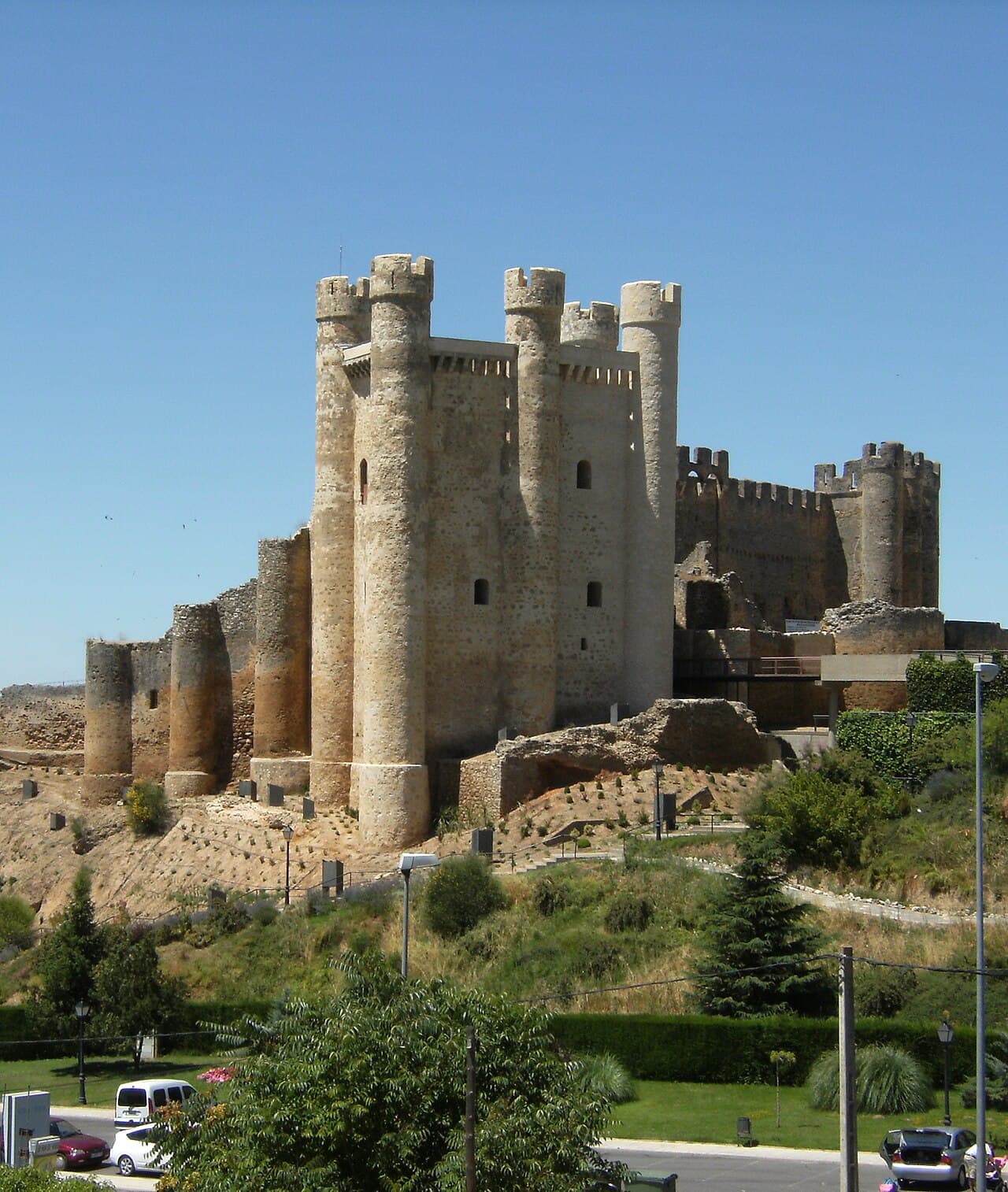
Coyanza Castle
Coyanza Castle, located in Valencia de Don Juan, Spain, stands as a remarkable example of late-medieval military architecture with a rich and layered history that spans from prehistoric times through the Renaissance. This hill castle was built in the 15th century on a site that had been continuously occupied and fortified since the Bronze Age and Iron Age, making it a strategic stronghold for centuries.
The castle's origins trace back to a fortified settlement that evolved through various historical phases, including Roman occupation and medieval fortifications. The earliest known significant event associated with the site is the Coyanza Council of 1050, highlighting its early administrative importance. The site was notably fortified by Fernando II of León in the second half of the 12th century, establishing the medieval foundation upon which the later castle was constructed.
Historical context and noble patronage
The current structure of Coyanza Castle largely dates from the 15th century, commissioned under the direction of Infante Juan de Portugal, the first Duke of Valencia de Campos and an illegitimate son of King Pedro I of Portugal. After political exile during the Portuguese succession crisis of 1383–1385, Infante Juan sought refuge in León and undertook the construction of the castle, reinforcing its military and administrative significance in the region.
Infante Juan’s familial connections deeply influenced the castle’s history. He married María Téllez de Meneses and later Constanza Enríquez, herself an illegitimate daughter of King Enrique II of Castile. Their daughter, María de Portugal, married Martín Vázquez de Acuña, who inherited the lordship and continued to expand and develop the fortress. The castle’s present form owes much to Juan de Acuña y Portugal, the third count and second duke of Valencia de Don Juan, and his wife Teresa Enríquez, who were responsible for significant enhancements during the late medieval period.
Architectural features and fortifications
Coyanza Castle exemplifies medieval military architecture with a distinctive layout characterized by a single articulated front with projections, flanked by turrets that overshadow the prominent tower of homage. The castle’s defensive design includes round turrets on the walls and fronts, which provided strategic vantage points for surveillance and defense.
The construction materials reflect typical medieval techniques, combining stone masonry, brick, and rammed earth—a method involving compressed earth layers to form sturdy walls. This blend of materials not only ensured robust fortifications but also illustrates the adaptation of local resources and construction knowledge during the late 14th and 15th centuries.
Inside, the castle once featured multiple floors with vaulted ceilings, roofs, and decorative plasterwork in the Mudéjar style, a unique fusion of Christian and Islamic artistic influences. Unfortunately, these interior elements were lost during the castle’s decline in the 17th century, when many structural and decorative features deteriorated or were removed.
Heraldic symbols and noble emblems
The castle walls bear heraldic shields representing the Acuña and Portugal families, as well as the Quiñones lineage from León. These emblems serve as enduring symbols of the noble families who controlled the fortress and highlight the castle’s role as a seat of power and lineage.
Historical events and decline
During the Castilian Succession War in 1475, Coyanza Castle endured a significant siege. This conflict marked a dramatic moment in the castle’s history, notably resulting in the accidental death of Juan de Acuña y Portugal after a fall from one of the castle’s windows. Following this period, the castle gradually lost its strategic importance and was abandoned by the mid-16th century.
The subsequent centuries saw the fortress fall into disrepair. By the 17th century, many of the castle’s internal features, including floors, vaulted ceilings, roofs, and decorative plasterwork, had deteriorated or vanished entirely. The decline reflected broader changes in military technology and political structures that rendered many medieval fortresses obsolete.
Conservation and modern use
Since the mid-20th century, Coyanza Castle has been the focus of several conservation and restoration efforts. Partial reconstructions of the keep tower were undertaken in the 1950s and again in the early 2000s to stabilize and preserve this central stronghold. Wall consolidations in the 1980s helped to maintain the integrity of the remaining structures, accompanied by archaeological excavations that uncovered numerous artifacts.
Ownership of the castle was transferred to the Fundación Instituto Valencia de Don Juan in Madrid by descendants of Adelaida Crooke y Guzmán, the 25th Countess of Valencia de Don Juan. A long-term agreement with the local government in 1998 facilitated the castle’s public use and preservation.
Museum and cultural significance
In 2008, a museum was opened within the keep tower, housed in a modern construction of iron, wood, and glass. This museum displays archaeological finds linked to the castle and its historical families, including shields, coins, and pottery. These exhibits provide valuable insights into the castle’s long history and the lives of its occupants.
Interestingly, Coyanza Castle’s image was used, reversed, as inspiration for the depiction of King Arthur’s Camelot in the 1975 British film Monty Python and the Holy Grail, underscoring its cultural resonance beyond Spain.
Archaeological significance and site layers
The castle’s site is notable for its archaeological importance, with layers of human occupation dating back to the Bronze Age and Iron Age. Excavations have revealed Roman elements and artifacts that attest to the continuous strategic value of this location over millennia.
These archaeological findings enrich our understanding of the site’s evolution from prehistoric fortifications to a medieval fortress and beyond. The combination of architectural remains and artifacts offers a comprehensive narrative of the region’s history and the castle’s role within it.
Visitor experience and accessibility
Today, visitors to Coyanza Castle can explore the partially preserved ruins and the modern museum housed within the keep tower. The site offers a unique opportunity to engage with centuries of history, from ancient fortifications to medieval nobility and modern conservation efforts.
While some areas remain in ruins, ongoing preservation work ensures that the castle’s historical and architectural significance is accessible to the public. The museum’s exhibits provide context and enrich the visitor experience, making Coyanza Castle a notable destination for those interested in Spanish medieval history and archaeology.
Frequently asked questions (FAQ)
- What is Coyanza Castle known for?
- Coyanza Castle is renowned for its impressive medieval architecture and rich historical significance. Built in the 15th century, it served as a strategic fortress during various conflicts, reflecting the historical importance of the region. Visitors can explore its well-preserved structures and learn about its role in local history.
- When was Coyanza Castle built?
- Coyanza Castle was constructed in the late 15th century, specifically around the year 1470. It was designed to provide defense and security during a tumultuous period in Spanish history. The castle's architecture showcases the transition from Gothic to Renaissance styles, making it an interesting site for architecture enthusiasts.
- Can I visit Coyanza Castle year-round?
- Yes, Coyanza Castle is open to visitors throughout the year, although specific opening hours may vary by season. It’s advisable to check the official website or local tourism information for the most accurate details before planning your visit. This ensures you can make the most of your experience at the castle.
- What are the opening hours for Coyanza Castle?
- Coyanza Castle typically opens at 10 AM and closes at 6 PM, but these hours can change based on the season or special events. It’s recommended to verify the current hours ahead of your visit to avoid any inconvenience. During peak tourist seasons, extended hours may be available.
- Is it possible to take a guided tour of Coyanza Castle?
- Yes, guided tours are available and highly recommended for a deeper understanding of the castle’s history and architecture. Knowledgeable guides provide insights into the castle's past, its significance, and interesting anecdotes. Check in advance to see if you need to book a tour or if walk-in options are available.
- What are the ticket prices for Coyanza Castle?
- Ticket prices for Coyanza Castle are generally affordable, with discounts available for students and seniors. Children under a certain age may enter for free, making it a family-friendly destination. Verify the latest pricing information on the official website before your visit to ensure accurate budgeting.
- When is the best time to visit Coyanza Castle?
- The best time to visit Coyanza Castle is during the spring and fall when the weather is mild and pleasant. These seasons allow for comfortable exploration of the castle and its surrounding areas. Additionally, visiting during these times can help you avoid the summer crowds, enhancing your experience.
- Are there nearby attractions to Coyanza Castle?
- Yes, there are several attractions near Coyanza Castle, including the charming town of Valencia de Don Juan and beautiful natural parks. Visitors can explore local museums and enjoy outdoor activities in the scenic surroundings. This makes Coyanza Castle a great starting point for a day of exploration in the area.
- How do I get to Coyanza Castle?
- Coyanza Castle is easily accessible by car and public transportation from nearby cities. If driving, you can follow the local signage once you reach Valencia de Don Juan. For public transport, check local bus schedules for routes that connect to the castle area.
Photo gallery

Information
Website
Visit websiteSources & official resources
Verify the information above using these authoritative references.
Loading map...
Visitor reviews
No reviews yet. Been here? Write the first review and help other travelers!
Write the first reviewVisited this castle? Share your experience
Your review helps other travelers and adds first-hand knowledge to our encyclopedia.


