Gradara Castle
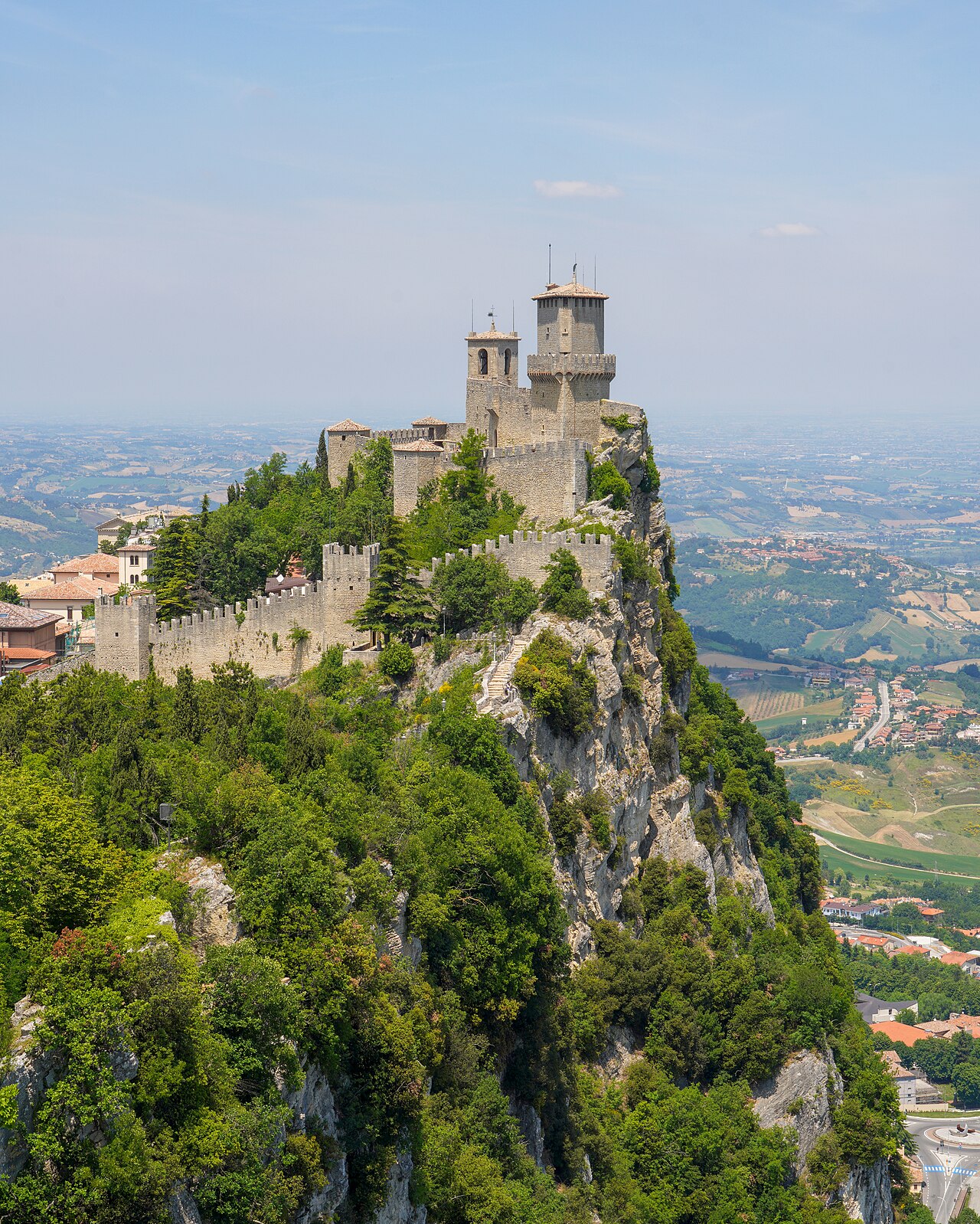
Gradara Castle stands as a remarkable example of a high medieval hill castle in the Marche region of Italy. Its strategic location on a commanding hilltop offers sweeping views of the Adriatic Sea and surrounding valleys, making it a vital military and trade crossroads since ancient times. This fortress has witnessed centuries of Italian history, from feudal conflicts to Renaissance politics, and remains one of the most evocative medieval fortresses in the region.
Historical significance and early construction
The origins of Gradara Castle trace back to the 12th century, when the territory was seized by the brothers Peter and Ridolfo De Grifo from the municipality of Pesaro. Their initial construction laid the foundations for what would become a formidable stronghold. The castle’s location on a hill was chosen for its natural defensive advantages and control over important land routes connecting Marche and Romagna.
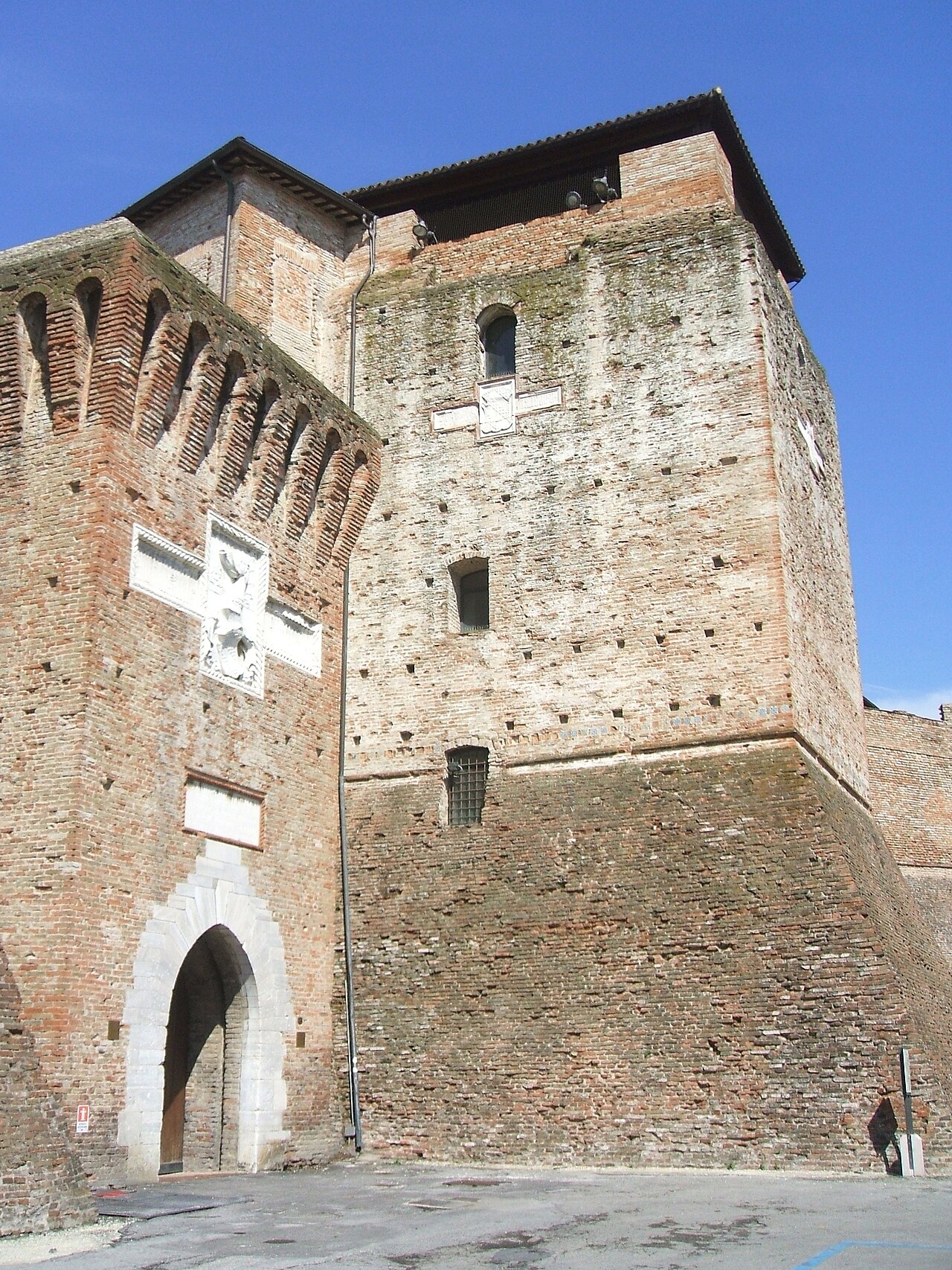
In the 13th century, the castle came under the control of the powerful Malatesta family, particularly Malatesta da Verucchio, known as the Centenario. With the support of a papal bull from Pope Boniface VIII, the Malatesta seized the De Grifo tower and transformed it into the castle’s central keep, or donjon. The Malatesta family undertook extensive building campaigns, erecting the fortress walls and two concentric city walls that define the castle’s impressive defensive perimeter today.
Architecture and fortifications
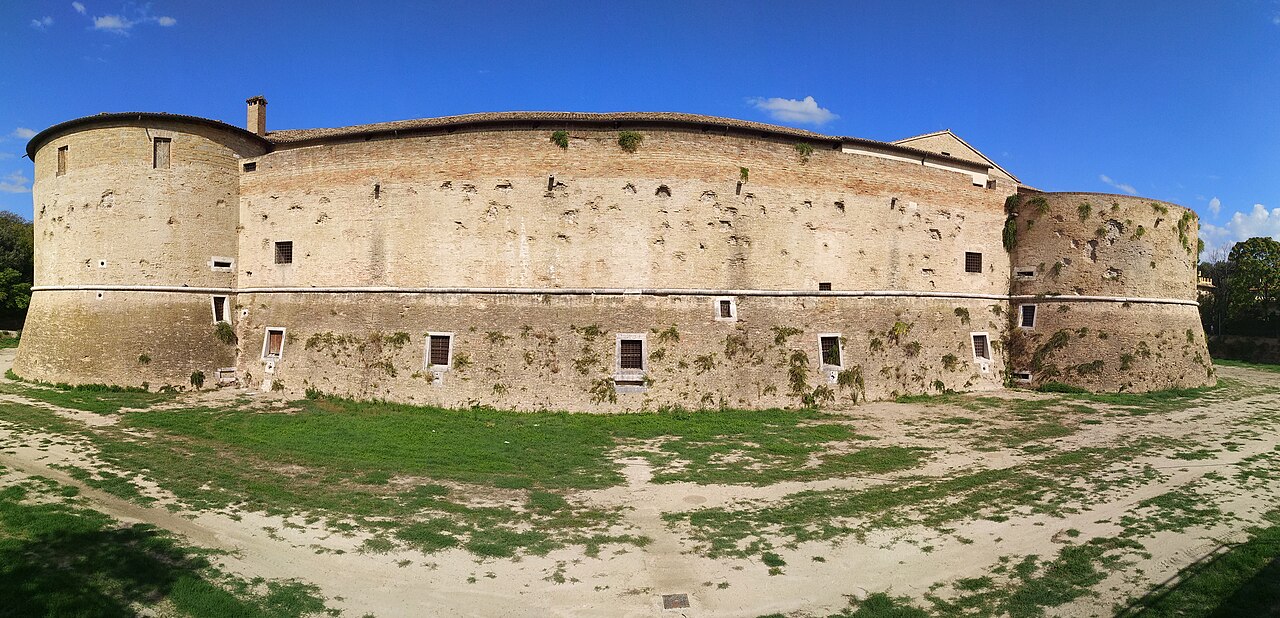
Gradara Castle is a quintessential example of a hill castle featuring medieval military architecture adapted to the rugged terrain. The fortress is characterized by its massive stone walls, battlements, towers, and a well-preserved moat system that enhanced its defenses against siege warfare. The castle’s layout includes a keep at its core, surrounded by multiple layers of walls and fortified gates, creating a formidable obstacle for any attacker.
The castle’s two city walls, built by the Malatesta between the 13th and 14th centuries, form a concentric defense system. The inner wall encloses the main fortress, including the keep and residential quarters, while the outer wall protects the expanded town area. The walls are punctuated by towers that served as watchposts and artillery platforms, providing overlapping fields of fire.
Inside the fortress, visitors can explore various chambers, halls, and courtyards that reflect the castle’s dual role as a military stronghold and noble residence. The parish church of St. John the Baptist, located within the second walled city, adds a religious dimension to the complex and highlights the integration of civic and spiritual functions.
Notable historical events and figures
Gradara Castle is famously linked to the tragic legend of Paolo Malatesta and Francesca da Polenta, whose doomed love affair ended in their murder by Giangiotto Malatesta in 1289. This story, immortalized by Dante in his Divine Comedy, has contributed to the castle’s cultural mystique and romantic allure.
The castle’s control shifted multiple times through the centuries, reflecting the turbulent politics of the region. In 1463, Federico da Montefeltro expelled the Malatesta and took command of the fortress on behalf of the Papal States. From 1445 to 1513, the castle was governed by the Sforza family of Pesaro, loyal allies of the Church.
Notably, the castle was the site of the marriage of Lucrezia Borgia to Giovanni Sforza in 1494, a union arranged by her father, Pope Alexander VI Borgia. The marriage was later annulled for political reasons, and the castle was occupied by her brother, Cesare Borgia, known as Valentino, from 1500 to 1503.
In 1513, Pope Julius II entrusted the castle to his nephew, Francesco Maria II Della Rovere, whose family ruled Gradara until 1631. Subsequent ownership passed through various noble families, including the Santinelli, Omodei, Albani, and finally the Marquis Mosca of Pesaro in the 18th century.
Restoration and modern era
After centuries of noble ownership, Gradara Castle became municipal property in the 19th century and was later acquired by Count Morandi Bonacossi di Lugo in 1877. In 1920, the castle was purchased by engineer Umberto Zanvettori, who initiated a careful and scholarly restoration. Collaborating with architects Ferrari and Giovannoni, Zanvettori’s work respected the castle’s historical integrity and revived its medieval character.
In 1928, Zanvettori sold the castle to the Italian State with the condition that his widow, Alberta Di Porta Natale, retain usufruct rights. She maintained the castle diligently until her death, after which the fortress was fully opened to the public in 1983.
Today, Gradara Castle is a restored monument and a popular tourist destination, offering visitors a rich experience of medieval architecture, history, and legend. Its well-preserved walls, towers, and interiors provide a vivid glimpse into the life and times of the Italian nobility and the military strategies of the Middle Ages.
Visitor experience and cultural significance
Visitors to Gradara Castle can explore its extensive fortifications, including the keep, battlements, and the two concentric city walls. The castle hosts exhibitions and cultural events that celebrate its historical legacy and the romantic tale of Paolo and Francesca. The panoramic views from the ramparts are a highlight, showcasing the scenic beauty of the Marche countryside and the Adriatic coastline.
The castle’s integration of military and residential architecture, along with its rich history involving prominent families like the Malatesta, Sforza, Borgia, and Della Rovere, make it an essential site for understanding the medieval and Renaissance periods in Italy. Its preservation as a restored hill castle ensures that this heritage continues to educate and inspire visitors.
Frequently asked questions (FAQ)
- What are the opening hours of Gradara Castle?
- Gradara Castle is open to visitors from 9:00 AM to 7:00 PM daily, with extended hours during the summer months. It's recommended to check the official website for any seasonal changes or special events that may affect these hours.
- What is the historical significance of Gradara Castle?
- Gradara Castle is renowned for its rich history, dating back to the 12th century and serving as a strategic military stronghold. It is also famously associated with the tragic love story of Paolo and Francesca, which has inspired numerous literary works.
- Is it possible to tour the interior of Gradara Castle?
- Yes, visitors can explore the interior of Gradara Castle, including its beautifully preserved rooms and towers. Guided tours are available, providing deeper insights into the castle's history and architecture.
- Can I purchase tickets online for Gradara Castle?
- Absolutely! Tickets for Gradara Castle can be purchased online through the official website, allowing for a smoother entry on your visit. Advance booking is recommended, especially during peak tourist seasons.
- When is the best time to visit Gradara Castle?
- The best time to visit Gradara Castle is during the spring and early autumn months when the weather is mild and the crowds are smaller. Visiting in late spring allows you to enjoy the beautiful surrounding landscapes in full bloom.
- How do I get to Gradara Castle from nearby cities?
- Gradara Castle is easily accessible by car and public transport from nearby cities like Rimini and Pesaro. Regular bus services operate in the region, and there are also parking facilities available for those driving.
- What nearby attractions can I visit after Gradara Castle?
- After exploring Gradara Castle, you can visit the charming town of Gradara, known for its medieval architecture and quaint streets. Additionally, the beautiful beaches of the Adriatic coast and the historic town of Urbino are just a short drive away.
- Is Gradara Castle accessible for visitors with disabilities?
- Yes, Gradara Castle strives to be accessible to all visitors, including those with disabilities. There are adapted pathways and facilities available, but it is advisable to contact the castle in advance to ensure a smooth visit.
- What are the ticket prices for Gradara Castle?
- Ticket prices for Gradara Castle are generally around €8 for adults, with discounts available for children, seniors, and groups. Special exhibitions or events may incur additional fees, so it's best to check the latest pricing details on the official website.
Information
Address
Gradara
Loading map...
Visitor reviews
No reviews yet. Been here? Write the first review and help other travelers!
Write the first reviewVisited this castle? Share your experience
Your review helps other travelers and adds first-hand knowledge to our encyclopedia.