Grabiny-Zameczek
Grabiny-Zameczek stands as a remarkable example of a late medieval hill castle located in the village of Grabiny-Zameczek, Poland. Its origins trace back to the period following the Teutonic Order's conquest of Pomerania, when the village became the seat of a vogt (local official). The initial fortification was a defensive manor built on a small elevation, surrounded by an earthen rampart topped with a palisade and a moat fed by the waters of the Kłodawa river. This early stronghold was likely destroyed by a flood in 1381, leading to the construction of a more robust stone castle in the early 15th century.
Architectural design and layout
The castle was constructed on a rectangular plan measuring approximately 70 by 80 meters, reflecting typical late medieval defensive architecture. The western wing housed the so-called "Dom główny" (main house), which served as the principal residential and administrative building. A smaller southern wing was added, while the remaining sides of the courtyard were lined with various utility buildings supporting the castle's functions.
Significant defensive features included towers reinforcing the eastern corners, which provided vantage points for surveillance and defense. The castle's interior contained a refectory, a chapel, and a dining hall for the servants, as recorded in the 1414 inventory. These spaces highlight the castle's dual role as both a military fortification and a noble residence.
Historical significance and military events
During the Thirteen Years' War (1454–1466), in 1459, the castle was captured by forces from Gdańsk. Following its capture, the castle was deliberately deprived of its defensive capabilities to prevent the Teutonic Order from maintaining a threatening stronghold in territory controlled by Gdańsk. Subsequently, new buildings were erected on the remnants of the original castle wings.
In 1577, the castle suffered destruction at the hands of King Stefan Batory's troops during his campaign against the rebellious city of Gdańsk. After reconstruction, the site became a suburban residence for Gdańsk's mayors, reflecting its transition from a military fortress to a noble estate.
The castle's strategic importance resurfaced during the Swedish Deluge ("Potop") in the mid-17th century, when Swedish forces used Grabiny as a base for attacks on Gdańsk. In January 1657, a force of 1,600 Gdańsk soldiers recaptured the castle after fierce fighting, taking advantage of a frozen moat to overcome the defenders.
Later modifications and present condition
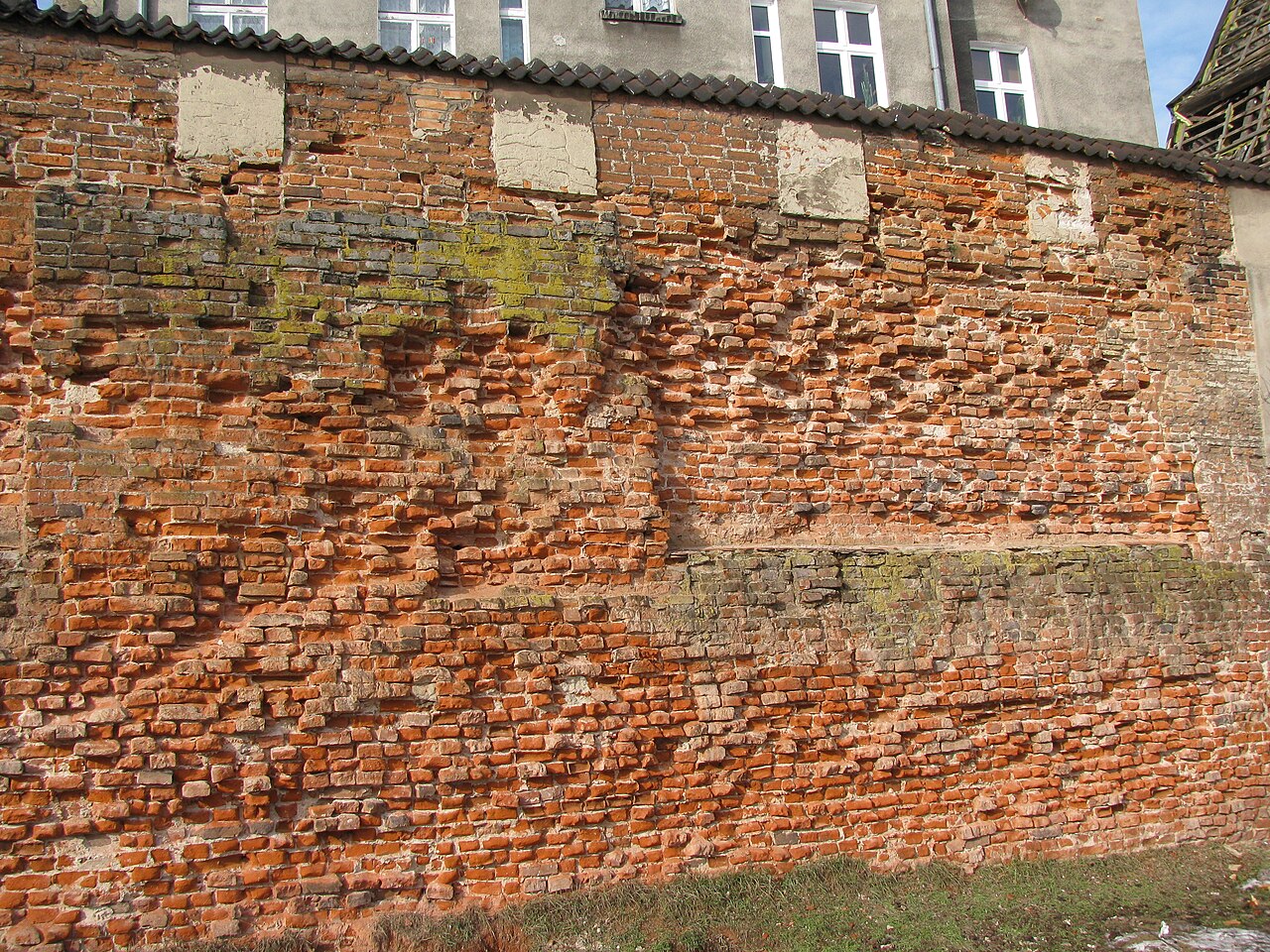
Over the centuries, especially during the 19th century, the castle underwent several reconstructions and modifications that significantly altered its medieval character. These later changes obscured much of the original architectural style, transforming the castle into a manor complex.
Today, Grabiny-Zameczek survives as a manor ensemble with several notable medieval elements still visible. The medieval cellars and a ground-floor hall—formerly the servants' chamber and chapel—remain intact. The chapel is distinguished by its star-shaped vault supported by a central column, a rare and architecturally significant feature.
The castle's former moat is still discernible around the site, preserving the memory of its defensive past. Access to the historic grounds is marked by a 17th-century brick gate adorned with the coat of arms of Gdańsk, linking the site to its historical ties with the city.
Grabiny-zameczek in the context of pomeranian castles
Grabiny-Zameczek represents a typical example of a hill castle in the Pomeranian region, combining military, administrative, and residential functions. Its history reflects the turbulent political landscape of northern Poland during the late medieval and early modern periods, marked by conflicts between the Teutonic Order, the Kingdom of Poland, and the city of Gdańsk.
The castle's evolution from a defensive stronghold to a noble residence mirrors broader trends in castle architecture and usage, where fortifications gradually gave way to more comfortable manor houses as political stability increased.
Architectural highlights
- Rectangular stone layout with fortified eastern corner towers
- Main residential wing (Dom główny) and smaller southern wing
- Medieval refectory and chapel with star vaulting
- Surrounding moat fed by the Kłodawa river
- 17th-century brick gate with Gdańsk coat of arms
Historical events
- Destruction by flood in 1381 leading to stone reconstruction
- Capture and de-fortification by Gdańsk forces in 1459
- Destruction by King Stefan Batory's troops in 1577
- Use as Swedish base during the mid-17th century conflicts
- Recapture by Gdańsk soldiers in 1657 after frozen moat battle
Visiting grabiny-zameczek
While primarily a historic manor complex today, visitors to Grabiny-Zameczek can explore the surviving medieval elements and appreciate the site's layered history. The visible moat and the brick gate provide tangible connections to its past as a Teutonic stronghold and later noble residence. The site's preservation offers valuable insight into the architectural and historical evolution of castles in the Pomeranian region.
Grabiny-Zameczek is a significant cultural heritage site that illustrates the complex history of territorial control and architectural adaptation in northern Poland. Its well-preserved medieval features, combined with later modifications, make it a unique destination for those interested in castle architecture and Polish history.
Frequently asked questions (FAQ)
- How do I get to Grabiny-Zameczek?
- Grabiny-Zameczek is accessible by car and public transport. If you are driving, there are well-marked roads leading to the castle from major cities in Poland. Public transport options include regional buses that connect to nearby towns.
- What is the historical significance of Grabiny-Zameczek?
- Grabiny-Zameczek has a rich history dating back to the 14th century, serving as a strategic fortification in the region. It played a vital role in local conflicts and has been a residence for various noble families. Today, it stands as a testament to the architectural and cultural heritage of Poland.
- When was Grabiny-Zameczek built?
- The construction of Grabiny-Zameczek began in the early 14th century, with significant renovations occurring in the 16th century. The castle showcases a blend of Gothic and Renaissance architectural styles, reflecting the changes in design preferences over the centuries.
- Can I take guided tours of Grabiny-Zameczek?
- Yes, guided tours are available at Grabiny-Zameczek, providing visitors with in-depth knowledge of its history and architecture. Tours typically run throughout the day, and it's advisable to check the schedule in advance. Private tours can also be arranged for a more personalized experience.
- Why is Grabiny-Zameczek popular among visitors?
- Grabiny-Zameczek attracts visitors for its stunning architecture, well-preserved interiors, and picturesque surroundings. The castle often hosts cultural events and exhibitions, making it a vibrant part of the local community. Its historical importance and scenic beauty make it a must-visit destination.
- Is it possible to visit Grabiny-Zameczek year-round?
- Yes, Grabiny-Zameczek is open to visitors year-round, although opening hours may vary by season. It's best to check the official website for the most current information on hours and any seasonal events. Be mindful of weather conditions, as winter visits may require special preparations.
- What are the ticket prices for visiting Grabiny-Zameczek?
- Ticket prices for Grabiny-Zameczek vary depending on the type of tour and age of the visitor. Generally, there are discounts for students and seniors, while children under a certain age may enter for free. It's recommended to purchase tickets at the entrance or online to avoid queues.
- What is the best time to visit Grabiny-Zameczek?
- The best time to visit Grabiny-Zameczek is during the spring and summer months when the weather is pleasant and the gardens are in full bloom. Autumn also offers beautiful foliage, making for stunning views. Visiting during weekdays can help you avoid larger crowds.
- Are there any nearby attractions to visit after Grabiny-Zameczek?
- Yes, there are several attractions near Grabiny-Zameczek, including beautiful parks and other historical sites. The surrounding area offers hiking trails and scenic viewpoints, making it perfect for outdoor enthusiasts. Local towns also feature charming shops and cafes to explore.
Information
Loading map...
Visitor reviews
No reviews yet. Been here? Write the first review and help other travelers!
Write the first reviewVisited this castle? Share your experience
Your review helps other travelers and adds first-hand knowledge to our encyclopedia.