Gdańsk
Gdańsk, a city with a history spanning over a millennium, has always held a critical strategic position guarding the mouth of the Vistula River. From the time of Mieszko I, the first historic ruler of Poland, a fortified complex existed here, initially protected by wooden and earth ramparts and accompanied by a bustling port. By the 12th century, Gdańsk had become the capital of an independent duchy, underscoring its regional importance.
The rise of the Teutonic castle in Gdańsk
In 1308, the city was seized by the Margraves of Brandenburg, who besieged the ducal stronghold. The city’s defender, Bogusz, called for help from the Teutonic Knights. After repelling the Brandenburg forces, the knights cunningly took control of Gdańsk and the entire region of Pomerelia. Following the Treaty of Kalisz in 1343 with King Władysław Łokietek, the Teutonic Order began constructing their convent castle in the strategic fork between the Motława and Vistula Rivers, replacing the earlier ducal fortifications.
The castle likely featured a four-winged structure with corner towers and a tall keep (donjon). It was fortified with extensive curtain walls, moats, and a large bailey to the west and north, separated by defensive walls and a moat. The castle’s garrison controlled a port on the Motława, emphasizing the fortress’s role in overseeing trade and river traffic.
Strategic and economic significance
Gdańsk’s castle was one of the most important fortresses in the Teutonic State, alongside the castles of Malbork and Królewiec. Its location allowed the knights to control the lucrative grain trade, a vital economic resource. The castle’s defenses and armaments reflected its importance in maintaining the Order’s dominance in the region.
Conflict and siege during the Polish-Teutonic wars
During the Polish-Teutonic War of 1410, the Gdańsk City Council initially pledged to defend the city and even sent 400 sailors to aid the defense of Malbork after the Battle of Grunwald. However, as King Władysław Jagiełło achieved military successes, anti-Teutonic sentiment grew in Gdańsk. The city limited the actions of the castle’s commander (komture) and pledged allegiance to the Polish king. Despite demands by the royal starosta and city officials for the knights to leave the castle, the commander Schönfeld refused to surrender.
After the Peace of Toruń, the castle’s command passed to Henryk von Plauen, brother of the Grand Master. His aggressive policies worsened relations with the city, culminating in a naval battle and the murder of city councilors invited for peace talks by the komture. In response, the citizens fortified the city walls and sealed the castle gate.
The castle’s fall and demolition
In 1440, Gdańsk joined the Prussian Confederation, which in 1454 sparked an uprising against the Teutonic Order. The city prepared to assault the castle, and under the temporary command of the domestic komture Postor, negotiations led to the knights’ surrender with safe passage guaranteed. The victorious citizens immediately began dismantling the castle to prevent it from being used again as a threat.
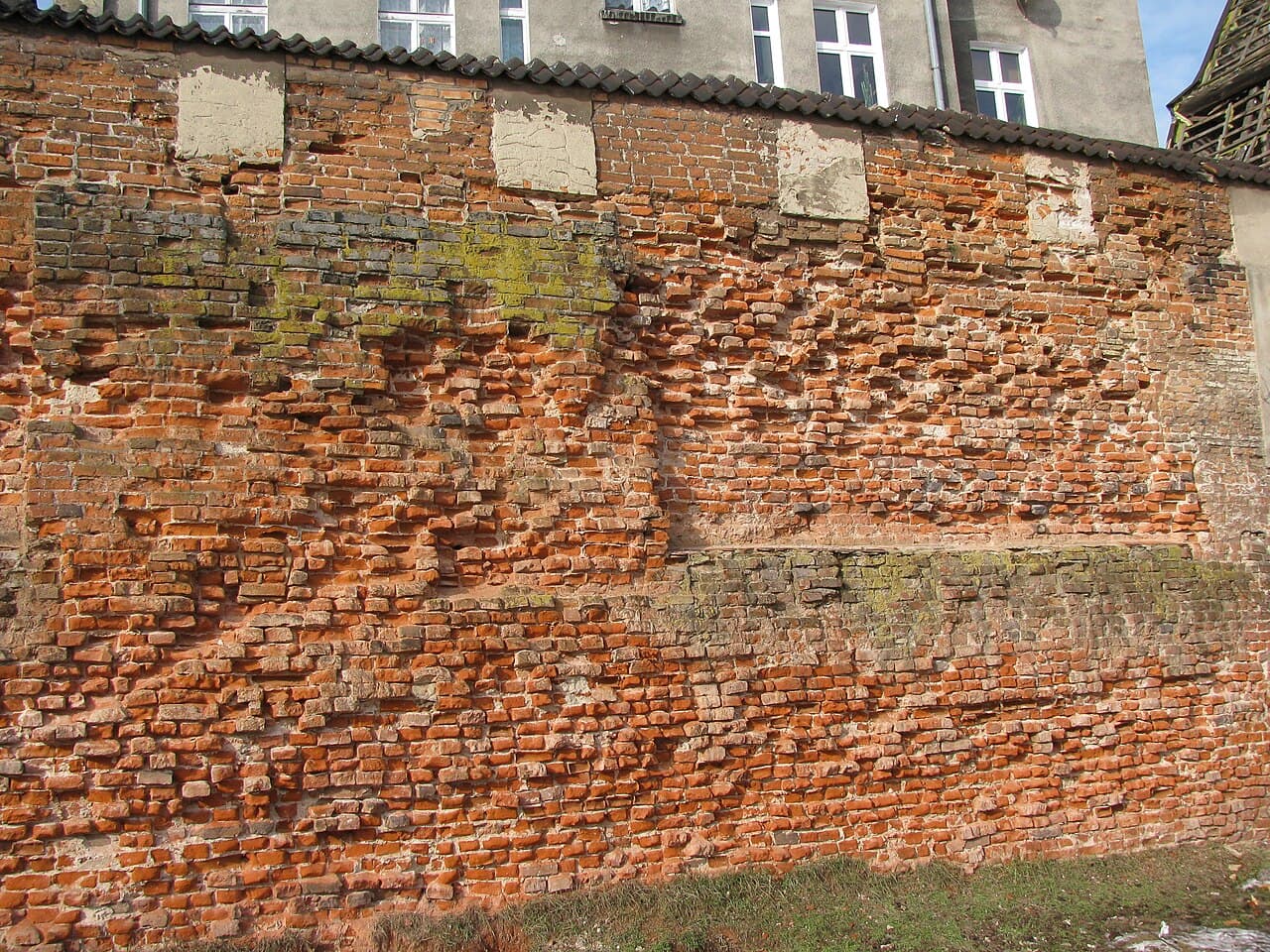
As a result, the castle has not existed for over 500 years. The only surviving fragment is a section of wall near Wartka Street. It is also believed that the Łabędź Tower near the Fish Market was originally part of the castle’s outer bailey, later incorporated into the city’s defensive walls after 1454.
Legacy and visiting Gdańsk today
Despite the castle’s near-total destruction, Gdańsk remains a city rich in history and architecture. Visitors can explore numerous other historic sites, including the medieval city walls, the iconic Long Market, and the Gothic St. Mary's Church. The castle’s story is a testament to the city’s turbulent past and its role as a key player in the medieval Baltic region.
The castle’s strategic position at the confluence of two rivers and its role in controlling trade and military power illustrate the importance of fortified structures in medieval urban centers. The remnants and historical records continue to attract scholars and tourists interested in the Teutonic Order and the complex history of Pomerania.
Frequently asked questions (FAQ)
- When was the castle in Gdańsk built?
- The castle was constructed starting around 1343 after the Treaty of Kalisz, replacing earlier fortifications from the ducal period.
- What role did the castle play in the Teutonic Order's control of the region?
- The castle served as a key fortress controlling trade routes and military presence, especially overseeing the grain trade in the Baltic region.
- Why was the castle demolished?
- After the city of Gdańsk joined the Prussian Confederation and rebelled against the Teutonic Order, the castle was dismantled to prevent it from being used again as a military threat.
- Are there any remains of the castle today?
- Only a fragment of the castle's wall near Wartka Street survives, along with the Łabędź Tower, which may have been part of the outer bailey.
- Can visitors see the castle ruins?
- Visitors can view the surviving wall fragment and the Łabędź Tower, but most of the castle no longer exists. The city offers many other historic sites to explore.
Photo gallery

Information
Loading map...
Visitor reviews
No reviews yet. Been here? Write the first review and help other travelers!
Write the first reviewVisited this castle? Share your experience
Your review helps other travelers and adds first-hand knowledge to our encyclopedia.