Gorgier Castle

Gorgier Castle in Gorgier, Switzerland
Gorgier, Switzerland
Modern (19th–20th c.)

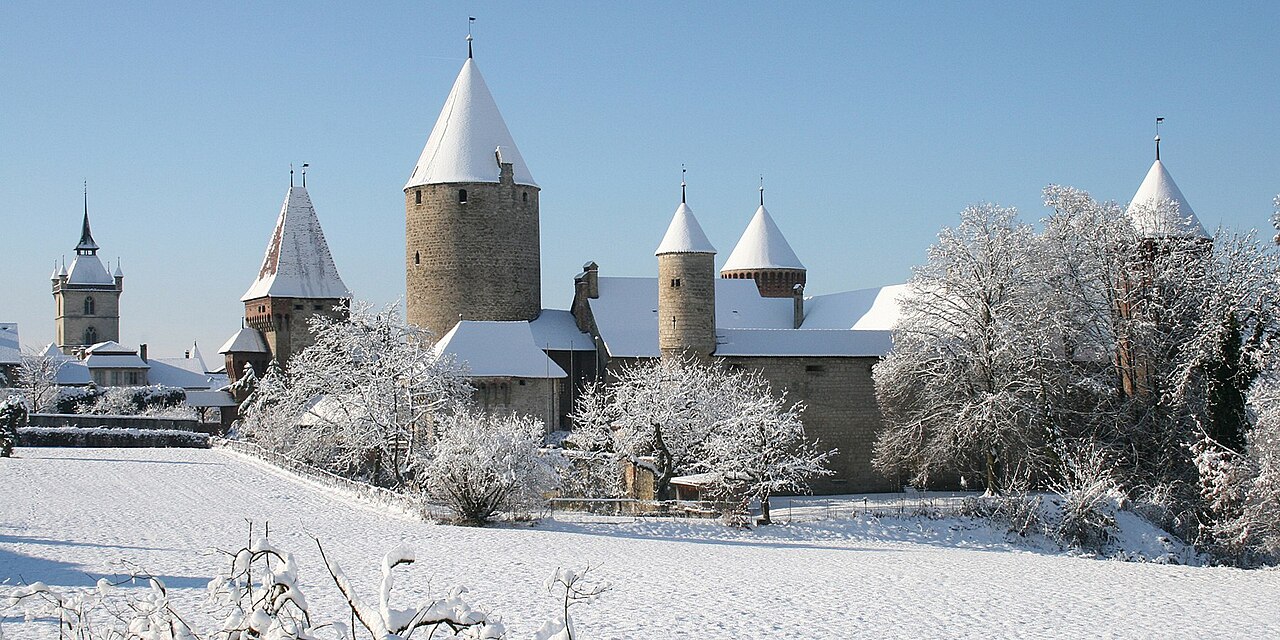
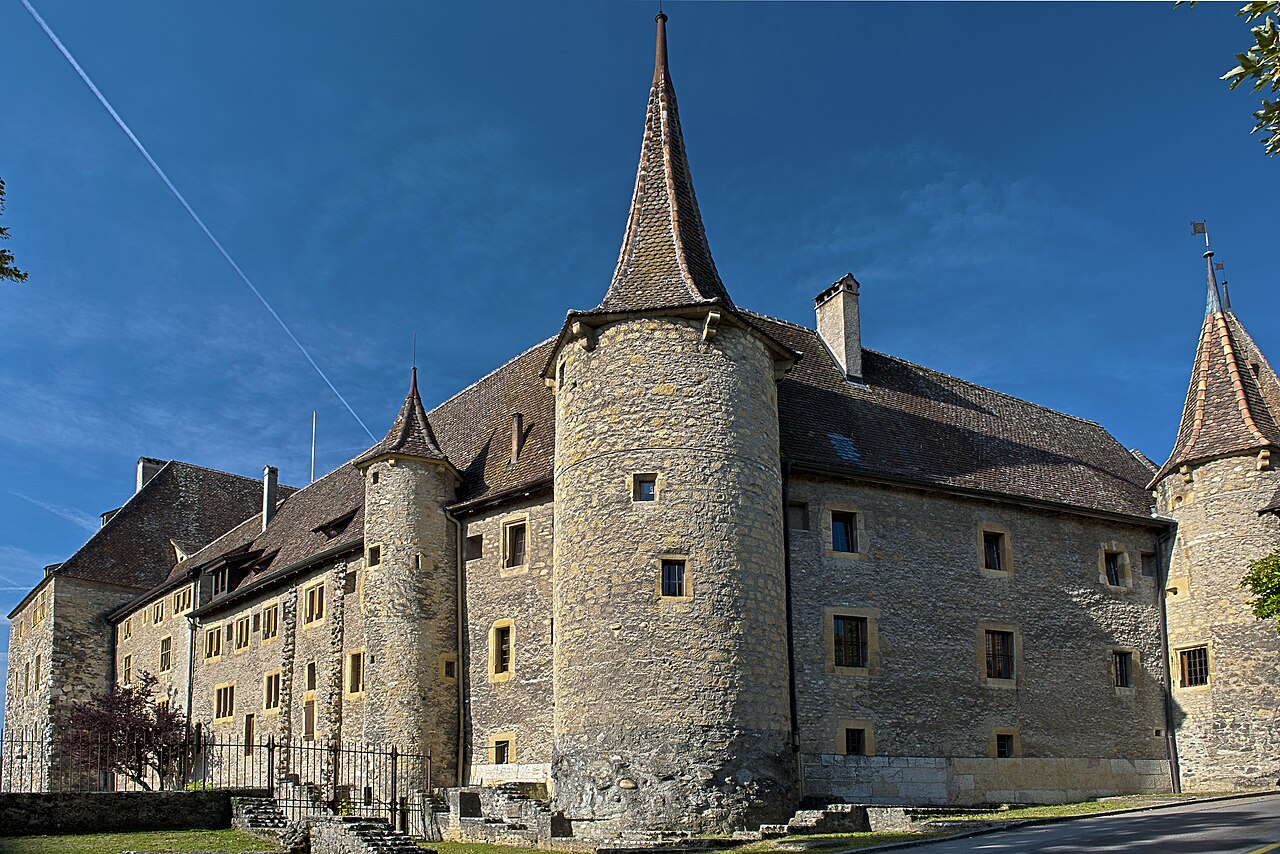
Gorgier Castle stands as a remarkable example of Swiss heritage, located in the municipality of Gorgier, Switzerland. Recognized as a Swiss heritage site of national significance, the castle embodies a rich history that spans several centuries, reflecting the architectural evolution and social changes of the region. Originally mentioned in historical records in 1299, Gorgier Castle has witnessed a complex lineage of ownership and architectural transformation that makes it a fascinating subject for enthusiasts of medieval and Renaissance architecture.

Historical background and ownership

The earliest known mention of Gorgier Castle dates back to the late 13th century, specifically the year 1299. During this period, the castle was under the ownership of the lords of Estavayer and Neuchâtel, influential noble families in the region. These families played a significant role in the political and social landscape of medieval Switzerland. The castle served not only as a fortified residence but also as a symbol of feudal power and territorial control.

Through the centuries, the castle remained an important stronghold, adapting to the needs and tastes of its successive owners. By the 16th century, significant architectural additions such as the drawbridge, ditches, gardens, and various outbuildings were constructed, enhancing both its defensive capabilities and residential comfort.

Architectural evolution

Medieval foundations and 16th-century enhancements

The original medieval structure of Gorgier Castle was designed primarily for defense, featuring typical elements such as , fortified towers, and a strategic location to oversee the surrounding territory. The drawbridge and ditches added in the 16th century reflect the ongoing importance of fortifications during the late medieval period, a time when artillery and siege tactics were evolving.

19th-century transformation and Neo-Renaissance influence

In the 19th century, the castle underwent a significant transformation when it became the residence of wealthy merchants and industrialists. This period marked a shift from purely defensive architecture to a style that emphasized aesthetic appeal and comfort. The renovations incorporated Neo-Renaissance architectural features, blending them with the existing medieval elements to create a unique and eclectic appearance.

The 19th-century modifications included decorative facades, elaborate window frames, and refined interior spaces that reflected the tastes of the rising bourgeoisie. This fusion of styles makes Gorgier Castle an important example of how historic buildings were adapted to new social realities and architectural trends during the period.

Architectural features and layout

Gorgier Castle is characterized by its combination of defensive and residential elements. The castle's layout includes a central courtyard surrounded by thick stone walls and towers, which provided protection and a commanding view of the landscape. The drawbridge and moats or ditches were critical defensive features designed to deter invaders and control access.

The gardens and outbuildings added in the 16th century contribute to the castle's charm and historical ambiance, offering insights into the lifestyle of its inhabitants over the centuries. These spaces would have supported both practical functions such as storage and agriculture, as well as leisure activities.

Current status and cultural significance

Today, Gorgier Castle is recognized as a protected heritage site, reflecting its importance in Swiss cultural history. Although it is currently listed for sale by Sotheby's Realty, the castle remains a valuable architectural and historical monument. Its preservation allows visitors and scholars to explore the intersection of medieval fortification techniques and 19th-century architectural revival styles.

The castle's status as a Swiss heritage site of national significance ensures ongoing attention to its conservation and promotes awareness of Switzerland's rich architectural legacy. It continues to attract interest from historians, architects, and tourists who appreciate its unique blend of history and style.

Visiting and exploring Gorgier Castle

While the castle is privately owned and currently for sale, its exterior and surrounding grounds can be appreciated by visitors interested in Swiss castles and historic architecture. The location in the picturesque municipality of Gorgier offers scenic views and a glimpse into the region's medieval past.

Visitors interested in the castle's architectural details and history may also explore nearby heritage sites and museums that provide context about the noble families and historical periods associated with Gorgier Castle.

Frequently asked questions (FAQ)

What are the opening hours of Gorgier Castle?
Gorgier Castle is open to visitors from April to October, daily from 10 AM to 6 PM. During the off-season, the castle may have limited access, so it's advisable to check the official website for the most current information.
Can I purchase tickets in advance for Gorgier Castle?
Yes, tickets for Gorgier Castle can be purchased online in advance to avoid long queues. Purchasing tickets online also allows you to select your preferred visiting time, ensuring a smoother experience.
When was Gorgier Castle built?
Gorgier Castle was constructed in the early 13th century and has a rich history tied to the region's feudal past. It has undergone several renovations over the centuries, reflecting various architectural styles.
Is Gorgier Castle accessible for visitors with disabilities?
Yes, Gorgier Castle is equipped with facilities to assist visitors with disabilities. Ramps and accessible pathways are available, but it’s recommended to contact the castle administration in advance for specific accessibility inquiries.
What is the historical significance of Gorgier Castle?
Gorgier Castle played a crucial role in the defense of the region during the Middle Ages. Its strategic location near Lake Neuchâtel allowed it to serve as a stronghold for local nobility and a center of power in the area.
What is the best time to visit Gorgier Castle?
The best time to visit Gorgier Castle is during the spring and early autumn when the weather is pleasant, and the surrounding gardens are in full bloom. Additionally, visiting during weekdays can help you avoid the larger crowds that typically gather on weekends.
Are there any nearby attractions to visit after Gorgier Castle?
Yes, visitors can explore the beautiful Lake Neuchâtel, which offers various recreational activities such as boating and hiking. Additionally, the charming village of Gorgier itself has quaint shops and cafes worth checking out.
What are the ticket prices for Gorgier Castle?
Ticket prices for Gorgier Castle vary, with adults typically paying around CHF 10 and discounts available for children and seniors. Family packages are also offered, making it an affordable option for those visiting with children.

Information

Sources & official resources

Verify the information above using these authoritative references.

Loading map...

Visitor reviews

No reviews yet. Been here? Write the first review and help other travelers!

Write the first review

Visited this castle? Share your experience

Your review helps other travelers and adds first-hand knowledge to our encyclopedia.

Write a review

(5/5)

0/2000 characters

Your review will be visible after admin approval

Nearby castles

3.3 km

Vaumarcus Castle

Vaumarcus, Switzerland

Vaumarcus Castle stands as a remarkable example of medieval military architecture in Switzerland, embodying centuries of historical evolution and adaptation. Located in the village of Vaumarcus, this hill castle traces its origins to the 13th century, a period marked by significant advances in castle fortifications designed to counter emerging siege technologies such as throwing machines. The castle's strategic position atop a promontory overlooking the valley carved by the La Vaux stream and near the shores of Lake Neuchâtel provided both natural defense and control over the surrounding territories. Originally constructed by the feudal lords of the region, Vaumarcus Castle served as the center of the barony (Freiherrschaft) of Vaumarcus. Its early history is closely tied to the noble families of Neuchâtel, with the castle first documented in 1285. The estate initially belonged to a junior branch of Rudolf II of Neuchâtel, before financial difficulties led to its sale to Count Rudolf IV of Neuchâtel in 1308. From that point forward, the castle was managed by appointed governors rather than hereditary lords, reflecting broader political shifts in the region. Architectural evolution and defensive features The castle's architectural development reflects the changing needs of medieval fortification. At its core stands a large bergfried or main tower, built in the 13th century, which functioned as both a defensive stronghold and residential space. Notably, the original entrance to this tower was situated approximately seven meters above ground level, accessible only by a wooden staircase that could be removed in times of danger to prevent enemy access. This elevated entrance was a common defensive feature in medieval castles, enhancing security against direct assault. The ground floor of the bergfried housed the kitchen, evidenced by surviving fireplace remains that offer insight into the daily life of the castle's inhabitants. Subsequent enhancements after 1309 included the construction of a Gothic gate on the ground floor, equipped with a drawbridge to further fortify the entrance. Massive stone buttresses were added to the eastern corners facing the valley, reinforcing vulnerable points against siege attacks. Additional defensive features include machicolations—openings in the parapets designed to drop projectiles or boiling liquids on attackers—strategically placed along the castle walls and above the main gate. A round tower adjacent to the entrance was constructed to better withstand siege engines, its curved walls deflecting projectiles more effectively than flat surfaces. A hexagonal stair tower at the rear facilitated safer movement between the different levels of the fortress. Historical significance and ownership changes Vaumarcus Castle's history is marked by episodes of conflict and changing ownership that mirror the tumultuous political landscape of medieval Switzerland. The castle was besieged and burned by the Swiss army following the Battle of Grandson in 1476 during the Burgundian Wars, a critical conflict that reshaped power dynamics in the region. After this destruction, Rudolf von Hochberg, having confiscated the property from his vassal, undertook a significant reconstruction of the fortress, restoring its defensive capabilities and residential functions. Ownership disputes continued into the 16th century until the barony was transferred through marriage to the Bonstetten family in 1577. The lordship was elevated to the status of Freiherrschaft in 1595, reaffirming its noble standing. From 1675, the von Bürens family administered the estate until feudal rights were abolished in 1831 as part of regional reforms. The castle continued to serve judicial functions until 1832, after which civil administration responsibilities moved to nearby districts. Later architectural additions and current use In the 18th century, a significant architectural addition known as the "New Castle" was constructed on the northeastern part of the site around 1773. This Baroque-style residence features a hipped roof, decorative pilasters supporting cornices along the façade, and a prominent gable adorned with the von Bürens family coat of arms. The new building is surrounded by a terrace and formal gardens, contrasting with the medieval fortress's austere defensive structures. Today, Vaumarcus Castle presents an asymmetrical silhouette shaped by its layered history, combining robust medieval fortifications like machicolations, buttressed towers, and thick stone walls with elegant Baroque residential elements. The castle has been repurposed to serve modern functions, housing an international central administration, a family and gastronomic restaurant, and a cultural center. This adaptive reuse preserves the castle's cultural heritage while integrating it into contemporary community life. Location and landscape context Perched on a hilltop, Vaumarcus Castle commands sweeping views over the valley and nearby Lake Neuchâtel, emphasizing its strategic importance in controlling regional trade routes and local settlements. The surrounding landscape, including the La Vaux stream, provided natural defensive advantages that were augmented by the castle's stone fortifications. The site also included a small village at the base of the hill, reflecting the typical medieval arrangement where the castle served as the administrative and military center for the surrounding populace. Architectural details and defensive innovations The castle's design incorporates several defensive innovations characteristic of the High Medieval period. The elevated entrance to the bergfried is a notable feature, reducing vulnerability to direct assault. The addition of a drawbridge and Gothic gate enhanced access control, while machicolations allowed defenders to repel attackers from protected positions. The round tower's curved walls were an advanced design to better resist siege engines, a response to evolving military technology. The hexagonal stair tower improved internal mobility and safety during attacks, allowing defenders to move efficiently between floors without exposure to external threats. These architectural elements illustrate the castle's adaptation to the demands of medieval warfare and the need for both defense and residential comfort. Cultural heritage and preservation Vaumarcus Castle has been legally protected since 1978 due to its significant cultural and historical value. The castle's preservation allows visitors to explore a site that encapsulates the complex history of feudal Switzerland, medieval military architecture, and noble residence development. Its current use as a cultural center and restaurant ensures that the castle remains a vibrant part of the community, bridging past and present. Visitors can appreciate the castle's architectural layers, from the imposing medieval bergfried and defensive walls to the elegant Baroque "New Castle" and landscaped terraces. The site offers insights into medieval life, feudal politics, and architectural innovation, making it a valuable destination for history enthusiasts and cultural tourists alike.

High Medieval (11th–13th c.)
Details
7.8 km
Chenaux Castle — Switzerland castle

Chenaux Castle

Estavayer-le-Lac, Switzerland

Chenaux Castle, located in the town of Estavayer-le-Lac in the Swiss Canton of Fribourg, is a significant example of a late medieval hill castle with a rich history dating back to its construction in 1392. The castle was originally built by Chevalier Pierre and his brother Guillaume, members of the local nobility who sought to establish a fortified residence in this strategic location overlooking Lake Neuchâtel. Historical context and construction The castle's foundation in the late 14th century corresponds to a period of frequent territorial conflicts and power struggles in the region. The original builders designed Chenaux Castle to serve both as a defensive stronghold and a symbol of feudal authority. Its position on a hill provided natural advantages for surveillance and defense against invaders. In 1432, the castle came under the control of Humbert, the bastard of Savoie, who enhanced the fortress with advanced defensive features. These improvements reflected the evolving military technology and siege tactics of the time, including strengthened curtain walls, fortified towers, and improved battlements designed to withstand artillery and prolonged assaults. Architectural features and defensive elements Chenaux Castle exhibits typical characteristics of late medieval military architecture. The castle complex includes a robust keep or donjon, surrounded by thick curtain walls that enclose a courtyard. The walls were constructed from local stone, providing substantial resistance to attacks. The castle's defensive system was further reinforced with strategically placed towers that allowed defenders to cover all approaches with crossfire. The battlements and machicolations enabled defenders to repel attackers attempting to scale the walls. The castle's elevated position above the surrounding landscape added to its defensive capabilities. Damage and restoration During the wars of Bourgogne in the 15th century, Chenaux Castle was set on fire, causing significant damage to its structures. Despite this, the castle remained an important administrative center in the region. Over the centuries, the castle underwent various repairs and modifications to maintain its functionality. Today, Chenaux Castle is well preserved and serves as the seat of the local prefecture. While it remains a government building, the castle is open to visitors, allowing the public to explore its historical architecture and learn about its role in Swiss history. Cultural significance and heritage status Chenaux Castle is recognized as a Swiss heritage site of national significance. This designation highlights its importance as a cultural and historical monument, reflecting the architectural styles and feudal history of the region. The castle's preservation contributes to the understanding of medieval fortifications in Switzerland and the political landscape of the late Middle Ages. Visiting Chenaux Castle Visitors to Chenaux Castle can appreciate its medieval architecture and the scenic views of Lake Neuchâtel and the surrounding countryside. The castle's location in Estavayer-le-Lac makes it accessible for tourists interested in exploring Swiss history and heritage sites. Guided tours often highlight the castle's defensive features, historical events, and the lives of its former inhabitants. The castle's blend of historical authenticity and ongoing administrative use provides a unique experience for visitors.

Late Medieval (14th–15th c.)
Details
11.1 km
Colombier Castle — Switzerland castle

Colombier Castle

Colombier, Switzerland

Colombier Castle stands as a remarkable historical monument in Colombier, Switzerland, embodying a rich architectural and cultural evolution from antiquity through the modern era. Originally constructed in the 11th century as a fortified tower, the castle was built atop the ruins of a grand Roman villa, one of the largest known in Switzerland. This villa, developed between the 1st and 4th centuries AD, featured luxurious residential quarters, baths with intricate mosaics and frescoes, terraced gardens, and a peristyle courtyard, reflecting the opulence and social status of its Roman owners. The castle’s strategic location on a hill overlooking Lake Neuchâtel and the surrounding Alps provided both natural defense and commanding views, which were crucial throughout its history. Over the centuries, Colombier Castle transformed from a Roman aristocratic residence to a medieval fortified stronghold, and later into a military facility, illustrating the shifting political and social landscapes of the region. Roman origins and early medieval transition Archaeological excavations in the mid-19th century revealed the extensive remains of the Roman villa beneath the castle, including foundations, roof tiles, and a column shaft discovered during reservoir construction in 1840. The villa was built in multiple phases, evolving into a palatial mansion with amenities such as at least two baths, richly decorated with mosaics and frescoes, and expansive terraced gardens oriented towards the lake and mountains. Following the decline of Roman authority, the site transitioned into an aristocratic curtis during the early medieval period, from the 5th to the 11th centuries. This residence was unfortified but held great regional importance, hosting significant events such as the 938 double marriage of Queen Berthe of Burgundy and her daughter Adélaïde to kings Hugues d’Arles and Lothaire II of Italy. The site remained under the control of various rulers including the Burgundians, Merovingians, and Carolingians, reflecting its continued political significance. Medieval fortification and architectural evolution Between the 11th and 15th centuries, the site evolved into a fortified castle serving as the seat of the regional lords of Colombier. The original Roman courtyard was enclosed by a crenellated curtain wall with round towers, rebuilt in the 14th century to enhance defense capabilities. A prominent donjon was constructed in the southwest corner of the courtyard, serving as the main fortified tower and residence. 15th-century renovations In the 15th century, Antoine de Colombier undertook significant renovations, replacing the old tower with a large rectangular donjon. This structure incorporated a cellar, kitchen, great hall, residential chambers, a polygonal stair turret, and a chapel, reflecting the castle’s transformation into a noble residence with both defensive and domestic functions. The castle’s layout and architecture from this period illustrate the late medieval emphasis on fortified yet comfortable living spaces. 16th to 18th-century adaptations During the 16th to 18th centuries, Colombier Castle shifted away from a military role towards agricultural and administrative functions. Under owners such as Jean-Jacques de Watteville and the Count of Neuchâtel, the castle became the center of a prosperous vineyard estate. Additions from this period include a stair turret, a large roof dated 1541, granaries, a gate tower from 1543, and a vast barn arranged around the courtyard. The castle also served as the residence and storage site for the local tax collector, underscoring its administrative importance. 19th and 20th-century military use and restoration The 19th century marked a return to military functions for Colombier Castle. In 1806, it was converted into a military hospital. From 1824, the castle grounds were used by Federal militias as a parade ground and subsequently transformed into barracks with an expanded arsenal. By 1877, it became the official barracks of the 2nd Division of the Swiss Army. Throughout the late 19th and 20th centuries, the site saw the construction of numerous military buildings, including barracks (built in 1842-43 and 1890), an arsenal (1869-71), riding halls (1851 and 1873), officers’ quarters and stables (1912-14), and a modern barracks completed in 1982. These additions display a mix of architectural styles such as neoclassical and Heimatstil, reflecting evolving military needs and architectural trends. Preservation and cultural significance Archaeological interest in Colombier Castle began in earnest in the 19th century, with early excavations led by Frédéric Dubois de Montperreux. The oldest parts of the castle were protected as historic monuments starting in 1905, and restoration efforts led by architect Charles-Henri Matthey between 1905 and 1934 helped preserve the site’s medieval and Roman heritage. The castle also became a cultural venue, housing large murals by Charles L’Eplattenier painted between 1915 and 1946. These murals depict the Swiss military mobilization during World War I and the origins of the Swiss Confederation, adding artistic and historical value to the site. Commemorative monuments include a World War I memorial (1921), a statue of athlete Jean Linder (1928), and a bas-relief of Henri I d’Orléans-Longueville (1953). Current use and visitor experience Today, Colombier Castle remains an active military site, serving as an infantry training center for the Swiss Army. The historic “Old Castle” houses a military museum since 1954, which was expanded in 1955 to include exhibits on locally produced painted cotton fabrics known as “indiennes.” Visitors can explore the layered history of the site, from its Roman origins to its medieval fortifications and modern military adaptations. The castle’s architecture offers a fascinating study in historical continuity and change, with visible traces of Roman masonry integrated into medieval walls and later military structures. The combination of archaeological remains, restored medieval buildings, and 19th- and 20th-century military installations provides a comprehensive narrative of the region’s past. Colombier Castle’s location on a hill overlooking Lake Neuchâtel offers picturesque views and a tangible connection to the landscape that shaped its history. The site’s preservation and continued use underscore its importance as both a cultural heritage landmark and a functional military facility.

High Medieval (11th–13th c.)
Details