Gniezno
Gniezno Castle holds a significant place in Polish history, tracing its origins back to the times of the early Piast dynasty. Initially, the site was home to a fortified wooden and earthwork stronghold that served as a crucial center in the emerging Polish state. This early fortification was strategically important but was eventually abandoned in the early 13th century when Prince Władysław Odonic established a new stronghold by Lake Jelonek.
The early defensive stronghold and medieval developments
The original fortification in Gniezno was primarily a wooden and earthwork fortress, typical of early medieval Polish defensive architecture. This type of construction was common during the Early Medieval period, providing essential protection but limited in terms of long-term durability and military strength. The abandonment of this early stronghold marked a shift in the region's defensive strategy and urban development.
The Renaissance castle and architectural transformations
The medieval castle at Gniezno presents a complex historical puzzle with varying interpretations among historians. Some scholars assert that in the mid-15th century, Archbishop Jarosław Bogoria Skotnicki constructed a brick castle on the site of the old stronghold. This castle was designed on a rectangular plan and featured a large residential building reinforced by buttresses and an enclosing defensive wall with a corner tower. Despite these features, the castle's military value was limited, reflecting its primary function as a residential palace rather than a fortress.
More recent hypotheses suggest that the initial structure may have been a wooden archiepiscopal manor, with the construction of the brick castle beginning in 1518 under the direction of Primate Jan Łaski. This ambitious construction project, however, was never completed. The only surviving element was a brick residential house with modest defensive capabilities. Unfortunately, this building suffered significant damage during a fire in 1617 and, although rebuilt, it fell into decline by the early 18th century.
Decline and archaeological legacy
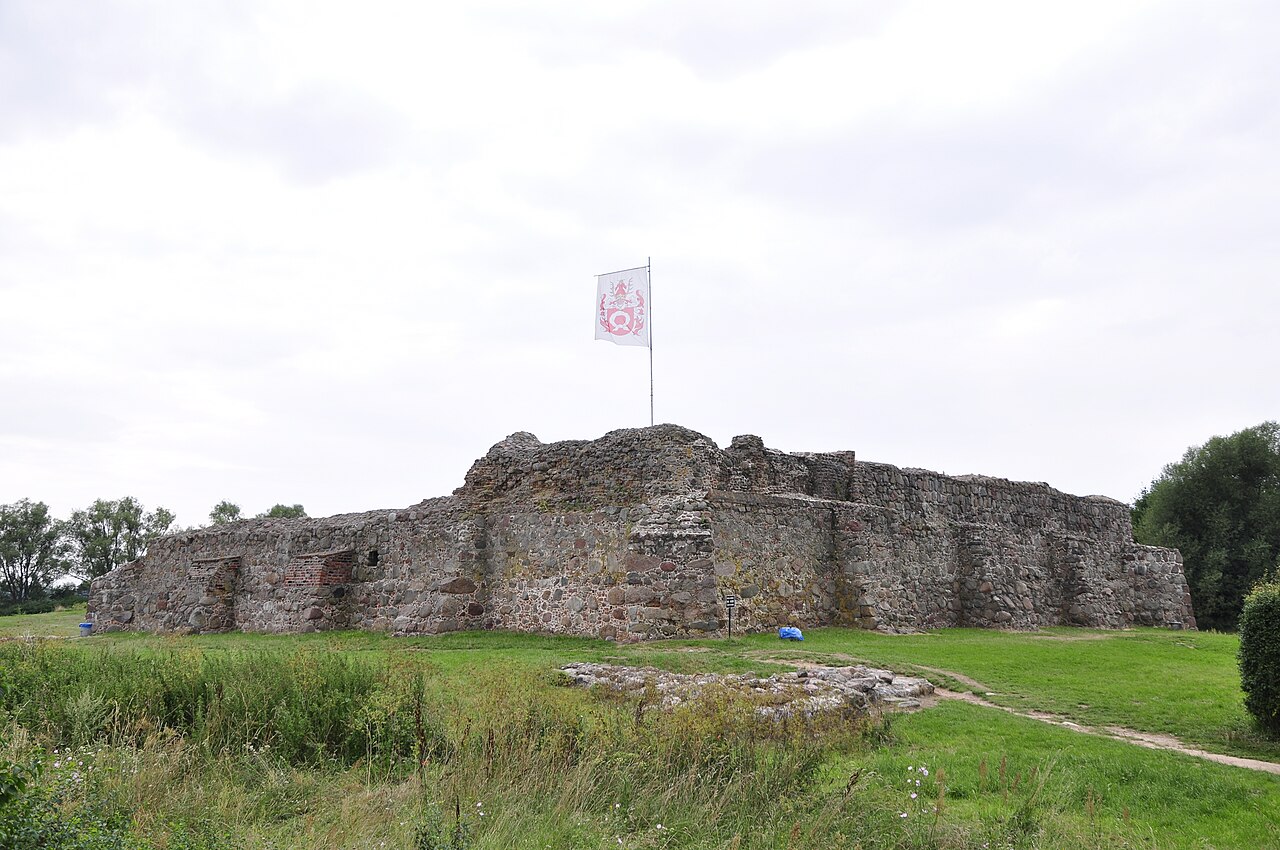
The construction of new primatial palaces in Skierniewice and Warsaw marked the definitive end of Gniezno Castle's prominence. By the early 19th century, the castle was dismantled, and today, only archaeological foundations remain as a testament to its historical presence. These remnants provide valuable insights into the castle's layout and construction techniques, contributing to our understanding of Renaissance architecture and ecclesiastical residences in Poland.
Architectural and historical significance
Gniezno Castle exemplifies the transition from early medieval wooden fortifications to Renaissance brick architecture that emphasized residential comfort over military defense. Its history reflects the broader political and religious developments in Poland, particularly the role of the primates in shaping regional power centers. Although the castle itself no longer stands, its archaeological remains and documented history offer a rich narrative about the evolution of castle architecture and the cultural heritage of Gniezno.
Key architectural features
- Rectangular plan typical of Renaissance palatial residences
- Brick construction replacing earlier wooden structures
- Residential house with buttresses for structural support
- Defensive wall with a corner tower, though limited in military function
Historical context
The castle's development was closely linked to the ecclesiastical authority of the primates of Poland, who used it as a residence and administrative center. The shift of primatial residences to other cities in the 17th and 18th centuries reflects changing political and religious priorities within the Polish-Lithuanian Commonwealth.
Present-day status
Currently, Gniezno Castle exists only as an archaeological site, with excavated foundations accessible to researchers and visitors interested in Poland's medieval and Renaissance heritage. The site offers a tangible connection to the early history of the Polish state and its ecclesiastical leadership.
Frequently asked questions (FAQ)
- When was Gniezno Castle originally built?
- The earliest fortifications at Gniezno date back to the early Piast period, with the brick castle construction beginning in 1518 under Primate Jan Łaski.
- What architectural style characterizes Gniezno Castle?
- Gniezno Castle features a mixed architectural style, primarily Renaissance, reflecting its construction period and later modifications.
- Is Gniezno Castle open to visitors today?
- Today, Gniezno Castle exists as an archaeological site with exposed foundations. Visitors can explore the remains and learn about its historical significance.
- What remains of Gniezno Castle can be seen today?
- Only the archaeological foundations of Gniezno Castle remain, uncovered by excavations, as the original structures were dismantled in the early 19th century.
- Why was Gniezno Castle dismantled?
- The castle was dismantled in the early 19th century following the construction of new primatial palaces in Skierniewice and Warsaw, which shifted the ecclesiastical center away from Gniezno.
Information
Loading map...
Visitor reviews
No reviews yet. Been here? Write the first review and help other travelers!
Write the first reviewVisited this castle? Share your experience
Your review helps other travelers and adds first-hand knowledge to our encyclopedia.