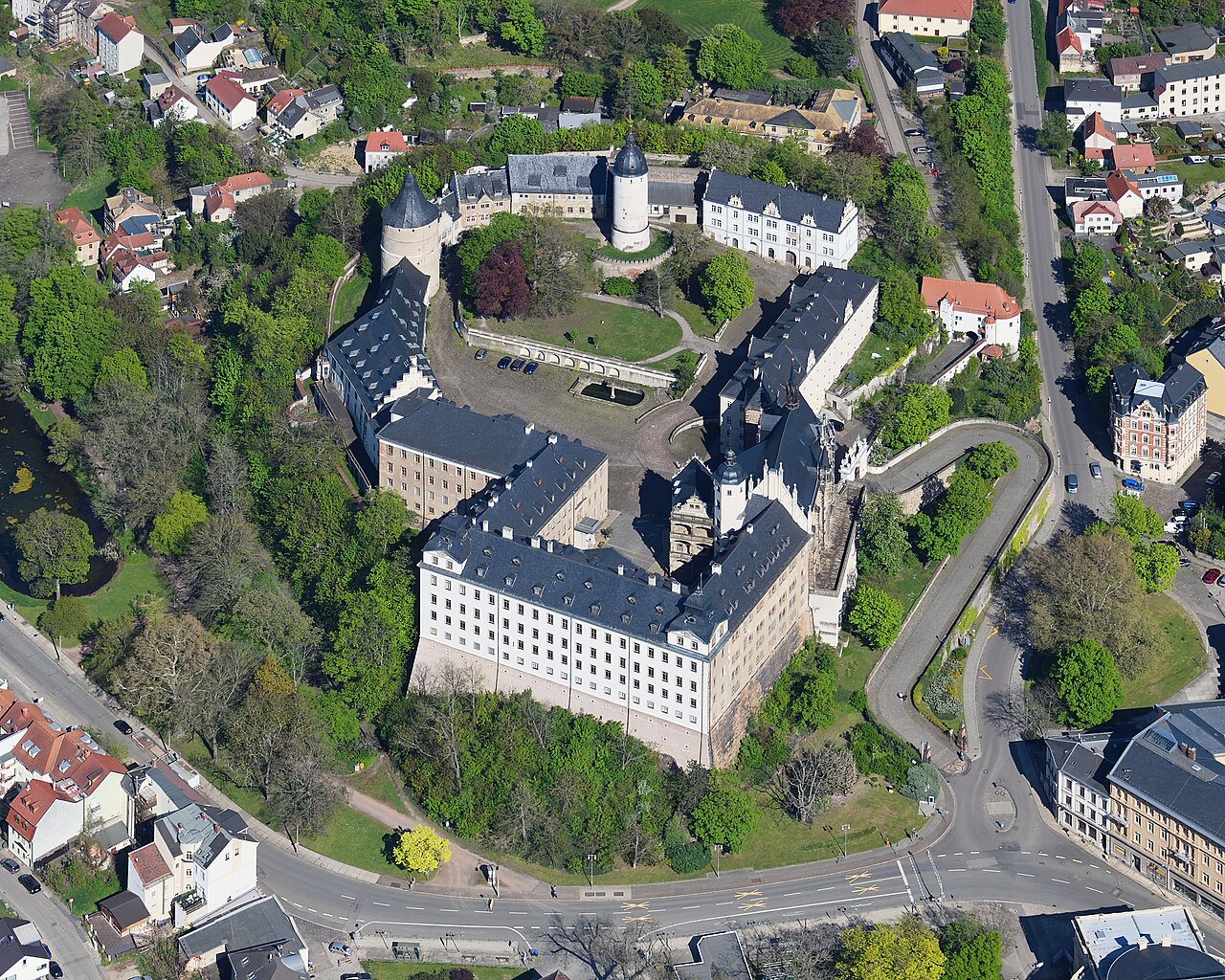
Gnandstein Castle
Gnandstein Castle is a striking example of a medieval hill castle located in the municipality of Frohburg, Saxony, Germany. Constructed in the 13th century, it embodies the architectural evolution from Romanesque origins to later Gothic enhancements. Perched prominently on a porphyry rock overlooking the Wyhra river valley, the castle's strategic hilltop location offered commanding views and defensive advantages throughout its history.
Early construction and architectural development
The castle was initially built in the early 1200s as a fortified residence for a family of ministeriales, unfree knights serving the powerful Wettin dynasty. Its original design was a simple rectangular groundplan with a residential tower, characteristic of early Romanesque military architecture. Surviving elements from this period include parts of the main building and foundational walls.
Between 1225 and 1230, a significant expansion introduced a three-story palas, the main residential building, which was later heightened by a fourth floor in the late 14th century. This vertical extension enhanced the castle's imposing silhouette and residential capacity. The mid-13th century also saw the construction of a distinctive round bergfried in the upper inner courtyard. This tall stone tower served as a refuge and lookout, a vital defensive feature in medieval fortifications.
Ownership and historical significance
Starting in 1228, the castle became the property of the von Schladebach family, who later adopted the name Marschall von Bieberstein. This family rose to prominence through high-ranking roles at the court of the Meissen electorate, a key principality within the Holy Roman Empire. In the late 14th century, ownership transferred to the noble von Einsiedel family, who maintained control for over five centuries until their expropriation in 1945.
During the von Einsiedel tenure, the castle underwent multiple phases of expansion and modernization. Defensive features were upgraded to adapt to evolving military technology, including the addition of a zwinger wall east of the main ring wall. This outer enclosure was designed to trap and expose attackers, enhancing the castle's defensive depth.
Gothic additions and religious features
Between the 13th and 15th centuries, late Gothic architectural elements were incorporated. Notably, around 1500, Heinrich von Einsiedel commissioned a late Gothic chapel in the north wing. This chapel is vaulted and richly decorated with three carved wing altars crafted by the workshop of Peter Breuer, a renowned sculptor of the period. The oak choir stall within the chapel offers seating for clergy and remains in its original late Gothic condition, a remarkable preservation given the family's early Lutheran conversion in the 1530s.
The south wing, built in the 15th century, is a three-story Gothic residential block featuring defensive shooting slits on the lower floors. A late Gothic plaster frieze once adorned the eaves, parts of which have been reconstructed to reflect the original ornamental design.
Defensive structures and military history
Gnandstein Castle's defensive architecture includes three late Gothic cellars equipped with embrasures for firearms, marking an adaptation to gunpowder weaponry. One cellar contains a well carved into the porphyry rock, essential for sustaining the castle during sieges. This well cellar has been restored and is part of the museum exhibits.
The castle endured significant damage during the Thirty Years' War (1618–1648), when Swedish troops partially destroyed portions of the complex. Near the war's end, a lightning strike caused a fire that destroyed the south wing, necessitating repairs and restoration.
Baroque and modern restorations
In the early 18th century, interior remodeling introduced Baroque elements, including a stone arcade in the inner courtyard that replaced earlier wooden galleries. The 19th and early 20th centuries saw further renovations under architects such as Woldemar Kandler, enhancing the castle's structural integrity and aesthetic appeal.
Before the von Einsiedel family's expropriation in 1945, Hanns von Einsiedel and his daughter Sibylla established a museum within the castle and opened the chapel to the public, preserving its historical and cultural significance.
After a period of limited conservation post-World War II, archaeological excavations resumed in the 1990s. Since 1992, the castle has been managed by the State Palaces, Castles and Gardens of Saxony, which undertook extensive restoration work from 1994 to 2004. These efforts significantly improved the castle's condition and expanded its museum collections.
Museum collections and cultural heritage
The castle's museum houses a rich collection of historical furnishings, artworks, and religious sculptures. A notable donation in 2004 added 338 items, including Meissen porcelain, period furniture, sacred sculptures, and 17th-century Dutch paintings. These artifacts enrich the visitor experience and underscore the castle's cultural importance.
Architectural highlights and visitor experience
Visitors to Gnandstein Castle can explore its well-preserved Romanesque and Gothic architecture, including the towering well house that rises over 33 meters. This structure served both as a watchtower and to cover the deep well, which extends 25 meters into the rock, ensuring a reliable water supply during sieges.
The castle's inner courtyard, with its Baroque stone arcade, offers a glimpse into the architectural transformations over centuries. Guided tours provide access to the restored defensive cellars, chapel, and museum, allowing visitors to appreciate the castle's historical layers and military significance.
Gnandstein Castle stands today as a testament to the enduring legacy of medieval fortifications in Saxony, blending architectural styles and historical narratives across centuries. Its preservation and museum functions invite exploration of the region's noble history and the evolution of castle architecture.
Frequently asked questions (FAQ)
- How do I get to Gnandstein Castle?
- Gnandstein Castle is located in the municipality of Frohburg, Saxony. It is accessible by car and public transport from nearby cities such as Leipzig and Chemnitz. Parking is available near the site.
- What are the opening hours of Gnandstein Castle?
- The castle is open daily from 10:00 to 17:00. Guided tours are available during visiting hours to explore the castle's history and architecture.
- What is the historical significance of Gnandstein Castle?
- Built in the 13th century, Gnandstein Castle served as a fortified residence for noble families and played a strategic defensive role in Saxony. It reflects architectural developments from Romanesque to Gothic styles.
- Can I visit the chapel inside Gnandstein Castle?
- Yes, the late Gothic chapel built around 1500 is open to visitors. It features original carved wing altars and an oak choir stall, preserved despite the family's Lutheran conversion.
- Is the castle suitable for families and children?
- Gnandstein Castle offers a family-friendly environment with guided tours and museum exhibits that engage visitors of all ages. The castle's accessible paths and informative displays make it suitable for children.
Information
Opening hours
10:00-17:00, daily
Ticket prices
€7 adult, €4 child
Current owner
State Palaces, Castles and Gardens of Saxony
Website
Visit websiteSources & official resources
Verify the information above using these authoritative references.
Loading map...
Visitor reviews
No reviews yet. Been here? Write the first review and help other travelers!
Write the first reviewVisited this castle? Share your experience
Your review helps other travelers and adds first-hand knowledge to our encyclopedia.