Glucksburg Castle
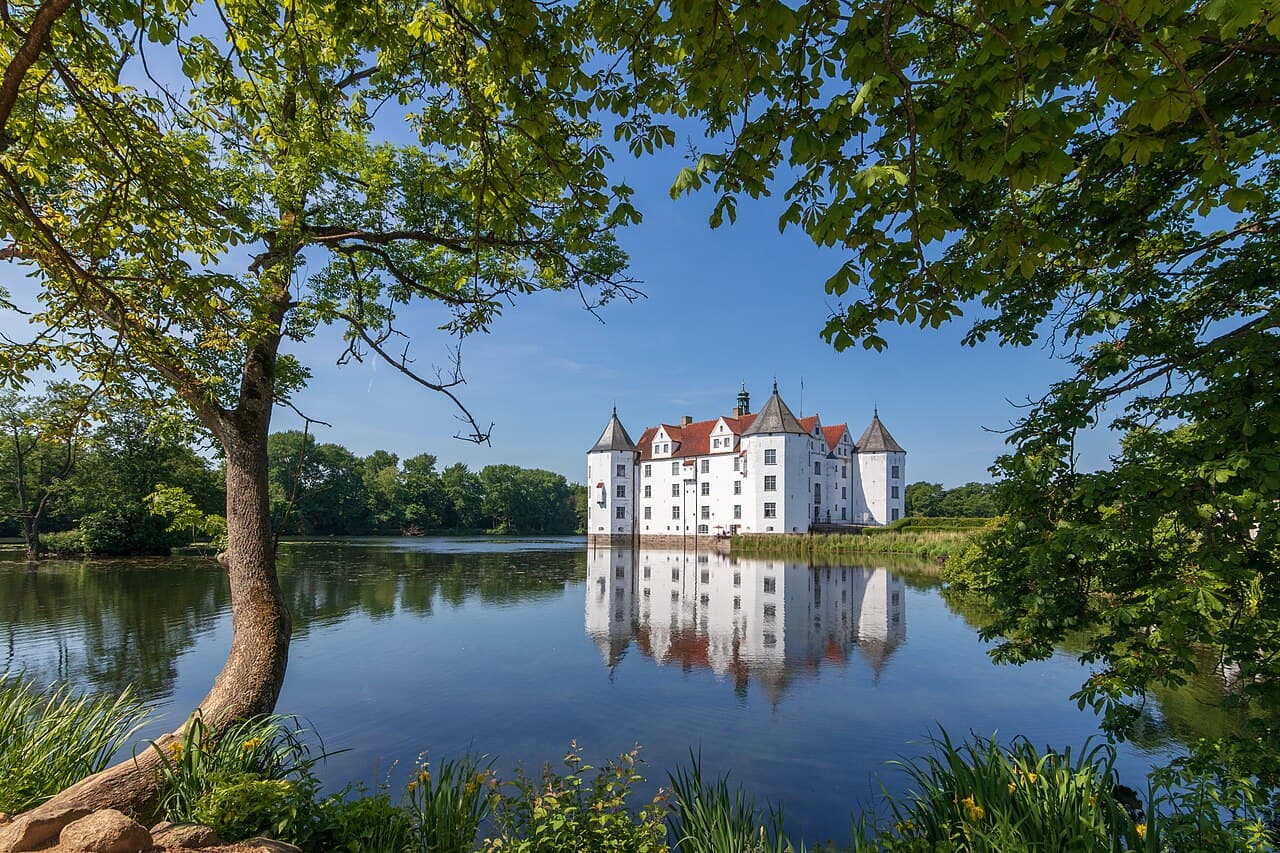
Glucksburg Castle stands as one of the most significant Renaissance castles in northern Europe, renowned for its architectural beauty and historical importance. Located on the scenic Flensburg Fjord in Glucksburg, Schleswig-Holstein, Germany, this castle has served as the seat of the House of Schleswig-Holstein-Sonderburg-Glucksburg and was also a residence for the Danish kings. Today, it functions as a museum owned by a foundation, preserving its rich heritage for visitors and scholars alike.
The foundation and construction of Glucksburg Castle
Constructed between 1583 and 1587 under the direction of Duke John II the Younger (1545-1622), Glucksburg Castle was built by the master builder Nikolaus Karies. The castle was erected on the site of a former Cistercian monastery known as Kloster Rude, which itself had medieval religious origins. The builders ingeniously reused granite and bricks from the demolished monastery, integrating these materials into the castle's structure. This reuse is evident in the castle's robust granite foundation that rises about 2.5 meters above the water, providing a sturdy base for the whitewashed walls above.
The castle's name derives from Duke John's personal motto: "Gott Gebe Glück Mir Frieden" (God wants happiness and peace). The initials of this motto, along with the Duke's coat of arms, are prominently displayed above the main entrance. Flanking the coat of arms are the heraldic symbols of the Duke's two wives from the Brunswick-Lüneburg family and the Electorate of Saxony, reflecting the castle's dynastic connections.
Architectural design and layout
Glucksburg Castle is notable for its square base, with sides measuring nearly 30 meters, comprising three separate houses each with its own roof. The central building contains the great halls and the vestibule, while the two side wings house the living quarters. A unique feature is the chapel, which spans two of the houses, underscoring the castle's integration of religious and residential functions.
The castle was originally adorned with characteristic Renaissance embellishments, although many of these decorative elements were removed in the 19th century. Despite this, the exterior has remained remarkably unchanged for over four centuries, preserving its historical authenticity.
Defensive and environmental features
The grounds of the former monastery were flooded to create a large pond that almost entirely surrounds the castle, serving as a defensive moat and also supporting fishing activities. This water feature enhances the castle's picturesque setting and historic defensive capabilities.
Gardens and landscape evolution
The castle's gardens have evolved significantly over the centuries. Initially, the only garden was a kitchen garden established in 1622, replacing the monastery's original garden lost to the pond's creation. Between 1706 and 1709, a small pleasure garden was added, located in the area now known as the rose garden.
From 1733 onward, a Baroque garden was laid out in the main park in front of the castle's outer buildings. This garden featured an orangery constructed in 1743, which was later renovated in 1827 into a Neoclassical building. Today, the orangery serves as a venue for art exhibitions and concerts, blending cultural activities with historical preservation.
In the 20th century, the formal gardens were transformed into English landscape parks, though remnants of the older garden styles remain visible. The Glücksburger Rosarium, established in 1990-91 on the site of the former castle nursery, boasts over 500 varieties of roses. Unlike the castle gardens, the Rosarium is a private garden that charges an admission fee.
Historical significance and cultural heritage
Glucksburg Castle has played a vital role as the ancestral seat of the House of Schleswig-Holstein-Sonderburg-Glucksburg, a cadet branch of the Danish royal family. Its use by Danish kings underscores its importance in the region's political and cultural history. The castle's architecture and preserved interiors offer valuable insights into Renaissance design and noble life in northern Europe during the late 16th century.
As a museum, the castle now welcomes visitors to explore its richly decorated rooms, historic artifacts, and extensive grounds. It stands as a testament to the enduring legacy of Renaissance architecture and the intertwined histories of Germany and Denmark.
Preservation and current status
Glucksburg Castle is well preserved, maintaining much of its original structure and charm. The castle's ownership by a foundation ensures ongoing conservation efforts and public accessibility. Its location on the Flensburg Fjord provides a stunning backdrop that enhances the visitor experience.
The castle is accessible to the public, offering guided tours that highlight its architectural features, history, and the stories of the noble families who lived there. Seasonal events and exhibitions held in the orangery and castle grounds contribute to its vibrant cultural life.
Frequently asked questions (FAQ)
- What is Glucksburg Castle known for?
- Glucksburg Castle is renowned for its striking Renaissance architecture and its picturesque setting by the Flensburg Fjord. It is one of the most significant water castles in Northern Europe, with a rich history tied to European royalty, particularly the House of Schleswig-Holstein.
- When was Glucksburg Castle built?
- Construction of Glucksburg Castle began in 1582 and was completed in 1587. The castle has been well-preserved, allowing visitors to explore its historical significance and architectural beauty.
- What are the opening hours for Glucksburg Castle?
- Glucksburg Castle is typically open for visitors from April to October, with hours varying by season. During peak tourist months, the castle is usually open daily from 10 AM to 6 PM, while off-season hours may be more limited.
- Can I take guided tours of Glucksburg Castle?
- Yes, guided tours of Glucksburg Castle are available and are highly recommended for a deeper understanding of its history and architecture. Tours usually run throughout the day and can provide insights into the castle's royal heritage and fascinating stories.
- Is Glucksburg Castle accessible for visitors with disabilities?
- Glucksburg Castle strives to be accessible for all visitors, with some areas equipped for those with mobility challenges. However, due to the historical nature of the site, not all areas may be fully accessible, so it's advisable to check in advance for specific accessibility options.
- What is the best time to visit Glucksburg Castle?
- The best time to visit Glucksburg Castle is during the spring and summer months when the gardens are in full bloom and guided tours are plentiful. Additionally, pleasant weather makes exploring the castle grounds and nearby areas more enjoyable.
- Are there any nearby attractions to visit?
- Yes, nearby attractions include the beautiful Flensburg Fjord, the charming town of Flensburg, and various hiking trails in the scenic landscape. Visitors can also explore additional historic sites and enjoy local cuisine in the surrounding area.
- How much do tickets cost for Glucksburg Castle?
- Ticket prices for Glucksburg Castle vary depending on the season and type of tour selected. Generally, adult tickets cost around 10 euros, with reduced prices for students and children, making it an affordable destination for families and history enthusiasts alike.
Photo gallery

Information
Website
Visit websiteSources & official resources
Verify the information above using these authoritative references.
Loading map...
Visitor reviews
No reviews yet. Been here? Write the first review and help other travelers!
Write the first reviewVisited this castle? Share your experience
Your review helps other travelers and adds first-hand knowledge to our encyclopedia.