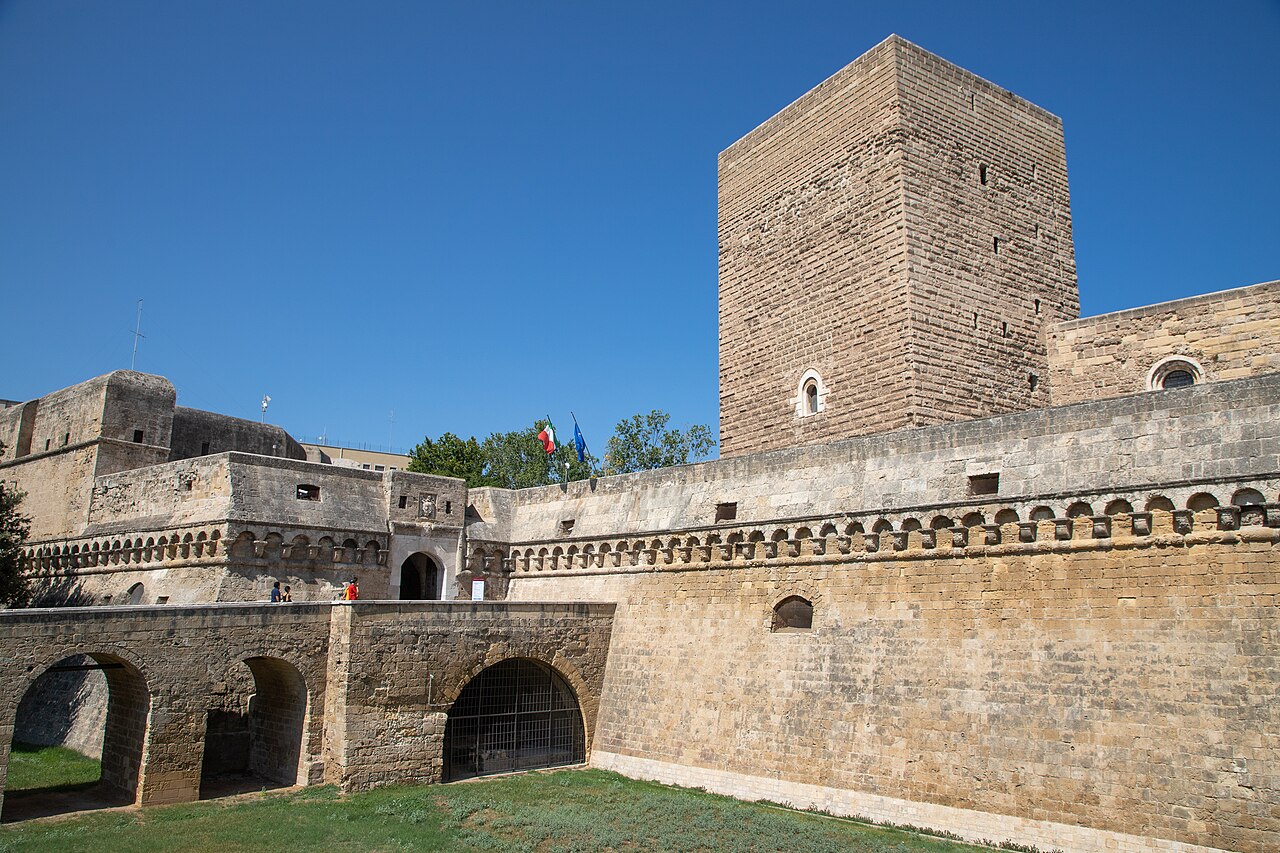
Giovinazzo Castle
Giovinazzo Castle stands as a significant medieval fortress in the historic center of the coastal town of Giovinazzo, located in the Puglia region of southern Italy. This imposing stronghold reflects centuries of military and architectural evolution, bearing the marks of various ruling powers that shaped its structure and function. Originally constructed in the 13th century by the Aragonese, the castle was strategically positioned to protect the town and its harbor from maritime threats and invasions.
The castle's architecture is characterized by a square-shaped layout fortified by four cylindrical towers at each corner, a design typical of medieval military constructions aimed at maximizing defensive capabilities. The inner courtyard serves as a central open space around which the castle's living quarters and functional rooms are arranged. Over the centuries, the castle underwent significant modifications and enlargements, notably under the Normans and later the Swabians, who contributed to its fortification and adaptation to changing military technologies and needs.
Historical evolution and architectural significance
The origins of Giovinazzo Castle trace back to a period of intense political and military activity in southern Italy. The Aragonese construction in the 13th century was part of a broader effort to consolidate control over coastal territories. However, archaeological and historical evidence suggests that the site may have hosted earlier fortifications, as the Normans and Swabians made substantial alterations and expansions to the original structure. These successive layers of construction highlight the castle's importance as a defensive bastion through different medieval regimes.
The castle's four cylindrical towers are a distinctive feature, providing 360-degree vantage points for surveillance and defense. These towers were equipped with battlements and arrow slits, allowing defenders to repel attackers effectively. The square plan with corner towers is a common medieval military design that maximizes defensive coverage and structural stability.
Structural features and defensive elements
The castle's walls are robust and thick, constructed primarily from local stone, which provided resilience against siege engines and artillery. The inner courtyard was a multifunctional space used for military drills, gatherings, and as a secure area during attacks. Access to the castle was originally controlled through a fortified gatehouse, which included defensive mechanisms such as portcullises and murder holes to thwart invaders.
Throughout its history, Giovinazzo Castle endured damage from wars and natural disasters, including earthquakes that are common in the region. These events necessitated multiple restoration campaigns, particularly from the modern era onwards, to preserve the castle's structural integrity and historical value.
Cultural role and current use
Today, Giovinazzo Castle serves as a cultural landmark and a venue for various public events. Its restoration has enabled it to host temporary exhibitions, concerts, and other cultural activities that celebrate the rich heritage of Giovinazzo and the broader Puglia region. The castle's preservation contributes to local tourism and education, offering visitors a tangible connection to the medieval past of southern Italy.
Visitors to the castle can explore its impressive towers, walk through the courtyard, and appreciate the blend of architectural influences from different historical periods. The castle's location within the historic town center also allows for easy access to nearby attractions, including ancient churches, narrow medieval streets, and the Adriatic coastline.
Architectural styles and influences
The castle exhibits architectural elements typical of medieval military design, with influences from the Aragonese, Norman, and Swabian periods. The robust stone masonry, cylindrical towers, and defensive battlements reflect the practical needs of fortification during the High to Late Medieval periods. While primarily functional, the castle also includes stylistic details that hint at the evolving tastes and construction technologies of its successive builders.
Restoration and preservation efforts
Restoration projects have focused on stabilizing the structure, repairing damage from earthquakes and warfare, and adapting the castle for modern use without compromising its historical authenticity. These efforts have been crucial in maintaining the castle as a well-preserved example of medieval fortification in Puglia.
Visiting Giovinazzo castle
The castle is accessible to the public and often included in cultural itineraries exploring the Puglia coast. Visitors are encouraged to check local information for opening hours and event schedules. The castle's location in the historic center makes it a convenient stop for tourists interested in medieval architecture, coastal history, and Italian heritage.
In summary, Giovinazzo Castle remains a vital monument that encapsulates the military, architectural, and cultural history of the region. Its layered construction, strategic coastal position, and ongoing role in the community underscore its enduring significance in Italy's rich tapestry of historic castles.
Frequently asked questions (FAQ)
- What is the historical significance of Giovinazzo Castle?
- Giovinazzo Castle, built in the 15th century, is a remarkable example of medieval military architecture. It played a crucial role in the defense of the coastal town against invasions, showcasing the strategic importance of Giovinazzo during its time.
- When was Giovinazzo Castle constructed?
- The construction of Giovinazzo Castle began in the late 15th century and was completed in 1497. It was commissioned by the King of Naples to fortify the town against potential attacks, reflecting the turbulent history of the region during that period.
- Can I visit Giovinazzo Castle?
- Yes, Giovinazzo Castle is open to visitors, allowing you to explore its impressive architecture and learn about its rich history. Guided tours are also available, providing deeper insights into the castle's significance and features.
- What are the opening hours of Giovinazzo Castle?
- Giovinazzo Castle is typically open from 9:00 AM to 6:00 PM, but it's advisable to check the official schedule before your visit as hours may vary seasonally. Special events may also affect regular visiting hours, so planning ahead is recommended.
- Is it possible to access Giovinazzo Castle with a wheelchair?
- While efforts have been made to improve accessibility, some areas of Giovinazzo Castle may present challenges for wheelchair users due to uneven surfaces and historical architecture. It’s best to contact the visitor center for detailed information on accessibility options prior to your visit.
- What is the best time to visit Giovinazzo Castle?
- The best time to visit Giovinazzo Castle is during the spring and early autumn when the weather is mild, making it pleasant for exploration. Additionally, visiting during these seasons often allows you to enjoy local festivals and events held in the town.
- Are there any nearby attractions to Giovinazzo Castle?
- Yes, nearby attractions include the charming old town of Giovinazzo, with its beautiful churches and coastal views. You can also explore the stunning beaches and enjoy the local cuisine at nearby restaurants, making it a perfect day trip destination.
- What are the ticket prices for Giovinazzo Castle?
- Ticket prices for Giovinazzo Castle are generally affordable, with discounts available for students and seniors. Children under a certain age may enter for free, making it a budget-friendly option for families.
Information
Loading map...
Visitor reviews
No reviews yet. Been here? Write the first review and help other travelers!
Write the first reviewVisited this castle? Share your experience
Your review helps other travelers and adds first-hand knowledge to our encyclopedia.