Gioia del Colle Castle
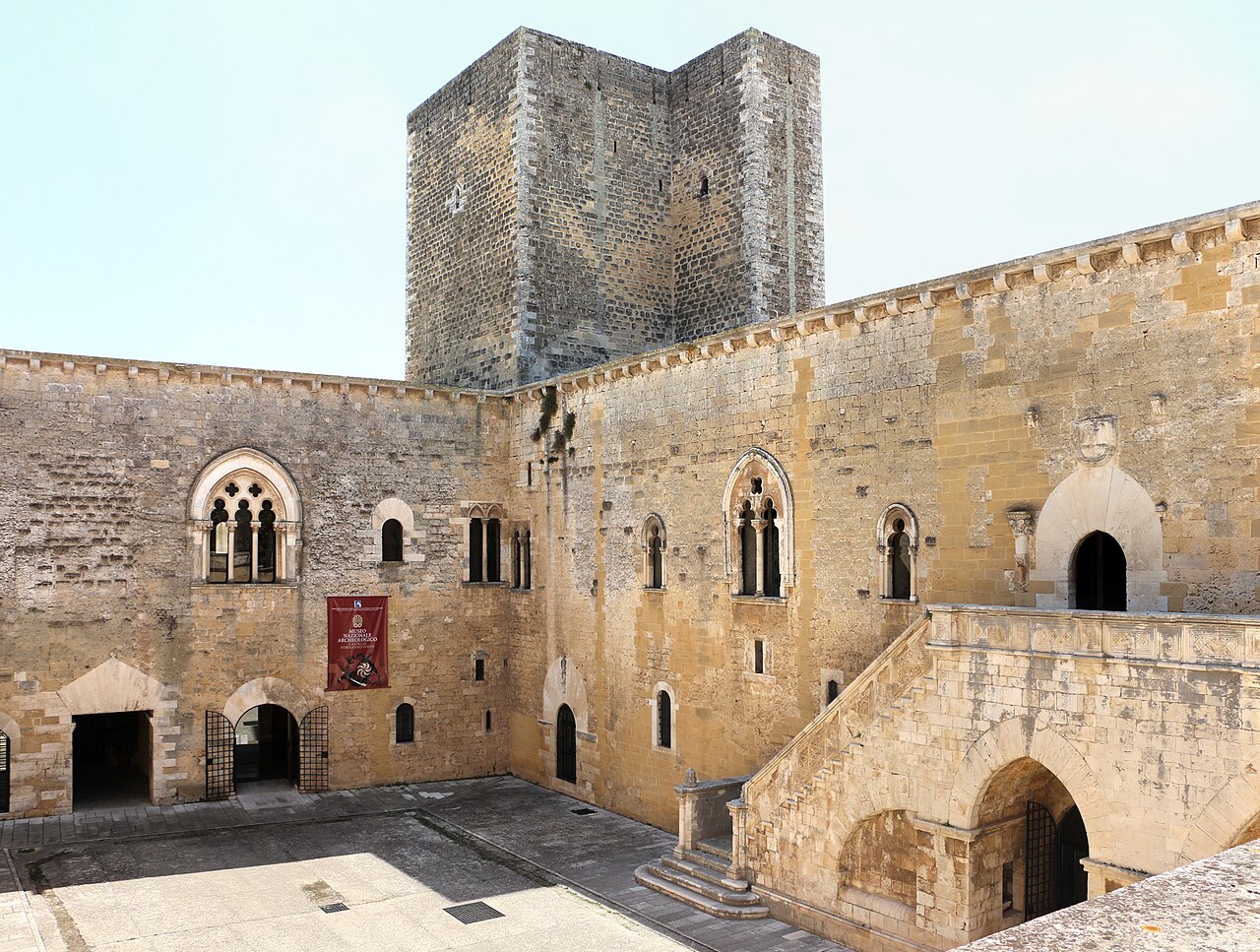
Gioia del Colle Castle stands as a striking example of medieval military architecture in the town of Gioia del Colle, located in the Puglia region of Italy. This imposing fortress, with its robust walls, multiple towers, and inner courtyards, offers commanding views over the surrounding landscape and the town itself. The castle's history spans several centuries, reflecting the complex political and military changes in southern Italy from the Byzantine period through the Norman, Swabian, Angevin, Aragonese, and later noble houses.
Historical origins and early development
The origins of Gioia del Colle Castle trace back to the 9th century Byzantine era, when it was initially constructed as a rectangular fortified enclosure built primarily from limestone. This early fortress served as a strategic defensive position in the region. During the late 9th and early 10th centuries, the castle underwent significant expansion under the auspices of Richard of Hauteville, the Duke of Apulia. Richard transformed the original Byzantine fortification into a more formidable feudal stronghold, expanding the courtyard southwards and reinforcing it with a solid enclosing wall.
One of the most notable additions during this period was the construction of a fortified tower in the southwest corner, which later became known as the Torre De' Rossi. This tower was a key defensive and residential feature of the castle, exemplifying Norman military architectural influence.
Norman and Swabian enhancements
In the 12th century, the castle was further modified under the reign of Roger II of Sicily, a Norman king who partially altered the fortifications and added two towers at the northeast and northwest corners. Although these towers no longer survive, their existence is documented in historical records. The castle's layout and defensive capabilities were thus enhanced to meet the military needs of the period.
The most significant phase of construction and refurbishment came under the direction of Frederick II, Holy Roman Emperor, around 1230. After returning from the Fourth Crusade, Frederick II undertook a comprehensive rebuilding of the castle. He added a new tower in the southeast corner and erected curtain walls within the courtyard to create enclosed areas for various functions. These included service rooms on the ground floor, such as kitchens, storages, stalls, and stables, while the first floor was reserved for residential quarters. This design reflects the dual military and domestic functions of the castle during the Swabian period.
The castle under Angevin, Aragonese, and noble ownership
The defeat of Manfred, King of Sicily, at the Battle of Benevento in 1266 marked the end of Swabian dominance in southern Italy and led to a decline in the castle's strategic importance. Manfred, who is traditionally believed to have been born in Gioia del Colle, lost possession of the castle after his death. Subsequently, the castle passed to the House of Anjou and later the Crown of Aragon.
From the late Middle Ages into the early modern period, the castle was controlled by various noble families, including the princes of Taranto until the 15th century and the House of Acquaviva from Conversano until the 17th century. Later, it remained under the ownership of the princes of Acquaviva until the early 19th century. During these centuries, the castle gradually transitioned from a military fortress to a noble residence, undergoing adaptations to meet changing residential needs while largely preserving its original structure.
Architectural features and layout
Gioia del Colle Castle is characterized by its rectangular plan with robust limestone walls and multiple towers positioned at strategic corners. The Torre De' Rossi remains one of the most prominent surviving towers, showcasing Norman defensive architecture. The castle's curtain walls enclose a central courtyard, which was historically divided by internal walls to form service and residential areas.
Inside, several halls retain significant decorative elements, including the Hall of Coats of Arms, which features heraldic decorations that narrate the region's history and noble lineages. The Armory displays remnants of the castle's martial past and provides insight into the military culture of the medieval period.
Defensive structures
The castle's fortifications include battlements and arrow slits designed for archers, which were typical of Norman and Swabian military architecture. The strategic placement of towers allowed for overlapping fields of fire and effective defense against sieges. The moat and gatehouse structures, while less documented, would have complemented these defenses.
Residential adaptations
Later modifications introduced more comfortable living quarters, reflecting the shift from a purely military fortress to a noble residence. The upper floors housed private chambers, while service rooms such as kitchens and stables were located on the ground floor, demonstrating a clear functional zoning within the castle.
Decline, restoration, and current use
By the 15th century, Gioia del Colle Castle began to lose its military relevance and entered a period of gradual decline and partial disrepair. Despite this, it retained much of its original Norman-Swabian architectural character, unlike many other Apulian castles that experienced extensive military modernization or structural alterations.
Between 1969 and 1974, the castle underwent significant restoration efforts aimed at preserving its historical fabric and architectural integrity. Today, the castle is well-preserved and serves as a cultural venue hosting exhibitions, events, and educational activities that celebrate the rich history and heritage of the region.
Gioia del Colle Castle in the broader historical context
The castle is a rare and valuable example of Norman and Swabian fortifications in southern Italy, providing insights into the military strategies, architectural styles, and feudal power structures of the medieval period. Its preservation allows historians and visitors alike to explore the evolution of castle construction from Byzantine origins through Norman and Swabian enhancements to later noble residential adaptations.
Its connection to prominent historical figures such as Richard of Hauteville, Roger II of Sicily, and Frederick II, Holy Roman Emperor highlights its strategic and symbolic importance in the history of Apulia and the Kingdom of Sicily.
Visiting Gioia del Colle Castle
Today, visitors to Gioia del Colle Castle can explore its well-preserved halls, towers, and courtyards, gaining a vivid understanding of medieval military architecture and noble life. The castle's panoramic views over the town and surrounding countryside enhance the visitor experience. Cultural events held within its walls offer a dynamic way to engage with the region's history and traditions.
Frequently asked questions (FAQ)
- What is the historical significance of Gioia del Colle Castle?
- Gioia del Colle Castle, built in the 12th century, is a prime example of medieval military architecture in Italy. It served as a strategic fortress during various conflicts and has witnessed significant historical events over the centuries.
- When was Gioia del Colle Castle built?
- The castle was constructed in the 12th century, specifically around the year 1132. Its design reflects the defensive needs of the time and showcases the architectural styles of the Norman period.
- What are the opening hours of Gioia del Colle Castle?
- Gioia del Colle Castle is open to visitors from Tuesday to Sunday, with hours typically from 9:00 AM to 7:00 PM. It is advisable to check for seasonal variations or special holiday hours before planning your visit.
- Is it possible to access all areas of the castle?
- While many areas of Gioia del Colle Castle are accessible to visitors, some sections may be restricted due to preservation efforts or safety regulations. Guided tours often provide access to key areas and informative insights.
- Can I purchase tickets in advance for Gioia del Colle Castle?
- Yes, tickets for Gioia del Colle Castle can often be purchased in advance through the official website or at local tourism offices. This is recommended especially during peak tourist seasons to avoid long lines.
- What is the best time to visit Gioia del Colle Castle?
- The best time to visit Gioia del Colle Castle is during the spring (April to June) and fall (September to October) when the weather is pleasant. These seasons also provide a more enjoyable experience with fewer crowds.
- Are there any nearby attractions worth visiting?
- Yes, nearby attractions include the charming town of Gioia del Colle, known for its wine and olive oil production, as well as the archaeological site of the ancient city of Egnazia. Both provide rich cultural experiences complementing your visit to the castle.
- How do I get to Gioia del Colle Castle?
- Gioia del Colle Castle is easily accessible by car and public transportation, located approximately 40 kilometers from Bari. The town's train station is within walking distance of the castle, making it convenient for visitors traveling by train.
Information
Loading map...
Visitor reviews
No reviews yet. Been here? Write the first review and help other travelers!
Write the first reviewVisited this castle? Share your experience
Your review helps other travelers and adds first-hand knowledge to our encyclopedia.