Gasr Banat
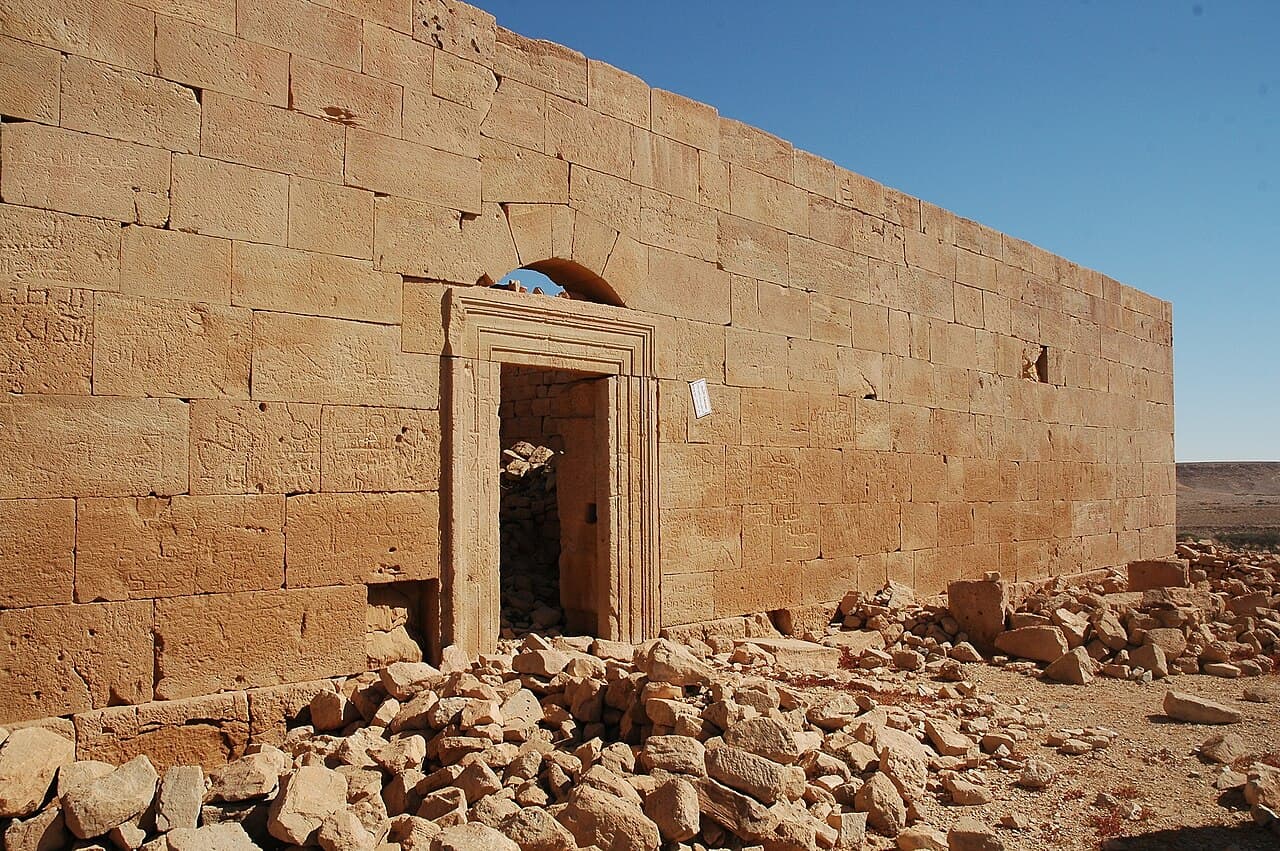
Gasr Banat, also known as Gasr Isawi, is a significant archaeological site located near Bani Walid in Libya. This site is notable for its remains of an Ancient Roman centenarium, a type of fortified farmstead or "perched" oppidum, dating back to the 3rd century CE. The centenarium's strategic position and architectural design reflect Roman rural military and agricultural practices in North Africa during the Early Medieval period.
The site was extensively studied by the archaeologist Graeme Barker in 1984, who contributed to understanding its historical context and construction techniques. Pottery fragments found around Gasr Banat confirm the dating to the third century CE, situating the centenarium within the broader framework of Roman imperial frontier settlements.
Architectural features of the centenarium
The centenarium at Gasr Banat exhibits architectural characteristics typical of Roman fortified farmsteads, designed to protect agricultural resources and serve as a military outpost. It shares a striking resemblance to a similar structure found at Gherait esh-Shergia north of Wadi Nefud, suggesting a regional architectural style or common purpose among these installations.
The building likely included robust defensive walls, towers, and internal courtyards, although much of the original structure now lies in ruins. Despite the loss of some surrounding medieval walls—possibly due to natural decay or conflict—the core of the centenarium remains in a fairly good condition, enabling ongoing archaeological study.
Associated structures and landscape features
Within the nearby valley, there is an ancient temple-type mausoleum dating to the same period as the centenarium. This mausoleum features a burial chamber decorated with fish motifs, which may hold symbolic or religious significance linked to Roman funerary practices in the region.
Additional remnants in the vicinity include a Roman quarry and several dams constructed within the nearby wadi (valley). These features illustrate the extensive use of local natural resources and water management techniques employed to support the settlement and its agricultural activities.
Historical use and significance
The centenarium at Gasr Banat was actively used for several centuries, indicating its importance as a sustained rural and military installation during the Roman and Early Medieval periods. The presence of medieval walls around the centenarium suggests continued occupation or reuse into later historical phases, although these walls no longer stand intact.
Today, the site also serves as a semi-permanent camp for nomadic groups, linking its ancient heritage with ongoing human activity in the region. Gasr Banat's combination of military, agricultural, and funerary elements provides valuable insights into the Roman frontier system in North Africa and the adaptation of Roman architecture to local conditions.
Archaeological investigations and preservation
Since its initial study in the 1980s, Gasr Banat has attracted scholarly attention for its well-preserved centenarium and associated structures. Archaeological efforts have focused on documenting the site's layout, construction methods, and material culture, such as pottery and architectural decoration.
Despite its classification as ruins, the site retains considerable archaeological value, offering a rare glimpse into Roman rural fortifications outside the more commonly studied urban centers. Preservation challenges include natural erosion and the impact of modern use by local populations.
Frequently asked questions (FAQ)
- What is Gasr Banat and where is it located?
- Gasr Banat is an archaeological site near Bani Walid in Libya, known for its Ancient Roman centenarium ruins dating back to the 3rd century CE.
- When was the centenarium at Gasr Banat built?
- The centenarium was constructed in the 3rd century CE, as evidenced by pottery found around the site.
- What architectural features are notable at Gasr Banat?
- The site features a Roman centenarium with defensive walls, a temple-type mausoleum with fish decorations, and nearby Roman quarry and dams.
- Is Gasr Banat accessible to visitors?
- Gasr Banat is primarily an archaeological ruin and may be visited, but facilities and official visiting hours are not well established.
- Why is the mausoleum at Gasr Banat significant?
- The mausoleum contains a burial chamber decorated with fish motifs, reflecting Roman funerary art and religious symbolism of the period.
Photo gallery

Information
Loading map...
Visitor reviews
No reviews yet. Been here? Write the first review and help other travelers!
Write the first reviewVisited this castle? Share your experience
Your review helps other travelers and adds first-hand knowledge to our encyclopedia.