Garz Slavic Fort
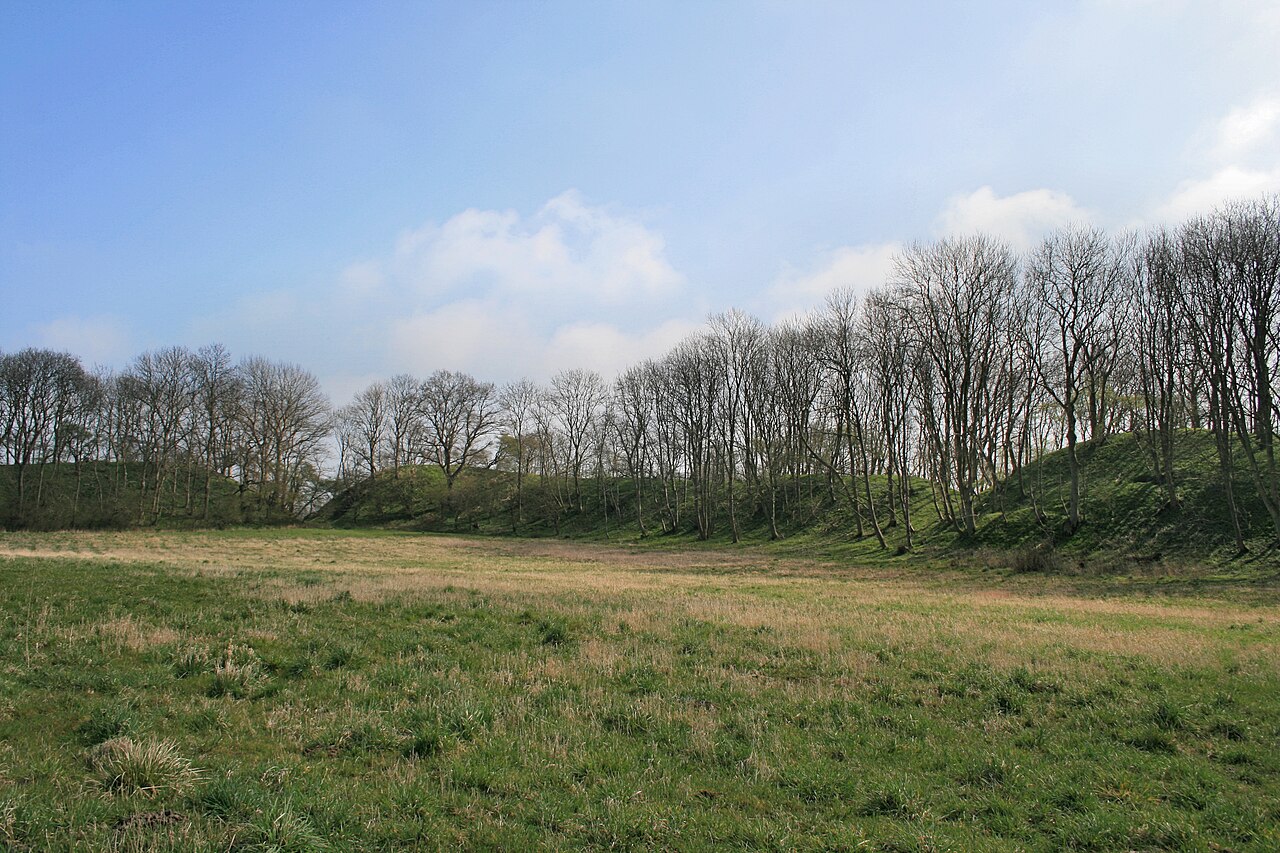
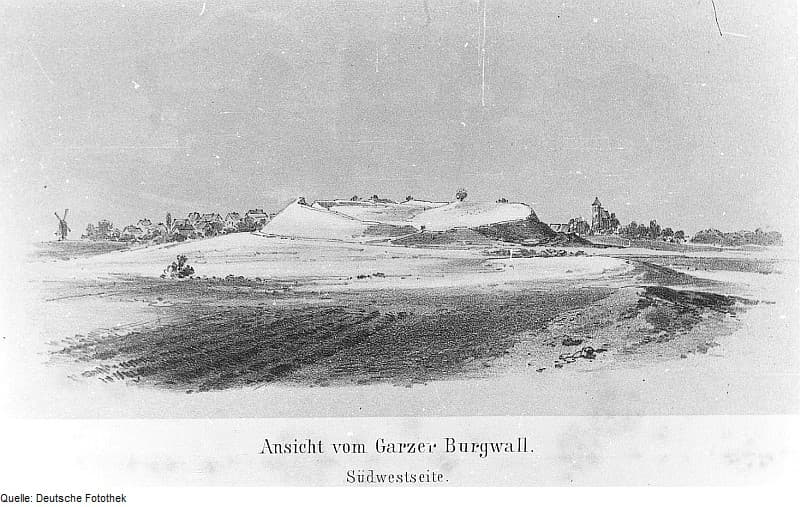
Garz Slavic fort is an early medieval burgwall located southwest of the town of Garz on the German Baltic Sea island of Rügen. This Slavic stronghold is distinguished by its large oval earthworks, measuring approximately 200 metres in length and 140 metres in width. The fort's ramparts, constructed primarily from earth, enclose the site and feature a prominent entrance roughly in the middle of the western side, which historically served as the main access point. Towards the south, facing the Garzer See lake, the ramparts are notably lower, likely due to the natural protection offered by the water body. The site is elevated up to 15 metres above the nearby town, providing strategic oversight of the surrounding landscape.
Historical context and significance
The fort was first mentioned in historical records in 1165 under the name Borgar Gardz, during a period marked by small-scale skirmishes with Danish warriors. While the fort itself does not appear to have been directly attacked at that time, these conflicts highlight its strategic importance in the Baltic region during the early medieval period. Over time, the original fortifications gradually fell into disrepair.
In 1300, Prince Vitslav III of Rügen initiated the construction of a new castle and chapel within the original burgwall. This addition reflects the continued use and adaptation of the site into the late medieval period. However, following the prince's death in 1325, the castle was abandoned and eventually fell into ruin.
Architectural features and layout
The fort's design as a burgwall is typical of Slavic fortifications from the early medieval era, characterized by earthen ramparts and a defensive ditch. The oval shape of the earthworks encloses a substantial area, suggesting it could accommodate a significant settlement or garrison within. The western entrance was likely fortified and controlled access to the interior.
The lower ramparts on the southern side facing the lake may have been a deliberate design choice, taking advantage of the natural defensive barrier provided by the water. This strategic positioning would have enhanced the fort's defensibility while allowing for access to water resources.
Later use and preservation
After the castle's abandonment in the 14th century, the site gradually deteriorated. Today, the remains of the fort are classified as archaeological ruins and are protected as a significant cultural heritage site. The earthworks remain visible and are considered among the best-preserved Slavic strongholds in terms of size and condition.
A war memorial dedicated to those who fell in the First World War has been erected on the ramparts, linking the site's historical military significance to more recent history. Nearby, the Ernst Moritz Arndt Museum offers visitors detailed information about the fort's history and the broader regional context.
Visiting Garz Slavic fort today
The site is accessible to the public and provides a unique glimpse into early medieval Slavic fortifications. Its location near the town of Garz and proximity to the Garzer See lake make it a notable destination for those interested in medieval history and archaeology. The fort's elevated position offers scenic views of the surrounding landscape, enhancing its appeal as a historical and cultural landmark.
Visitors can explore the earthworks and imagine the fort's role in the turbulent history of the Baltic region during the early and late medieval periods. The combination of natural and man-made defenses exemplifies the strategic considerations of Slavic fort builders.
Frequently asked questions (FAQ)
- What is the historical significance of Garz Slavic fort?
- Garz Slavic fort is a key early medieval Slavic burgwall that played a strategic role in the Baltic region, especially during conflicts with Danish warriors in the 12th century.
- When was Garz Slavic fort built and used?
- The fort dates back to the 8th-9th century and was actively used through the early to late medieval periods until it fell into disrepair after 1325.
- Can visitors explore the earthworks of Garz Slavic fort?
- Yes, the earthworks are well-preserved and accessible to the public, allowing visitors to walk around the ramparts and experience the fort's layout.
- Is there a museum near Garz Slavic fort?
- The Ernst Moritz Arndt Museum is located near the fort and provides extensive information about the site's history and the region's cultural heritage.
- Why are the ramparts lower on the southern side of the fort?
- The southern ramparts are lower because the fort faces the Garzer See lake, which served as a natural defensive barrier, reducing the need for high earthworks on that side.

Information
Current owner
State museum
Loading map...
Visitor reviews
No reviews yet. Been here? Write the first review and help other travelers!
Write the first reviewVisited this castle? Share your experience
Your review helps other travelers and adds first-hand knowledge to our encyclopedia.