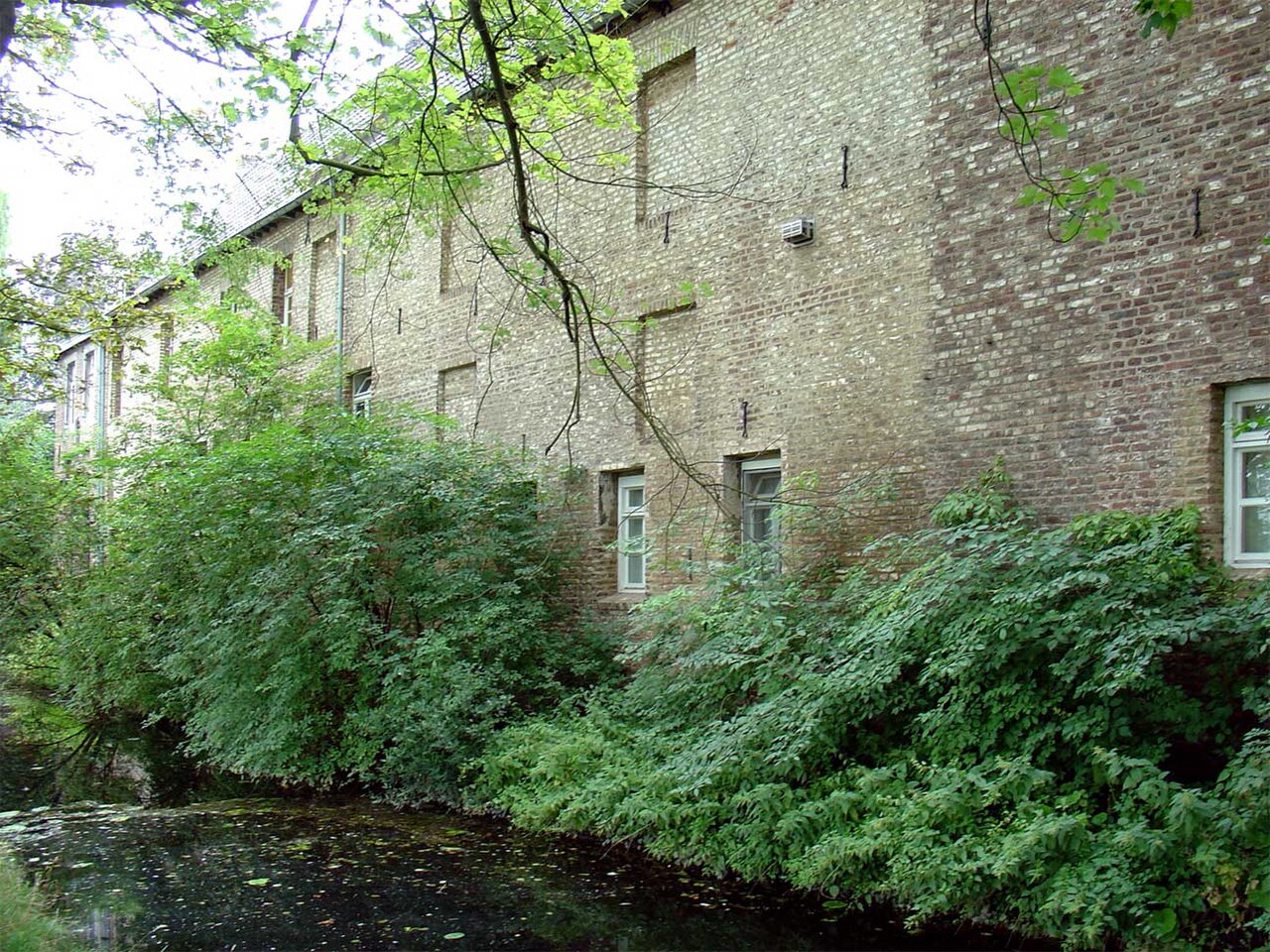
Gangelt Castle
Gangelt Castle is located in the town of Gangelt, within the North Rhine-Westphalia region of Germany, near the Dutch border and north of Brunssum. This castle has a rich history dating back to the 14th century, with its first recorded mention in 1364. Over the centuries, it has witnessed multiple destructions and reconstructions, reflecting the turbulent history of the region.
Historical development and significant events
The original castle was destroyed by a devastating fire in 1484, which also affected the town of Gangelt. It was rebuilt in 1511 by Gotart von Hanxler, a knight who played a key role in the castle's Renaissance-era reconstruction. This rebuilding marked the beginning of the castle's current architectural phase.
Unfortunately, the castle and the town suffered another major fire in 1542, this time caused by the Imperial troops. The destruction necessitated another rebuilding effort, undertaken between 1553 and 1555. However, the castle's strategic importance meant it was soon involved in further conflict, enduring a siege by Spanish troops in 1568.
Following the death of the last knight of the original family line, Von Hanxler, in 1648, ownership of the castle passed to the Hanxler von Steinkallenfels family. Subsequently, the castle was owned by the Counts of Wenburg in 1666 and later by the Counts of Schaefberg in 1707, reflecting its continued significance as a noble residence.
In 1791, most of the castle was demolished, leaving only the keep intact. This keep is believed to date back to the 16th century and is a distinctive feature of the site. The surrounding moat was filled in with stones from destroyed buildings after World War II, in 1945.
Architectural features and style
The castle's reconstruction in the early 16th century places it firmly within the Renaissance period, a time when castle architecture began to incorporate more comfortable living quarters alongside defensive features. The surviving keep is the primary architectural element visible today, showcasing typical Renaissance defensive design with robust stone construction.
Interestingly, the keep also served a dual purpose at one time as a city gate, integrating the castle's defensive role with the town's fortifications. This multifunctional use highlights the strategic importance of Gangelt Castle within the medieval town's defenses.
Restoration efforts in the second half of the 20th century have preserved the keep, maintaining its structural integrity and historical character. The castle’s location on Burgstrasse places it within a quiet town that still retains other medieval features, including two city gates and sections of the original city wall.
Current status and visitor information
Today, Gangelt Castle is privately owned and is not open to the public. Its status as a private residence means that visitors can only view the castle externally. Despite this, the castle remains a significant historical landmark within Gangelt, contributing to the town’s medieval ambiance.
The surrounding town offers additional medieval heritage sites, such as the preserved city gates and walls, which are accessible to visitors interested in the region’s history. While the castle itself cannot be toured, its exterior and the town’s historical fabric provide valuable insight into the architectural and defensive strategies of Renaissance-era fortifications in this part of Germany.
Gangelt castle in the context of regional history
Gangelt Castle’s history is closely intertwined with the political and military conflicts of the 16th and 17th centuries, including the struggles involving Imperial and Spanish forces. Its repeated destruction and rebuilding reflect the broader European conflicts of the time, such as the religious wars and territorial disputes that shaped the Holy Roman Empire’s western territories.
The castle’s transition through various noble families illustrates the shifting ownership patterns typical of German aristocratic estates. Each family left its mark on the castle and the town, contributing to the layered historical narrative visible in the remaining structures and town layout.
Architectural significance
Although much of the original castle was demolished, the surviving keep represents an important example of Renaissance military architecture adapted for local defensive needs. Its use as both a fortified residence and a gatehouse demonstrates the multifunctional nature of such structures during this period.
The keep’s preservation and restoration highlight the value placed on maintaining historical monuments even when their original functions have ceased. It stands as a testament to the architectural evolution from medieval fortresses to Renaissance residences.
Frequently asked questions (FAQ)
- How do I get to Gangelt Castle?
- Gangelt Castle is located on Burgstrasse in Germany, easily accessible by car or public transport. If you're traveling by train, the nearest station is in Gangelt, from which you can take a short taxi ride or enjoy a pleasant walk to the castle.
- What is the historical significance of Gangelt Castle?
- Gangelt Castle has a rich history dating back to the medieval period, serving as a noble residence and a strategic stronghold. It reflects the architectural styles of its time and has witnessed numerous historical events, making it an important cultural landmark in the region.
- When was Gangelt Castle built?
- Gangelt Castle was originally constructed in the 14th century, with its architecture evolving over the centuries. The castle has undergone several renovations, preserving its historical features while adapting to modern needs.
- Can I visit Gangelt Castle during the off-season?
- Yes, Gangelt Castle is open to visitors year-round, although some facilities may have limited hours during the off-season. It's advisable to check the castle's official website for specific opening hours and any seasonal events.
- Why is Gangelt Castle a popular tourist attraction?
- Gangelt Castle is popular due to its stunning architecture, rich history, and picturesque surroundings. Visitors appreciate the castle's serene ambiance and the opportunity to explore its grounds and learn about its historical significance.
- Is it possible to take guided tours of Gangelt Castle?
- Yes, guided tours of Gangelt Castle are available, providing an in-depth look at its history and architecture. These tours are led by knowledgeable guides who share fascinating stories and insights about the castle's past.
- What are the opening hours for Gangelt Castle?
- Gangelt Castle typically opens its doors to visitors from 10 AM to 6 PM, but hours may vary depending on the season. It is recommended to check the castle's official schedule before planning your visit.
- Are there any nearby attractions to Gangelt Castle?
- Yes, visitors to Gangelt Castle can explore nearby attractions such as the scenic countryside, local museums, and charming villages. The area offers beautiful walking trails and opportunities to experience the rich culture of the region.
- What are the ticket prices for visiting Gangelt Castle?
- Ticket prices for Gangelt Castle are generally affordable, with discounts available for students and seniors. Children under a certain age may enter for free, making it an excellent destination for families.
Loading map...
Visitor reviews
No reviews yet. Been here? Write the first review and help other travelers!
Write the first reviewVisited this castle? Share your experience
Your review helps other travelers and adds first-hand knowledge to our encyclopedia.