Gagi Castle
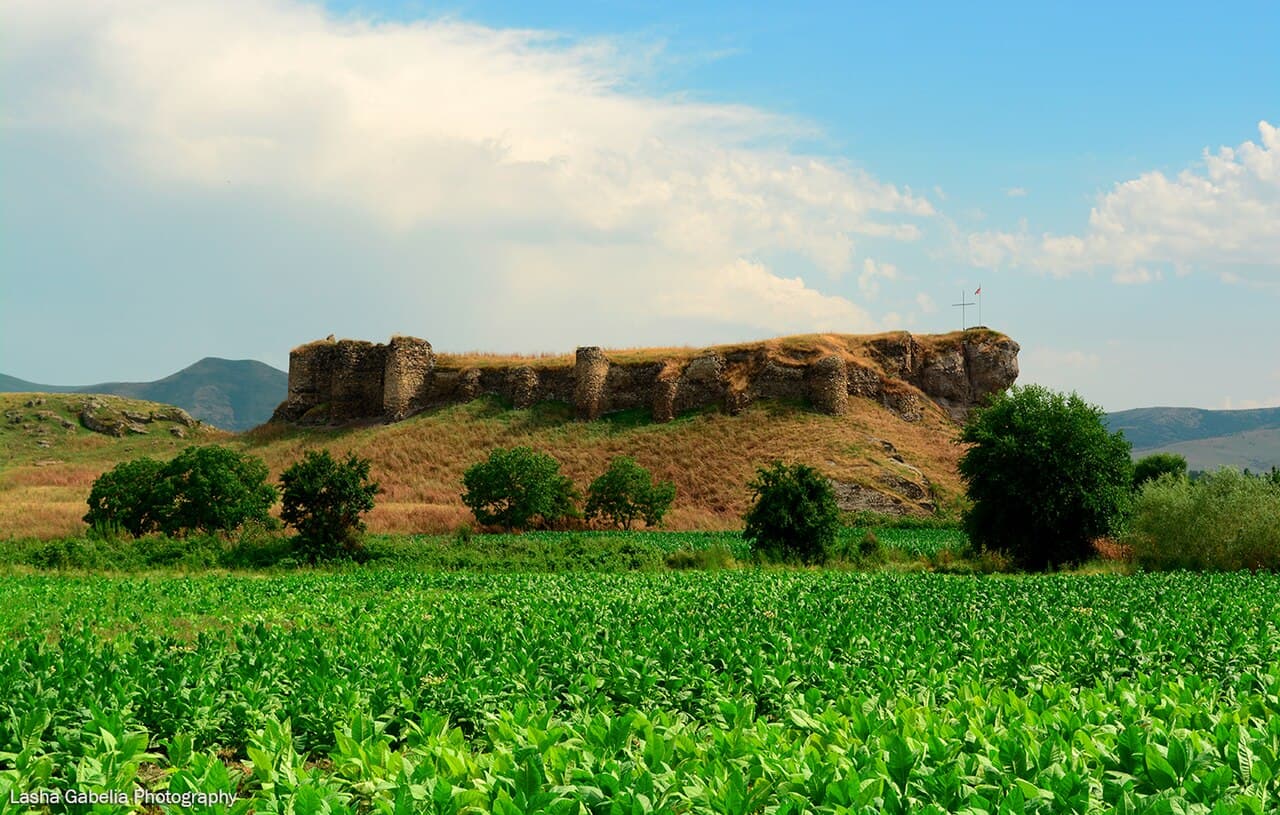
Gagi Castle, also known historically as Aghjakala or the "White Castle," is a significant bastioned fortress located near the village of Kushchi in the Marneuli municipality of the Kvemo Kartli region in Georgia. The castle occupies a solitary, elongated rocky hill on the Marneuli plain, adjacent to the right bank of the Debed river. This strategic position allowed it to control the vital route leading to Tbilisi from the south, making it an important military and trade outpost throughout its history.
Early history and origins
The earliest recorded mention of Gagi Castle dates back to the 11th century. According to the Armenian historian Vardan, writing in the 13th century, the fortress was constructed by King Gagik I of Ani, who reigned from 989 to 1020. However, archaeological evidence indicates that the site had been of strategic importance for centuries prior to Gagik's reign. The ruins suggest that the original fortification predates the 11th century, and that Gagik I likely undertook significant rebuilding or renovation of an earlier fortress rather than founding it anew.
Architectural features and layout
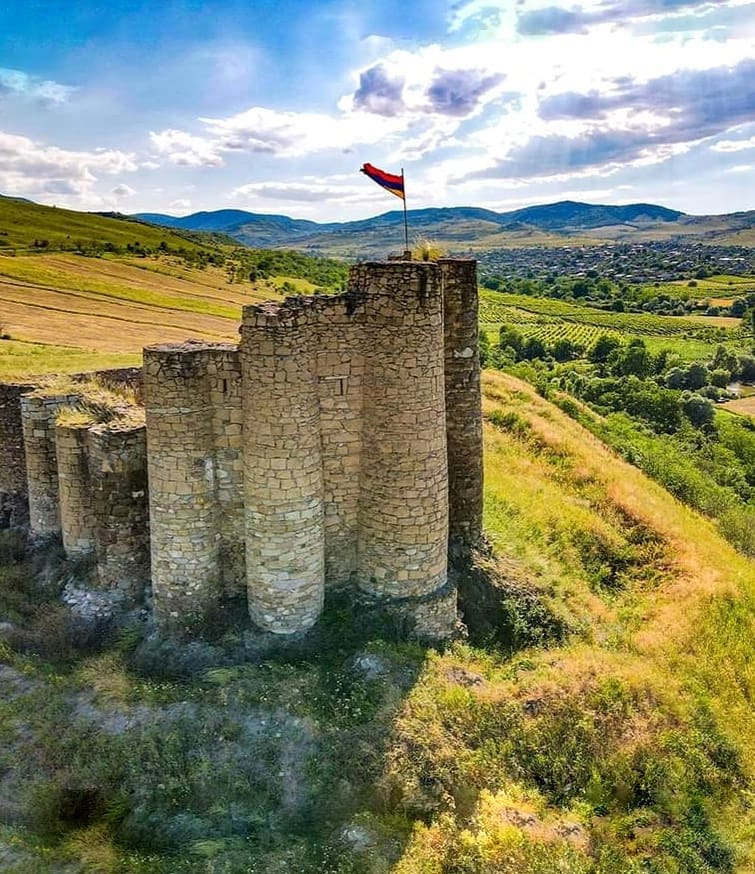
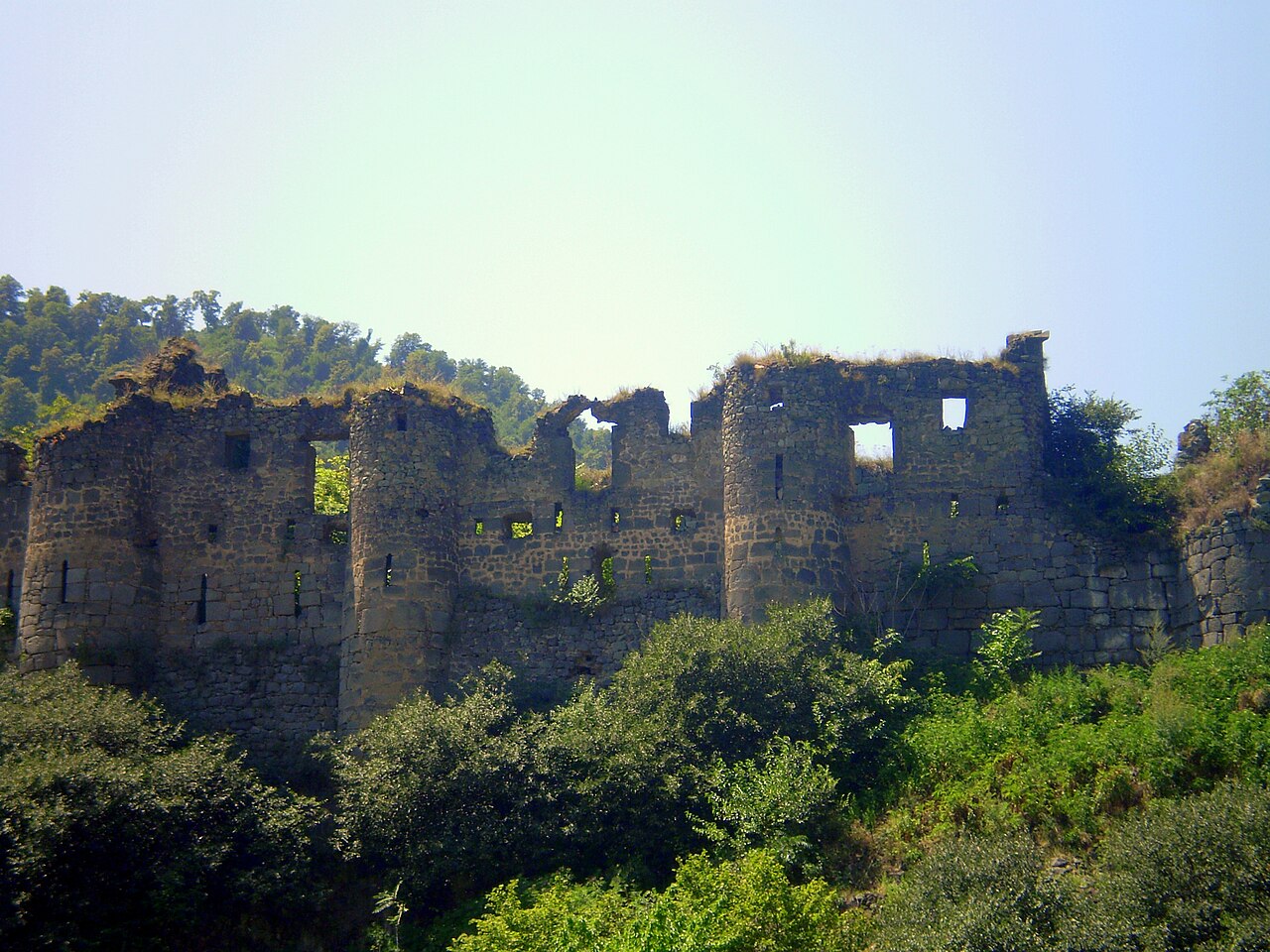
Gagi Castle exemplifies the characteristics of a bastioned fortress typical of the late medieval period. The castle was constructed on a rocky hill that provided natural defensive advantages. Its fortifications included several protruding round towers strategically placed to cover the surrounding plains and the approach routes. The southern side of the castle was fortified with a prominent gate accompanied by a round bastion, which served as a key defensive structure.
The walls of the fortress were notably white, which earned it the name Aghjakala, meaning "White Castle" in the 15th century. This distinctive coloration would have made the castle a visible landmark across the Marneuli plain. Unfortunately, no significant structures remain on the summit of the hill today, as much of the castle has fallen into ruin over the centuries.
Strategic importance and historical context
Throughout the late medieval period, Gagi Castle played a crucial role in controlling the southern access route to Tbilisi, the capital of Georgia. Its position near the Debed river and on a prominent hill made it a formidable defensive site against invasions and raids. The fortress was part of a network of fortifications that secured the region and protected trade routes connecting Georgia with neighboring territories.
The castle's association with King Gagik I links it to the Armenian Kingdom of Ani, highlighting the complex political and cultural interactions in the South Caucasus region during the medieval era. The fortress reflects the military architecture and geopolitical dynamics of the time, embodying the defensive needs of a borderland area influenced by both Georgian and Armenian powers.
Current condition and visitor information
Today, Gagi Castle remains a ruin, with only fragments of its walls and towers visible. The site is freely accessible to visitors and offers a glimpse into the medieval fortifications of the region. Despite the lack of standing structures on the hilltop, the castle ruins provide valuable insights into its original layout and defensive features.
The castle's location near the village of Kushchi makes it a point of interest for those exploring the Kvemo Kartli region. Its historical significance and scenic setting on the Marneuli plain contribute to its appeal for history enthusiasts and tourists alike.
Frequently asked questions (FAQ)
- What is the historical significance of Gagi Castle?
- Gagi Castle, located in the picturesque region of Kushchi, Georgia, dates back to the 12th century. It served as a strategic fortress, reflecting the architectural styles of the medieval period and playing a crucial role in the defense against invasions.
- When was Gagi Castle built?
- Gagi Castle was constructed in the early 12th century during the time of the Kingdom of Georgia. Its robust structure and design are emblematic of the era's military architecture.
- Can I visit Gagi Castle year-round?
- Yes, Gagi Castle is open to visitors throughout the year. However, it's advisable to check local weather conditions as access can be challenging during the winter months due to snow.
- What are the opening hours for Gagi Castle?
- Gagi Castle typically opens to visitors from 9 AM to 5 PM daily. It’s recommended to verify the current hours before your visit, as they may vary seasonally.
- Is it possible to explore the nearby attractions?
- Absolutely! The area surrounding Gagi Castle offers several attractions, including natural parks and local villages. These sites provide a deeper insight into Georgian culture and stunning landscapes.
- What is the best time to visit Gagi Castle?
- The best time to visit Gagi Castle is during the spring (April to June) and fall (September to October) when the weather is mild and the scenery is particularly beautiful. This period also sees fewer tourists, allowing for a more enjoyable experience.
- How much are the ticket prices for Gagi Castle?
- Admission to Gagi Castle is relatively affordable, with tickets priced around 5 GEL for adults. Children and students often receive discounted rates, making it accessible for families and educational visits.
- Is Gagi Castle accessible for people with disabilities?
- Gagi Castle has uneven terrain and steep pathways, which can pose challenges for visitors with mobility issues. It is advisable to contact local authorities for more information on accessibility options before planning your visit.
Photo gallery

Information
Loading map...
Visitor reviews
No reviews yet. Been here? Write the first review and help other travelers!
Write the first reviewVisited this castle? Share your experience
Your review helps other travelers and adds first-hand knowledge to our encyclopedia.