Akhtala fortress is a prominent hill castle located in the Lori Province of Armenia. This medieval fortress stands on a rocky outcrop overlooking the town of Akhtala and the surrounding valley, offering strategic views that were crucial for defense and control during its time. The fortress is notable for its well-preserved walls and the remarkable integration of military and religious architecture within its complex.
Historical background and significance
The origins of Akhtala fortress date back to the 10th to 13th centuries, during the High medieval period when the region was a contested frontier between various Armenian and Georgian principalities. The fortress was constructed primarily to serve as a military stronghold and a refuge against invasions. It was also an important administrative center for the local rulers.
Throughout its history, Akhtala was controlled by different dynasties, including the Georgian princes of the Mkhargrdzeli family, who contributed to its fortifications and the adjacent religious buildings. The fortress played a key role in regional conflicts and was part of the defensive network guarding the northern borders of medieval Armenia.
Architectural features and layout
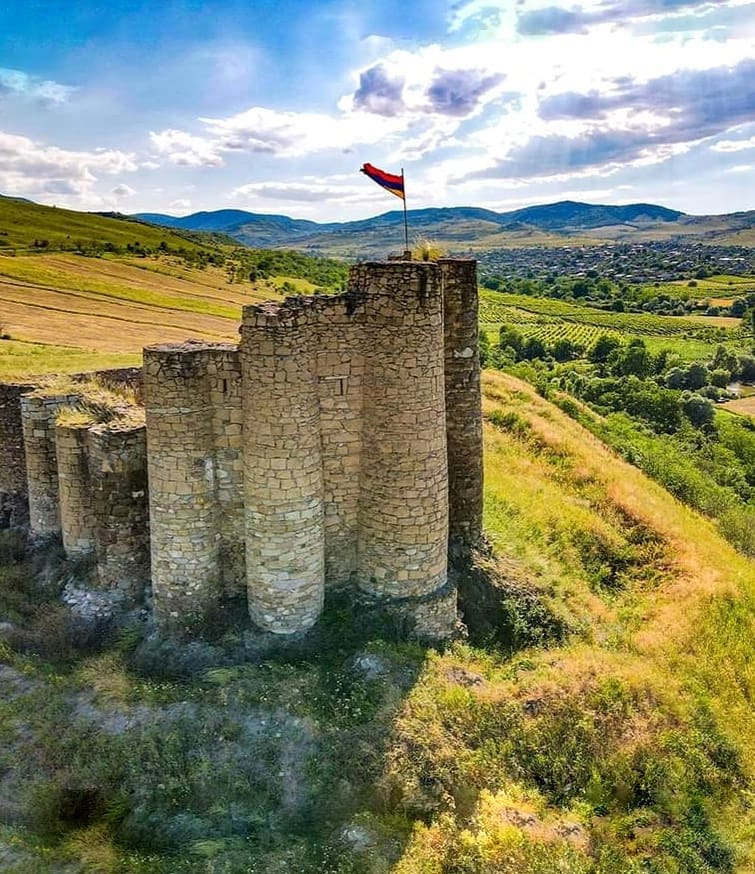
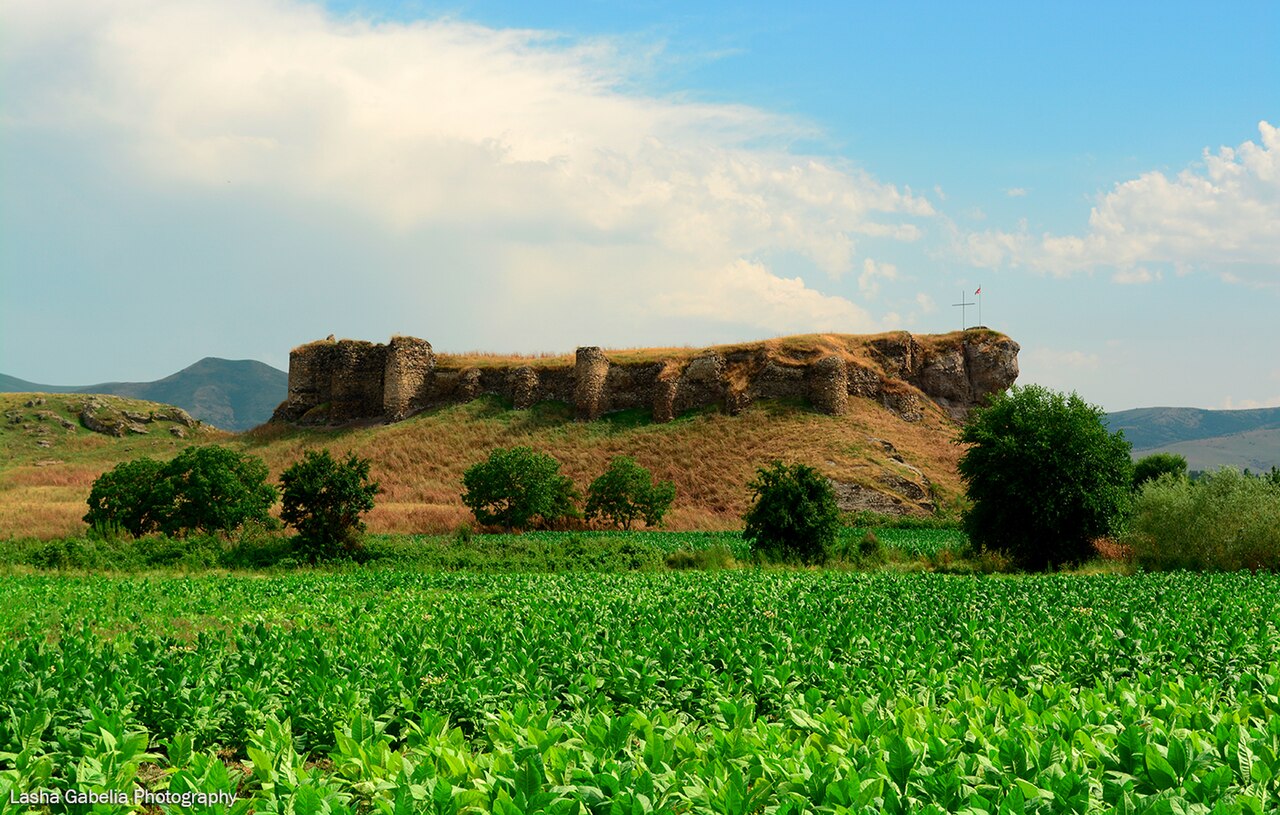
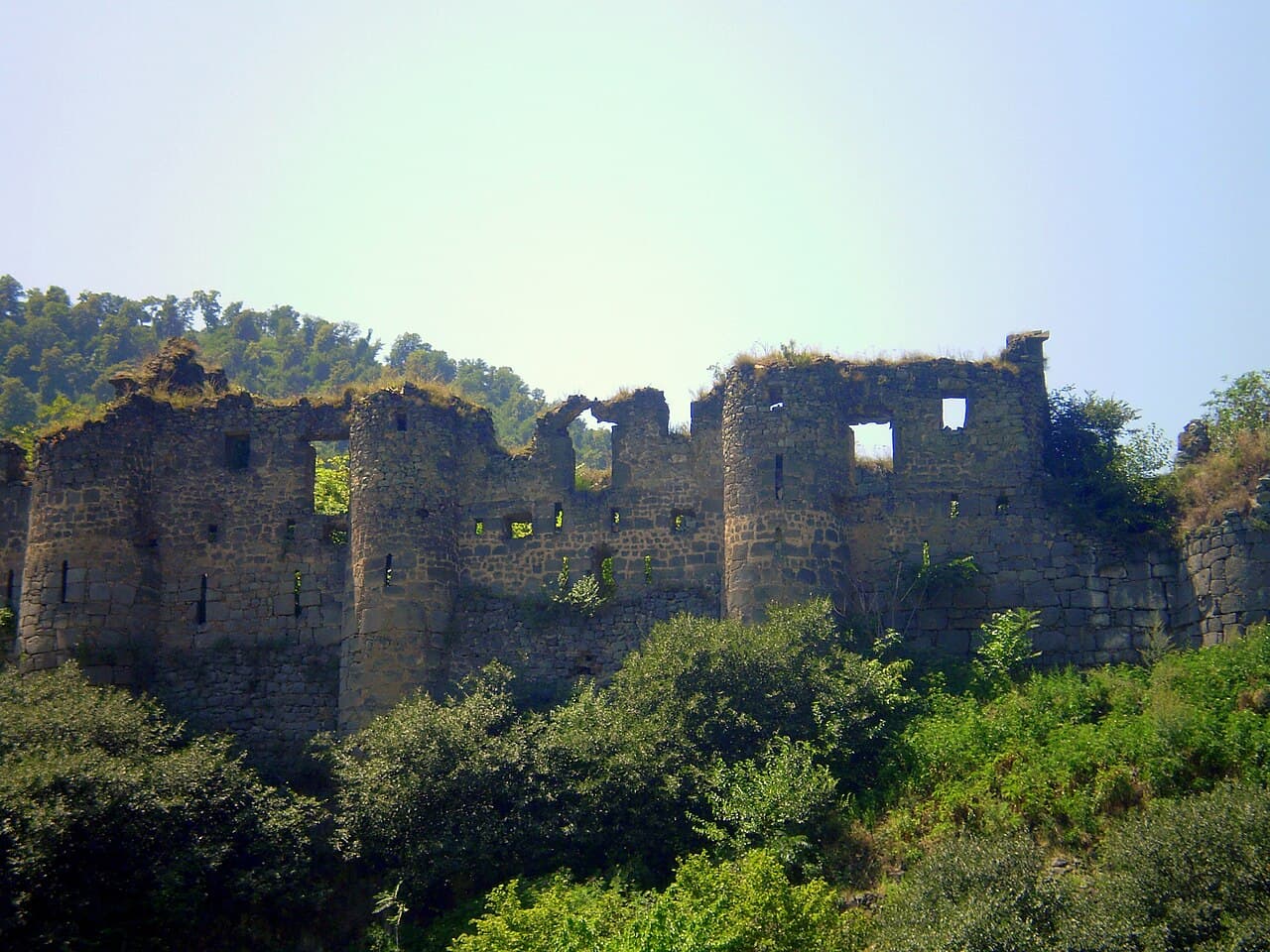
Akhtala fortress is classified as a hill castle due to its elevated position on a natural rocky hill, which enhanced its defensive capabilities. The fortress is surrounded by thick stone walls, which follow the contours of the hill, creating an irregular polygonal shape. These walls include several towers and bastions that provided vantage points for archers and lookouts.
The main entrance is fortified with a gatehouse featuring defensive mechanisms typical of medieval military architecture, such as murder holes and arrow slits. Inside the fortress walls, there are remains of residential buildings, storage facilities, and a chapel, indicating the multifunctional nature of the complex.
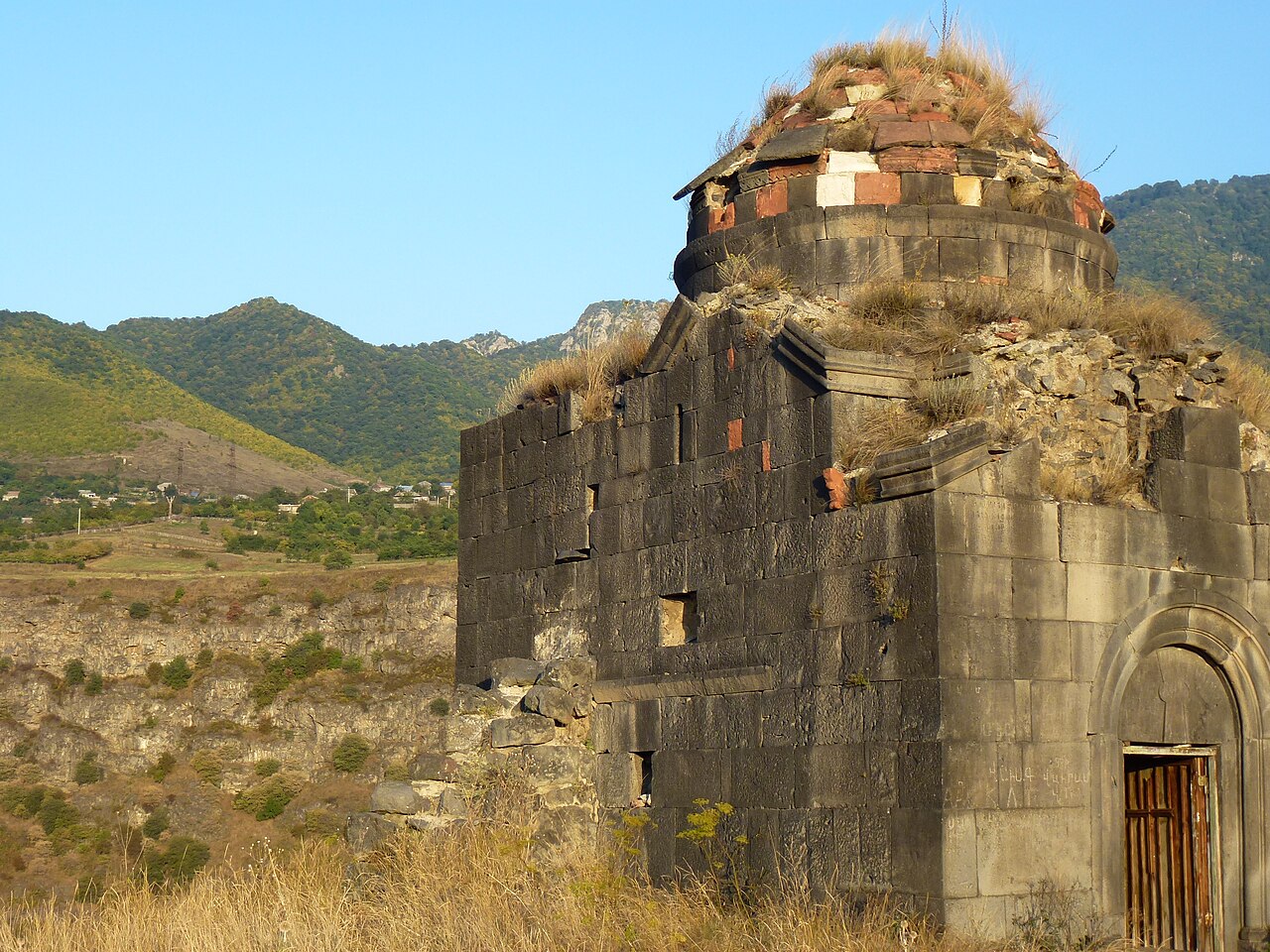
One of the most distinctive features of Akhtala is its integration of a fortified monastery within the castle grounds. The Akhtala Monastery, built in the 13th century, is renowned for its well-preserved frescoes and architectural blend of Armenian and Georgian styles. This combination of religious and military architecture is relatively rare and highlights the fortress's dual role as a spiritual and defensive site.
Construction materials and techniques
The fortress walls are constructed primarily from local basalt stone, known for its durability and dark color, which gives the fortress a distinctive appearance. The masonry work exhibits the skilled craftsmanship of medieval Armenian builders, with carefully cut stones and lime mortar binding the structure. The use of natural rock formations as part of the defensive walls further strengthened the fortress.
Preservation and current condition
Today, Akhtala fortress is partially preserved, with significant sections of its walls and towers still standing. The adjacent monastery complex remains one of the best-preserved examples of medieval religious art in Armenia, attracting scholars and tourists alike. Conservation efforts have focused on stabilizing the remaining structures and protecting the valuable frescoes inside the monastery.
The site is accessible to visitors, offering a glimpse into the military and religious life of medieval Armenia. Its location in the Lori region makes it a popular destination for cultural tourism, combining historical exploration with scenic views of the surrounding landscape.
Architectural style and cultural influences
The fortress and monastery exhibit a mix of Armenian medieval and Georgian architectural styles, reflecting the historical interactions between these cultures in the region. The fortress's military architecture follows typical High medieval defensive principles, while the monastery's design incorporates elements of both Armenian and Georgian ecclesiastical architecture.
The frescoes inside the monastery are particularly significant, showcasing a blend of artistic traditions and religious iconography from the 13th century. These artworks provide valuable insights into the cultural and spiritual life of the period.
Visitor information and cultural importance
Visitors to Akhtala fortress can explore the extensive ruins of the castle walls, towers, and the monastery complex. The site offers interpretive signage and guided tours that explain its historical context and architectural features. The fortress's elevated position provides panoramic views of the Lori valley, enhancing the visitor experience.
The fortress is a protected cultural heritage site in Armenia, recognized for its unique combination of military and religious architecture. It serves as a testament to the region's complex history and the interplay of different cultural influences over the centuries.
Frequently asked questions (FAQ)
- What is the historical significance of Akhtala Fortress?
- Akhtala Fortress is a significant medieval monument in Armenia, dating back to the 10th century. It served as a strategic military stronghold and a center of culture and religion, showcasing the architectural prowess of the period through its well-preserved frescoes and unique design.
- When was Akhtala Fortress built?
- The construction of Akhtala Fortress began in the 10th century, primarily under the rule of the Kiurikian dynasty. Over the centuries, it has undergone various modifications and restorations, contributing to its historical and architectural importance.
- What are the opening hours for visiting Akhtala Fortress?
- Akhtala Fortress is typically open to visitors from 10 AM to 6 PM daily. It is advisable to check for any seasonal changes in hours or special closures before planning your visit.
- Can I access Akhtala Fortress by public transportation?
- Yes, Akhtala Fortress is accessible by public transportation from nearby cities. Local buses and taxis frequently operate routes to the site, making it convenient for visitors to reach the fortress.
- Is it possible to take guided tours of Akhtala Fortress?
- Yes, guided tours are available at Akhtala Fortress, providing insights into its rich history and architecture. These tours can enhance your understanding and appreciation of the site, and can often be arranged on-site or through local tour companies.
- What is the best time to visit Akhtala Fortress?
- The best time to visit Akhtala Fortress is during the spring (April to June) and fall (September to October) when the weather is mild and the surrounding landscapes are beautiful. Visiting during these seasons allows you to enjoy the fortress without the peak summer crowds.
- Are there any nearby attractions to explore after visiting Akhtala Fortress?
- Yes, after visiting Akhtala Fortress, you can explore nearby attractions such as the Sanahin Monastery and the Haghpat Monastery, both UNESCO World Heritage Sites. These sites are rich in history and architecture, making them excellent additions to your itinerary.
- What are the ticket prices for entering Akhtala Fortress?
- Entrance to Akhtala Fortress is generally free, but there may be nominal fees for guided tours or special events. It's always a good idea to verify any costs when you arrive, as they can change over time.
Photo gallery

Information
Loading map...
Visitor reviews
No reviews yet. Been here? Write the first review and help other travelers!
Write the first reviewVisited this castle? Share your experience
Your review helps other travelers and adds first-hand knowledge to our encyclopedia.