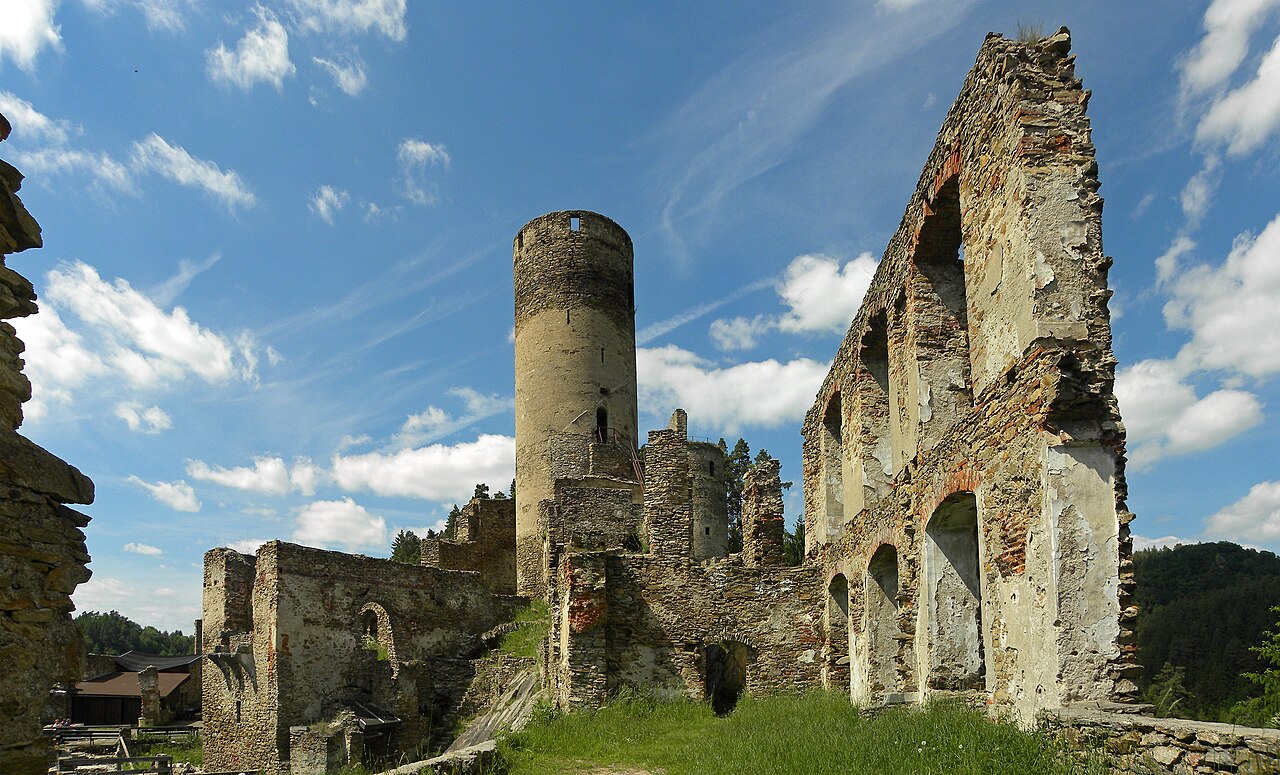
Gaber Castle
Gaber Castle, located near the village of Nonndorf bei Raabs in Lower Austria, is a medieval castle ruin primarily known today for its surviving chapel, commonly referred to as Gaberkirche. Built around 1300 by the Lords of Gaber, the castle was a modest fortification reflecting the status of its builders, a relatively minor noble family in the region. The castle's military role was limited, and by the late 15th century, it had fallen into disrepair and was described as dilapidated.
Historical background and ownership
The earliest documented mention of the Gaber family dates to 1327, with Bernhard von Gaber recorded as the lord of the castle. The family's prominence was short-lived, with the last known lord, Georg von Gaber, mentioned in 1405. By this time, the castle was already in decline, and it was eventually abandoned. In 1551, the ruins, including the chapel, were sold by Margarethe von Schneckenreith to the local community of Luden, marking a transition from private noble ownership to communal stewardship.
Architectural features of the gaberkirche ruins
The most significant remains of Gaber Castle are those of the castle chapel, which stand as a testament to the site's religious function within the medieval complex. The chapel, built in the Gothic architectural style, showcases characteristic elements such as pointed arches, ribbed vaults, and slender windows designed to maximize light and verticality.
Structural remains
The chapel's longhouse layout remains visible, constructed from stone with well-preserved walls outlining its original rectangular form. The west wall survives partially, featuring a doorway with a segmental arch, a flattened curve typical of Gothic design. The south wall is notably intact, containing two windows: one square with a pronounced stone frame and another narrow, pointed-arch window that exemplifies Gothic vertical emphasis.
Remnants of the choir area include windows set within pointed arches, consistent with the chapel's overall style. Inside, foundational elements of the vaulted ceiling are evident, including bases for three clustered ribs and partial remains of the springing of the triumphal arch that separated the nave from the choir.
Significance of the chapel remains
These surviving architectural features provide valuable insight into the religious and cultural role of the castle during the medieval period. The chapel's stone construction and Gothic stylistic details are among the best-preserved parts of the original castle complex. The site has been documented since at least the early 20th century, including in the 1911 Austrian Art Topography, underscoring its importance as a cultural heritage monument.
The castle's decline and later history
By the late 15th century, Gaber Castle was described as dilapidated, reflecting the waning influence of the Gaber family and the changing political landscape of the region. The abandonment led to the gradual ruin of most castle structures, leaving primarily the chapel standing. Over the following centuries, the chapel ruins gained recognition as a local pilgrimage site, sometimes referred to as Gaberwaldkirche due to its woodland surroundings.
In the modern era, the site is protected as a listed monument, preserving its historical and architectural legacy. The ruins are accessible to visitors, situated within a small forest and reachable by a dirt road, offering a quiet and evocative glimpse into Austria's medieval past.
Visiting gaber castle today
Today, Gaber Castle is an open site that can be visited freely. The ruins are modest in scale, primarily comprising the chapel remains, but they offer a unique opportunity to explore a lesser-known medieval site in Lower Austria. The peaceful forest setting enhances the experience, making it a worthwhile destination for those interested in medieval architecture, history, and quiet heritage sites.
Access and visitor information
- The castle is located near Nonndorf bei Raabs and can be reached by a dirt road through a small forest.
- There are no entrance fees or formal visitor facilities on site, reflecting its status as a small ruin rather than a fully developed tourist attraction.
- Visitors should be prepared for a rustic experience and wear appropriate footwear for walking on uneven terrain.
Cultural and heritage significance
Gaber Castle and its chapel ruins represent an important fragment of Austria's medieval architectural heritage. The site illustrates the typical fate of many small noble castles that lost strategic importance and fell into ruin over time. The preservation of the chapel, in particular, offers valuable insight into Gothic religious architecture and the spiritual life associated with such castles.
The designation of the ruins as a listed monument ensures ongoing protection and recognition of their cultural value. As a modest but evocative ruin, Gaber Castle contributes to the broader understanding of medieval fortifications and ecclesiastical architecture in the Lower Austrian region.
Frequently asked questions (FAQ)
- How do I get to Gaber Castle?
- Gaber Castle is located near Nonndorf bei Raabs in Lower Austria. Visitors can reach the site via a dirt road through a small forest. It is advisable to use a vehicle suitable for rough terrain or be prepared for a walk.
- What remains of Gaber Castle can I see today?
- Today, visitors can mainly see the ruins of the castle chapel, known as Gaberkirche. The chapel's walls, windows with pointed arches, and vaulted ceiling bases are still visible, showcasing Gothic architectural elements.
- Is there an entrance fee to visit Gaber Castle?
- There is no entrance fee to visit Gaber Castle. The site is open to the public and can be explored freely at any time.
- When was Gaber Castle built and by whom?
- Gaber Castle was built around 1300 by the Lords of Gaber, a minor noble family in the region. The first documented lord was Bernhard von Gaber in 1327.
- Why is Gaber Castle also called Gaberkirche?
- The name Gaberkirche, meaning 'Gaber Church,' comes from the surviving castle chapel ruins. The chapel remained a notable feature after the castle fell into ruin and became a local pilgrimage site.
Information
Loading map...
Visitor reviews
No reviews yet. Been here? Write the first review and help other travelers!
Write the first reviewVisited this castle? Share your experience
Your review helps other travelers and adds first-hand knowledge to our encyclopedia.