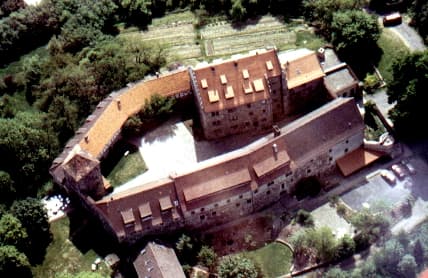
Fürsteneck Castle (German: Burg Fürsteneck) is a notable late medieval hill castle situated in central Germany, strategically positioned between the towns of Fulda and Bad Hersfeld. The castle lies within the administrative boundaries of the commune of Eiterfeld, perched at an elevation of 406 metres on a small plateau. This elevated location provided both natural defense advantages and commanding views of the surrounding landscape, a common feature for castles built during the 14th century.
Historical context and significance
Constructed in the 14th century, Fürsteneck Castle was built during a period characterized by territorial consolidation and frequent regional conflicts in the Holy Roman Empire. The castle served as a fortified residence and a local administrative center, reflecting the feudal power structures of medieval Germany. Its position between Fulda and Bad Hersfeld, two important towns with ecclesiastical and commercial significance, underlines its strategic importance in controlling trade routes and regional influence.
Architectural features and layout
As a hill castle, Fürsteneck is built on elevated terrain, utilizing the natural topography for defense. The castle's layout typically includes a central keep or donjon, surrounded by defensive walls and possibly a moat or ditch, although specific details about these features at Fürsteneck are limited. The use of stone as the primary building material reflects the architectural practices of the late medieval period, emphasizing durability and fortification.
Defensive structures
Typical defensive elements of castles from this era include curtain walls with battlements, gatehouses with portcullises, and towers for observation and defense. While detailed descriptions of Fürsteneck's defensive structures are scarce, it is likely that it incorporated several of these features to withstand sieges and attacks common in the 14th century.
Residential and functional spaces
Within the castle walls, there would have been living quarters for the lord and his household, a great hall for gatherings and administrative functions, as well as chapels or religious spaces reflecting the period's spiritual life. Storage rooms, kitchens, and stables would support the daily life and self-sufficiency of the castle's inhabitants.
Geographical and cultural setting
Located in central Germany, Fürsteneck Castle is part of the rich cultural landscape of the region, which includes numerous medieval castles and historic towns. The castle's proximity to the Rhön Mountains and the Hessian region places it within an area known for its natural beauty and historical significance. The elevation of 406 metres on a plateau not only provided defensive benefits but also allowed for control over the nearby valleys and routes.
Current condition and use
Fürsteneck Castle has been preserved to a significant degree, maintaining much of its medieval character. It is currently used for cultural and educational purposes, hosting events, workshops, and possibly serving as a venue for historical reenactments or community gatherings. Its preservation allows visitors to experience a tangible connection to the late medieval period and the architectural heritage of central Germany.
Visiting Fürsteneck Castle
The castle is accessible to visitors interested in medieval architecture and history. Its location between Fulda and Bad Hersfeld makes it a convenient stop for tourists exploring the region's castles and historic sites. Visitors can appreciate the castle's setting on the plateau, its historical ambiance, and the surrounding scenic views.
Nearby attractions
Besides Fürsteneck Castle, the region offers other historical landmarks, including the city of Fulda with its baroque architecture and the spa town of Bad Hersfeld, known for its cultural festivals. The natural surroundings also provide opportunities for hiking and exploring the Hessian landscape.
Frequently asked questions (FAQ)
- How do I get to Fürsteneck Castle?
- Fürsteneck Castle is located between Fulda and Bad Hersfeld in central Germany. It is accessible by car and local roads connecting the commune of Eiterfeld. Visitors should check local maps or GPS for the best route.
- What is the historical significance of Fürsteneck Castle?
- Built in the 14th century, Fürsteneck Castle served as a fortified residence and administrative center in medieval Germany. Its strategic location helped control trade routes and regional influence during the late medieval period.
- Can I visit Fürsteneck Castle?
- Yes, Fürsteneck Castle is open to visitors. It is used for cultural and educational events, providing insight into medieval architecture and history. Visitors can explore the castle grounds and enjoy the scenic views from the plateau.
- What architectural style is Fürsteneck Castle?
- Fürsteneck Castle exhibits characteristics typical of late medieval hill castles, with stone construction and defensive features such as walls and towers. Specific stylistic details are consistent with the architectural practices of the 14th century.
- Is Fürsteneck Castle suitable for family visits?
- The castle grounds are suitable for family visits, offering educational and cultural programs. However, visitors should be aware of the terrain as the castle is located on a plateau and may involve some walking on uneven surfaces.
Photo gallery

Information
Loading map...
Visitor reviews
No reviews yet. Been here? Write the first review and help other travelers!
Write the first reviewVisited this castle? Share your experience
Your review helps other travelers and adds first-hand knowledge to our encyclopedia.



