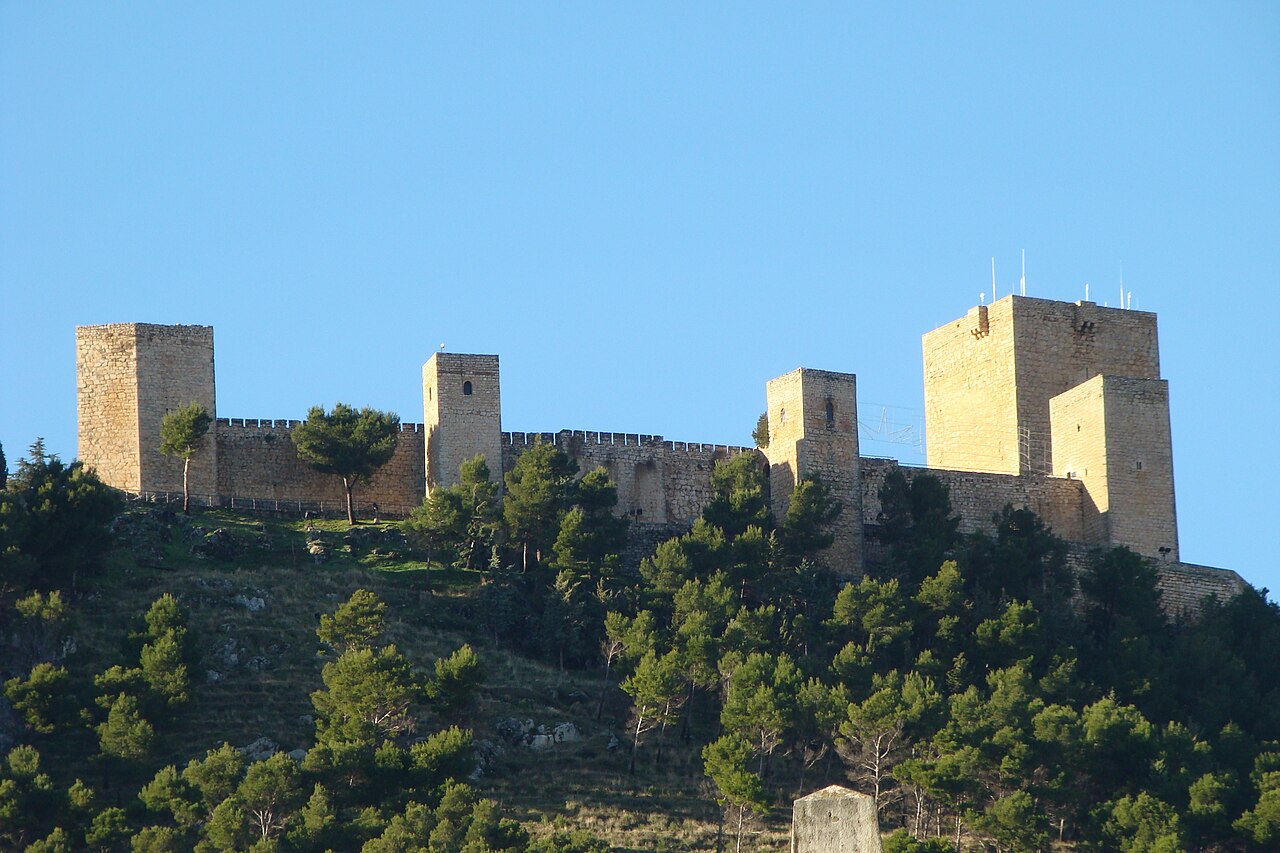
Fuentetétar Castle
Fuentetétar Castle is a medieval fortress located in the province of Jaén, Spain, notable for its strategic position atop a high hill overlooking the surrounding landscape. Constructed primarily during the 12th century and extending into the 13th century, this castle was an important defensive site during the High Medieval period. Its elevated location allowed it to visually connect with other significant fortifications in the region, including the castle of Jaén and the castle of Zumel, forming a network of military surveillance and control over the territory.
The castle's architecture reflects the typical features of High Medieval military construction in southern Spain, with a focus on practical defense and control rather than elaborate ornamentation. While much of the original structure has not survived intact, the site still contains numerous remains from various eras, illustrating its long history of occupation and adaptation. The castle's keep, originally built of masonry, has largely disappeared, leaving only traces of its former prominence. This central tower would have served as the last line of defense and a residence for the lord or commander of the castle.
Historical context and strategic importance
During the 12th and 13th centuries, the region of Jaén was a frontier zone between the Christian kingdoms to the north and the Muslim territories to the south. Castles like Fuentetétar played a crucial role in the ongoing conflicts of the Reconquista, serving as military outposts to secure newly conquered lands and to monitor enemy movements. The castle's position on a high hill provided extensive views of the surrounding plains, allowing early warning of approaching forces and control over key routes.
The visual link between Fuentetétar Castle and nearby fortresses such as the castle of Jaén and the castle of Zumel suggests coordinated defense strategies. These castles formed part of a defensive chain that helped to consolidate Christian control in the area during a period marked by frequent skirmishes and territorial changes.
Architectural features and current condition
Fuentetétar Castle was originally designed as a hill castle, taking full advantage of the natural topography for defense. The castle's walls and towers would have been constructed using local stone and masonry techniques typical of the High Medieval period. Although the keep has mostly vanished, other structural elements remain visible, including portions of the curtain walls and various rooms that have been repurposed over time.
Today, the castle is partially inhabited as a farmhouse, reflecting a common fate for many rural castles in Spain where military use declined. Significant reforms and adaptations have been made to the original structure to accommodate agricultural functions. Some of the castle's rooms are currently used as stables for goats and other livestock, demonstrating a practical reuse of the historic building.
Despite these changes, Fuentetétar Castle retains a partially preserved condition, with emergent remains from different historical phases visible throughout the site. These remains provide valuable insights into the castle's evolution and the broader historical landscape of medieval Jaén.
Surrounding landscape and cultural significance
The castle's location next to the village or farmhouse of Fuentetétar situates it within a rural setting that has changed little over the centuries. Its commanding position on a hilltop not only served military purposes but also symbolized feudal authority and territorial control in the medieval period.
Fuentetétar Castle is part of the rich cultural heritage of Jaén province, an area known for its numerous castles and fortifications that reflect the complex history of the Reconquista and medieval Spain. The castle's enduring presence contributes to the understanding of medieval military architecture and rural life in this borderland region.
Visiting information and accessibility
As the castle is currently used as a farmhouse and is partially inhabited, public access may be limited or restricted. Visitors interested in exploring the site should verify access permissions and opening times locally. The castle's rural location requires transportation by car or other means, with the nearest urban center being the city of Jaén.
Although the castle is not fully restored as a tourist site, its visible remains and strategic hilltop setting make it a point of interest for enthusiasts of medieval architecture and Spanish history. The surrounding landscape offers opportunities for hiking and appreciating the natural environment that shaped the castle's historical role.
Frequently asked questions (FAQ)
- What is the historical significance of Fuentetétar Castle?
- Fuentetétar Castle, dating back to the 13th century, is a remarkable example of medieval military architecture and played a crucial role during the Reconquista. Its strategic location on a hilltop allowed it to oversee the surrounding region, making it an important stronghold in the defense against invasions.
- When was Fuentetétar Castle built?
- The construction of Fuentetétar Castle began in the 13th century, specifically around the year 1240, during the period of the Reconquista. Over the years, it underwent various modifications and restorations that reflect the architectural styles of different eras.
- Can I visit Fuentetétar Castle?
- Yes, Fuentetétar Castle is open to visitors, allowing you to explore its rich history and stunning architecture. Make sure to check the local guidelines and any special events that may affect visiting hours.
- What are the opening hours for Fuentetétar Castle?
- Fuentetétar Castle is generally open to the public from 10 AM to 6 PM, but hours may vary depending on the season and local holidays. It is advisable to check the official website or contact local tourism offices for the most current schedule before your visit.
- Is it possible to access Fuentetétar Castle with a wheelchair?
- Unfortunately, Fuentetétar Castle has limited accessibility for visitors with mobility challenges due to its historic construction and uneven terrain. If you require assistance, it is best to contact the management in advance to discuss possible accommodations.
- What is the best time to visit Fuentetétar Castle?
- The best time to visit Fuentetétar Castle is during the spring and fall months when the weather is mild and pleasant for exploring. Additionally, these seasons often feature fewer crowds, allowing for a more enjoyable experience.
- Are there any nearby attractions to visit?
- Yes, in addition to Fuentetétar Castle, you can explore the beautiful landscapes of Sierra de Cazorla Natural Park and visit the charming town of Jaén, known for its impressive cathedral and olive oil production. These nearby attractions make for a perfect day trip.
- What are the ticket prices for Fuentetétar Castle?
- Ticket prices for Fuentetétar Castle are generally very affordable, with discounts available for children, students, and seniors. It's recommended to check the official site for the latest pricing information and any special deals that may be offered.
Information
Loading map...
Visitor reviews
No reviews yet. Been here? Write the first review and help other travelers!
Write the first reviewVisited this castle? Share your experience
Your review helps other travelers and adds first-hand knowledge to our encyclopedia.