Fréteval Castle
Fréteval Castle, also known as Château féodal de Fréteval, stands as a significant medieval fortress located above the village of Fréteval in the Loir-et-Cher department of France. Constructed in the first half of the 11th century by Nivelon I, the seneschal of the Count of Blois, this castle was strategically positioned on the site of an earlier Carolingian village called Saint Victor. It occupies a commanding headland formed by the confluence of the Loir valley and a dry valley, overlooking the Loir river. This vantage point allowed the castle to monitor important medieval trade and military routes connecting Chartres to Vendôme and Tours, as well as Orléans to Le Mans.
Medieval origins and strategic location
The castle's foundation in the early high medieval period reflects the feudal power structures emerging in France during the 11th century. Nivelon I's decision to build on the site of the Carolingian settlement indicates the continued importance of this location for controlling river valleys and roads. The castle's position provided both defensive advantages and control over regional traffic, essential for the Counts of Blois in asserting their influence.
Architectural features and fortifications
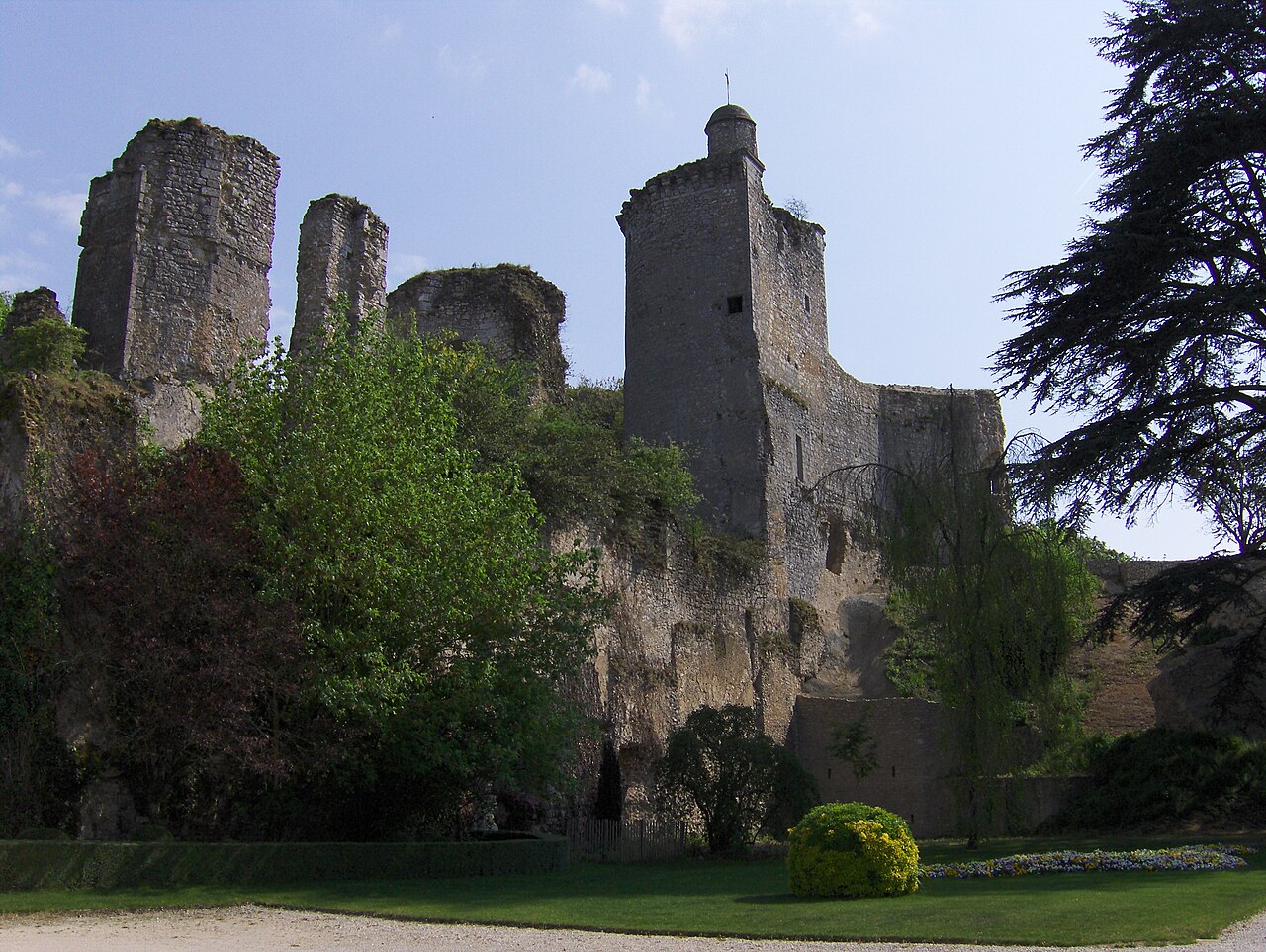
The most remarkable architectural element of Fréteval Castle is its round keep, which is considered one of the oldest round keeps in France. Originally constructed as a shell keep, the keep was surrounded by two additional outer walls and defensive ditches, forming a layered defense system typical of early medieval fortifications. This design enhanced the castle’s defensive capabilities against siege warfare, which was common during the turbulent medieval period.
The keep’s circular form was innovative for its time, as most early keeps were square or rectangular. The round shape helped to deflect projectiles and reduced blind spots for defenders. Though now in ruins, the keep remains a dominant feature of the site, towering above the Loir valley and symbolizing the castle’s former military strength.
Historical significance and events
Fréteval Castle played a role in several notable historical events. Most famously, the nearby Battle of Fréteval in 1194 saw the forces of Richard the Lionheart clash with those of Philip II 'Auguste' of France. This battle is particularly remembered because Philip II lost his royal baggage train, which included the royal seal and important archives, a significant blow to the French monarchy at the time.
Throughout the 12th and 13th centuries, the castle was held by the Meslay family, lords from Meslay-le-Vidame near Chartres. Their stewardship helped maintain the castle’s regional influence until the late 13th century.
During the Hundred Years' War, Fréteval Castle underwent further fortifications to withstand the ongoing conflicts between England and France. Despite these efforts, it was attacked twice by English forces in 1418. The castle suffered damage and decline, leading to its partial ruin by the late 15th century. Nevertheless, it remained inhabited until at least 1487.
Decline and current condition
After the castle was abandoned as a noble residence, the ruins of Fréteval were repurposed by locals as a quarry for building materials. This common practice contributed to the gradual deterioration of the structures. Today, the castle remains a ruin, with the interior of the keep fenced off for safety reasons due to its fragile condition.
The site is freely accessible to visitors, set in a picturesque green landscape that highlights the dramatic silhouette of the keep. The ruins evoke the castle’s medieval past and the complex history of feudal France, offering insight into early castle architecture and regional power struggles.
Architectural legacy and preservation
Fréteval Castle’s round keep stands as a rare example of early medieval military architecture in France. Its design influenced later developments in castle construction, particularly in the evolution of keeps from square to circular forms to improve defense. The layered walls and ditches reflect strategic thinking in fortification during the high medieval period.
Preservation efforts focus on maintaining the structural integrity of the surviving walls and protecting the site from further decay. While the castle is not fully restored, it remains an important cultural heritage site within the Loir-et-Cher region, attracting visitors interested in medieval history and castle architecture.
Frequently asked questions (FAQ)
- How do I get to Fréteval Castle?
- Fréteval Castle is located east of the D2 road in the Loir-et-Cher department, France. Visitors can reach the site by car or local transport to the village of Fréteval, from where the castle is accessible on foot.
- What is the historical significance of Fréteval Castle?
- Fréteval Castle was built in the 11th century and played a strategic role in controlling regional trade routes. It is known for the nearby 1194 Battle of Fréteval involving Richard the Lionheart and Philip II of France.
- Is the castle open to visitors?
- The castle grounds are freely accessible to the public, but the interior of the keep is fenced off for safety. Visitors can explore the ruins and enjoy views of the Loir valley.
- What makes the round keep of Fréteval Castle special?
- The round keep at Fréteval Castle is one of the oldest in France, originally built as a shell keep with layered defenses, showcasing early medieval military architecture.
- When was Fréteval Castle last inhabited?
- Historical records indicate that Fréteval Castle was inhabited until at least 1487, after which it fell into ruin and was used as a stone quarry by locals.
Information
Loading map...
Visitor reviews
No reviews yet. Been here? Write the first review and help other travelers!
Write the first reviewVisited this castle? Share your experience
Your review helps other travelers and adds first-hand knowledge to our encyclopedia.