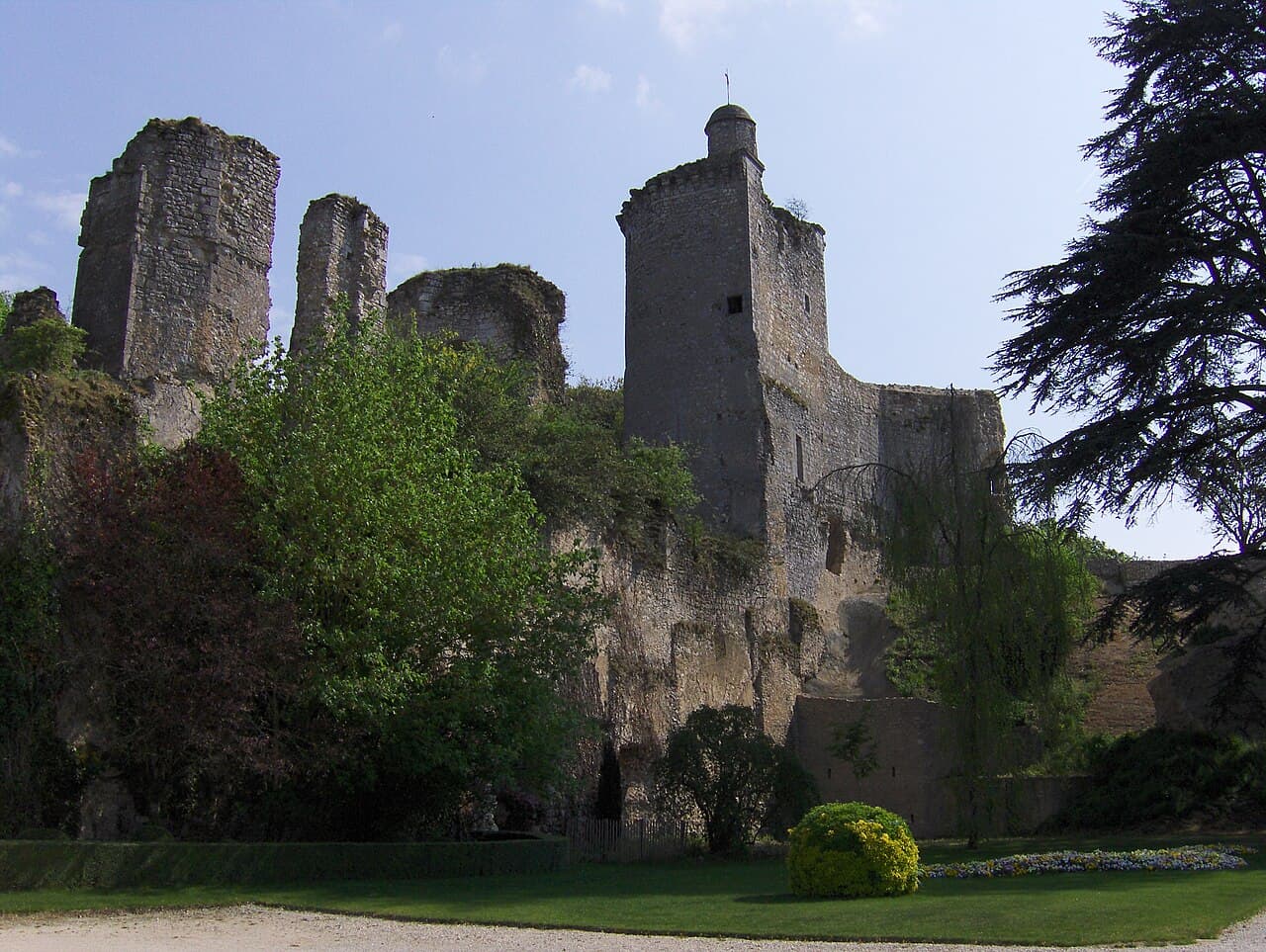
Château de Vendôme — France castle

Château de Vendôme

Château de Vendôme: historic hill castle ruins in Vendôme, France
Vendôme, Centre-Val de Loire, France
High Medieval (11th–13th c.)
Ruins

The Château de Vendôme stands as a monumental testament to the medieval and Renaissance history of Vendôme, France. Perched strategically on a rocky hilltop, this hill castle was a key military and administrative center from the 11th century through the early modern era. Though now largely in ruins, the site preserves significant architectural and historical remains that reflect the power and prestige of the Counts and Dukes of Bourbon-Vendôme, whose lineage culminated in the ascension of Henry IV to the French throne. The castle's enduring silhouette, dominated by the imposing Poitiers Tower, and its surrounding medieval curtain walls evoke centuries of feudal authority, conflict, and transformation.

Originally constructed in the High medieval period, the castle's earliest stone fortifications replaced earlier wooden defenses, marking Vendôme as a fortified stronghold commanding the vital route between Chartres and Tours. The site's defensive importance is documented as far back as the 6th century, underscoring its longstanding strategic value. Over subsequent centuries, the castle evolved architecturally and functionally, adapting to the shifting demands of warfare, residence, and governance. The addition of religious institutions such as the collegiate church of Saint-Georges and Saint-Lubin's church within and near the castle grounds further integrated spiritual authority with feudal power.

Medieval origins and architectural evolution

The castle's foundations lie in the 11th century when the counts of Vendôme, notably Bouchard I, established a quadrangular keep (donjon) and robust curtain walls enclosing the fortress. These early fortifications included key towers such as the Poitiers Tower and the Saint-Lubin Tower, which fortified the northern and western approaches. The castle's natural rocky plateau, approximately 170 meters long and 100 meters wide, was further defended by a deep semicircular ditch carved into the plateau's flank, enhancing its defensibility.

Throughout the 12th century, under counts like Geoffroy III, the castle underwent significant reinforcement and enlargement to meet the rising military challenges of the era. This included heightening the walls and adding defensive towers, likely in preparation for royal visits and regional conflicts. The castle hosted notable historical events, including the 1170 meeting between King Louis VII of France and Henry Plantagenet, underscoring its diplomatic significance.

Residential expansions and civil functions

From the late 14th century onward, the castle's role expanded beyond military defense to incorporate residential and judicial functions. The northern side was enhanced with three pavilion towers and interconnected living quarters, including a substantial 15th-century building measuring 24 by 11 meters. This structure featured a monumental stair tower that linked new residential spaces with older parts of the castle, facilitating internal movement and reflecting the castle's adaptation to noble domestic life.

The castle also served as a judicial center, exemplified by the 1458 trial of Duke Jean d'Alençon under King Charles VII. The integration of administrative and residential functions marked the castle's evolution into a seat of regional governance.

Renaissance influence and military significance

The Renaissance period brought further prominence to the Château de Vendôme. It was the birthplace of Louis, Prince of Condé, in 1530, linking the site to significant figures in French history. During the Wars of Religion in the late 16th century, the castle played a strategic role as Henri de Bourbon, Duke of Vendôme, later King Henri IV, used it as a military base to recapture the region from the Catholic League in 1589. The castle withstood a siege before falling under his control, demonstrating its enduring military value.

In the early 17th century, Duke César de Vendôme initiated modernization efforts to adapt the medieval fortress to contemporary needs. He constructed a large ramp leading to the castle, flanked by three monumental gates, including the new southern entrance known as the porte de Beauce. These modifications improved access and defense, reflecting evolving military architecture. César also relocated the parish church of Saint-Lubin outside the castle walls and transformed the collegiate church of Saint-Georges into a parish church in 1626. Additionally, he built a new residence adjacent to the old main entrance, integrating Renaissance architectural elements.

Decline, preservation, and current state

Following the absorption of the Vendôme duchy into the royal domain in 1712, the castle gradually fell into disuse. The French Revolution marked a turning point, with parts of the castle sold off and dismantled for building materials. This led to significant structural losses, leaving much of the castle in ruins.

In the 19th century, preservation efforts began, notably by the count de Beaumont, who conserved remaining walls and towers and donated them to the town. The castle was officially designated a historic monument in 1840, recognizing its cultural and architectural significance. Early 20th-century restoration made the Poitiers Tower accessible by adding floors and stairs, allowing visitors to appreciate its scale and history.

Despite these efforts, the castle remains largely in a state of ruins, with partial curtain walls, towers, and underground galleries still visible. A majestic cedar tree planted in 1807 symbolizes the site's transformation into a park-like setting. The English-style park, created in the 19th century within the castle's heart, offers winding paths and panoramic views of Vendôme, blending natural beauty with historical ambiance.

Recent restoration projects, initiated after a partial collapse in 2001, aim to stabilize and rehabilitate the ruins. These efforts continue to preserve the Château de Vendôme as a vital link to France's medieval and Renaissance heritage.

Architectural features and defensive elements

The Château de Vendôme's architecture reflects a complex layering of styles and functions developed over centuries. The original 11th-century quadrangular keep, though mostly vanished, set the foundation for the castle's defensive core. The Poitiers Tower, reinforced in the 14th century, remains the dominant feature, showcasing medieval military engineering with thick stone walls and an integrated dungeon.

The castle's curtain walls enclose a roughly rectangular plateau, with defensive towers placed strategically along the northern and western sides. The deep semicircular ditch carved into the plateau enhances natural defenses, creating a formidable barrier against attackers. The 15th-century residential quarters with their pavilion towers demonstrate the castle's transition from pure fortress to noble residence.

Underground galleries beneath the main structures likely served defensive or storage purposes, illustrating the castle's sophisticated design. The 17th-century additions by César de Vendôme, including monumental gates and a formal ramp, reflect Renaissance influences and the adaptation of medieval fortresses to new military realities.

Religious buildings within the castle complex

Religious architecture played a significant role in the castle's layout and function. The collegiate church of Saint-Georges, founded in the 11th century by Agnes of Burgundy, served as the burial site for the counts and dukes of Vendôme and members of the Bourbon dynasty. Though damaged during the Wars of Religion and the Revolution, its footprint remains marked by yew hedges planted in the 20th century.

Saint-Lubin's church, initially within the castle precincts, was relocated outside the walls in the early 17th century to accommodate new construction and urban development. These religious sites underscore the intertwined nature of feudal power and ecclesiastical authority at Vendôme.

Visiting the château de vendôme

Today, visitors to the Château de Vendôme can explore the evocative ruins and enjoy the peaceful English-style park that occupies the castle's heart. The site offers panoramic views of the town and surrounding landscape, making it a popular destination for history enthusiasts and nature lovers alike.

Interpretive signage and guided tours provide insights into the castle's layered history, from its medieval origins to its Renaissance transformations and eventual decline. The preservation of key structures such as the Poitiers Tower allows visitors to appreciate the scale and complexity of this historic fortress.

Ongoing restoration work ensures that the Château de Vendôme remains accessible and safe for public enjoyment while preserving its rich heritage for future generations.

Frequently asked questions (FAQ)

What is the historical significance of Château de Vendôme?
Château de Vendôme has a rich history dating back to the 10th century and played a crucial role in French medieval politics. It served as a royal residence and was the birthplace of several notable figures, including King Louis XII. Its strategic location and architecture reflect the power dynamics of the region throughout history.
When was Château de Vendôme built?
The main structures of Château de Vendôme were constructed during the 15th century, although its origins trace back to earlier defensive fortifications. The castle underwent various renovations and expansions over the centuries, showcasing a blend of medieval and Renaissance architectural styles. Today, it stands as a testament to the historical evolution of French castles.
What are the opening hours for Château de Vendôme?
Château de Vendôme is typically open to visitors from 10 AM to 6 PM, with extended hours during the summer months. It's advisable to check the official website for any seasonal changes or special events that may affect opening times. Guided tours are also available, which can provide a deeper insight into the castle's history.
Can I purchase tickets in advance for Château de Vendôme?
Yes, you can purchase tickets in advance through the official Château de Vendôme website or at local tourist information centers. Pre-booking is recommended, especially during peak tourist seasons, to ensure your entry and possibly avoid waiting in line. Ticket prices vary depending on the season and whether you choose a guided tour.
Is it possible to access Château de Vendôme with a wheelchair?
Yes, Château de Vendôme is accessible for visitors with mobility challenges, although some areas may have limited access due to the historic nature of the site. The staff are trained to assist guests, and there are facilities available to make your visit more comfortable. It's best to contact the castle in advance to inquire about specific accessibility options.
What is the best time to visit Château de Vendôme?
The best time to visit Château de Vendôme is during the spring and early fall when the weather is mild, and the gardens are in full bloom. Additionally, these seasons tend to attract fewer tourists, allowing for a more intimate experience. Summer can be quite busy, but it also offers various events and activities to enjoy.
Are there any nearby attractions to visit along with Château de Vendôme?
Yes, nearby attractions include the charming town of Vendôme itself, known for its picturesque streets and local markets. The Loire Valley, a UNESCO World Heritage site, is also within easy reach, offering stunning landscapes and other historic châteaux. Visitors can easily plan a full day of exploring the rich culture and history of the region.

Photo gallery

Château de Vendôme
Click to view

Photo by Joe Shlabotnik•CC BY 2.0

1 photo • Click any image to view in full screen

Information

Hill Castle

Sources & official resources

Verify the information above using these authoritative references.

Loading map...

Visitor reviews

No reviews yet. Been here? Write the first review and help other travelers!

Write the first review

Visited this castle? Share your experience

Your review helps other travelers and adds first-hand knowledge to our encyclopedia.
Write a review

(5/5)

0/2000 characters

Your review will be visible after admin approval

Nearby castles

14.7 km
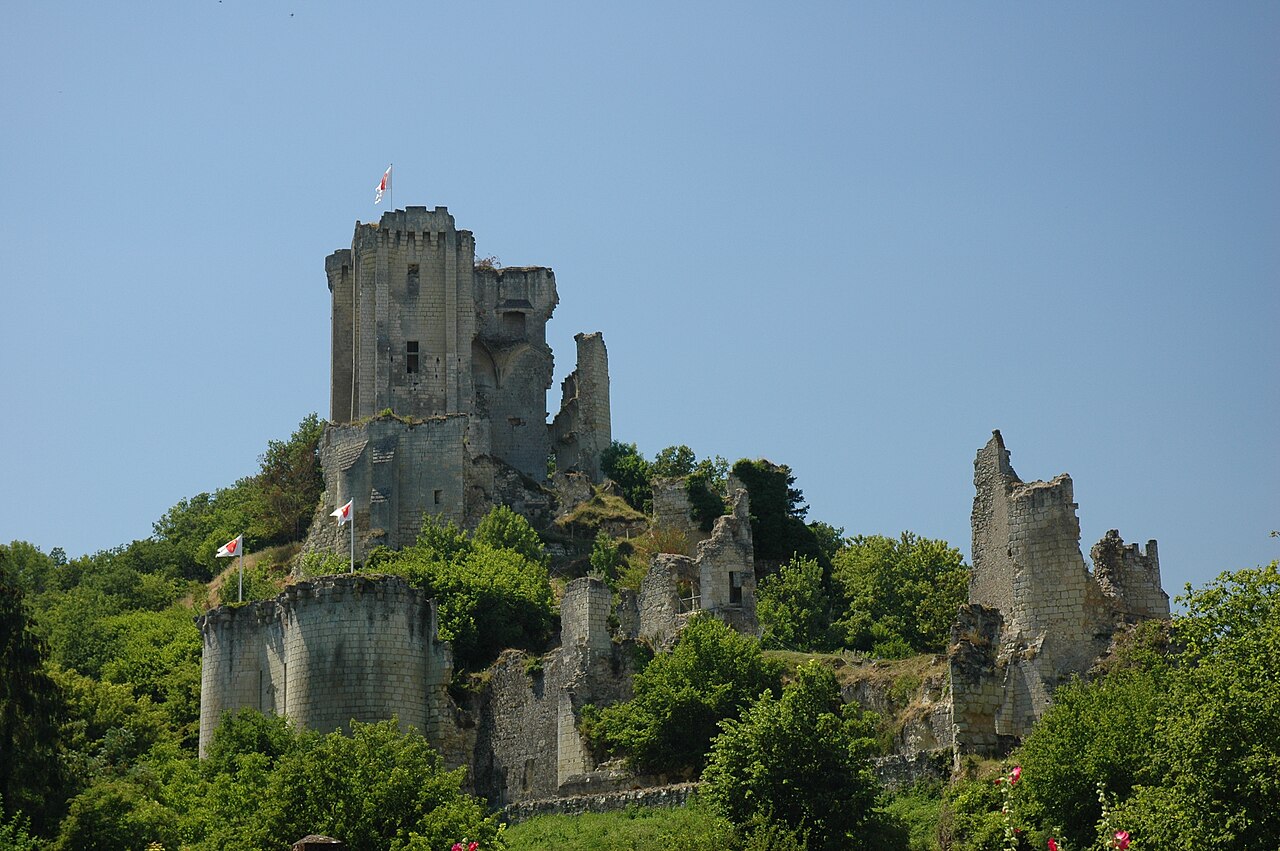
Château de Lavardin Ruins — France castle

Château de Lavardin Ruins

Lavardin, France

The Château de Lavardin ruins stand majestically on a rocky promontory overlooking the Loir River in the village of Lavardin, France. This hill castle traces its origins to the early 11th century, when the first lords of Lavardin constructed a wooden keep atop a motte to protect their manor house. Over centuries, it evolved into a formidable stone fortress and noble residence, reflecting the changing military and residential needs of its inhabitants. Today, the site offers a compelling glimpse into medieval fortification architecture and feudal history. Initially built as a simple wooden tower on an earthwork, the castle's strategic position on a sharply triangular ridge allowed extensive control over the surrounding landscape. Around 1130, the castle was sold to the count of Vendôme, who transformed it into his principal stronghold by the late 12th century. The counts of Vendôme invested heavily in expanding and fortifying the castle, making it a symbol of their power and prestige in the region. Medieval origins and early fortifications The earliest phase of the Château de Lavardin featured a wooden keep on a motte, typical of early medieval fortifications. This structure protected a seigneurial residence on the summit of the promontory. Archaeological evidence suggests the site was occupied since protohistoric times, possibly the Neolithic era, with a medieval cemetery and rock-cut graves indicating continuous use through the Merovingian and Carolingian periods. In the late 11th century, the wooden defenses were replaced by stone constructions under Hervé de Beaugency, the first lord to adopt the Lavardin name. He built a large rectangular stone keep, approximately 26 meters high, on foundations that partially reused earlier walls. This keep became the castle's dominant feature, surrounded by a curtain wall or chemise, which was gradually enhanced with defensive elements such as machicolations and embrasures for cannon, reflecting developments in military technology from the 12th to the 15th centuries. Architectural evolution under the counts of vendôme From the late 12th century onward, the castle underwent significant expansions and modifications under the counts of Vendôme. The fortress was composed of three or four successive enclosures on three rock terraces, creating a layered defense system. The first enclosure included a large gatehouse or châtelet, built and modified between the 12th and 15th centuries, featuring machicolations and cannon embrasures that controlled access to the castle. The second terrace housed residential buildings dating from the 12th to the 15th centuries, including the lord's residence and a crypt likely associated with the castle chapel. A large ceremonial hall constructed in the late 15th century featured vaulted ceilings adorned with the arms of the Bourbon-Vendôme family and decorative niches for oil lamps, highlighting the castle's dual role as a military fortress and noble household. The uppermost terrace was dominated by the imposing rectangular keep, reinforced with three strong towers added between the late 12th and 13th centuries and rebuilt extensively during the late 14th and early 15th centuries, largely under Louis I, count de Vendôme. Architectural details inside the keep include a 15th-century chimney emblazoned with the arms of Charles VII, a multi-bayed 14th-century window, and vaulted ceilings bearing the coats of arms of Louis II d'Anjou and Alix de Bretagne. Defensive innovations and underground galleries The castle's defensive design incorporated advanced features for its time. The curtain walls were adapted over centuries to include cannon embrasures and machicolations, allowing defenders to repel attackers effectively. A network of underground galleries and staircases, carved into the rock during the 14th and 15th centuries, connected different parts of the fortress, facilitating secure movement and access to the keep's moat. These subterranean passages also housed storage areas and a troglodytic kitchen with a baker's oven, illustrating the castle's self-sufficiency during sieges. Historical significance and key events The Château de Lavardin played a notable role in regional and national history. In 1188, it withstood a siege by Richard the Lionheart during the conflict between English King Henry II and French King Philip Augustus. The castle later became a focal point during the French Wars of Religion in the late 16th century, changing hands between Catholic League forces and royal troops. Captured by Henri IV in 1589, it was dismantled the following year on his orders to prevent further military use. Despite its dismantling, the castle remained an important cultural and historical landmark. Attempts to restore it in the 19th century, including plans by the architect Viollet-le-Duc, were not realized. The ruins were officially protected as a historic monument in 1945, ensuring their preservation for future generations. Architectural features and notable elements The castle's layout on a triangular ridge includes three or four enclosures with multiple terraces, each serving distinct functions. The gatehouse with its machicolations and cannon embrasures is a prominent feature of the first enclosure. The second terrace's residential buildings showcase the blend of defensive and domestic architecture typical of late medieval noble residences. The keep, the castle's centerpiece, is remarkable for its height and robust construction. Its interior contains significant decorative elements such as heraldic chimneys, vaulted halls, and a narrow dungeon accessible only via a well shaft, emphasizing the castle's layered security. The presence of underground galleries and storerooms carved into the rock further highlights the ingenuity of medieval military architecture at Lavardin. The priory of saint-gildéric and surrounding site At the foot of the castle, between the promontory and the Loir River, lies the site of the priory of Saint-Gildéric (also known as Saint Martin), founded around 1040 by the first lord of Lavardin. This religious establishment was protected by an outer enclosure and integrated into the castle's defensive complex, reflecting the close ties between spiritual and feudal authority during the Middle Ages. Archaeological discoveries and preservation Excavations at Château de Lavardin have revealed traces of human occupation dating back to protohistoric and possibly Neolithic times. The discovery of a medieval cemetery with rock-cut graves beneath the castle promontory provides valuable insights into the site's long-term significance. Remnants of multiple concentric ring walls and towers illustrate the castle's complex defensive evolution. Today, the castle stands as a restored ruin, with many architectural elements preserved or stabilized for public viewing. Its classification as a historic monument ensures ongoing conservation efforts. Visitors can explore the impressive remains of the keep, gatehouse, residential buildings, and underground galleries, gaining a comprehensive understanding of medieval fortification and noble life in the Vendôme region.

High Medieval (11th–13th c.)
Details
15.3 km

Fréteval Castle

East of the D2-road, France

Fréteval Castle, also known as Château féodal de Fréteval, stands as a significant medieval fortress located above the village of Fréteval in the Loir-et-Cher department of France. Constructed in the first half of the 11th century by Nivelon I, the seneschal of the Count of Blois, this castle was strategically positioned on the site of an earlier Carolingian village called Saint Victor. It occupies a commanding headland formed by the confluence of the Loir valley and a dry valley, overlooking the Loir river. This vantage point allowed the castle to monitor important medieval trade and military routes connecting Chartres to Vendôme and Tours, as well as Orléans to Le Mans. Medieval origins and strategic location The castle's foundation in the early high medieval period reflects the feudal power structures emerging in France during the 11th century. Nivelon I's decision to build on the site of the Carolingian settlement indicates the continued importance of this location for controlling river valleys and roads. The castle's position provided both defensive advantages and control over regional traffic, essential for the Counts of Blois in asserting their influence. Architectural features and fortifications The most remarkable architectural element of Fréteval Castle is its round keep, which is considered one of the oldest round keeps in France. Originally constructed as a shell keep, the keep was surrounded by two additional outer walls and defensive ditches, forming a layered defense system typical of early medieval fortifications. This design enhanced the castle’s defensive capabilities against siege warfare, which was common during the turbulent medieval period. The keep’s circular form was innovative for its time, as most early keeps were square or rectangular. The round shape helped to deflect projectiles and reduced blind spots for defenders. Though now in ruins, the keep remains a dominant feature of the site, towering above the Loir valley and symbolizing the castle’s former military strength. Historical significance and events Fréteval Castle played a role in several notable historical events. Most famously, the nearby Battle of Fréteval in 1194 saw the forces of Richard the Lionheart clash with those of Philip II 'Auguste' of France. This battle is particularly remembered because Philip II lost his royal baggage train, which included the royal seal and important archives, a significant blow to the French monarchy at the time. Throughout the 12th and 13th centuries, the castle was held by the Meslay family, lords from Meslay-le-Vidame near Chartres. Their stewardship helped maintain the castle’s regional influence until the late 13th century. During the Hundred Years' War, Fréteval Castle underwent further fortifications to withstand the ongoing conflicts between England and France. Despite these efforts, it was attacked twice by English forces in 1418. The castle suffered damage and decline, leading to its partial ruin by the late 15th century. Nevertheless, it remained inhabited until at least 1487. Decline and current condition After the castle was abandoned as a noble residence, the ruins of Fréteval were repurposed by locals as a quarry for building materials. This common practice contributed to the gradual deterioration of the structures. Today, the castle remains a ruin, with the interior of the keep fenced off for safety reasons due to its fragile condition. The site is freely accessible to visitors, set in a picturesque green landscape that highlights the dramatic silhouette of the keep. The ruins evoke the castle’s medieval past and the complex history of feudal France, offering insight into early castle architecture and regional power struggles. Architectural legacy and preservation Fréteval Castle’s round keep stands as a rare example of early medieval military architecture in France. Its design influenced later developments in castle construction, particularly in the evolution of keeps from square to circular forms to improve defense. The layered walls and ditches reflect strategic thinking in fortification during the high medieval period. Preservation efforts focus on maintaining the structural integrity of the surviving walls and protecting the site from further decay. While the castle is not fully restored, it remains an important cultural heritage site within the Loir-et-Cher region, attracting visitors interested in medieval history and castle architecture.

High Medieval (11th–13th c.)
Details
16.2 km

Château de Montoire

Montoire-sur-le-Loir, France

The Château de Montoire is a notable example of a high medieval fortress located in Montoire-sur-le-Loir, France. Its origins trace back to around 1080, marking it as an important 11th-century castle whose construction and development spanned several centuries. The castle’s strategic position on a rocky promontory overlooking the Loir River facilitated its role as a defensive stronghold controlling the surrounding territory. Medieval construction and architectural evolution The initial construction phase of the Château de Montoire began in the late 11th century. This early phase likely included the erection of a keep (donjon) and basic fortifications typical of the period, designed primarily for defense and surveillance. Over the subsequent centuries, the castle underwent significant expansions and modifications during the 12th, 13th, and 14th centuries, reflecting evolving military architecture and the needs of its occupants. 12th and 13th century enhancements During the 12th and 13th centuries, the castle’s fortifications were strengthened with the addition of curtain walls and towers, adapting to advances in siege technology. The castle likely featured a motte and bailey layout initially, which was common in Norman castles, but evolved into a more complex stone fortress with multiple defensive layers. The walls would have been thickened, and battlements added to improve defense against archers and siege engines. 14th century developments In the 14th century, further structural enhancements were made, possibly including the addition of a gatehouse and reinforced towers. These improvements coincided with the turbulent period of the Hundred Years' War, during which fortifications across France were upgraded to withstand prolonged sieges. The castle’s position overlooking the Loir River made it a valuable military asset during this time. Role in the wars of religion and subsequent demolition The Château de Montoire played a significant role during the French Wars of Religion in the late 16th century. It was seized by the Catholic League, a powerful faction opposing the Protestant Huguenots. This occupation made the castle a target for the Protestant king, Henry IV, who sought to consolidate his power and suppress Catholic strongholds. In 1593, following his conversion to Catholicism and efforts to unify France, King Henry IV ordered the demolition of the castle to prevent it from being used as a military base by his enemies. The ordered dismantling left the castle in ruins, a status it retains to this day. Architectural remains and current condition Today, the Château de Montoire stands as a ruined medieval castle, with remnants of its stone walls, towers, and defensive structures visible amidst the landscape of Montoire-sur-le-Loir. The ruins provide insight into medieval military architecture, showcasing typical features such as thick curtain walls and the remains of fortified towers. The site’s condition reflects centuries of neglect following its deliberate destruction, yet it remains an important cultural and historical landmark. Visitors can explore the ruins, which evoke the castle’s former strategic importance and turbulent history during the medieval and early modern periods. Historical significance and heritage value The Château de Montoire is emblematic of the evolution of medieval fortifications in the Loire Valley region. Its phases of construction illustrate the transition from early motte-and-bailey designs to more sophisticated stone castles adapted to the changing demands of warfare. Its involvement in the Wars of Religion highlights the castle’s role in the religious and political conflicts that shaped France’s history. The decision by King Henry IV to demolish the castle underscores the strategic importance of controlling fortified sites during this era. As a historic ruin, the castle contributes to the understanding of medieval military architecture and the complex history of the Loire Valley. It attracts historians, archaeologists, and visitors interested in France’s medieval past and the legacy of its fortified structures. Visiting château de montoire The castle ruins are accessible to visitors interested in medieval history and architecture. While no extensive facilities exist on-site due to its ruined state, the location offers scenic views of the Loir River and the surrounding countryside. The site is a point of interest within the town of Montoire-sur-le-Loir, which features other historical landmarks and cultural attractions. Visitors are encouraged to explore the remains carefully to appreciate the castle’s architectural features and its historical context within the region.

High Medieval (11th–13th c.)
Details

