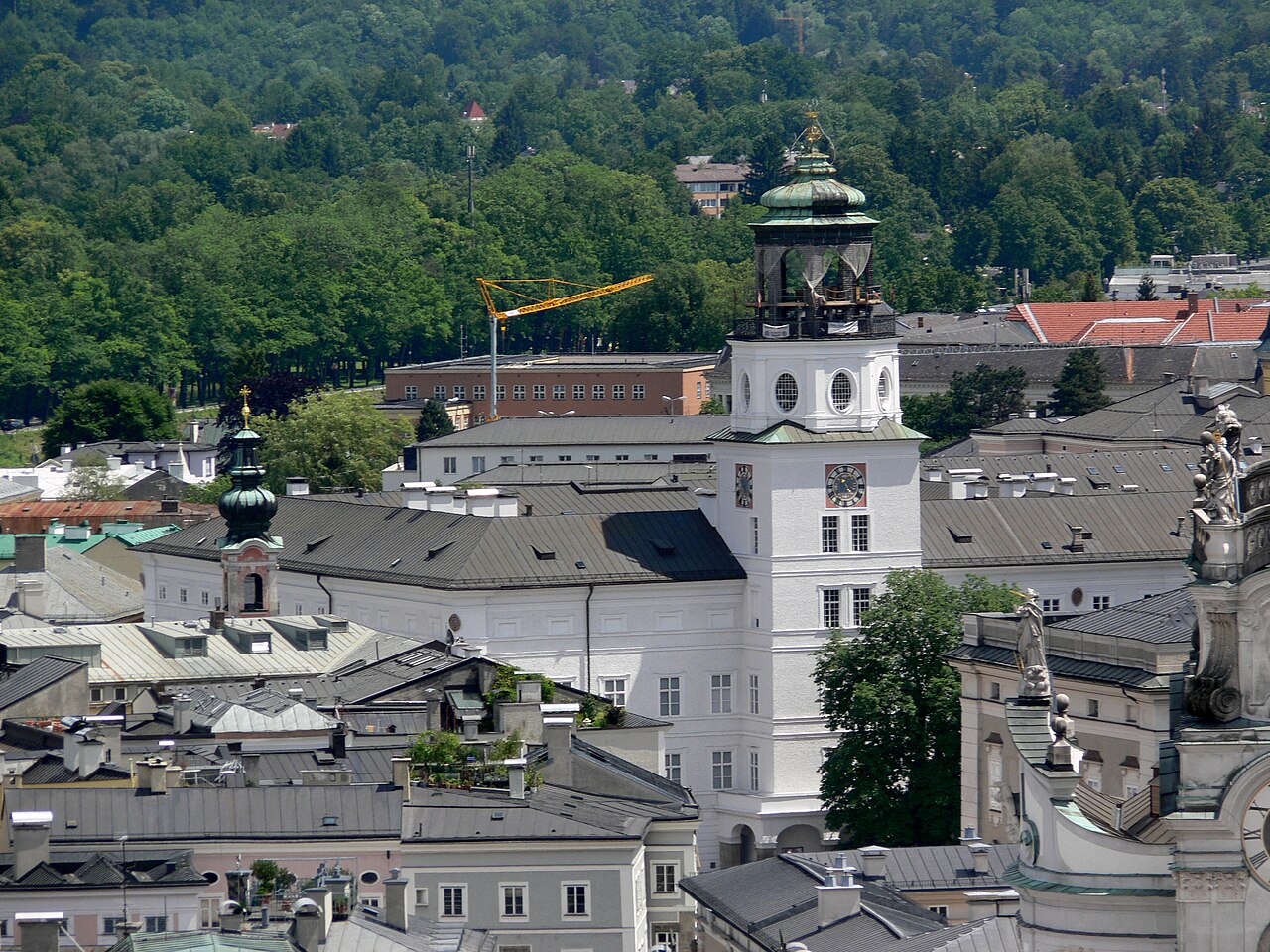
Freisaal Castle

Freisaal Castle in Salzburg, Austria
Salzburg, Salzburg, Austria
Late Medieval (14th–15th c.)
Partially Preserved

Freisaal Castle is a historic late medieval structure located in Salzburg, Austria, with origins dating back to the 14th century. The earliest documented mention of the castle is from 1392, establishing its longstanding presence in the region. The castle’s name is derived from the original term Freudensaal, meaning "pleasure hall," which reflects its initial function as a recreational retreat for the Prince Archbishop Pilgrim II von Puchheim.

Historical background and original purpose

Constructed during the late medieval period, Freisaal Castle was designed primarily as a pleasure castle rather than a defensive fortress. It served as a place of leisure and entertainment for ecclesiastical nobility, specifically for the Prince Archbishop who governed Salzburg at the time. This function distinguishes it from many other castles of the era, which were typically built for military or administrative purposes.

Architectural evolution and remodeling

In 1549, the castle underwent significant remodeling under the direction of Ernst von Bayern. This renovation introduced elements characteristic of the Renaissance architectural style, which was gaining prominence across Europe during the 16th century. The changes included enhancements to the castle’s interior and exterior, adapting it to the tastes and requirements of the period.

Preserved frescos by Hans Bocksberger the older

One of the castle’s most notable artistic features is the set of frescos on the second floor, painted in 1558 by Hans Bocksberger the older. These frescos are significant examples of Renaissance art in Salzburg and include a depiction of Prince Archbishop Michael von Kuenburg moving into Salzburg. The preservation of these frescos offers valuable insight into the cultural and religious history of the region during the 16th century.

20th-century alterations and current state

In 1907, Freisaal Castle experienced a fundamental transformation when construction work altered its structure, converting it into a villa-like residence. This renovation, however, has been described as somewhat disorderly, diminishing the castle’s original architectural coherence. Despite these changes, the castle retains important historical features, especially the Renaissance frescos.

Today, Freisaal Castle remains private property and is not accessible to the public. Its preservation status is considered partially preserved, reflecting the combination of its medieval origins, Renaissance artistic heritage, and early 20th-century modifications.

Architectural features and significance

The castle’s design originally focused on creating a leisure environment rather than fortification, which is evident in its layout and decorative elements. The presence of frescos and the castle’s connection to notable historical figures of Salzburg’s ecclesiastical hierarchy add to its cultural importance. While its external appearance has been altered, the interior artworks remain a key attraction for scholars and art historians studying the Renaissance period in Austria.

Location and context within Salzburg

Situated in the Salzburg region, Freisaal Castle contributes to the area's rich tapestry of medieval and Renaissance architecture. Salzburg itself is renowned for its historical buildings, and Freisaal Castle adds a unique narrative as a pleasure castle linked to the Prince Archbishops who shaped the city’s religious and political landscape.

Access and visitor information

As the castle is currently under private ownership, it is not open to the public. Visitors interested in the history and architecture of Salzburg’s castles can explore other nearby sites that are accessible, while Freisaal Castle remains a subject of interest primarily for academic research and heritage documentation.

Frequently asked questions (FAQ)

What is Freisaal Castle known for?
Freisaal Castle is renowned for its stunning baroque architecture and rich historical significance as a former noble residence. It played an important role in the region's history and is a beautiful example of 18th-century design, making it a popular destination for history enthusiasts and architecture lovers alike.
When was Freisaal Castle built?
Freisaal Castle was constructed in the early 18th century, specifically between 1701 and 1706. It was commissioned by the noble family of Freisaal and has undergone various restorations to preserve its historical integrity and charm.
What are the opening hours for Freisaal Castle?
Freisaal Castle is typically open to visitors from April to October, with hours varying by season. It is advisable to check the official website or local tourist information for the most current opening hours before planning your visit.
Can I take a guided tour of Freisaal Castle?
Yes, guided tours of Freisaal Castle are available and provide a deeper insight into its history and architecture. Tours are led by knowledgeable guides who can share fascinating stories and details about the castle's significance.
Is Freisaal Castle accessible for visitors with disabilities?
Freisaal Castle strives to be accessible to all visitors, including those with disabilities. However, due to its historical structure, some areas may present challenges, so it is recommended to check in advance regarding specific accessibility options.
What is the best time to visit Freisaal Castle?
The best time to visit Freisaal Castle is during the spring and early autumn months when the weather is mild and the gardens are in full bloom. These seasons offer a picturesque backdrop for exploring the castle and its surroundings.
Are there any nearby attractions to visit while in Salzburg?
Yes, there are several nearby attractions to explore, including the historic city center of Salzburg, Mirabell Palace, and Hohensalzburg Fortress. These sites complement a visit to Freisaal Castle, providing a rich cultural experience in the area.
What are the ticket prices for Freisaal Castle?
Ticket prices for Freisaal Castle vary depending on the type of tour and whether you choose a guided option. Generally, entrance fees are affordable, making it accessible for a wide range of visitors.

Information

Lowland Castle

Loading map...

Visitor reviews

No reviews yet. Been here? Write the first review and help other travelers!

Write the first review

Visited this castle? Share your experience

Your review helps other travelers and adds first-hand knowledge to our encyclopedia.
Write a review

(5/5)

0/2000 characters

Your review will be visible after admin approval

Nearby castles

1.2 km
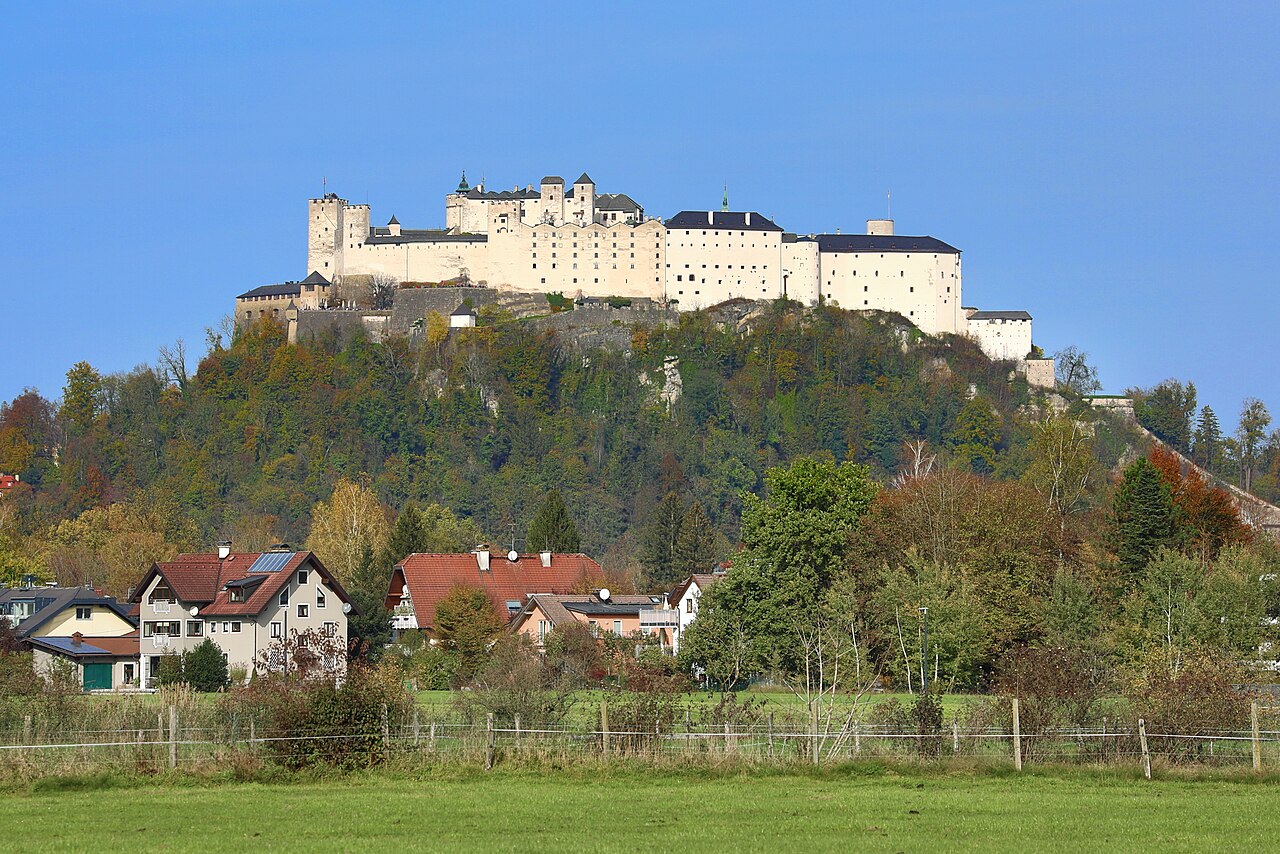
Hohensalzburg Castle — Austria castle

Hohensalzburg Castle

Salzburg, Austria

Hohensalzburg Castle, known locally as Festung Hohensalzburg, is a monumental medieval fortress perched atop the Festungsberg hill overlooking the historic city of Salzburg in Austria. It stands as one of the largest and best-preserved castles in Europe, with an extensive complex covering over 7,000 square meters of built area and more than 14,000 square meters including its ramparts. Founded in 1077 by Archbishop Gebhard von Helfenstein during the turbulent period of the Investiture Controversy, the castle was conceived primarily as a defensive stronghold and a symbol of the prince-archbishops’ power within the Holy Roman Empire. The castle’s name, Hohensalzburg, translates to "High Salt Castle," reflecting its strategic role in securing the valuable salt trade that was vital to Salzburg’s wealth and influence. The fortress was built on a site with fortifications dating back to Roman times, making it a long-standing bastion of control over the region. Over centuries, the castle evolved from a simple fortification into a sprawling complex featuring multiple wings, curtain walls, bastions, towers, and richly decorated princely apartments. Early history and medieval expansion The initial construction phase under Archbishop Gebhard von Helfenstein included a residential tower, a small chapel, and a surrounding defensive wall. Following Gebhard’s exile, subsequent archbishops such as Berthold von Moosburg and Konrad von Abenberg continued development between 1106 and 1147, completing the early fortifications and establishing the castle’s foundational structure. During the 12th and 13th centuries, the castle was expanded significantly as Salzburg’s archbishops gained independence from the Duchy of Bavaria under Eberhard II. This period saw the construction of a robust outer ring wall and the enlargement of the main residential tower known as the Hohen Stock. The castle’s defenses were continually improved to protect the growing principality and its valuable salt resources. Fortification enhancements in the 15th and 16th centuries The advent of gunpowder and artillery in the late medieval period necessitated major upgrades to Hohensalzburg’s defenses. In the 1460s, Prince-Archbishop Burkhard II von Weisspriach added four round artillery towers and bastions to withstand cannon fire, marking the castle’s transition into a modern fortress. Between 1495 and 1519, Archbishop Leonhard von Keutschach transformed the castle into a late Gothic princely residence. He expanded the upper floors, installed magnificent state apartments including the Golden Hall and the Golden Chamber, and constructed a large cistern to secure water supply during sieges. The castle’s chapel was rebuilt with a richly ornamented star vault ceiling, and the interior was adorned with coffered ceilings, gilded decorations, and intricate woodwork. Leonhard also commissioned the Salzburger Stier, a massive mechanical organ housed in the Krautturm (powder tower), built in 1502. This organ is considered one of the oldest functioning mechanical organs in the world and adds a unique cultural dimension to the fortress. The castle during conflicts and sieges Hohensalzburg Castle’s only significant siege occurred during the German Peasants' War of 1525, when miners, farmers, and townspeople attempted to overthrow the prince-archbishop. Despite a prolonged siege lasting nearly two months, the fortress held firm, demonstrating its formidable defensive capabilities. During the Thirty Years’ War, Archbishop Paris von Lodron further fortified the castle and the city of Salzburg. He added artillery bastions, strengthened gatehouses, and constructed the Lodronbogen, the first defensive arch at the castle. Later, in 1681, the Feuerbastei bastion was built, representing the last major defensive enhancement of the fortress. The castle surrendered without resistance to French troops under General Jean Victor Marie Moreau during the Napoleonic Wars in 1800, marking the end of clerical rule in Salzburg and the transition of the city into a military stronghold within the Austrian Empire. Architectural features and princely apartments The fortress is a complex of interconnected wings, courtyards, and defensive structures built primarily from local dolomite stone. Its imposing ring walls and artillery towers reflect the evolution of military architecture from Romanesque to late Gothic styles adapted for gunpowder weaponry. The prince-archbishops’ apartments on the upper floors showcase exquisite late Gothic interior design. The Golden Hall served as a grand reception and banqueting room, richly decorated with coffered ceilings and gold embellishments. The Golden Chamber is the most lavishly furnished room, featuring intricately carved benches adorned with motifs of vines, grapes, and animals, and walls that were once covered with gold-embossed leather tapestry. The bedchamber reveals the intimate living quarters of the archbishops, complete with elaborate wood paneling and a primitive toilet facility concealed behind a door, showcasing early innovations in sanitary design. The castle chapel, rebuilt under Leonhard von Keutschach, features a star-vaulted ceiling and richly decorated stucco work. It includes openings in the north wall allowing the archbishop to attend services privately from adjacent chambers. Unique artifacts and cultural heritage The Salzburger Stier organ housed in the Krautturm is a remarkable mechanical instrument with over 200 pipes, powered by a large cylinder mechanism. It is a rare surviving example of early 16th-century musical technology. Within the Prince's Cellars lies the Salzburg Marionette Museum, displaying historic marionettes from the famous Salzburg Marionette Theatre. The collection includes puppets used in performances of The Sound of Music and Mozart’s The Magic Flute, as well as puppets depicting historical events such as the 1525 peasants’ uprising. Modern history and tourism After serving as a military barracks, prison, and storage depot through the 19th and early 20th centuries, Hohensalzburg Castle was officially decommissioned as a military site in 1861. It gained prominence as a tourist destination with the opening of the Festungsbahn funicular railway in 1892, which provides convenient access from Salzburg’s city center to the fortress. Extensive restoration and stabilization efforts throughout the 20th century have preserved the castle’s structural integrity and historic interiors. Today, it is one of Austria’s most visited monuments, attracting nearly a million visitors annually. The castle offers panoramic views of the Salzburg basin and surrounding mountain ranges, including the Tennengebirge and Hahnsberg. Visitors can explore its courtyards, museums, and special exhibition areas, including restricted sections such as the old bakery, wine cellar, and bastions accessible only via guided tours. Hohensalzburg Castle remains a symbol of Salzburg’s rich history, architectural heritage, and cultural significance, embodying centuries of political power, military innovation, and artistic achievement.

High Medieval (11th–13th c.)
Details
1.4 km

Schloss Leopoldskron

Salzburg, Austria

Schloss Leopoldskron is a distinguished Baroque palace located on the serene shores of a pond in Salzburg, Austria. Commissioned in 1736 by Prince-Archbishop Leopold Anton von Firmian (1679–1744), the palace was built during the post-Renaissance period as a symbol of power and cultural refinement. The palace's origins are closely tied to the political and religious upheavals of the time, notably the expulsion of over 22,000 Protestants from Salzburg, which contributed to the archbishop's wealth and enabled this grand construction.Leopoldskron was originally constructed as a family estate, situated between the palace grounds and the majestic Untersberg mountain. Upon the archbishop's death in 1744, the estate was inherited by his nephew, Count Laktanz Firmian, who transformed it into a repository for an impressive collection of European masterworks. This collection included paintings by Titian, Albrecht Dürer, Nicolas Poussin, Peter Paul Rubens, and Rembrandt, reflecting the palace's role as a cultural hub in the 18th century.Architectural design and featuresSchloss Leopoldskron exemplifies Baroque architecture with its elegant façade, harmonious proportions, and integration with the natural landscape. The palace is set beside a reflective pond, enhancing its picturesque quality and creating a tranquil environment. The building's layout includes a grand staircase, a Great Hall, and a Marble Hall, which are key features showcasing the ornate interior design typical of the period.Interior and artistic elementsThe interiors were originally lavishly decorated, housing a wealth of artworks and fine furnishings. The palace also contains a private chapel where the heart of Prince-Archbishop Firmian was interred, while his body rests in Salzburg Cathedral. The artistic legacy continued under Count Laktanz Firmian, whose collection significantly enriched the cultural value of the estate.19th and early 20th-century historyFollowing the Firmian family's ownership until 1837, Schloss Leopoldskron experienced a period of decline. The palace changed hands multiple times, including ownership by King Ludwig I of Bavaria and local entrepreneurs who attempted to repurpose it as a hotel. Unfortunately, much of the original interior decoration was stripped by George Zierer, a local shooting gallery owner, who sold off valuable paintings, etchings, and sculptures.Max reinhardt and cultural revivalIn 1918, the palace was purchased by Max Reinhardt, a prominent theatre director and co-founder of the Salzburg Festival. Reinhardt undertook extensive renovations over two decades, restoring key features such as the staircase, Great Hall, and Marble Hall. He also added new spaces including the Library, the Venetian Room, and an open-air garden theatre. Reinhardt used the palace innovatively for theatrical productions that moved audiences from room to room, creating an immersive cultural experience. The palace became a gathering place for international artists, writers, composers, and designers during this period.Wartime impact and post-war restorationDuring World War II, Schloss Leopoldskron was confiscated by the Nazi regime as part of their seizure of Jewish property. It was assigned to Princess Stephanie von Hohenlohe, who converted it into a guest house for prominent artists aligned with the Reich and as a reception venue for Adolf Hitler's Berghof residence. The palace suffered damage from a bomb explosion in the garden, which shattered windows, damaged the library chandelier, and left shrapnel marks on wall murals and stucco work.After the war, the palace was returned to the Reinhardt estate. In 1946, Helene Thimig, Max Reinhardt's widow, offered the palace for use by the newly founded Salzburg Seminar in American Studies. This initiative aimed to promote cultural exchange and education among young people from countries recently at war, fostering understanding through American history, art, and literature.Modern use and preservationThe Salzburg Global Seminar purchased Schloss Leopoldskron in 1959, followed by the acquisition of the adjacent Meierhof estate in 1973. Since then, extensive renovations have adapted the palace for use as a conference center and event venue, while preserving its historical and architectural integrity. A notable renovation in 2014 updated 50 rooms in the Meierhof, including themed rooms inspired by the film The Sound of Music, reflecting the palace's cultural significance and popular appeal.Today, Schloss Leopoldskron functions as a luxury hotel and cultural site, welcoming visitors to experience its rich history, architectural beauty, and artistic heritage. Its combination of Baroque elegance, historical layers, and ongoing cultural vitality make it a unique landmark in Salzburg.

Post-Renaissance (17th–18th c.)
Details
1.5 km
Salzburg Museum — Austria castle

Salzburg Museum

Salzburg, Austria

The Salzburg Museum, housed since 2007 in the magnificent New Residence (Neuen Residenz) on Mozart Square, serves as the premier museum of artistic and cultural history for the city and region of Salzburg, Austria. Established originally in 1834, the museum began as a modest collection of military memorabilia commemorating the Napoleonic wars. Over time, it evolved into the official town museum after the 1848 revolution, expanding its scope to include a rich array of artistic objects, historical artifacts, and multimedia presentations that highlight Salzburg's unique cultural heritage. The museum's location in the New Residence situates it within the heart of Salzburg's historic center, an area renowned for its baroque architecture and profound ecclesiastical history. The museum's innovative exhibition concept blends valuable art objects, aesthetic installations, and interactive multimedia elements, creating a harmonious and engaging visitor experience that reflects Salzburg's multifaceted history. Salzburg Residenz: the seat of ecclesiastical power The Salzburg Residenz is a sprawling palace complex that served as the residence and administrative center for the Prince-Archbishops of Salzburg for centuries. Its origins trace back to the early 12th century, with the first documented reference around 1120 when Archbishop Conrad I relocated the bishop's official residence from St. Peter’s Abbey to its present site near the Salzburg Cathedral. This relocation marked the beginning of the Residenz's long-standing role as the political and religious hub of Salzburg. Architectural evolution and Renaissance transformation The Residenz underwent significant architectural transformations, most notably around 1600 under the direction of Archbishop Wolf Dietrich von Raitenau. Influenced by Renaissance ideals and possibly designed with input from the Venetian architect Vincenzo Scamozzi, who visited Salzburg in 1603 and 1604, the palace was extensively remodeled. This phase introduced key elements such as the grand marble staircase and the Carabinieri-Saal, a large ceremonial hall that connected the palace to the adjacent Franziskanerkirche and courtyard. Subsequent Prince-Archbishops, including Markus Sittikus and Paris Lodron, continued to expand and refine the palace, adding Baroque flourishes and elaborate interior decorations. The interiors were richly adorned with frescoes, stucco work, and paintings by prominent artists such as Johann Michael Rottmayr and Martino Altomonte during the late 17th and early 18th centuries, which celebrated themes like the life of Alexander the Great and classical mythology. Key architectural features and interior spaces The Residenz is organized around four main courtyards: the central Haupthof (main courtyard), the Toskanatrakt courtyard, the former Dietrichsruh garden courtyard, and a smaller courtyard adjoining the Wallistrakt. The main courtyard is notable for its arcade and the Hercules fountain, as well as the grand marble staircase leading to the principal state rooms on the second floor. Among the palace's most impressive halls is the Carabinierisaal (Carabinieri Hall), the largest hall in the complex, featuring a richly decorated stucco ceiling by Francesco and Carlo Brenno and Antonio Carabelli, along with a ceiling fresco by Rottmayr depicting the four classical elements and scenes from Virgil's Aeneid. The Rittersaal (Knights’ Hall) displays paintings illustrating episodes from Alexander the Great’s life and his horse Bucephalus, while the Konferenzsaal (Conference Hall) contains a ceiling painting by Martino Altomonte portraying Alexander at the Battle of Granicus. The Audienzsaal (Audience Hall) is adorned with gilded ceiling paintings and Brussels tapestries featuring Archbishop Wolf Dietrich’s coat of arms. Smaller chambers include the Retirada, a private living and working room decorated with ceiling paintings by Altomonte, and a small chapel with a dome vault fresco by Rottmayr and an altar likely designed by architect Antonio Beduzzi in 1711. Gardens and external features The Dietrichsruh garden, created between 1605 and 1612, was a Renaissance garden complex featuring walled courtyards, water features, artificial grottos, and a garden hall or Sala terrena with open arcades and a fountain. Though much altered by the late 18th century, remnants such as a grotto with a Hercules statue remain, illustrating the garden's original grandeur. The Wallistrakt, part of the northern section of the complex, was originally built as private apartments for Archbishop Wolf Dietrich. Its reconstruction in the 20th century preserved the exterior walls and some garden enclosures, though many interior features were lost. Salzburg cathedral and its architectural significance The Salzburg Cathedral stands as one of the city's most significant ecclesiastical buildings, embodying early Baroque architecture north of the Alps. Its origins date back to 767 when Bishop Virgil established the first cathedral on the site of the Roman city Juvavum. The cathedral has undergone multiple reconstructions due to fires and expansions, notably after the fire of 1598, when Archbishop Wolf Dietrich initiated a Baroque redesign. Architect Santino Solari was commissioned by Archbishop Markus Sittikus to rebuild the cathedral, which was consecrated in 1628 by Archbishop Paris Lodron. The cathedral's impressive façade, dome, and interior elements such as the baptismal font where Wolfgang Amadeus Mozart was baptized, the grand organ, and the richly decorated portals contribute to its architectural and cultural importance. Historical events and cultural impact The cathedral has witnessed key historical events, including its near-destruction during World War II bombings in 1944 and subsequent restoration completed in 1959. It also played a central role in Salzburg's religious and cultural life, with Mozart composing sacred music for its services and performing in its vicinity. Salzburg old town and UNESCO heritage Salzburg's Old Town (Altstadt) is internationally acclaimed for its baroque architecture and was designated a UNESCO World Heritage Site in 1997. It represents an exceptionally well-preserved example of an ecclesiastical city-state from the Holy Roman Empire era. The urban fabric and monumental buildings, including the Residenz, Cathedral, Franciscan Abbey, and St. Peter's Abbey, showcase the city's historical significance and architectural richness. The Old Town's distinctive skyline, featuring numerous spires and domes set against a mountainous backdrop, is dominated by the HohenSalzburg Fortress. The cityscape reflects the cultural confluence of Italian and German influences, largely shaped by architects such as Vincenzo Scamozzi and Santino Solari. Architectural and cultural legacy The Old Town's layout reveals a clear separation between the prince-archbishops' lands, characterized by monumental buildings and open spaces like the Domplatz, and the burghers' quarters with their narrow streets and small plots. This division underscores the social and political structure of Salzburg's past. The preservation of Gothic and Baroque architecture, alongside associations with renowned figures such as Wolfgang Amadeus Mozart, enriches Salzburg's cultural heritage and attracts visitors worldwide.

Modern (19th–20th c.)
Details