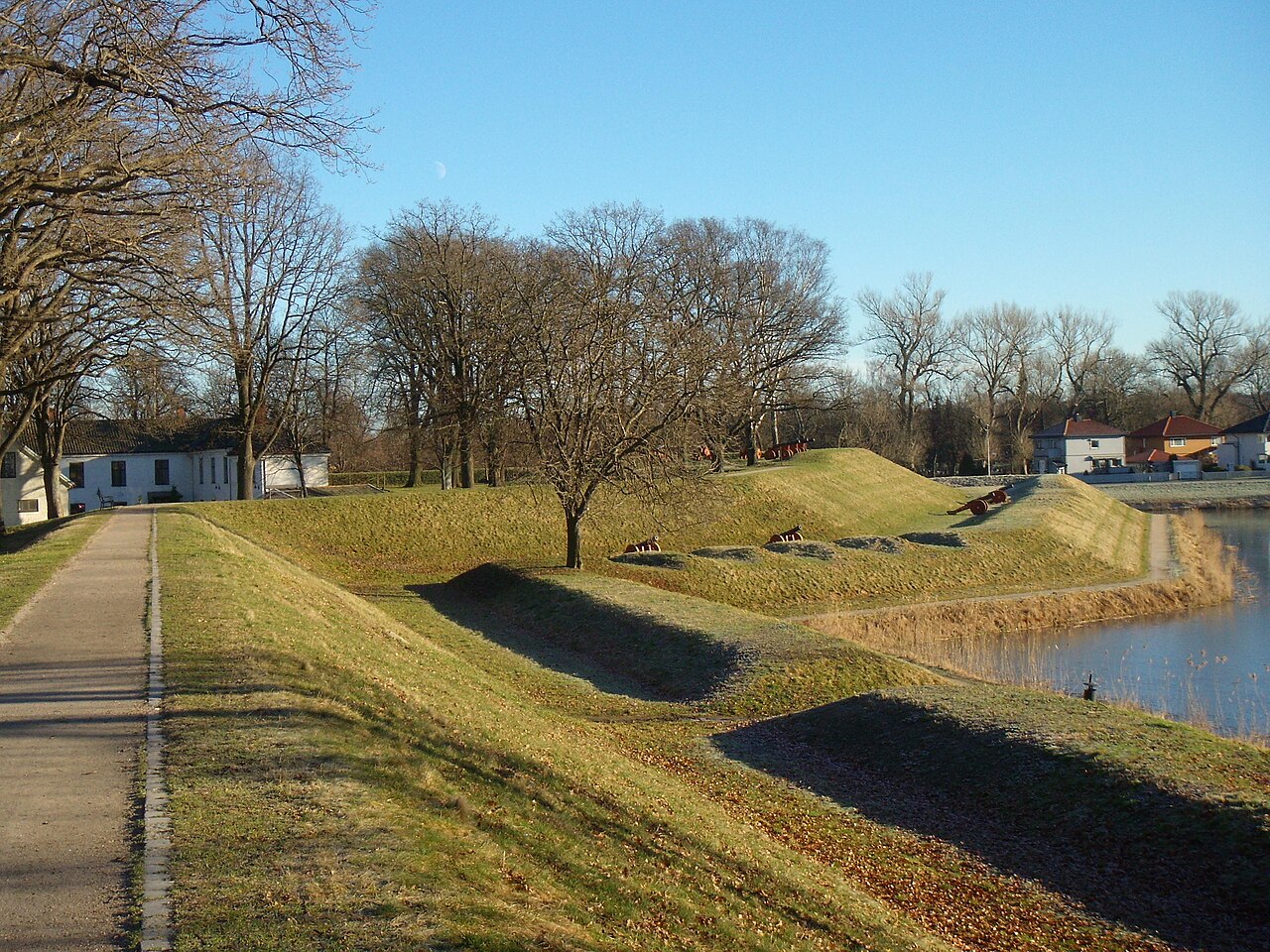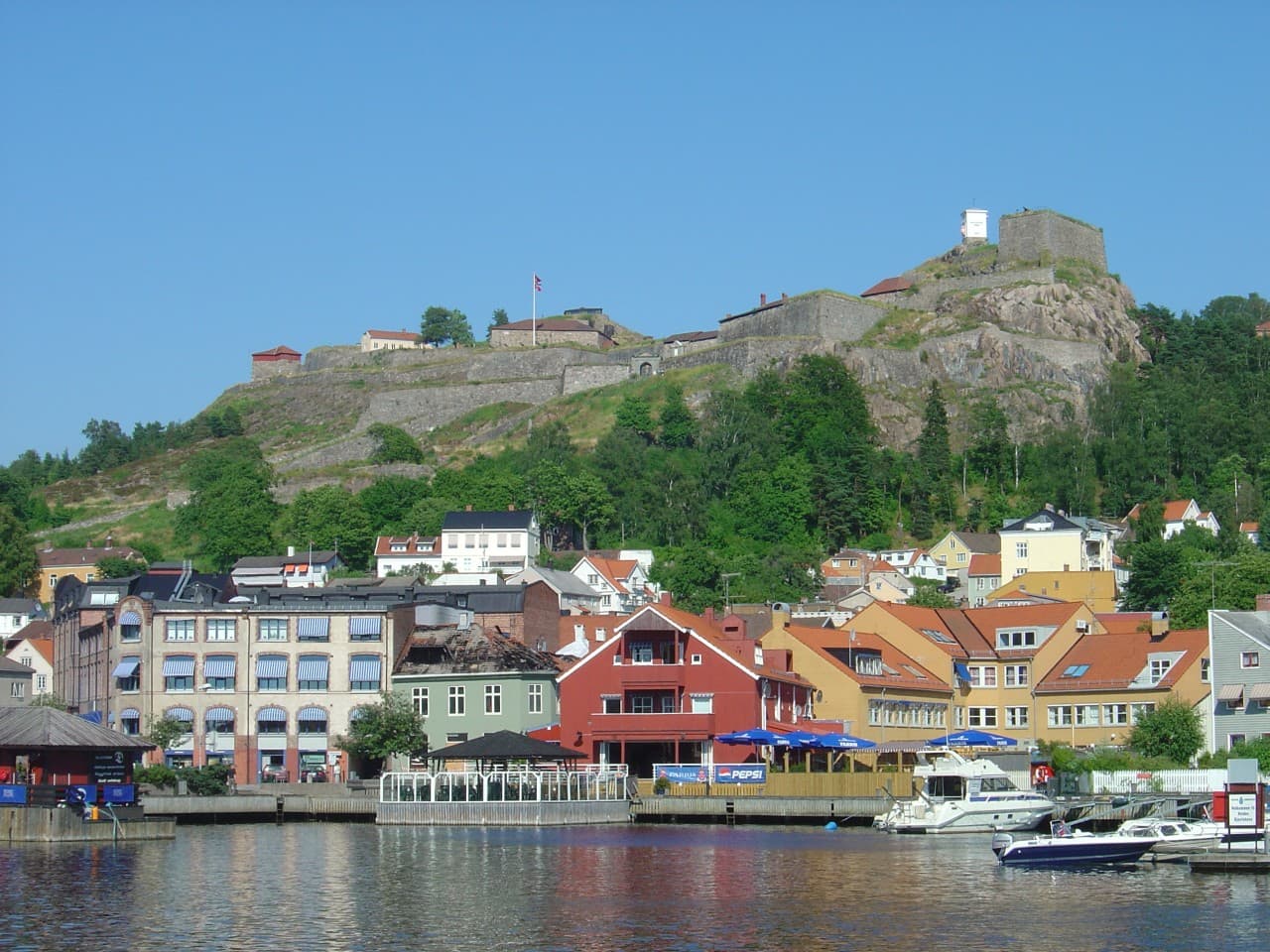
Fredriksten fortress in Halden, Norway, stands as a monumental example of 17th-century military architecture and a symbol of the turbulent history between Denmark-Norway and Sweden. Constructed in 1659 following the loss of the Bohus fortress to Sweden after the Treaty of Roskilde (1658), Fredriksten was strategically designed to defend the border and assert Danish-Norwegian control in the region. Named after King Frederick III of Denmark and Norway, the fortress embodies the Renaissance period’s military engineering innovations, particularly its distinctive star-shaped layout that enhanced defensive capabilities against artillery and siege tactics.
Historical context and strategic importance
The fortress was erected to replace the older border fortress of Bohus, which had been ceded to Sweden, a loss that necessitated a new stronghold to protect Norway’s southeastern frontier. The location on a prominent hill overlooking the town of Halden provided a commanding view of the surrounding landscape and key access routes, making it an ideal defensive position.
Fredriksten quickly became a focal point in the ongoing conflicts between Denmark-Norway and Sweden. It saw its first major military action in 1660 when Swedish forces launched an attack during the final phases of the Northern Wars. Despite repeated attempts, the fortress withstood sieges and assaults, notably under the leadership of commanders such as Tønne Huitfeldt, who successfully defended the fortress with a garrison of approximately 2,100 men. The fortress’s resilience contributed to the eventual signing of the Treaty of Copenhagen (1660), which restored some territorial balance in the region.
Architectural evolution and military upgrades
Initial construction and star fort design
Fredriksten’s original design reflected the Renaissance star fort principles, characterized by angled bastions and low, thick walls intended to deflect cannon fire and provide overlapping fields of fire. This design was state-of-the-art in the mid-17th century and allowed defenders to cover all approaches with minimal blind spots.
Expansion under Ulrik Frederik Gyldenløve
Between 1673 and 1675, significant enhancements were overseen by Ulrik Frederik Gyldenløve, the statholder of Norway. He initiated extensive fortification works not only at Fredriksten but also at other key sites such as Akershus and Fredrikstad. At Fredriksten, the fortress was expanded and reinforced to accommodate growing military needs and evolving siege technology.
Later fortifications and outer works
From 1682 to 1701, under the command of Major-General Ernst von Tettau, Fredriksten was further expanded with the addition of three outer fortifications: Gyldenløve, Overberget, and Stortårnet. These outer works functioned as advanced defensive positions to delay and disrupt attackers before they could reach the main fortress walls. The use of stone and earthworks in these fortifications exemplifies the military engineering adaptations of the late 17th century to counter artillery bombardment.
Fredriksten in the Great Northern War
The fortress played a pivotal role in the Great Northern War (1700–1721), particularly during two major Swedish invasions led by King Charles XII. In 1716, Charles XII captured the town of Halden but failed to take the fortress despite fierce fighting. The Norwegian defenders’ resilience, combined with the decisive naval victory by Tordenskjold at the Battle of Dynekilen, forced the Swedish army to retreat.
In 1718, Charles XII launched a renewed siege on Fredriksten. The Swedish forces managed to capture the forward fortification of Gyldenløve on December 8th, but the main fortress held strong. The siege abruptly ended when Charles XII was fatally shot on December 11th while inspecting the trenches. His death marked a turning point in the war and effectively ended Swedish attempts to conquer Norway. A memorial park now stands at the exact location where the king fell, serving as a poignant historical landmark.
Later military history and cultural legacy
Fredriksten continued to serve military purposes through the late 18th and early 19th centuries. It was a staging ground during the Theater War (1788) and endured bombardment during the Swedish-Norwegian War of 1814, though it was never captured. The fortress was ceded to Sweden after the Convention of Moss (1814) but was returned to Norway in the 20th century. The original fortress flag from 1814, taken by Swedish troops, is preserved and displayed in the fortress museum, linking visitors to this era of conflict.
After Norway’s independence in 1905, Fredriksten’s military significance waned, but it remained in use by various military units. Today, it houses the Norwegian Defence Logistics and Administrative College and serves as a cultural venue hosting museums, art exhibitions, and outdoor concerts, blending its martial heritage with contemporary cultural life.
Architectural features and visitor experience
The fortress’s star-shaped layout remains one of its most striking features, demonstrating the principles of early modern fortification design. Visitors can explore the extensive network of walls, bastions, and outer forts, including the well-preserved Gyldenløve fortification. The site offers panoramic views of Halden and the surrounding landscape, highlighting its strategic placement.
Inside, the fortress contains a museum that exhibits artifacts such as the 1814 fortress flag and provides detailed historical interpretation. The memorial park commemorating King Charles XII’s death is a key point of interest, attracting visitors interested in Nordic military history. Seasonal outdoor concerts and cultural events enliven the fortress grounds, making Fredriksten a dynamic heritage site.
Access and tourism
Fredriksten is accessible year-round, with guided tours available during the summer months. The fortress’s museums and exhibitions offer rich educational experiences for visitors of all ages. Its combination of military history, architectural significance, and cultural programming makes it a prominent attraction in southeastern Norway.
Frequently asked questions (FAQ)
- How do I get to Fredriksten Fortress?
- Fredriksten Fortress is located in Halden, Norway, and is easily accessible by car or public transportation. If you are traveling by train, the nearest station is Halden, from where you can take a local bus or enjoy a scenic walk to the fortress.
- What is the historical significance of Fredriksten Fortress?
- Fredriksten Fortress is historically significant as it played a crucial role in defending Norway against Swedish invasions during the 17th and 18th centuries. The fortress is also known for the death of Swedish King Charles XII, who was killed during a siege in 1718, marking a pivotal moment in Scandinavian history.
- When was Fredriksten Fortress built?
- Construction of Fredriksten Fortress began in 1661 and continued over several decades, with significant expansions and renovations occurring throughout the 18th century. The fortress was strategically built to enhance Norway's defense capabilities and has since become a symbol of national pride.
- Can I explore the fortress grounds?
- Yes, visitors are welcome to explore the grounds of Fredriksten Fortress. The area is open to the public, and you can walk along the ramparts, enjoy stunning views of the surrounding landscape, and discover various historical buildings within the fortress.
- Why is Fredriksten Fortress a popular tourist attraction?
- Fredriksten Fortress attracts visitors due to its rich history, impressive architecture, and breathtaking views of the surrounding fjord and town of Halden. Additionally, the fortress hosts various events and exhibitions throughout the year, making it an engaging destination for history enthusiasts and families alike.
- Is it possible to take guided tours of Fredriksten Fortress?
- Yes, guided tours are available at Fredriksten Fortress, providing visitors with in-depth insights into its history and architecture. These tours are typically offered during the peak season and can be booked in advance for a more personalized experience.
- What are the opening hours for Fredriksten Fortress?
- Fredriksten Fortress is generally open to visitors year-round, but opening hours may vary depending on the season. It is advisable to check the official website for the most current information on hours and any special events that may affect access.
- What are the ticket prices for visiting Fredriksten Fortress?
- Entry to the fortress grounds is free; however, there may be fees associated with guided tours or special exhibitions. Be sure to check the official website for detailed information on any costs that may apply during your visit.
- When is the best time to visit Fredriksten Fortress?
- The best time to visit Fredriksten Fortress is during the summer months, from June to August, when the weather is typically mild, and various events are held. Spring and early autumn are also great times to visit for fewer crowds and beautiful scenery.
- Are there any nearby attractions to visit along with Fredriksten Fortress?
- Yes, there are several nearby attractions, including the charming town of Halden, the historic Halden Canal, and the beautiful nature trails in the surrounding area. Visitors can easily combine their trip to the fortress with a stroll through the town or a hike in the nearby forests.

Information
Loading map...
Visitor reviews
No reviews yet. Been here? Write the first review and help other travelers!
Write the first reviewVisited this castle? Share your experience
Your review helps other travelers and adds first-hand knowledge to our encyclopedia.