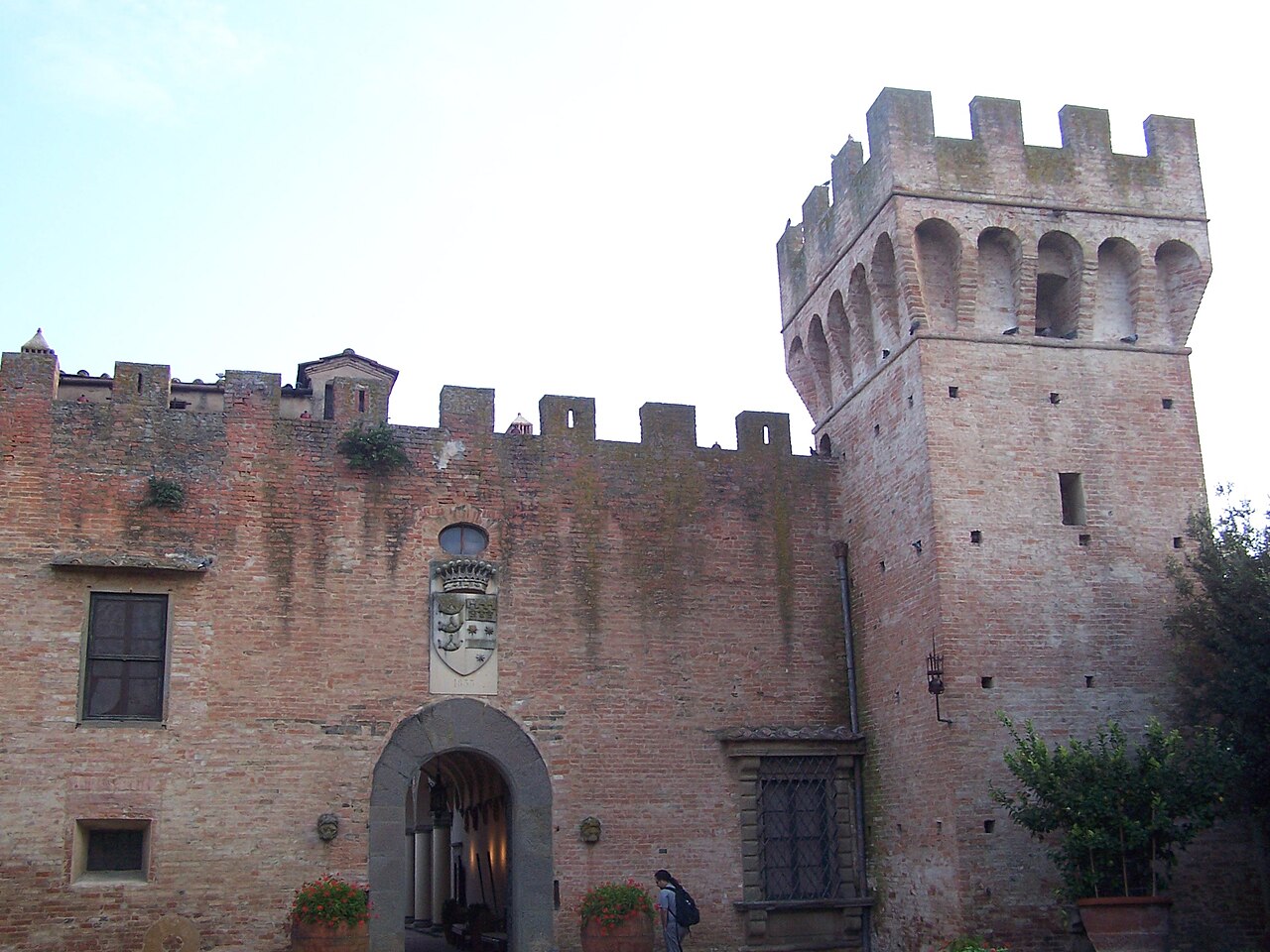
Frederick II Tower in San Miniato
The Frederick II Tower in San Miniato, Italy, stands as a remarkable example of medieval military architecture and historical significance. Constructed in the early 13th century under the directive of Holy Roman Emperor Frederick II of Swabia, this hill castle occupies the highest of San Miniato's three hills, a location chosen for its commanding views and strategic importance. The tower's placement allowed control over the vital Via Francigena, a major medieval pilgrimage and trade route connecting Florence and Pisa, underscoring its role in regional defense and administration.
Historical background and construction
The site of the Frederick II Tower has a history that likely extends back to Roman times, serving as a military command post due to its advantageous elevation and visibility. The current tower was built between 1217 and 1223 following orders from Emperor Frederick II, who sought to strengthen San Miniato's defenses as part of a broader fortification initiative originally begun by Otto I. This period marked a significant phase of military architecture development in Tuscany, reflecting the political and military tensions of the era.
The construction of the tower was overseen by Corrado da Spira, the imperial chancellor, whose name is preserved in an inscription on the tower. The involvement of Norman craftsmen is suggested by stylistic elements and historical records, indicating a blend of regional medieval building techniques. The tower was integral to a defensive network that included the Tower of Matilde (now the cathedral bell tower) and the now-lost Tower of the Crows, together forming a protective system guarding the strategic corridor along the Via Francigena.
Architectural features and design
The Frederick II Tower is built on a trapezoidal plan, rising to a height of approximately 37 meters. Its robust stone masonry reflects the medieval military engineering practices of the time, likely incorporating local stone materials combined with techniques introduced by Norman masons. The tower's elevated position at 192 meters above sea level offers extensive views over the Valdarno valley, enabling early detection of approaching forces and effective control of the surrounding territory.
The tower's exterior once featured a prominent inscription crediting Corrado da Spira for overseeing its construction, a rare example of administrative acknowledgment in medieval fortifications. Its design emphasizes verticality and defensive strength, with thick walls and limited openings suitable for archers and lookouts. The trapezoidal shape provided structural stability and resistance to siege warfare tactics common in the High Medieval period.
Relationship with surrounding fortifications
The tower's strategic function was enhanced by its integration into a network of fortifications on San Miniato's hills. The Tower of Matilde, which survives today as part of the cathedral complex, and the lost Tower of the Crows complemented the Frederick II Tower in controlling access along the Via Francigena. This triad of towers ensured a layered defense system, reflecting the military priorities of the Holy Roman Empire in Tuscany during the 13th century.
Later history and transformations
Following its medieval military use, the tower's role evolved over the centuries. It remained in active use until around 1530, after which it was abandoned as a fortress. The tower was then acquired by Michele Mercati, a notable papal physician and naturalist, who repurposed it as a residential building. This transformation illustrates the shift from feudal military functions to more peaceful, civil uses in the Renaissance period.
The tower also holds a somber historical association as the traditional site where Pier della Vigna, an imperial secretary accused of treason or corruption, was reportedly blinded. This anecdote highlights the tower's occasional use for punitive measures within the imperial administration.
Destruction and restoration in the 20th century
During World War II, the Frederick II Tower suffered deliberate destruction at the hands of withdrawing German forces. On 23 July 1944, explosives planted by the retreating army caused significant damage, reducing the tower to ruins. This loss was keenly felt given the tower's historical and cultural importance to San Miniato and the broader Tuscan heritage.
In 1958, a meticulous restoration was undertaken by architect Renato Baldi and engineer Emilio Brizzi, who aimed to faithfully reconstruct the tower based on historical documentation and surviving elements. The restoration restored the tower to its former stature as a prominent medieval landmark and symbol of San Miniato's historical legacy.
Cultural significance and current status
Today, the Frederick II Tower stands as the only remaining medieval stronghold on San Miniato's highest hill, embodying centuries of military history and architectural heritage. Its reconstruction has preserved its original form and strategic placement, allowing visitors to appreciate the tower's commanding views and historical context.
The tower is a key cultural asset for San Miniato, attracting scholars, tourists, and history enthusiasts interested in medieval fortifications, the legacy of Frederick II, and the complex history of Tuscany during the High Middle Ages. Its preservation contributes to understanding the region's military, political, and architectural evolution.
Frequently asked questions (FAQ)
- When was the Frederick II Tower built?
- The Frederick II Tower was constructed between 1217 and 1223 under the orders of Holy Roman Emperor Frederick II.
- What was the strategic importance of the tower?
- The tower was strategically located on the highest hill of San Miniato to control the Via Francigena, a vital medieval pilgrimage and trade route between Florence and Pisa.
- Who oversaw the construction of the tower?
- The construction was overseen by Corrado da Spira, the imperial chancellor, with possible involvement of Norman craftsmen.
- What happened to the tower during World War II?
- In July 1944, retreating German forces destroyed the tower with explosives, causing significant damage.
- Has the tower been restored?
- Yes, the tower was carefully restored in 1958 by architect Renato Baldi and engineer Emilio Brizzi to replicate its original medieval design.
Information
Loading map...
Visitor reviews
No reviews yet. Been here? Write the first review and help other travelers!
Write the first reviewVisited this castle? Share your experience
Your review helps other travelers and adds first-hand knowledge to our encyclopedia.